
Best business purchase finance options for franchise buyers in 2026

Best overall for a franchise acquisition backed by suitable security: a secured acquisition loan. Best for an established operation with strong earnings: cash-flow lending. Best for staged seller payments: vendor finance. This 2026 guide compares business purchase finance for franchise buyers by repayment capacity, security and settlement requirements.
TL;DR
- Secured acquisition loans are the default business purchase finance for franchise buyers with suitable security and demonstrated repayment capacity.
- Cash-flow lending suits established franchise operations; equipment finance funds eligible assets, not the entire acquisition.
- Glenclair suits established Australian business owners seeking a broker-led acquisition funding review.
- Compare guarantees, covenants, working capital and franchise terms before choosing a lender.
Why this matters
Buying a franchise means funding more than the purchase agreement. You need to account for transaction expenses, operating cash, equipment commitments and obligations under the franchise agreement. A loan that completes the purchase but leaves the business short of cash is the wrong structure.
Glenclair is an independent commercial finance brokerage with a panel of 60+ lenders. Glenclair business purchase finance enquiries are best framed around the whole borrowing position, including existing facilities, rather than the acquisition alone.
This guide focuses on established Australian business owners considering business-purpose borrowing above A$2 million. That is a preferred audience, not a universal eligibility threshold; suitability requires individual assessment.
What makes the best franchise purchase finance?
Use these criteria to compare options in 2026:
- Repayment capacity: Base borrowing on sustainable earnings after franchise charges, owner remuneration and ongoing operating expenses.
- Security exposure: Identify which business assets, properties and personal guarantees support each facility.
- Franchise alignment: Check the franchise term, transfer requirements, renewal provisions and lender conditions together.
- Complete funding: Separate the acquisition amount from equipment, transaction expenses and working capital.
- Contract flexibility: Compare repayment schedules, covenants, early repayment provisions and conditions attached to future borrowing.
- Settlement certainty: Establish what must happen before funds are released. Approval subject to conditions is not settlement-ready funding.
Choose the structure that fits the business after settlement, not simply the one that produces an approval.
Franchise finance options at a glance
These are funding structures, not a ranking of named lenders. Each serves a different acquisition need, and some purchases require a combination.
| Rank and option | Best for | Standout feature | Key limitation |
|---|---|---|---|
| 1. Secured acquisition loan | Buyers with suitable security | Funds the business purchase against agreed security | Exposes the pledged assets to enforcement risk |
| 2. Cash-flow acquisition lending | Established operations with dependable earnings | Centres the assessment on business repayment capacity | Requires detailed earnings analysis and lender acceptance |
| 3. Vendor finance | Purchases with negotiated deferred consideration | Leaves part of the purchase amount payable to the seller | Requires seller agreement and coordination with senior debt |
| 4. Equipment finance | Identifiable equipment within the purchase | Separates eligible assets from goodwill funding | Does not fund goodwill or general operating cash |
| 5. Commercial property finance | Acquisitions that include business premises | Separates premises funding from the operating business | Adds property assessment and security requirements |
1. Secured acquisition loan: best for buyers with suitable security
A secured acquisition loan funds a business purchase against security accepted by the lender. Depending on the transaction, the security package can involve business assets, property and guarantees; the actual requirements belong in the written offer.
For a franchise buyer, the central question is whether the operating business can service the debt. Security does not replace repayment capacity.
Secured acquisition loan pros:
- Provides a defined facility for the purchase.
- Allows security and repayment obligations to be assessed together.
- Supports a combined review of existing and proposed borrowing.
Secured acquisition loan cons:
- Pledged assets are exposed if obligations are not met.
- Cross-security can complicate later refinancing or asset sales.
- Property valuations and legal requirements add settlement dependencies.
Ask whether the lender requires security over unrelated assets. Also establish how guarantees or individual securities can be released after debt reduction or an asset sale.
Best for: Established buyers with suitable security and sustainable business earnings.
Verdict: Buy only when the repayment profile and security exposure both fit your position.
2. Cash-flow acquisition lending: best for established earnings
Cash-flow acquisition lending centres on the business's ability to generate cash for debt repayment. It is not automatically unsecured, and it does not remove the need to examine guarantees or other security requirements.
For a franchise acquisition in 2026, distinguish actual historical trading from the buyer's proposed improvements. A funding structure should not depend entirely on sales growth that has not happened.
Cash-flow acquisition lending pros:
- Directs attention to sustainable operating performance.
- Links debt sizing to the business's repayment capacity.
- Provides a framework for assessing established franchise operations.
Cash-flow acquisition lending cons:
- Adjustments to reported earnings require evidence.
- Trading volatility weakens the repayment case.
- Covenants and reporting requirements need ongoing attention.
Review the seller's claimed add-backs individually. An expense that disappears for the seller does not necessarily disappear for you, particularly if you need to employ a replacement manager.
Best for: Buyers of established franchise operations with dependable, documented earnings.
Verdict: Buy when verified cash generation supports the proposed debt without relying on optimistic growth.
3. Vendor finance: best for negotiated deferred consideration
Vendor finance leaves an agreed portion of the purchase amount payable to the seller after settlement. The sale agreement and finance documents establish repayment timing, security and the parties' rights.
Vendor finance is not the same as an earn-out. Deferred debt and payments contingent on future performance create different obligations, so the documents must distinguish them.
Vendor finance pros:
- Allows part of the consideration to be paid later.
- Creates scope to negotiate repayments around the transaction.
- Can sit alongside senior lending where the lender accepts the arrangement.
Vendor finance cons:
- Depends on the seller agreeing to extend credit.
- Adds another repayment obligation after settlement.
- Can require subordination or restrictions on seller repayments.
Put the vendor repayments into the same forecast as bank debt. A deferred payment does not disappear because it sits outside the senior loan.
Best for: Transactions where the seller accepts staged consideration and all financiers accept the terms.
Verdict: Hold until the seller terms, senior lender requirements and total repayments align.
4. Equipment finance: best for identifiable business assets
Equipment finance funds eligible assets rather than the franchise's goodwill. It can form part of an acquisition structure when the purchased business includes identifiable equipment accepted by the financier.
Separate equipment from stock, goodwill and operating cash in the funding schedule. A purchase price allocation is not, by itself, confirmation of what a financier will fund.
Equipment finance pros:
- Separates asset funding from the wider acquisition loan.
- Makes equipment repayments visible in the operating forecast.
- Supports a distinct assessment of eligible assets.
Equipment finance cons:
- Does not cover goodwill or general working capital.
- Asset age, condition and ownership affect suitability.
- Existing security interests require attention before transfer.
Confirm who owns each asset and whether it is leased, financed or subject to another party's interest. Include planned replacement expenditure when assessing post-purchase cash needs.
Best for: Franchise purchases with a material, identifiable equipment component.
Verdict: Buy for eligible assets; skip equipment finance as a substitute for a complete acquisition facility.
5. Commercial property finance: best for purchases including premises
Commercial property finance addresses the real estate component when the transaction includes business premises. It needs a separate assessment from the purchase of the operating franchise.
Buying the business does not always mean buying the property. Where premises are leased, examine lease obligations and occupancy rights rather than treating property finance as an acquisition option.
Commercial property finance pros:
- Separates premises debt from business acquisition funding.
- Makes property security and repayment obligations explicit.
- Supports a coordinated review of the property and operating business.
Commercial property finance cons:
- Introduces valuation and property due diligence requirements.
- Ownership structures need legal and tax advice.
- Cross-security can connect property risk with business debt.
Compare the property loan and acquisition facility together before accepting either. Separate documents do not necessarily mean separate security exposure.
Best for: Buyers acquiring both the franchise operation and its premises.
Verdict: Buy only where property ownership fits the transaction and combined debt remains serviceable.
How the options are ranked
The ranking follows repayment capacity, security, franchise alignment, complete funding, flexibility and settlement requirements. Secured acquisition lending is the starting point for buyers with suitable security; the remaining options address earnings-led borrowing, deferred consideration, equipment and premises.
This is a suitability ranking, not a claim that one lender or structure always wins. In 2026, compare written terms for your transaction rather than treating a product label as a recommendation.
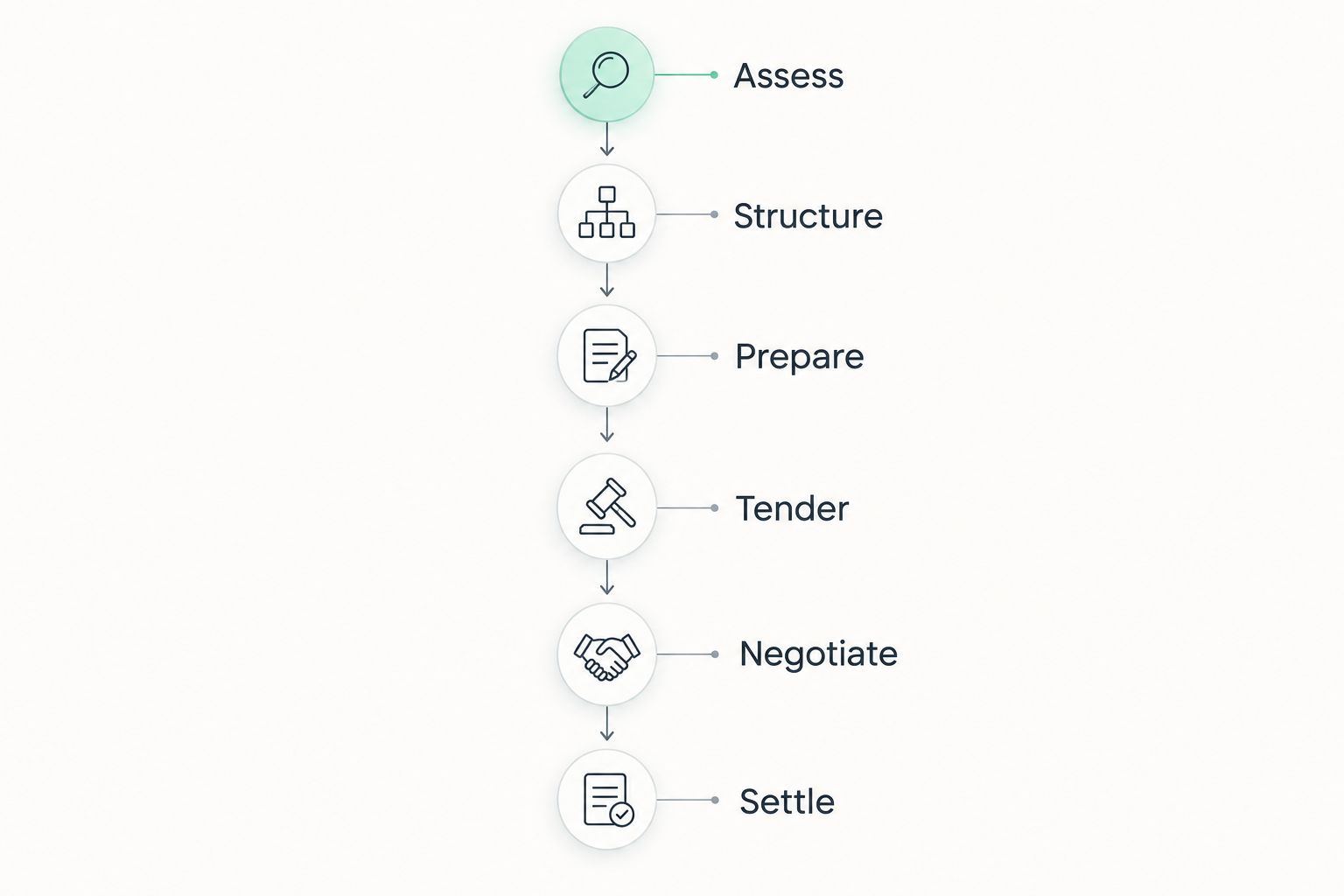
Prepare a banking tender before choosing a lender
For an established owner, an acquisition is also a reason to review existing banking arrangements. Compare the incumbent lender's proposal with alternatives using the same transaction information and funding requirements.
Glenclair business purchase finance discussions should address the proposed acquisition alongside refinancing, equipment, property and working capital needs. Ask for the engagement scope and remuneration arrangements before proceeding.
Assess
Reconcile the seller's financial statements, current trading, franchise charges and existing debts. Prepare a 13-week cash-flow forecast for the settlement period and a 12-month operating forecast to test the first year of ownership; these are planning recommendations, not lender eligibility rules.
Structure
Allocate the funding requirement between acquisition debt, equipment, property and working capital. Map the proposed securities and guarantees before accepting interconnected facilities.
Prepare
Assemble financial records, the purchase agreement, franchise documents, asset details and forecasts. Have your solicitor examine transfer requirements and your accountant review the earnings assumptions.
Tender
Present a consistent funding request to suitable lenders. Require each response to identify security, repayments, covenants, information requirements and conditions before settlement.
Negotiate
Compare the complete proposals, not just the interest rate. Identify restrictions on distributions, additional debt, asset sales and security releases before negotiating changes.
Settle
Confirm that finance conditions, franchise transfer requirements and transaction documents align. Keep the working capital allocation visible when final settlement payments are calculated.
Understand the engagement before you proceed
Distinguish lender-paid brokerage from debt advisory. Glenclair's debt advisory services use a retainer and success-fee structure; confirm which engagement applies and obtain the terms in writing.
Ask what work is included, how remuneration operates and what obligations arise if the transaction changes. Review the commercial finance services before choosing the scope of assistance.
Review your acquisition funding structure
Discuss the purchase, existing borrowing, security and working capital requirements together.
Which franchise purchase finance should you choose?
Start with a secured acquisition loan if suitable security and verified earnings support it. Choose cash-flow lending for an earnings-led assessment, vendor finance for negotiated deferred consideration, equipment finance for eligible assets and property finance for premises.
Before signing in 2026, reconcile every proposed facility in one repayment forecast. A collection of individually acceptable loans can still leave the acquired business with an unsuitable combined obligation.
FAQ
What's the best business purchase finance for franchise buyers?
A secured acquisition loan is the starting option for franchise buyers with suitable security and demonstrated repayment capacity. Cash-flow lending, vendor finance, equipment finance and property finance address different transaction needs.
Can I finance the goodwill in a franchise purchase?
Goodwill requires acquisition funding rather than equipment finance. Lender acceptance depends on the transaction, business earnings, security and proposed structure.
Is cash-flow lending the same as an unsecured business loan?
No. Cash-flow lending describes an earnings-led assessment, not a promise that no security or guarantees are required. Check the written security requirements.
Can vendor finance sit alongside a bank loan?
Yes, where the senior lender accepts the arrangement. The documents must address repayment timing, security priority and any restrictions on payments to the seller.
Should I refinance existing loans when buying a franchise?
Review existing loans alongside the acquisition before deciding whether to refinance. Compare the combined repayments, security exposure, exit provisions and settlement requirements.
Does equipment finance cover the whole franchise purchase?
No. Equipment finance addresses eligible assets, not goodwill or general operating cash. The acquisition needs a separate plan for those amounts.
Is borrowing above A$2 million an eligibility requirement?
No. This guide targets established owners considering borrowing above A$2 million, but suitability is assessed case by case. Loan size alone does not establish eligibility.
One last thing
Ask for a security map before accepting the finance offer. List every pledged asset, guarantor and facility, then identify the conditions for releasing each security. That document makes the consequences of refinancing, selling equipment or disposing of property easier to assess.
Related guides
- Equipment finance options for construction businesses
- Truck finance options for owner-drivers
- Income requirements for commercial property finance
By the Glenclair Financial team. General information only. Obtain advice on the finance, legal and tax implications of your proposed transaction.