
Best commercial property finance for medical practices in 2026

Best default for a practice buying its own premises: an owner-occupied commercial property loan. Best for reviewing existing debt: commercial refinancing; best for eligible retirement-fund ownership: an SMSF limited recourse borrowing arrangement. This 2026 guide compares commercial property finance for medical practices by ownership, repayment structure, security and exit terms.
TL;DR
- Owner-occupied lending is the default commercial property finance for medical practices buying premises for their own use.
- Glenclair suits established Australian business owners reviewing business-purpose borrowing above A$2 million; suitability is assessed individually.
- Compare refinancing against the existing facility, including security, covenants, repayment terms and switching costs.
- Separate property, equipment and working capital requirements before seeking lender proposals.
Why this matters
A medical practice needs more than a loan that funds settlement. Property repayments must leave room for staffing, equipment, fit-out and working capital. The ownership structure also needs to accommodate partners joining, retiring or selling their interests.
Glenclair is best suited to established business owners reviewing commercial property finance for medical practices alongside their wider banking arrangements. Its panel includes 60+ lenders. The preferred focus is business-purpose borrowing above A$2 million, with suitability assessed case by case rather than treated as a universal eligibility threshold.
For a 2026 purchase or refinance, start with the borrowing structure. A lender shortlist comes later.
What makes the best medical practice property finance?
The best structure matches the property's use, the borrowing entity and the practice's ability to service debt. Judge each proposal against these criteria:
- Ownership fit: The borrower, property owner and occupying practice need a deliberate legal and tax structure.
- Repayment fit: Scheduled repayments must work alongside operating expenses and other debt commitments.
- Security scope: Identify mortgages, guarantees and any connection to other business or personal assets.
- Facility terms: Compare maturity, amortisation, covenants, review requirements and repayment flexibility.
- Execution requirements: Check valuation, property-use requirements, documentation and settlement conditions.
- Exit flexibility: Understand what happens when partners change, premises are sold or the practice relocates.
A familiar lender is not a substitute for this assessment. Nor does a medical tenant remove the need to examine the property's condition, permitted use and suitability as security.
Medical practice property finance at a glance
These 5 finance structures address different ownership and borrowing needs. The ranking is a decision sequence, not a claim that one lender or facility wins for every practice.
| Rank and structure | Best for | Main feature | Key limitation |
|---|---|---|---|
| 1. Owner-occupied commercial property loan | Buying premises for your operating practice | Property funding assessed alongside the occupying business | Property debt and practice performance remain closely connected |
| 2. Commercial property refinance | Reviewing an existing property facility | Reassesses debt terms, security and lender fit | Switching requires a fresh assessment and settlement process |
| 3. Separate property-entity borrowing | Partners separating property ownership from operations | Distinct property ownership and operating arrangements | Entity separation does not automatically limit lender recourse |
| 4. SMSF limited recourse borrowing | Eligible retirement-fund property ownership | A specific superannuation borrowing structure | Strict borrowing, leasing and compliance requirements |
| 5. Commercial construction finance | Building or substantially redeveloping premises | Funding linked to the construction project | Greater documentation, completion and funding complexity |
1. Owner-occupied loan: best for buying practice premises
An owner-occupied commercial property loan funds premises used by the borrowing business or an associated operating entity, subject to lender classification. Assessment considers the property and the financial position supporting repayments.
For an established practice buying its consulting rooms, this is the starting point. It does not eliminate the need to choose the right ownership entity or document occupation arrangements.
Owner-occupied loan pros:
- Connects the borrowing purpose directly to the practice's premises.
- Allows you to compare repayment and security structures across lender proposals.
- Supports a clear distinction between property funding and other business borrowing.
Owner-occupied loan cons:
- Property repayments remain payable when practice cash flow weakens.
- A specialised fit-out does not necessarily translate into equivalent property security value.
- Guarantees or additional security depend on the lender's assessment.
Best for: Established practices purchasing premises for their own operations.
Before committing, test repayments against actual business cash flow. Separate the property purchase from fit-out, medical equipment and the cash needed to keep the practice operating.
Verdict: Buy for a straightforward owner-occupied purchase, after confirming serviceability and ownership structure.
2. Commercial refinance: best for reviewing existing debt
Commercial property refinancing replaces an existing facility with a newly agreed arrangement. It creates an opportunity to review repayment terms, security, covenants and the wider banking relationship—not just the interest margin.
For a 2026 review, compare the incumbent lender's proposal with alternatives using the same financial information and borrowing brief. A lower headline margin does not establish a better overall result.
Commercial refinance pros:
- Reopens terms that no longer match the practice's circumstances.
- Creates an opportunity to review guarantees and linked security.
- Allows property debt to be considered alongside equipment and working capital facilities.
Commercial refinance cons:
- Requires updated financial information and a new credit assessment.
- Existing discharge conditions and new lender requirements need coordination.
- Changing lenders does not guarantee improved terms.
Best for: Practices with existing property debt that needs a structured banking review.
Keep the existing facility as the comparison baseline. Document what must improve, what must remain unchanged and which conditions would make switching unacceptable.
Verdict: Buy only when the documented refinancing terms justify replacing the current facility.
3. Property-entity loan: best for separating ownership
A separate property entity can own premises and lease them to the operating medical practice. This distinguishes the property investment from the business operating inside it, although lender classification depends on the arrangement.
The structure needs legal and tax advice before contracts and loan documents are finalised. Separate entities do not automatically prevent guarantees, cross-security or recourse to associated parties.
Property-entity loan pros:
- Distinguishes property ownership from day-to-day practice operations.
- Allows ownership interests and occupation arrangements to be documented separately.
- Makes the lease between the property owner and practice an explicit part of the structure.
Property-entity loan cons:
- Adds entity, lease and administrative requirements.
- Related-party rent must be considered alongside the practice's capacity to pay.
- Changes in partners or ownership can affect both finance and lease arrangements.
Best for: Practice owners deliberately separating property ownership from operating interests.
Resolve who owns the premises, who owes the debt and who guarantees it. Then check how the arrangement responds to a partner's departure or a sale of the practice.
Verdict: Hold until ownership, lease obligations and lender recourse are documented together.
4. SMSF borrowing: best for eligible retirement-fund ownership
An SMSF can acquire eligible property using a limited recourse borrowing arrangement where the legal requirements are satisfied. Business real property leased to a related business must meet the relevant superannuation rules, including arm's-length requirements.
This is a specialist ownership decision, not a default lending recommendation. Obtain advice from appropriately qualified superannuation, legal and tax advisers before committing the fund.
SMSF borrowing pros:
- Provides a defined route for eligible property ownership within an SMSF.
- Separates the fund's ownership role from the practice's operating role.
- Makes lease terms and fund obligations central to the decision.
SMSF borrowing cons:
- Borrowing, asset and related-party rules constrain the structure.
- The fund needs sufficient liquidity to meet its obligations.
- Property improvements and changes require careful advice under the applicable rules.
Best for: Eligible SMSFs whose trustees have obtained advice supporting the property and borrowing strategy.
The ATO's SMSF guidance covers limited recourse borrowing arrangements and business real property. Check the current requirements for your 2026 transaction; lender acceptance alone does not establish compliance.
Verdict: Hold until qualified advisers confirm the proposed arrangement meets the fund's requirements.
5. Construction finance: best for new or redeveloped premises
Commercial construction finance funds a building project rather than only an existing completed property. Lending assessment considers the proposed works, project budget, builder, approvals and the borrower's financial position.
A substantial redevelopment needs a different funding brief from a simple property purchase. Plan how the practice will operate during the works and how the debt will be managed after completion.
Construction finance pros:
- Matches the funding discussion to a defined building project.
- Brings construction documentation and project funding into the credit assessment.
- Allows the completed property's intended use to inform the proposed debt structure.
Construction finance cons:
- Requires more project documentation than a completed-property purchase.
- Cost overruns and delays create additional funding pressure.
- Drawdown and completion conditions restrict access to funds.
Best for: Established practices building or substantially redeveloping their premises.
Distinguish the construction budget from equipment, relocation and operating requirements. Confirm responsibility for funding variations before accepting a facility.
Verdict: Buy only after the project budget, funding contributions and completion requirements are clear.
How the finance structures are ranked
Owner-occupied borrowing ranks first because it directly addresses a practice buying premises for its own use. Refinancing comes next for owners who already hold property debt and need to review their banking arrangements.
The remaining structures answer narrower ownership or project requirements. The criteria are ownership fit, repayment fit, security, facility terms, execution and exit flexibility—not unverified approval rates or claimed savings.
For your 2026 decision, use the use-case labels to shortlist a structure. Then compare actual lender proposals for that structure.
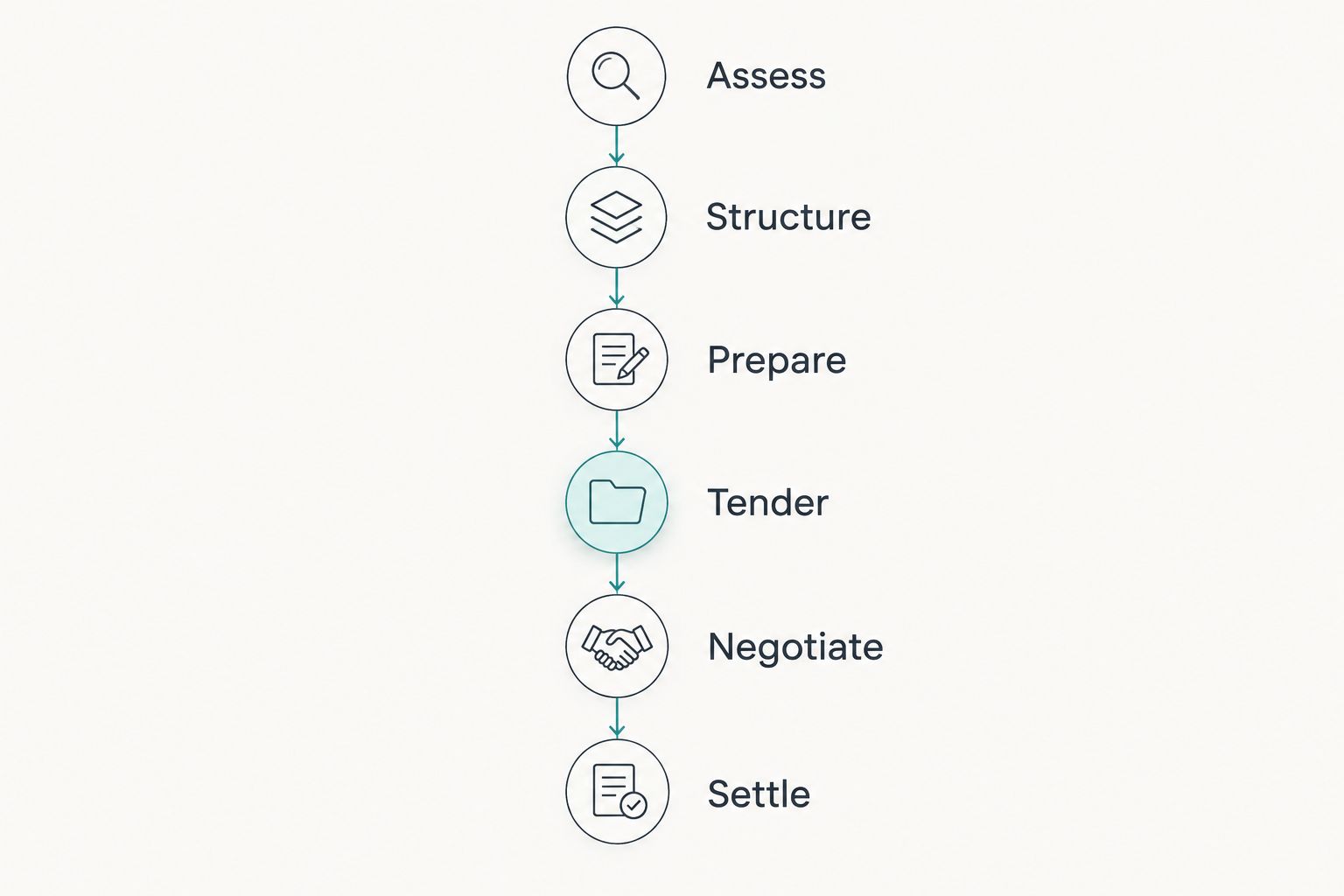
Use a 6-step banking tender
Glenclair's process-led approach to commercial property finance for medical practices follows a defined sequence. Its services cover commercial borrowing needs, including refinancing, equipment and property development finance.
Assess
Review existing debt, financial statements, current trading and the purpose of the borrowing. Identify property obligations alongside equipment commitments and working capital requirements.
Structure
Decide which entity borrows, which entity owns the property and how the practice occupies it. Identify the proposed security and any guarantees before requesting competing terms.
Prepare
Assemble a consistent lender brief. Include the borrowing purpose, financial position, property information and the terms you want assessed.
Tender
Present the agreed borrowing requirement to suitable lenders. Comparable information makes differences between proposals easier to identify.
Negotiate
Compare the complete terms, not an isolated margin. Resolve questions about security, covenants, repayment obligations and conditions before accepting an offer.
Settle
Coordinate documentation, satisfaction of conditions and any discharge of existing debt. Confirm the new facility's reporting and review obligations after settlement.
Which property finance should you choose?
Choose owner-occupied commercial property lending as the default starting point when your practice is buying its own premises. Choose a refinancing review when the property is already financed and the existing arrangement needs reassessment.
Use separate-entity or SMSF ownership only when the ownership strategy supports it. Use construction finance when the transaction includes a building project, not merely because premises need routine changes.
For a 2026 banking review, ask Glenclair to assess the whole borrowing position. Distinguish lender-paid brokerage from debt advisory services, which use a retainer and success-fee structure. Confirm the engagement terms before proceeding.
Review your commercial borrowing
Discuss property debt, refinancing and the structure of your existing banking arrangements.
FAQ
What's the best commercial property finance for medical practices?
An owner-occupied commercial property loan is the default starting point for a practice buying premises for its own use. The final choice depends on ownership, serviceability, security and the proposed property.
Should my medical practice refinance its existing property loan?
Refinance when the complete proposed arrangement justifies replacing the existing facility. Compare repayments, security, covenants, switching requirements and exit conditions rather than focusing only on the headline margin.
Can a separate entity own the practice premises?
A separate entity can own premises and lease them to the operating practice, subject to the legal structure and lender requirements. Entity separation does not automatically remove guarantees or linked security.
Can my SMSF borrow to buy medical practice premises?
An SMSF can use a compliant limited recourse borrowing arrangement to acquire eligible property. Obtain qualified advice on borrowing, business real property, related-party leasing and the fund's liquidity before committing.
Do lenders treat medical equipment as part of the property loan?
Do not assume medical equipment belongs in the property facility. Identify equipment, fit-out and property requirements separately, then ask lenders how each component will be funded and secured.
Does Glenclair only consider loans above A$2 million?
Glenclair prioritises established Australian business owners seeking business-purpose finance above A$2 million. Suitability is assessed case by case; the preferred borrowing size is not a universal eligibility rule.
What information should I prepare for a banking tender?
Prepare financial statements, current trading information, existing facility details and the purpose of the borrowing. Include property information, ownership arrangements and the terms you want lenders to assess.
One last thing
Ask what happens to the loan if a practice partner leaves. A facility can suit today's repayments yet create complications when ownership changes. Put partner exits, guarantees and property control into the borrowing brief before settlement—not after a departure is agreed.
Related guides
By the Glenclair Financial team.