
Best machinery finance options for agricultural contractors in 2026

Best overall for ownership: a chattel mortgage. Best for planned equipment replacement: a finance lease. Best for staged ownership: commercial hire purchase. Machinery finance for agricultural contractors in 2026 should match the machine’s working life, seasonal cash flow and existing banking commitments—not just the repayment quoted.
TL;DR
- A chattel mortgage is the default machinery finance for agricultural contractors who want ownership from purchase.
- A finance lease suits planned equipment replacement, but end-of-term obligations need close scrutiny.
- Equipment refinancing deserves a whole-business banking review, not an isolated repayment comparison.
- Glenclair suits established agricultural contractors seeking an independent commercial finance review.
Why this matters
Agricultural contracting combines equipment commitments with income tied to work completed and customers paying. A repayment schedule that looks manageable across a year can still place pressure on cash between jobs.
Start with the whole borrowing position. Glenclair’s commercial finance services cover business loans, refinancing and equipment finance through a panel of 60+ lenders. For established operators considering business-purpose borrowing above A$2 million, machinery funding deserves a review alongside existing banking arrangements. Suitability remains case by case; that amount is not a universal eligibility threshold.
The right structure funds the equipment without leaving the operating business short of cash. A lender’s willingness to finance a machine does not establish whether the repayment schedule suits your contracts.
What makes the best machinery finance option?
Assess these criteria before comparing proposals in 2026:
- Ownership: Establish who owns the machine during the agreement and what happens when it ends.
- Cash-flow fit: Compare repayment dates with expected customer receipts, including quiet periods.
- End-of-term exposure: Identify any balloon, residual payment or return conditions before signing.
- Security: Check which assets support the borrowing and whether guarantees are required.
- Replacement flexibility: Understand the contractual consequences of selling, upgrading or paying out early.
- Whole-business fit: Assess equipment debt alongside working capital, property lending and existing lender conditions.
No structure wins every criterion. Ownership finance suits a different decision from renting machinery for a defined period or refinancing equipment already in service.
Machinery finance options at a glance
| Option | Best for | Main feature | Key limitation |
|---|---|---|---|
| Chattel mortgage | Keeping machinery long term | Business owns the machine, subject to lender security | Debt and asset-value risk remain with the business |
| Finance lease | Planned equipment replacement | Lessor owns the machine during the lease | End-of-term obligations need careful comparison |
| Commercial hire purchase | Acquiring ownership through instalments | Ownership transfers after contractual obligations are met | Less ownership flexibility during the agreement |
| Equipment refinance | Reviewing debt on existing machinery | Replaces an existing equipment facility | Lower repayments can hide a longer debt period |
| Working capital facility | Repairs and short operating gaps | Funds business cash-flow needs rather than ownership | Does not automatically suit long-lived machinery purchases |
1. Chattel mortgage: best for long-term machinery ownership
A chattel mortgage finances machinery that your business owns from purchase, with the lender taking security over it. It is a useful starting point when you expect to retain and operate the machine beyond the finance term.
For an agricultural contractor, the central question is whether the equipment can support the proposed repayments through its expected workload. Assess purchase finance against maintenance needs, seasonal downtime and existing debt—not just the supplier’s invoice.
Chattel mortgage pros:
- Ownership sits with the business from purchase.
- The agreement can provide a defined repayment schedule.
- It separates a specific machinery purchase from everyday operating expenditure.
Chattel mortgage cons:
- The business carries maintenance and resale-value risk.
- A balloon, if included, leaves a payment to address at the end.
- Early repayment and disposal remain subject to lender terms.
Best for: Contractors buying core equipment they intend to keep and maintain.
Ask for the full repayment schedule, security requirements and payout provisions. If a balloon is proposed, document how you intend to meet it without assuming the machine’s future sale value will cover it.
Verdict: Buy with a chattel mortgage when long-term ownership is the objective and repayments fit the operating cash flow.
2. Finance lease: best for planned equipment replacement
Under a finance lease, the lessor owns the machinery and your business pays to use it under the lease agreement. The agreement determines the end-of-term obligations; ownership does not automatically pass to you.
A finance lease belongs on the shortlist when equipment replacement forms part of your operating plan. Compare the entire agreement with ownership finance rather than treating a lower periodic payment as proof of a better outcome.
Finance lease pros:
- Provides machinery use without ownership during the lease.
- Creates a defined contractual payment schedule.
- Allows you to assess equipment use separately from an outright ownership decision.
Finance lease cons:
- You cannot assume ownership at expiry.
- Early termination can create contractual costs.
- Maintenance, insurance and end-of-term responsibilities require checking.
Best for: Contractors with a documented replacement plan who understand the lease exit arrangements.
Before accepting a lease in 2026, ask what happens if the machine no longer suits the work. Read the provisions for termination, damage, continued use and any residual obligation. Do not assume every lease includes an upgrade or return entitlement.
Verdict: Hold until the end-of-term obligations and replacement plan are clear.
3. Commercial hire purchase: best for staged ownership
Commercial hire purchase lets your business use machinery while paying instalments towards ownership. The financier retains ownership until the agreement’s requirements are satisfied.
This structure suits a buyer who wants eventual ownership but is comparing alternatives to a chattel mortgage. Its ownership sequence differs from a secured purchase loan, so the agreement needs a separate review.
Commercial hire purchase pros:
- Provides an agreed route towards ownership.
- Supports equipment use while instalments are paid.
- Sets out payment obligations in a specific machinery agreement.
Commercial hire purchase cons:
- Ownership does not sit with your business from the outset.
- Selling or changing the equipment requires attention to the agreement.
- Default and early settlement provisions can affect the ownership plan.
Best for: Contractors who want eventual ownership and accept the contractual restrictions during the agreement.
Ask your accountant to assess the tax treatment of the actual proposal. Do not select hire purchase solely because somebody describes it as tax-effective; the business’s circumstances and applicable rules matter.
Compare it against a chattel mortgage using the same equipment, payment dates and proposed term. Otherwise, differences in the repayment schedule can obscure differences in the structure.
Verdict: Hold until the ownership-transfer conditions and alternative loan terms have been compared.
4. Equipment refinance: best for reviewing existing machinery debt
Equipment refinance replaces an existing equipment facility with new borrowing. It belongs on the shortlist when the machine still serves the business but the existing debt arrangement needs review.
For established contractors, the stronger question is often broader than machinery alone: does the current banking structure still fit the business? A refinancing review in 2026 should consider equipment facilities, working capital and any property-backed borrowing together.
Equipment refinance pros:
- Creates an opportunity to reassess the remaining repayment schedule.
- Brings existing security and guarantee requirements into the review.
- Lets you compare staying with the current lender against changing arrangements.
Equipment refinance cons:
- Extending the term can reduce repayments while increasing total financing costs.
- Existing payout obligations and new facility costs need checking.
- Machinery condition, value and lender acceptance affect suitability.
Best for: Contractors with existing equipment debt and a reason to review their banking arrangements.
Request a current payout figure before comparing proposals. Assess the remaining debt against the machine’s expected useful working life, not its original purchase date alone.
Verdict: Hold until the proposed refinance improves the documented borrowing position, not merely the monthly repayment.
5. Working capital facility: best for repairs and operating gaps
A working capital facility supports business cash-flow needs, such as repair expenditure or a gap between completing work and receiving payment. It is not automatically the right structure for purchasing long-lived machinery.
Separate the asset decision from the operating-cash decision. Funding a machine and funding the fuel, wages or repairs required to operate it are different borrowing needs.
Working capital facility pros:
- Addresses operating needs separately from equipment ownership.
- Provides a way to assess short cash-flow gaps against expected receipts.
- Keeps the purpose of machinery borrowing distinct from day-to-day funding.
Working capital facility cons:
- Repayment or review conditions can differ from equipment finance.
- Security and guarantees still require assessment.
- Repeated borrowing can conceal a continuing operating shortfall.
Best for: Contractors with a defined operating cash requirement and an identifiable repayment source.
For your 2026 funding plan, map the expected receipt that will repay the borrowing. If the facility remains drawn because normal operations do not generate enough cash, review the underlying cash-flow position before adding machinery debt.
Verdict: Skip as the default machinery-purchase structure; assess it separately for working capital.
How to compare machinery finance proposals
Use the same borrowing brief for each proposal. Changing the equipment, deposit, repayment timing or end payment makes headline comparisons unreliable.
A structured review follows this sequence:
Assess
Gather existing facility agreements, current payout figures, financial statements and a cash-flow forecast. Include the machinery quote, intended use and expected workload.
Structure
Separate equipment purchase, refinancing and working capital requirements. Decide which ownership arrangement fits the business before comparing individual lender proposals.
Prepare
Explain how the business earns revenue and services debt. Support forecasts with the contracts, trading records and operating assumptions available to you.
Tender
Present a consistent request to suitable lenders. A meaningful tender compares responses to the same business need, rather than collecting unrelated repayment quotes.
Negotiate
Compare the full set of terms: repayments, end payments, security, guarantees, fees, early exit and lender conditions. Record unresolved points before accepting an offer.
Settle
Check that the final documents reflect the agreed structure. Confirm equipment details and settlement requirements before funds are advanced.
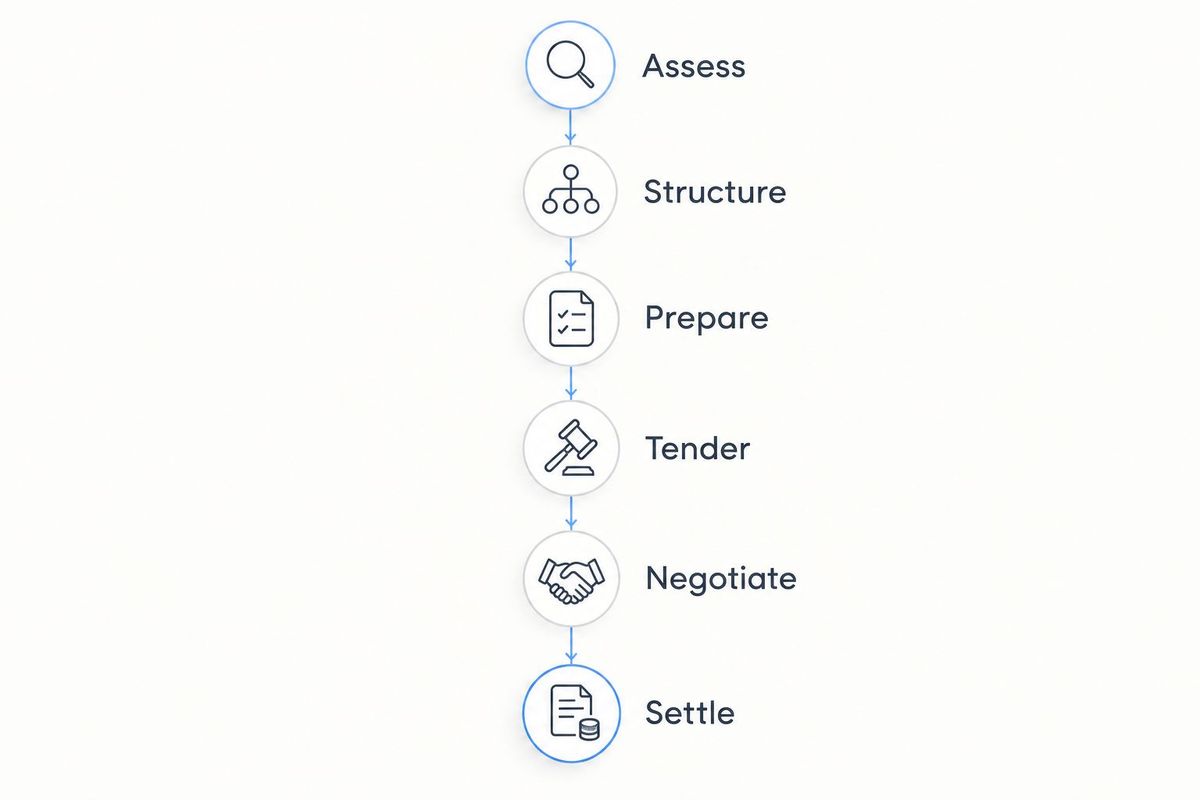
Keep the comparison in writing. A repayment figure without its term, end payment and security conditions is not a complete basis for a decision.
Brokerage and debt advisory are different engagements
Glenclair distinguishes lender-paid brokerage from debt advisory, which uses a retainer and success-fee structure. Confirm which engagement applies before work begins and ask for the remuneration terms in writing.
For a larger refinancing review, establish the scope as well as the payment arrangement. Clarify which facilities are being reviewed, what information is required and which decisions remain yours. Do not assume lender-paid brokerage means every possible service is included.
How these options were ranked
The order prioritises ownership clarity, cash-flow fit, end-of-term exposure, security, replacement flexibility and whole-business fit. It is a decision framework, not a lender ranking or a claim that every contractor qualifies.
Glenclair is an independent commercial finance brokerage. Its role is relevant when equipment funding needs to be considered alongside refinancing and existing banking arrangements, rather than as an isolated purchase.
Which machinery finance option should you choose?
Start with a chattel mortgage if you want to own and retain the machine. Compare a finance lease when planned replacement matters, and commercial hire purchase when staged ownership fits the decision.
If you already own the equipment, start with the debt review instead. In 2026, an established contractor considering borrowing above A$2 million should assess machinery finance within the wider commercial funding requirement, with suitability determined case by case.
Do not choose on repayment alone. Choose after ownership, security, seasonal cash flow and the exit position are clear.
FAQ
What's the best machinery finance for agricultural contractors?
A chattel mortgage is a useful default for agricultural contractors who want ownership from purchase. Compare its repayment schedule, security and end payment against the machine's expected use before choosing.
Is a machinery lease better than a chattel mortgage?
A machinery lease suits a different ownership decision, not an automatically better one. A chattel mortgage gives the business ownership subject to lender security; a finance lease leaves ownership with the lessor during the agreement.
Can machinery finance repayments match seasonal income?
Ask prospective lenders whether they can offer a repayment schedule aligned with your seasonal receipts. Assess the actual proposal against your cash-flow forecast; do not assume seasonal repayments are included.
Should I refinance equipment or review all my business lending?
Review the wider lending position when equipment debt interacts with working capital, property security or other facilities. An equipment refinance alone does not establish whether the overall banking arrangement suits your business.
Do I need to borrow more than A$2 million to work with Glenclair?
Borrowing above A$2 million is Glenclair's preferred audience focus, not a universal eligibility rule. Suitability is assessed case by case against the business and its funding requirements.
What should I check before accepting a machinery finance balloon?
Check the amount, due date and intended repayment source. Test the plan without assuming the machinery's future sale value will meet the obligation.
Is commercial finance brokerage the same as debt advisory?
No. Glenclair distinguishes lender-paid brokerage from debt advisory services, which use a retainer and success-fee structure. Confirm the engagement scope and remuneration terms before proceeding.
One last thing
Check the exit before the repayment. Ask what happens if you sell the machine, lose a contract or need to replace equipment before the agreement ends. Those answers reveal obligations that a repayment quote alone leaves out.
Related guides
- Equipment finance options for construction businesses
- Truck finance options for Australian transport fleets
- Truck finance options for owner-drivers
Author: Glenclair Financial team.