
Best machinery finance options for earthmoving contractors in 2026

Best overall for long-term ownership: a chattel mortgage. Best for separating use from ownership: a finance lease. Best for releasing capital from existing machinery: equipment refinancing. This guide compares 5 machinery finance options for earthmoving contractors in 2026, with a focus on repayments, security and existing banking arrangements.
TL;DR
- A chattel mortgage is the default machinery finance for earthmoving contractors seeking ownership, subject to suitable terms.
- Compare finance leases and operating leases by ownership, maintenance responsibilities and end-of-term obligations.
- Equipment refinancing releases capital but extends borrowing against machinery you already own.
- Glenclair suits established earthmoving businesses reviewing commercial machinery finance and existing banking arrangements.
Why this matters
An excavator loan does not sit outside your business finances. Its repayments compete with wages, fuel, repairs and other debt. Its security arrangements also need to fit your existing banking facilities.
Glenclair is an independent commercial finance brokerage with a panel of 60+ lenders. The focus here is established businesses considering business-purpose borrowing greater than A$2 million, including fleet purchases and refinancing. That preferred borrowing size is not a universal eligibility rule; suitability requires a case-by-case assessment.
For a 2026 machinery purchase, compare the debt structure before choosing the lender. A lower repayment is not a better deal if it leaves an unsuitable final payment or restricts your next equipment purchase.
What makes the best machinery finance option?
Use these criteria to assess each structure before seeking proposals:
- Ownership: Decide whether you want to own the machine during the agreement, acquire it later or return it.
- Cash-flow fit: Compare repayment commitments with cash collected from contracts, not invoices issued.
- Security: Establish which assets support the borrowing and how that affects existing lenders.
- Total obligation: Include interest, fees, any final payment and the consequences of ending early.
- Operating flexibility: Check machine-use restrictions, maintenance obligations and disposal rights.
- Fleet-wide fit: Assess the purchase alongside existing equipment debt, working capital and banking arrangements.
Choose the structure that fits the machine's role and your repayment capacity, then compare lenders on equivalent terms.
Machinery finance options at a glance in 2026
| Option | Best for | Standout feature | Key limitation |
|---|---|---|---|
| Chattel mortgage | Long-term ownership | Business owns the machinery, subject to lender security | Balloon payments and security require scrutiny |
| Finance lease | Using machinery without ownership during the lease | Financier owns the asset while the business uses it | End-of-term obligations need careful review |
| Commercial hire purchase | Ownership after completing the agreement | Instalments lead to ownership under the contract | Ownership remains with the financier until contractual requirements are met |
| Operating lease | Use over a defined operating period | Return-based structure rather than an ownership-first approach | Usage, condition and return terms can restrict flexibility |
| Equipment refinancing | Reviewing debt on machinery already owned | Replaces existing equipment borrowing | A longer term can increase total interest |
These are financing structures, not interchangeable products. Compare written proposals rather than assuming every lender applies the same conditions.
1. Chattel mortgage: best for long-term machinery ownership
A chattel mortgage finances machinery your business owns, with the lender taking security over the asset. It is a practical starting point when you expect to retain an excavator, loader or grader beyond the finance term.
The ownership structure does not remove lender controls. Check the security documents before selling, trading or replacing the machine.
Chattel mortgage pros:
- Ownership sits with your business from the outset.
- The structure supports a clear purchase-and-repayment plan.
- Proposals can be compared by term, repayment schedule and final payment.
Chattel mortgage cons:
- Your business carries resale-value and maintenance risk.
- A balloon payment leaves debt to settle at the end.
- Lender security affects your freedom to dispose of the asset.
Best for: Contractors buying core machinery they intend to retain.
Ask for proposals both with and without a balloon. Compare the full repayment obligation, not just the regular instalment. A balloon should have an identified repayment source, not an assumption that refinancing will be available.
Verdict: Buy through a chattel mortgage when ownership is the objective and the repayment structure fits your business.
2. Finance lease: best for separating machinery use from ownership
Under a finance lease, the financier owns the machinery and your business pays to use it. Maintenance responsibilities, insurance requirements and end-of-term obligations sit in the agreement.
A finance lease is not automatically a way to return the machine without further responsibility. Establish exactly what happens when the lease ends before comparing it with a loan.
Finance lease pros:
- Separates legal ownership from operational use during the lease.
- Provides a defined contractual rental schedule.
- Gives you another structure to compare against ownership-based borrowing.
Finance lease cons:
- Your business does not own the machine during the lease.
- Residual-value obligations need careful assessment.
- Early termination can create additional liabilities.
Best for: Contractors who want machinery use without ownership during the finance period.
Ask who bears any shortfall between the machine's value and its contractual residual. Also confirm whether purchase, extension or disposal arrangements require a separate agreement.
Verdict: Hold until the residual and end-of-term obligations are clear.
3. Commercial hire purchase: best for ownership after instalments
Commercial hire purchase lets your business use machinery while paying instalments under an agreement. Ownership transfers after you satisfy the contract's requirements, rather than at the outset.
That ownership timing distinguishes hire purchase from a chattel mortgage. Do not assume the difference produces a particular tax benefit; ask your accountant to assess the actual agreement.
Commercial hire purchase pros:
- Provides a contractual route to eventual ownership.
- Allows operational use while instalments are paid.
- Makes the ownership-transfer conditions explicit in the agreement.
Commercial hire purchase cons:
- The financier retains ownership until the contractual requirements are met.
- Early payout and termination conditions need review.
- A final payment, where included, still needs funding.
Best for: Contractors who want ownership after completing the agreement.
Compare hire purchase with a chattel mortgage using the same machinery, borrowing amount and term. Ask your accountant to explain any differences in GST, deductions and accounting treatment for your business.
Verdict: Buy through hire purchase only when its ownership terms and full obligation suit better than the alternatives.
4. Operating lease: best for a defined period of machinery use
An operating lease provides machinery use under a contract designed around an operating period rather than ownership. Assess the return conditions as closely as the rental schedule.
For earthmoving machinery, hours, wear, attachments and maintenance responsibilities belong in that review. Do not assume servicing or repairs are included.
Operating lease pros:
- Supports a use-and-return approach where the contract provides it.
- Avoids making ownership the central purchasing objective.
- Defines the permitted use and return requirements upfront.
Operating lease cons:
- Excess use or condition issues can create additional obligations.
- You do not build ownership simply by making rental payments.
- Early return depends on the contract, not your project timetable.
Best for: Contractors whose required operating period fits the lease and return conditions.
Match the lease to realistic machine hours and work conditions. A contract based on light use is unsuitable for an intensive earthmoving programme, regardless of the advertised repayment.
Verdict: Hold until usage limits, maintenance responsibilities and return conditions match the work.
5. Equipment refinancing: best for reviewing existing machinery debt
Equipment refinancing replaces an existing finance arrangement with new borrowing. It belongs in the comparison when your business already owns financed machinery and wants to review repayments, maturity dates or lender arrangements.
Refinancing does not create operating profit. It changes the debt attached to the asset and can extend how long your business remains committed to repayments.
Equipment refinancing pros:
- Brings existing machinery debt into a wider banking review.
- Creates an opportunity to reassess repayment timing and security.
- Allows comparison between the incumbent lender and alternative proposals.
Equipment refinancing cons:
- Exit costs and new establishment costs can reduce the benefit.
- Extending the term can increase total interest.
- Machinery condition, value and existing debt constrain the assessment.
Best for: Established contractors reviewing an existing fleet and banking arrangements.
Compare keeping the current facility with refinancing over both the remaining term and any proposed longer term. This separates genuine improvements from repayment reductions caused by extending the debt.
Verdict: Hold until a written comparison shows the implications of changing lenders or terms.
How the options are ranked
The ranking starts with long-term ownership because that is the clearest default for a core machine you intend to retain. Finance lease, hire purchase and operating lease address different ownership objectives. Refinancing addresses existing debt rather than a fresh purchase.
The order is a decision guide, not a lender approval ranking. No structure wins without checking cash flow, security, total obligations and the machine's intended role.
Review the machinery and the banking together
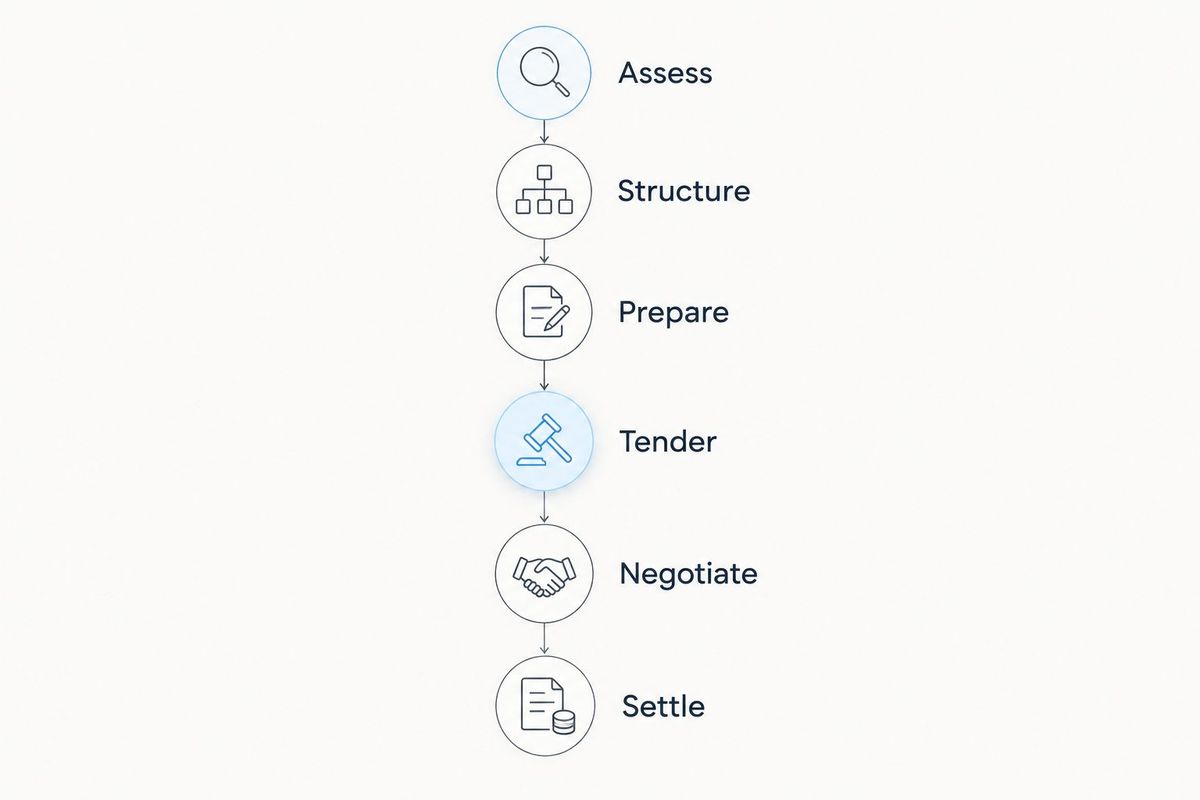
For a substantial 2026 borrowing decision, use a structured process rather than collecting unrelated repayment quotes. Glenclair's commercial finance services cover equipment finance and refinancing; the services overview is the starting point for assessing the scope of a review.
Assess
Document existing facilities, machinery debt, financial performance and upcoming commitments. Identify whether the real need is a new machine, replacement debt or working capital.
Structure
Choose the ownership approach and proposed repayment structure. Separate machinery funding from day-to-day operating needs rather than assuming one facility should cover everything.
Prepare
Assemble financial statements, current management accounts, debt schedules and machinery details. Explain material changes in trading and the assumptions supporting repayment capacity.
Tender
Present a consistent funding requirement to suitable lenders. Comparable proposals need the same underlying assumptions about amount, term, security and final payments.
Negotiate
Compare the full terms, including fees, guarantees, security and early payout provisions. Resolve conditions before treating a proposal as a workable funding arrangement.
Settle
Confirm outstanding conditions, payout arrangements and asset details. Coordinate settlement with the machinery transaction and any existing finance discharge requirements.
These 6 stages keep the decision focused on the whole borrowing arrangement, not just a quoted repayment.
Check costs and security before accepting a proposal
For your 2026 review, request a written schedule of repayments, fees, final payments and early payout provisions. Ask which assets secure the facility, whether guarantees apply and whether the arrangement affects existing banking covenants.
Keep brokerage remuneration separate from debt advisory fees. Glenclair distinguishes lender-paid brokerage from debt advisory services, which use a retainer and success-fee structure. Confirm which service applies and obtain the engagement terms before proceeding.
For borrowing greater than A$2 million, assess the machinery decision alongside the wider debt position. That is a review priority, not a promise of eligibility or approval.
Review your commercial finance structure
Assess machinery borrowing alongside refinancing and existing banking arrangements.
Which machinery finance option should you choose?
Start with a chattel mortgage if you want long-term ownership. Compare hire purchase if ownership after completing the agreement suits your requirements. Assess leases when use, rather than immediate ownership, is the objective.
If the machinery is already financed, start with a keep-versus-refinance comparison. Do not replace an existing facility simply because a new proposal shows a smaller regular repayment.
For a 2026 fleet review, the next move is straightforward: assemble your debt schedule, identify the machinery requirement and compare equivalent structures before choosing a lender.
FAQ
What's the best machinery finance for earthmoving contractors?
A chattel mortgage is the starting point for contractors seeking long-term machinery ownership. Finance leases, hire purchase and operating leases suit different ownership objectives, while refinancing addresses existing debt.
Is a chattel mortgage better than a finance lease for an excavator?
A chattel mortgage fits ownership from the outset; a finance lease separates use from legal ownership during the lease. Compare repayment obligations, security and end-of-term conditions before choosing.
Can I refinance earthmoving equipment I already own?
Equipment refinancing is an option to assess for existing machinery debt. Lender assessment includes the business's repayment capacity, the machinery and the existing finance arrangements; approval is not guaranteed.
Should I include a balloon payment in machinery finance?
Include a balloon only when your business has a credible plan to meet the final payment. Compare a proposal without a balloon and do not assume future refinancing will be approved.
What information should I prepare for an equipment finance review?
Prepare financial statements, current management accounts, existing debt schedules and machinery details. Include the proposed purchase information and explain how the business will meet repayments.
Does Glenclair only assess borrowing above A$2 million?
Glenclair prioritises established Australian businesses seeking business-purpose finance greater than A$2 million, but assesses suitability case by case. The preferred borrowing size is not a universal eligibility rule.
Is lender-paid brokerage the same as debt advisory?
No. Lender-paid brokerage and debt advisory have different remuneration structures; debt advisory uses a retainer and success fee. Confirm the service scope and engagement terms before proceeding.
One last thing
Ask every lender the same question: What must the business pay, provide or obtain consent for if it sells this machine before the finance ends? The answer connects early payout, security release and replacement planning in one practical check.
Related guides
- Equipment finance options for construction businesses
- Truck finance options for Australian transport fleets
- Income requirements for commercial property finance
By the Glenclair Financial team.