
Commercial property finance for aged care: complete 2026 guide

Aged care commercial property finance is borrowing secured against an aged care property to fund acquisition, refinancing or development. This 2026 guide explains how to separate property income from operating performance, prepare a credit submission and compare loan terms without treating residential care as ordinary commercial real estate.
TL;DR
- Commercial property finance for aged care requires separate assessment of property income, operator performance and security.
- Glenclair suits established Australian owners reviewing borrowing above A$2 million, with suitability assessed case by case.
- Compare refinancing through a banking tender using the same financial information and funding request.
- Separate property debt, equipment finance and working capital before selecting a lending structure.
Why commercial property finance matters for aged care
An aged care property depends on more than its address and valuation. The operator's ability to maintain services and meet rent or debt repayments affects the property owner's financing position. An owner-operator also needs to distinguish business cash flow from the value of the underlying real estate.
Glenclair is best suited to established Australian business owners reviewing business-purpose borrowing above A$2 million. That is a preferred client profile, not a universal eligibility threshold. Glenclair is an independent commercial finance brokerage with a panel of 60+ lenders; panel size does not mean every lender finances aged care.
For your 2026 review, establish what the borrowing must achieve before asking for terms. Refinancing an operating facility, buying a leased property and funding construction involve different repayment sources and execution risks.
The practical objective is a facility that fits the asset, the operating structure and the repayment source. A lower headline rate does not resolve an unsuitable repayment schedule, restrictive security arrangements or an approaching maturity.
How to prepare aged care property finance
Assess your existing banking arrangements
Start with your facility letters, loan statements, leases and security documents. Build a single schedule showing what each facility funds, who owes the debt, what secures it and when it expires. You can prepare this yourself in a spreadsheet before engaging a broker.
For an existing facility, compare the original lending assumptions with the business today. A changed operator, lease, occupancy profile or refurbishment programme belongs in the review. Explain the change rather than leaving the lender to reconcile conflicting documents.
Include equipment loans, overdrafts and guarantees in the same schedule. Property borrowing rarely sits in isolation when an operating business shares security or banking arrangements.
- Record borrowers, guarantors, balances and maturity dates.
- List property mortgages and other security interests.
- Identify financial covenants and reporting obligations.
- Mark any consent needed for a sale, refinance or restructure.
- Separate property debt from equipment and working capital facilities.
Structure the borrowing around the repayment source
Decide whether the lender will assess lease income, operating cash flow, development completion or a combination. A leased property and an owner-operated facility need different explanations, even when both provide aged care accommodation.
For a leased asset, explain who pays rent, the lease obligations and the evidence supporting rental payments. For an owner-operated asset, show how trading cash flow supports debt after operating expenses and necessary capital expenditure. Avoid counting the same income twice across related entities.
For a development or substantial refurbishment, identify how construction will be funded and how the completed asset will repay or refinance that debt. Do not assume an operating-property facility will automatically fund building works.
- Map the property owner and operating entities.
- Identify the source of interest and principal payments.
- Explain related-party leases and payments clearly.
- Separate acquisition, construction and ongoing operating requirements.
- Define the intended repayment or refinance pathway.
Prepare a lender-ready evidence pack
Create one organised document folder with an index and a short funding summary. Ask your accountant to reconcile financial information and your legal advisers to identify material lease or security issues. A clear submission explains the numbers; it does not just attach them.
A Glenclair commercial property finance review can then assess the borrowing request against its lender panel. The brokerage also covers business loans, refinancing, equipment and property development finance. Discuss the scope through its commercial finance services, rather than assuming one facility should cover every need.
For your 2026 submission, use current information and explain any gap between historical results and forecasts. A 12-month cash-flow forecast is a useful preparation exercise, not a stated universal lender requirement. Show the assumptions behind it.
- Include financial statements and current management accounts.
- Provide leases, rent schedules and relevant operating information.
- Explain occupancy trends and material operating changes.
- Include planned maintenance and capital expenditure.
- Reconcile forecast cash flow to the proposed debt repayments.
Tender the same request to suitable lenders
Prepare a written funding brief and use it consistently. You can approach lenders directly, but each response needs to address the same borrowing amount, purpose, security proposal and repayment structure. Otherwise, the comparison becomes a collection of different transactions.
A broker-assisted banking tender adds a coordinated process for presenting the request and assessing responses. Ask which lenders fit the property and operating structure, why they fit and what information they require. A large panel is not a substitute for selecting suitable lenders.
Keep indicative terms separate from credit-approved terms. Conditions concerning valuation, financial performance, documentation or security can change whether an offer is usable.
- State the amount, purpose and proposed term consistently.
- Describe the property and operating structure accurately.
- Request written security and guarantee requirements.
- Ask which conditions remain outstanding.
- Record whether each response is indicative or approved.
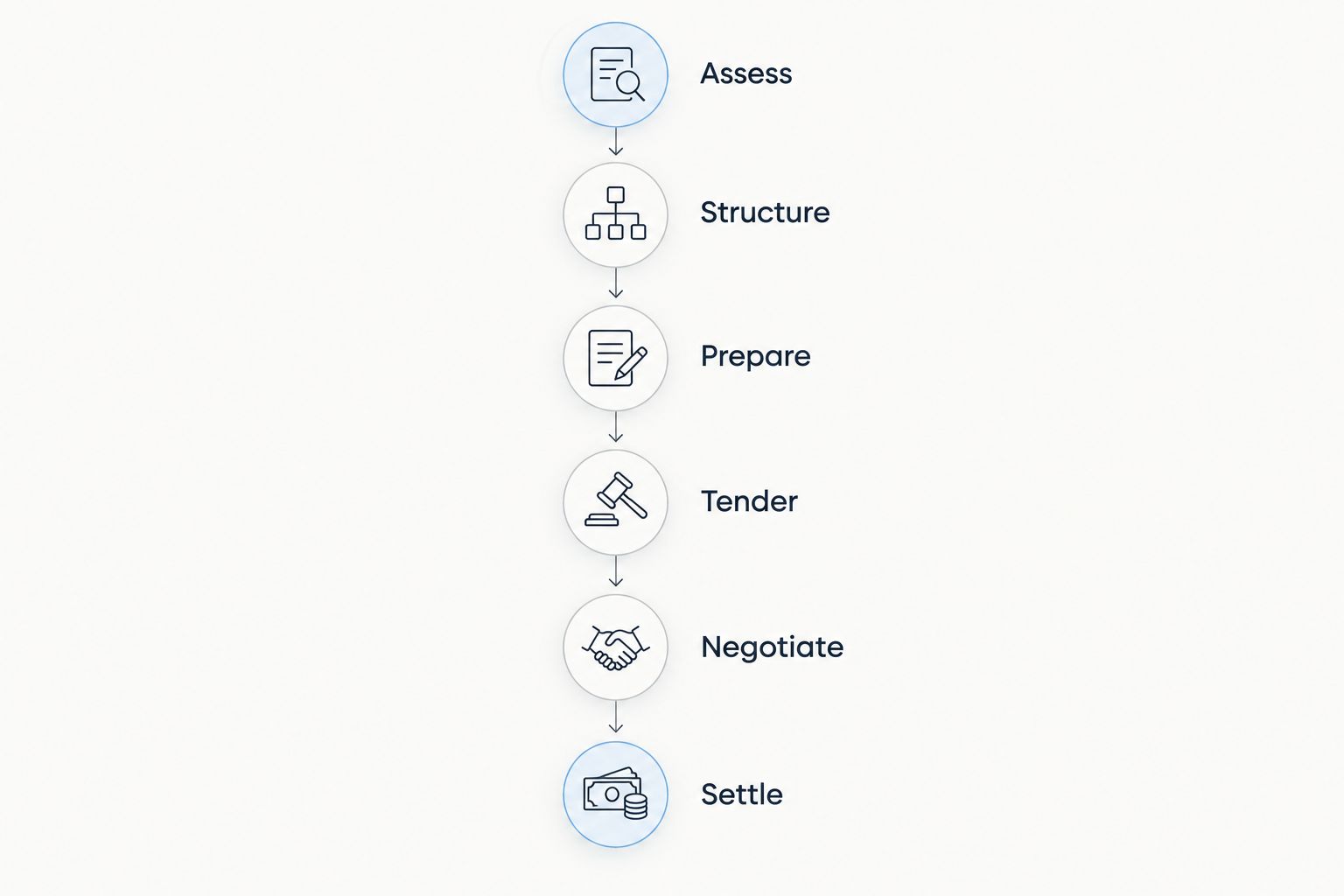
Negotiate the whole facility, not just the rate
Compare the written terms side by side. Interest is one component; repayments, maturity, financial covenants, guarantees and security release conditions also affect the borrowing arrangement. A facility that requires an unsuitable repayment pattern does not become suitable because its headline rate is lower.
Use your forecast to test 3 scenarios: expected trading, weaker operating performance and delayed capital works. These are planning scenarios, not prescribed lender tests. Identify where cash becomes constrained and which assumptions need further evidence.
Ask how lender-paid brokerage applies to the proposed engagement. Glenclair distinguishes lender-paid brokerage from debt advisory services, which use a retainer and success-fee structure. Confirm the engagement terms, payment arrangements and scope in writing before proceeding.
- Compare interest, fees and repayment obligations together.
- Review covenant definitions and testing dates.
- Check guarantees, shared security and release conditions.
- Document assumptions that affect the lending decision.
- Confirm brokerage or advisory remuneration in writing.
Settle with a documented operating plan
Before signing, reconcile the final documents with the agreed terms. Your solicitor should explain the legal obligations, while your accountant can assess the financial implications. A credit approval is not the end of the review: conditions still need to be satisfied and settlement coordinated.
For refinancing, check how existing debt will be repaid and security released. Confirm the treatment of any facilities that remain with the outgoing lender. Do not assume that moving the property loan leaves overdrafts, equipment arrangements or guarantees unchanged.
After settlement, maintain a reporting calendar. Keep the information used for the application available for future reviews rather than rebuilding the evidence pack at the next maturity.
- Match final documents against the agreed facility terms.
- Confirm all settlement conditions and responsibilities.
- Coordinate repayment and security discharge requirements.
- Record covenant and reporting deadlines.
- Set a review date before the next maturity.
Compare your financing routes
Choose the route that fits the work required, not the shortest application form. The options below describe different ways to organise a 2026 financing review. They do not indicate lender appetite, approval prospects or guaranteed outcomes.
| Option | Best for | Practical advantage | Key limitation |
|---|---|---|---|
| Existing lender review | Owners whose current facilities still fit the business | Builds on an existing banking relationship | Does not establish what other lenders would offer |
| Direct lender comparison | Owners able to prepare and manage their own submissions | Gives you direct control over lender discussions | You must reconcile different information requests and terms |
| Independent commercial finance broker | Owners seeking a coordinated comparison of suitable lenders | Helps structure the request and compare responses | Panel access does not guarantee suitability or approval |
| Debt advisory engagement | Owners needing separately scoped debt strategy or transaction support | Defines advisory work beyond a lending introduction | Uses a distinct engagement and remuneration structure |
For Glenclair commercial property finance enquiries, establish whether the assignment is brokerage or debt advisory before work starts. Ask what is included, who is responsible for each deliverable and how remuneration works. Do not treat those services as interchangeable.
Common mistakes aged care borrowers make
Treating the property and operator as unrelated
A property's financing assessment needs an explanation of the income supporting repayments. For leased premises, provide evidence about the lease and tenant payments. For an owner-operated facility, explain trading performance and the relationship between the operating business and property owner.
Correct the submission before requesting terms. A valuation alone does not explain repayment capacity.
Refinancing without mapping shared security
An aged care property loan can sit alongside working capital or equipment facilities. Moving one loan without checking the security supporting the others can complicate the transaction.
Prepare an entity-and-security map first. Ask which facilities require replacement, consent or revised documentation when the property debt moves.
Treating capital expenditure as an afterthought
A facility needs a clear account of planned works, their funding source and their effect on cash flow. A forecast that omits necessary expenditure does not provide a useful picture of repayment capacity.
Separate ongoing maintenance from a substantial redevelopment. Explain whether works affect operations, rental income or the timing of the finance request.
Comparing offers with different assumptions
A loan assessed on lease income is not directly comparable with one assessed on consolidated operating cash flow. Differences in security, repayment structure and conditions matter too.
Use one comparison schedule. Mark unresolved conditions rather than presenting every indicative response as an executable offer.
Leaving the review until maturity
A maturity date is a deadline, not a financing strategy. Legal work, valuation requirements and lender questions need to be accounted for in your transaction plan.
Start your 2026 review by identifying the decision date, then work backwards through the required tasks. Confirm timing with the parties involved rather than relying on a generic approval estimate.
FAQ
What's the best way to arrange commercial property finance for aged care?
Start by defining the repayment source, property ownership and operating structure, then compare suitable lending arrangements against the same brief. The best route depends on the transaction and the support required, not a single lender label.
Can I refinance an existing aged care property loan?
An existing aged care property loan can be assessed for refinancing, but approval depends on the lender's assessment of the borrower, property, income and proposed structure. Review current security arrangements and discharge requirements before committing to a change.
How much income do lenders require for an aged care property loan?
There is no single income figure that applies to every aged care property loan. The relevant assessment depends on the debt amount, repayments, lease or operating income, expenses and lender requirements.
Is a leased aged care property assessed differently from an owner-operated facility?
Yes, the repayment analysis differs because a leased property's income comes from its tenant, while an owner-operated facility relies on business cash flow. Related-party arrangements need a clear explanation so income is not counted twice.
Does Glenclair only consider loans above A$2 million?
Glenclair prioritises established Australian business owners seeking business-purpose finance above A$2 million and assesses suitability case by case. The preferred borrowing size is not a universal eligibility rule.
How does commercial finance brokerage differ from debt advisory?
Commercial finance brokerage arranges lending, while debt advisory is a separately scoped advisory engagement. Lender-paid brokerage differs from debt advisory services using a retainer and success-fee structure; confirm the applicable terms in writing.
What should I prepare for an aged care finance review in 2026?
Prepare existing facility documents, an entity-and-security schedule, financial statements, current management accounts and evidence supporting property income. Include a forecast that explains planned capital expenditure and the proposed repayment source.
One last thing
Ask what must happen to release the property from security. That question matters when you refinance, sell, change operators or restructure ownership. It also exposes dependencies between the property loan and other business facilities.
For your 2026 review, put the answer beside the repayment schedule and maturity date. Those terms describe how you live with the debt and how you exit it.
Related guides
By the Glenclair Financial team.