
How much pre-sales do you need for development finance in 2026?

There is no universal development finance pre-sales requirement in Australia in 2026: the required level depends on the lender, the project and how the development debt will be repaid. Ask for the requirement in writing, including which contracts qualify and how sales proceeds are measured against debt. Meeting a headline pre-sales target does not, by itself, satisfy every condition for funding.
TL;DR
- The development finance pre-sales requirement is lender-specific; get the qualifying-contract and debt-coverage tests in writing.
- Signed contracts and qualifying pre-sales are not necessarily the same thing.
- Glenclair provides commercial finance broking across development finance and refinancing through a panel of 60+ lenders.
- Compare development finance on equity, security, repayment terms and settlement conditions, not pre-sales alone.
Why this matters
A pre-sales target only helps if you understand what counts towards it. You need to know whether the lender measures contracted revenue, qualifying net proceeds, debt coverage or another agreed measure.
For established business owners reviewing development funding alongside existing banking arrangements, commercial finance services should address the whole borrowing structure. A facility that meets the project's immediate needs still needs to fit your existing security arrangements and repayment obligations.
Do not exchange contracts simply to chase a percentage you have not defined. Establish the funding test first, then assess your sales position against it.
How much pre-sales do you need for development finance in 2026?
You need enough qualifying pre-sales to meet the proposed lender's documented funding conditions. There is no single percentage that answers the question across all Australian developments.
Start by asking what the lender wants the pre-sales to demonstrate. Is the requirement about repayment of development debt, evidence of buyer demand, or both? The answer determines which documents and calculations matter.
Use this sequence before relying on any quoted target:
- Confirm the measure. Establish whether the requirement refers to sale value, net sale proceeds, debt coverage or a count of dwellings or lots.
- Confirm the denominator. Identify the debt amount or project value used in the calculation. Do not assume the initial loan advance is the relevant figure.
- Confirm qualifying contracts. Ask which contract terms, deposits and purchaser circumstances the lender will accept.
- Confirm deductions. Establish how tax, selling expenses and other settlement deductions affect recognised proceeds.
- Confirm the deadline. Identify when the requirement must be satisfied and whether it remains a condition during construction.
- Confirm the remaining conditions. Check equity, valuation, construction documentation, security and repayment requirements separately.
The useful answer is a documented test applied to your project. A percentage without those definitions is not a funding plan.
Signed sales versus qualifying pre-sales
A signed contract records a sale agreement. A qualifying pre-sale is a contract that meets the particular lender's acceptance criteria for the proposed facility.
That distinction matters when you report progress. Keep the total contracted amount separate from the amount the lender has accepted, and record any unresolved conditions against each contract.
Ask your solicitor to explain the legal obligations and termination provisions. Ask the lender or broker to explain how those provisions affect the funding assessment. Those are different questions and need separate answers.
Gross sales versus money available to repay debt
Gross contracted revenue is not the same as cash available to reduce the development loan. Your assessment needs to account for the deductions and payment obligations that apply to the project.
Compare debt with the proceeds available to repay it, not just the headline sales total. Have your accountant confirm the relevant tax treatment and your solicitor confirm settlement obligations before treating the calculation as reliable.
Do not substitute an informal spreadsheet assumption for the lender's definition. Record both the calculation and its supporting documents so discrepancies can be resolved before settlement.
Match the pre-sales question to the repayment strategy
A development intended for sale raises a different repayment question from a development intended to be retained. Before comparing facilities in 2026, state which properties you expect to sell, which you intend to retain and how each part of the debt will be repaid.
The following comparison describes repayment strategies, not promises that a particular lender will accept them.
| Repayment strategy | Best for | What to establish | Main constraint |
|---|---|---|---|
| Develop and sell | Developers planning to repay from completed property sales | Accepted contracts, net proceeds and the timing of settlements | Repayment depends on sales completing as planned |
| Develop and retain | Owners intending to hold completed property | The proposed investment funding or other documented repayment source | Completion does not itself secure refinance approval |
| Mixed exit | Developers selling some property and retaining the balance | How sales proceeds and retained-property funding work together | Both parts need to satisfy their respective funding conditions |
Develop and sell: establish accepted sales proceeds
For a sale-led project, organise the contract schedule around the lender's qualifying criteria. Show the contracted property, purchaser, deposit position, relevant conditions and expected settlement arrangements.
The benefit is a clear connection between the sales programme and the proposed debt repayment. The constraint is that a signed contract does not put settlement funds in your account immediately.
Ask what happens if an expected settlement does not proceed. The funding discussion should address that situation before construction commitments make changing course difficult.
Develop and retain: establish the completion exit
If you intend to retain completed property, explain how the construction facility will be repaid or replaced. Do not describe an intention to refinance as an approved exit.
Retention preserves your intended ownership strategy, but it leaves a separate funding task at completion. Establish what the proposed replacement lender needs to assess and which matters remain unresolved.
Keep the distinction clear in your feasibility assessment: development funding and long-term holding finance serve different stages of the project. Acceptance at one stage is not confirmation of acceptance at the next.
Mixed exit: reconcile both sources of repayment
A mixed strategy needs a combined repayment schedule. Identify the proceeds expected from sales and the funding intended for retained property, then reconcile both against the development debt.
This gives you flexibility over what you sell and retain. It also creates dependencies between sales settlements, property releases and replacement finance.
Ask how the lender will apply each settlement payment and what must happen before retained property can be released from the development security. Resolve the sequence rather than assuming the transactions will align automatically.
Why the development finance pre-sales requirement varies
The requirement needs to fit the proposed transaction. These are the factors to resolve in your funding submission rather than relying on a market-wide percentage:
- Repayment strategy. Explain whether repayment depends on sales, replacement finance or a combination of sources.
- Contract acceptability. Establish which sales the lender recognises and what supporting evidence it requires.
- Debt definition. Confirm the balance and obligations that the lender expects recognised sales proceeds to cover.
- Project feasibility. Reconcile construction expenditure, professional costs, tax treatment, selling expenses and funding assumptions.
- Security and equity. Document what supports the proposed borrowing and what contribution you must make.
- Timing. Align the sales programme, construction commitments, funding conditions and expected settlements.
These factors belong in the same assessment. Satisfying a sales condition while leaving the equity contribution or completion exit unresolved does not produce a complete funding proposal.
How to prepare a development funding review
For a 2026 banking review, give prospective lenders a consistent account of the project. Comparable information makes it easier to identify differences in their proposed conditions rather than differences caused by incomplete submissions.
Glenclair is an independent commercial finance brokerage with a panel of 60+ lenders. Panel size provides context about the brokerage; it is not evidence that every lender will consider your development or accept the same pre-sales position.
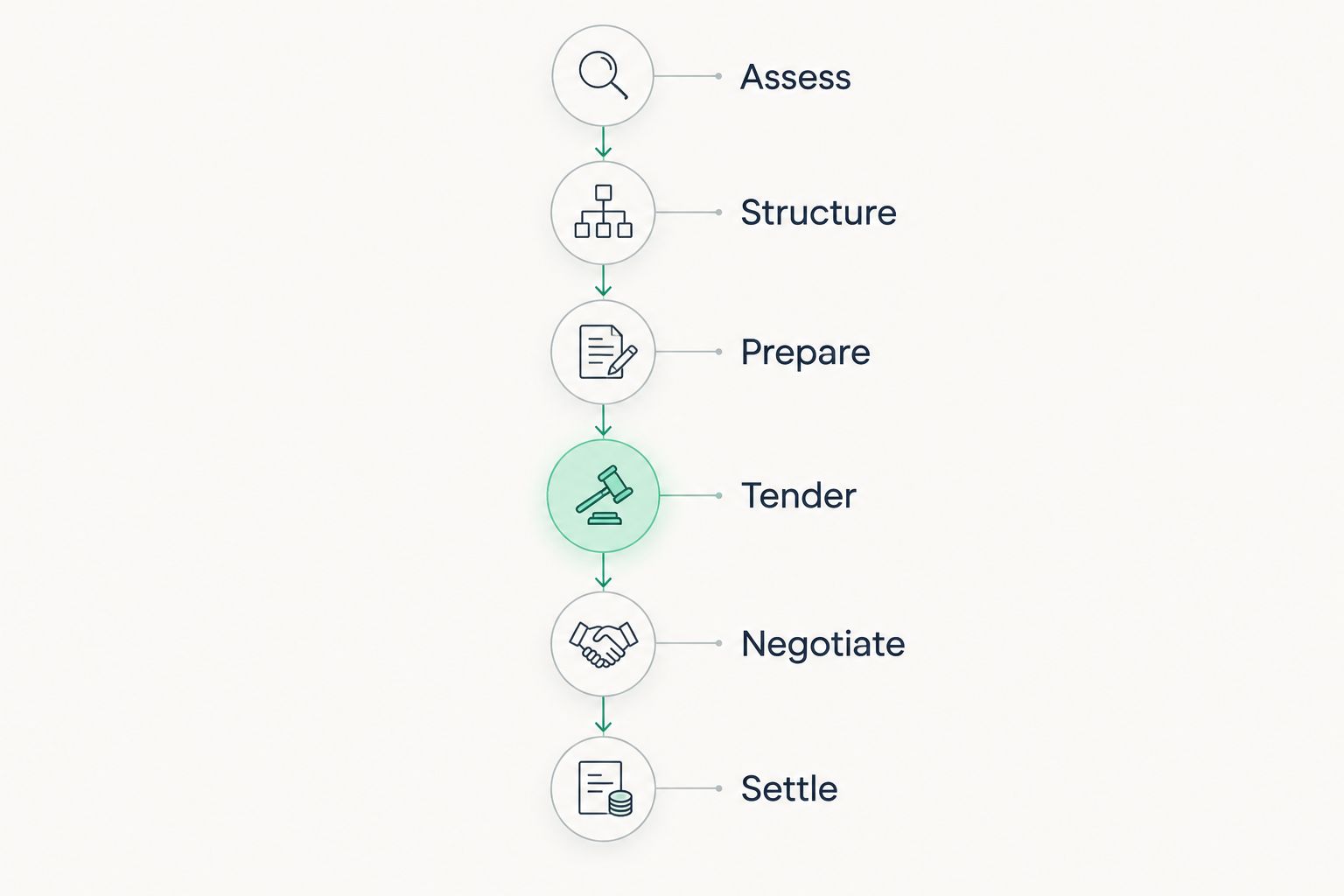
Use the following process to prepare the review:
- Assess. Document the development, ownership structure, existing debt and intended exit. Identify the decisions that depend on obtaining finance.
- Structure. Set out the proposed borrowing, equity contribution and security. Explain how development funding interacts with existing business facilities.
- Prepare. Assemble the feasibility, contracts, approvals, construction documents and financial information relevant to the application.
- Tender. Present consistent information to suitable lenders. Ask each to state its pre-sales definition and outstanding conditions.
- Negotiate. Compare the whole proposal, including security, guarantees, repayment obligations, reporting and release conditions.
- Settle. Resolve the documented conditions and coordinate the legal and funding steps before relying on access to funds.
Glenclair commercial finance broking is suited to business owners seeking a lender comparison, not a promise of approval. For enquiries above A$2 million, suitability still requires a case-by-case assessment; that preferred borrowing size is not a universal eligibility rule.
Separate brokerage from debt advisory
Ask which service your engagement covers and how remuneration works. Lender-paid brokerage and debt advisory are different arrangements; debt advisory uses a retainer and success-fee structure.
Get the scope, payment responsibilities and applicable terms in writing. Do not assume an explanation of brokerage remuneration also describes a separate advisory engagement.
Review your development funding structure
Discuss pre-sales conditions, repayment strategy and existing commercial borrowing arrangements.
Can you obtain development finance without pre-sales?
Do not assume a development finance proposal without pre-sales will be accepted. Ask prospective lenders whether they will assess that structure and which alternative conditions they require.
If a lender considers the proposal, compare the complete terms with a pre-sales-backed structure. Removing a sales condition does not remove the need for a credible repayment plan, sufficient equity and acceptable security.
Do pre-sales guarantee development finance approval?
Pre-sales do not guarantee development finance approval. They address one part of the assessment, while the proposed facility can have separate conditions relating to the borrower, project, construction arrangements and security.
For your 2026 funding plan, track sales acceptance and the remaining funding conditions separately. That prevents a strong sales update from being mistaken for confirmation that funds are ready to draw.
Should you refinance existing debt before development starts?
Review existing debt before committing to a development funding structure. The decision to refinance should follow an assessment of the existing facilities, proposed security and the development's funding needs.
A review does not require changing lenders. Its purpose is to establish whether the current arrangements support the project and to identify any consents, releases or changes needed before you commit.
FAQ
What's the development finance pre-sales requirement in Australia in 2026?
There is no universal development finance pre-sales requirement. Obtain the proposed lender's written definition of qualifying contracts, recognised proceeds, debt coverage and timing.
Do all signed contracts count towards pre-sales?
Not necessarily: a contract must meet the proposed lender's acceptance criteria to count towards its pre-sales condition. Keep signed contracts separate from lender-accepted contracts in your reporting.
Is the pre-sales requirement measured against the loan or the project value?
The relevant measure depends on the lender's documented terms. Confirm the denominator and any deductions before calculating whether your project meets the requirement.
Can I keep some properties instead of pre-selling them?
A retention strategy needs a documented repayment or replacement-finance plan. Establish how retained property affects the proposed development facility rather than assuming it replaces a sales condition.
Does reaching the pre-sales target mean I can start drawing funds?
Reaching the pre-sales target does not establish that every drawdown condition has been satisfied. Check the facility documents and obtain confirmation of the remaining requirements before relying on funding.
What should I ask a commercial finance broker about pre-sales?
Ask the broker to explain qualifying contracts, the coverage calculation, timing and the remaining funding conditions. Also confirm the engagement scope and distinguish lender-paid brokerage from separately charged debt advisory.
One last thing
Ask for a written reconciliation of total contracted sales, lender-accepted sales and recognised net proceeds. Those figures answer different questions; putting them side by side exposes assumptions that a single pre-sales percentage hides.
Keep that reconciliation with your 2026 funding conditions checklist. Update both when contracts, costs or the proposed facility change.
Related guides
- How much income lenders require for commercial property finance
- Equipment finance options for construction businesses
Author: Glenclair Financial team.