
SMSF commercial property loans for doctors: complete 2026 guide

Doctors’ SMSF commercial property finance is borrowing through a self-managed super fund to acquire business premises with the aim of building retirement assets while accommodating a medical practice. This 2026 guide explains the ownership structure, related-party lease requirements and lending assessment, including why your practice’s profitability does not replace the fund’s repayment capacity.
TL;DR
- SMSF commercial property loans for doctors require separate assessments of the property, fund, lease and borrowing structure.
- Glenclair suits established business owners seeking commercial finance reviews; SMSF suitability needs separate assessment.
- A medical practice can lease qualifying business real property from a related SMSF on arm’s-length terms.
- Compare refinancing terms, security and repayment conditions, not just the interest rate.
Glenclair is best suited to established business owners seeking a commercial finance review, with SMSF suitability assessed separately. Glenclair is an independent commercial finance brokerage with a panel of 60+ lenders. Panel size does not establish how many lenders will accept a particular SMSF transaction.
Why SMSF commercial property finance matters for doctors
Buying consulting rooms through an SMSF connects decisions that need separate assessments: your practice’s premises, your retirement investment and the fund’s borrowing. A property that works clinically can still be unsuitable for the fund because of liquidity, concentration or lending constraints.
For an established practice, the decision also interacts with existing banking arrangements. Moving premises ownership into super does not automatically improve the practice’s working capital position or release existing guarantees.
The legal reference points for this 2026 guide are the Superannuation Industry (Supervision) Act 1993, including sections 62, 66, 67A and 67B, and Australian Taxation Office guidance on SMSF property and limited recourse borrowing arrangements. These govern different questions: retirement purpose, related-party acquisitions and the borrowing exception. Have your SMSF adviser and solicitor apply them to the proposed transaction before you commit.
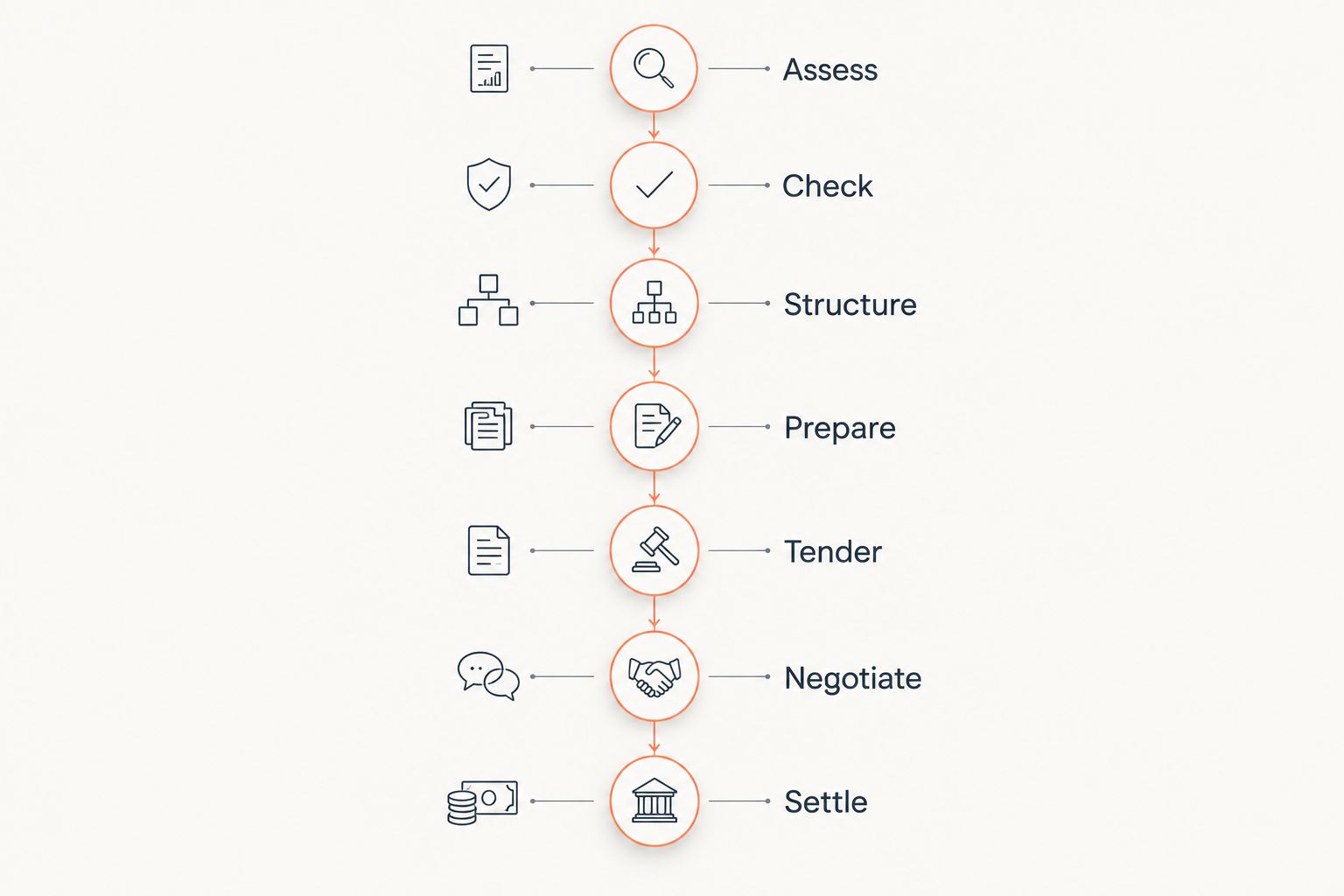
How to assess SMSF commercial property loans for doctors
Assess the fund’s purpose and liquidity
Start with your SMSF investment strategy, member circumstances and cash-flow records. A spreadsheet is enough to identify the first problem: whether the purchase would leave the fund dependent on uninterrupted rent and contributions.
A doctor’s personal income is not the same as cash available to the SMSF. Keep practice revenue, personal earnings, contributions and fund rental income separate. Contributions remain subject to the applicable superannuation rules; they are not an unlimited repayment backstop.
Prepare a 12-month cash-flow forecast as a planning exercise. Include loan repayments, property outgoings, fund administration and any pension obligations, then test a period without rent. The forecast is a recommendation, not a statutory minimum or lender approval standard.
- Reconcile the fund’s cash, investments, liabilities and member balances.
- Record expected contributions without assuming they can increase indefinitely.
- Test vacancy, repairs and changes in member circumstances.
- Set a cash reserve consistent with the fund’s investment strategy.
Check the property and related-party lease
Identify the legal property being purchased before comparing loans. Consulting rooms, a mixed-use building and premises containing residential accommodation raise different questions. The description in a sales listing does not establish the property’s SMSF treatment.
An SMSF can lease qualifying business real property to a related medical practice on arm’s-length terms. Acquiring property from a related party is a separate legal question with specific conditions. Do not treat permission to lease as permission to purchase any related-party asset.
Ask your solicitor and SMSF adviser to assess the actual use, title and proposed lease. For medical premises, also separate the building purchase from equipment, fit-out and operating approvals. Owning the property does not settle those matters.
- Obtain the title, contract, current lease and property-use details.
- Confirm whether the property qualifies as business real property.
- Support related-party rent and lease terms with market evidence.
- Identify fit-out ownership, maintenance duties and make-good obligations.
Structure the borrowing before signing
Map the ownership and borrowing structure with your advisers before entering an unconditional contract. SMSF borrowing commonly uses a limited recourse borrowing arrangement, or LRBA, under which a separate holding trust holds the acquired asset while the borrowing remains outstanding.
The arrangement generally concerns a single acquirable asset. Multiple titles, bundled equipment or planned changes to the property need legal assessment; counting contracts alone does not answer the question.
Glenclair’s commercial finance services provide a starting point for discussing the broader borrowing requirement. Its stated focus includes established business owners seeking business-purpose finance greater than A$2 million, assessed case by case. That focus is not a universal SMSF eligibility rule or confirmation that a particular transaction is suitable.
- Confirm the purchasing entity and holding-trust arrangements before execution.
- Check whether multiple titles form a permissible borrowing asset.
- Separate acquisition funding from equipment and fit-out requirements.
- Obtain advice on guarantees, recourse and document sequencing.
Prepare a consistent evidence pack
Collect the documents yourself before requesting lender proposals. Use the same financial periods, property details and funding assumptions throughout the pack. Contradictions between the application, lease and financial statements create questions that a lower advertised rate cannot solve.
For doctors, distinguish the practice entity paying rent from the practitioners earning income and the SMSF receiving rent. A lender needs to understand those relationships, particularly where several doctors own or occupy the premises.
Your 2026 evidence pack should explain both the fund’s position and the tenant’s ability to meet the lease. A newly established fund and an existing SMSF require different supporting histories; ask each lender what evidence it accepts rather than assuming a standard document list guarantees assessment.
- Assemble fund accounts, statements, trust documents and investment strategy.
- Provide the lease, rental evidence and property information.
- Explain practice ownership, income flows and existing borrowing commitments.
- Reconcile the deposit, transaction expenses and remaining liquidity.
Tender comparable lending proposals
Request proposals against a written brief. You can approach lenders directly, but each proposal must address the same borrower, asset, loan amount and repayment assumptions. Otherwise, the comparison measures different transactions.
A broker-led banking tender can coordinate those requests and negotiations. Confirm the proposed lender scope, who receives the application and how remuneration works. Lender-paid brokerage is distinct from debt advisory services, which use a retainer and success-fee structure. Establish which engagement applies before proceeding.
For a refinancing review in 2026, include the existing lender. A revised offer belongs beside alternative proposals, not outside the comparison. An incumbent’s familiarity with the fund does not remove the need to check its current terms.
- Issue a consistent brief covering the fund, property and lease.
- Compare repayment basis, loan term and interest structure.
- Record valuation, security, guarantee and ongoing reporting requirements.
- Confirm remuneration, conflicts and the scope of any advisory engagement.
Negotiate the whole borrowing arrangement
Read the conditions before accepting the preferred proposal. An indicative offer is not an unconditional commitment, and a headline interest rate does not describe the full arrangement.
For an established practice, test the effect on other banking facilities. Refinancing the SMSF property loan does not automatically change the practice’s overdraft, equipment finance or guarantees. Keep those facilities visible without assuming they belong in the same borrowing structure.
Separate negotiable commercial terms from legal requirements. A lender’s willingness to fund a transaction is not confirmation that the SMSF complies with superannuation law. Your advisers still need to assess the structure and documents.
- Compare covenants, review rights and information obligations.
- Check repayment flexibility and early-exit provisions.
- Identify guarantees and connections to other facilities.
- Resolve outstanding conditions before relying on settlement funding.
Settle and maintain the arrangement
Coordinate the lender, solicitor, accountant and SMSF trustee before settlement. Check that the final documents match the approved structure, particularly the purchaser, holding trustee, borrower and lease parties.
After settlement, treat the medical practice and SMSF as separate entities. Related-party rent must follow the documented lease rather than fluctuate informally with practice cash flow. Keep evidence of payments and decisions.
Use the 2026 review as a baseline for later checks. Review the arrangement when the lease, ownership, member circumstances or property plans change, not only when the loan reaches a renewal date.
- Verify the signed documents against the agreed ownership structure.
- Establish separate payment records for rent and loan repayments.
- Monitor liquidity, insurance obligations and lease compliance.
- Obtain advice before refinancing, renovating or changing property use.
Compare the available paths
The right comparison is not simply broker versus bank. Decide whether you are reviewing an existing loan, funding a new acquisition or reconsidering SMSF ownership itself.
Each option below has a useful role and a clear limitation. Compare the ownership decision separately from the funding decision; a successful loan application does not establish that buying through super is the right investment.
| Option | Best for | Main benefit | Key limitation |
|---|---|---|---|
| Existing lender review | An established SMSF loan needing a terms review | Tests a revised offer against the current arrangement | Shows only that lender’s proposal |
| Direct lender applications | Trustees prepared to manage the process | Gives direct control over applications and discussions | Requires you to reconcile differing terms and evidence requests |
| Broker-led banking tender | Borrowers seeking a coordinated lender comparison | Presents a consistent brief across selected lenders | Panel access does not mean every lender accepts the transaction |
| Purchase outside the SMSF | Owners assessing a different ownership structure | Keeps the acquisition outside SMSF borrowing restrictions | Creates different tax, liability and funding considerations |
| Continue leasing | Practices prioritising operating flexibility | Avoids committing the fund to the premises acquisition | Does not create property ownership for the fund |
Choose the structure first, then compare funding within that structure. Ask an appropriately licensed adviser to assess whether SMSF ownership fits your retirement strategy; ask the finance provider to explain the proposed lending terms.
Common mistakes doctors make
Treating professional income as sufficient evidence
Strong personal earnings do not establish the SMSF’s repayment capacity. Present the fund’s income and liquidity separately from the practice’s financial performance, then explain how the lease connects them.
Do not assume lender policies for personal home loans to medical professionals also apply to SMSF commercial property borrowing. Obtain transaction-specific criteria.
Buying premises that need substantial redevelopment
A practice’s clinical requirements can conflict with the intended borrowing structure. Borrowed money under an LRBA cannot fund improvements, and alterations that create a different asset raise further restrictions.
Distinguish repairs and maintenance from improvements before committing. Obtain advice on the proposed works and their funding source rather than treating all fit-out spending as interchangeable.
Setting related-party rent informally
The practice and SMSF have different obligations even when the same people control both. Rent should reflect arm’s-length terms, supported by evidence and a written lease.
Reducing or deferring rent informally to help the practice creates compliance questions. Seek advice before changing the arrangement and document the basis for any variation.
Comparing rates while ignoring the lease
A loan proposal depends on more than the doctor’s occupation. The lease, tenant, property use, valuation and fund position all matter to the assessment.
Compare lender conditions alongside the lease’s obligations and expiry provisions. A longer loan term does not remove the consequences of a tenant leaving or failing to pay.
FAQ
Can my SMSF buy the consulting rooms my practice uses?
An SMSF can acquire qualifying commercial premises and lease them to a related medical practice, subject to the applicable superannuation rules. Check business real property status, arm’s-length terms, the fund’s investment strategy and any borrowing structure before signing.
Can my SMSF buy a property that I already own?
A related-party acquisition requires a specific exception to the general prohibition, such as qualifying business real property acquired at market value. Have your solicitor and SMSF adviser confirm every applicable condition before proceeding.
Do doctors automatically qualify for SMSF commercial property loans?
No. A medical qualification does not replace assessment of the fund, property, lease and borrowing arrangement. Lender policies and the evidence required differ.
Can an SMSF loan pay for a medical fit-out?
Do not assume an SMSF property loan can fund the fit-out. LRBA borrowed funds cannot pay for improvements, and equipment or alterations require separate assessment of the asset, funding source and structure.
Is refinancing an SMSF property loan possible?
Refinancing an SMSF property loan is possible where the replacement arrangement meets the applicable borrowing rules and lender requirements. Have the documents, remaining asset and holding arrangements checked before committing.
Should I use a broker or approach a lender directly?
Approach a lender directly if you want to manage the application and comparison yourself; consider a broker-led tender if you want a coordinated lender process. Confirm lender coverage, remuneration and engagement scope either way.
Who should advise me before I sign a contract?
Use a solicitor experienced in SMSF property transactions and an appropriately licensed adviser for the investment decision. Coordinate tax, accounting and lending advice so that each professional addresses their area before you commit.
One last thing
The practice’s preferred premises and the fund’s preferred investment are not automatically the same asset. Before reviewing a loan in 2026, write two separate briefs: what the practice needs from the building, and what the SMSF needs from the investment.
If those briefs conflict, resolve ownership and occupancy first. Negotiating finance cannot fix an unsuitable property decision.
Related guides
By the Glenclair Financial team. General information only, not personal financial, tax or legal advice. Obtain advice specific to your fund and transaction before acting.