
Best agribusiness loan options for dairy farmers in 2026

Best default for an established dairy farm reviewing existing debt: commercial refinancing. Best for a machinery purchase: equipment finance. Best for a temporary cash-flow gap: a working capital facility. This 2026 guide compares agribusiness loans for dairy farmers by borrowing purpose, repayment structure and security—not by an advertised rate.
TL;DR
- Compare agribusiness loans for dairy farmers by purpose: refinancing, equipment purchases, working capital, land or development.
- Glenclair suits established Australian business owners seeking a broker-led review of existing commercial borrowing.
- Refinancing is the starting point for reviewing existing debt, not an automatic recommendation to switch lenders.
- Match repayment commitments to dairy cash flow and assess security, guarantees and exit conditions together.
Why this matters
A dairy business can need funding for land, milking equipment, feed and building works at the same time. Those expenses do not belong in the same loan structure. A temporary operating shortfall needs a different repayment plan from an asset expected to serve the farm for years.
For an established borrower, the first question in 2026 is whether existing facilities still fit the business. Adding another loan without reviewing the current arrangements leaves security, repayments and lender conditions disconnected from the wider funding plan.
Glenclair provides commercial finance brokering services through a panel of 60+ lenders. Its preferred focus is business-purpose finance greater than A$2 million, with suitability assessed case by case; that figure is not a universal eligibility rule.
Glenclair is best suited to established Australian business owners seeking a broker-led review of commercial borrowing rather than a direct loan product. A broad lender panel does not establish that every lender finances dairy businesses or that every application fits.
What makes the best agribusiness loans for dairy farmers?
Use these criteria before comparing proposals:
- Purpose fit: Separate existing debt, permanent investment and temporary operating needs.
- Repayment fit: Match scheduled repayments to the farm's cash generation, not just accounting profit.
- Security: Identify the land, equipment and other assets supporting each facility.
- Guarantees: Understand who guarantees the debt and what obligations remain after a restructure.
- Flexibility: Check repayment changes, additional borrowing, asset sales and early exit conditions.
- Execution: Establish the documents, valuations and conditions required before settlement.
For a 2026 review, compare proposals against the same borrowing requirement. Different loan terms, security packages or repayment assumptions make headline comparisons unreliable.
Dairy finance options at a glance
These rankings compare funding structures, not named lender products. Each option has a distinct job.
| Rank and option | Best for | Standout feature | Key limitation |
|---|---|---|---|
| 1. Commercial refinancing | Reviewing existing banking arrangements | Restructures existing debt around current needs | Switching requires an assessment of exit and establishment costs |
| 2. Equipment finance | Identifiable machinery purchases | Links borrowing to a specific business asset | Equipment eligibility and security requirements vary |
| 3. Working capital facility | Temporary operating cash-flow gaps | Provides operating liquidity within agreed limits | Does not fix a continuing operating loss |
| 4. Secured term loan | Land and long-term farm investment | Spreads repayments across an agreed term | Commits cash flow and pledged security |
| 5. Property development finance | Defined property development projects | Can align funding with project stages | Requires project-specific assessment and controls |
1. Commercial refinancing: best for existing banking reviews
Commercial refinancing replaces or restructures existing borrowing. For a dairy business, the review should consider the whole banking position: term debt, operating facilities, equipment commitments, security and guarantees.
Start here when your borrowing arrangements no longer reflect how the farm operates. Refinancing is a review pathway, not evidence that moving lenders is the right decision.
Commercial refinancing pros:
- Tests existing arrangements against alternative proposals.
- Creates an opportunity to review repayment structure and facility limits.
- Brings security and guarantee obligations into the same assessment.
Commercial refinancing cons:
- Exit, establishment, valuation and legal costs affect the decision.
- A new lender requires its own credit assessment and settlement conditions.
- Changing lenders does not remove underlying repayment risk.
Best for: Established dairy businesses with existing commercial debt that needs a coordinated review.
For a 2026 banking review, ask for a written comparison between retaining, renegotiating and replacing existing facilities. Include the work required to release old securities and establish new ones.
Verdict: Hold any switching decision until the full proposal improves the borrowing arrangement—not just one headline term.
2. Equipment finance: best for identifiable machinery purchases
Equipment finance funds an identifiable business asset, such as a tractor or milking equipment. The finance structure should distinguish the equipment itself from installation, building works and other project expenses.
Do not assume one agreement covers every component of a dairy upgrade. Ask which expenses qualify and how the lender treats the asset as security.
Equipment finance pros:
- Separates an equipment purchase from general operating borrowing.
- Makes the financed asset and repayment commitment easier to identify.
- Supports a direct comparison of proposals for the same purchase.
Equipment finance cons:
- Lender requirements differ for asset age, condition and supplier documentation.
- Installation and related works need explicit confirmation of funding treatment.
- A residual or balloon payment creates an obligation at the end of the term.
Best for: Dairy operators buying identifiable machinery with a clear business purpose and repayment source.
Compare any proposed final payment with the farm's expected cash position at that point. Do not treat a lower regular repayment as a complete assessment.
Verdict: Buy equipment finance for a defined asset purchase only after checking the complete repayment schedule and ownership terms.
3. Working capital facility: best for temporary cash-flow gaps
A working capital facility supports operating expenditure when payments and receipts fall at different times. An overdraft or revolving facility is a structure to assess when the funding need rises and falls with operations.
The application needs to explain both the cash shortfall and how it clears. Repeated borrowing without a credible reduction path signals a different problem from a temporary timing gap.
Working capital facility pros:
- Separates operating liquidity from long-term asset borrowing.
- Provides a defined facility for eligible business expenditure.
- Allows assessment against the timing of farm receipts and payments.
Working capital facility cons:
- Limits, review conditions and repayment requirements constrain use.
- Permanent reliance leaves less room for an unexpected expense.
- Borrowing does not repair an unprofitable operating model.
Best for: Dairy businesses with an identifiable, temporary operating cash requirement and a supported repayment path.
Prepare a cash-flow forecast that shows the facility increasing and reducing. Test the effect of weaker receipts or higher operating expenses without presenting those scenarios as forecasts.
Verdict: Buy working capital funding for a timing gap; skip it as a substitute for correcting continuing losses.
4. Secured term loan: best for long-term farm investment
A secured term loan provides borrowing over an agreed term, supported by specified security. Assess this structure for farmland purchases or enduring farm investment rather than day-to-day expenditure.
The central question is whether operating cash flow supports the commitment after existing obligations and essential expenditure. Property security does not replace a repayment case.
Secured term loan pros:
- Creates an agreed repayment framework for long-term investment.
- Separates permanent capital needs from operating liquidity.
- Allows the investment and its funding to be assessed together.
Secured term loan cons:
- Pledged assets are exposed if the borrower defaults.
- Repayments continue when operating conditions weaken.
- Security arrangements can affect later borrowing or asset sales.
Best for: Established dairy businesses funding land or enduring investment with a demonstrable repayment source.
Compare the loan term, amortisation, review provisions and any amount remaining at maturity. These are separate questions; the stated term alone does not describe the repayment burden.
Verdict: Buy a secured term structure for long-term investment only when the farm supports the repayments and security obligations.
5. Property development finance: best for defined development projects
Property development finance addresses a defined development project, with assessment centred on the project, borrower and proposed repayment strategy. It is not automatically the right category for every shed, dairy upgrade or farm improvement.
First establish whether the proposed works belong under equipment, ordinary commercial property borrowing or a development structure. Classification affects the application and funding process.
Property development finance pros:
- Brings the project budget and funding requirement into one assessment.
- Can structure drawdowns around documented project progress.
- Makes completion and repayment assumptions explicit.
Property development finance cons:
- Requires detailed project documentation and lender-specific conditions.
- Staged funding creates additional administration and drawdown requirements.
- Delays and overruns need a credible funding response.
Best for: Dairy business owners undertaking a defined property development project requiring project-specific commercial finance.
Document approvals, building arrangements, the cost-to-complete position and the repayment strategy. Obtain confirmation of the structure before treating proposed funding as committed.
Verdict: Hold until the project scope, funding conditions and repayment strategy are clear.
How a banking tender should work
A useful banking tender gives lenders a consistent borrowing request. Otherwise, you receive proposals built around different assumptions and cannot compare them properly.
Use this sequence to keep the decision focused:
- Assess: Map existing facilities, security, guarantees and the farm's cash-flow position.
- Structure: Separate refinancing, equipment, working capital and property requirements.
- Prepare: Assemble financial records, forecasts, debt details and supporting asset information.
- Tender: Present a consistent request to suitable lenders.
- Negotiate: Compare conditions, repayment obligations and security alongside borrowing costs.
- Settle: Satisfy conditions and coordinate documents, payouts and security changes.
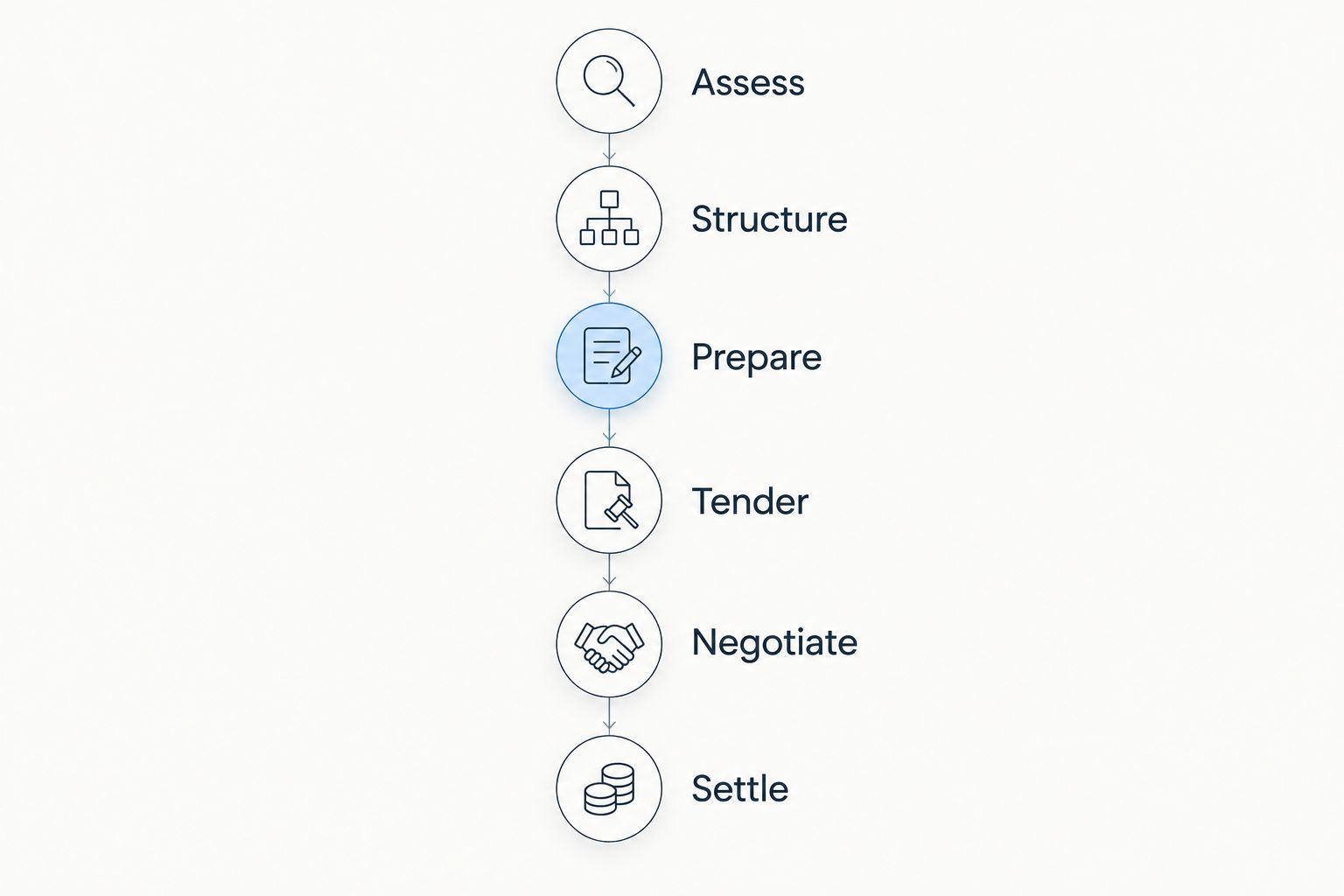
For dairy borrowing, the submission should explain how the farm earns and spends cash, not just list assets. Ask the broker which lenders fit the actual requirement; panel size alone does not answer that question.
What to prepare before approaching lenders
Prepare a consistent information pack before comparing offers. Incomplete or conflicting records make the underlying borrowing requirement harder to assess.
- Financial position: Financial statements, current management accounts and existing debt commitments.
- Operating cash flow: Milk receipts, feed expenditure, labour, other material expenses and forecast assumptions.
- Security position: Property and equipment details, ownership entities and existing lender interests.
- Borrowing purpose: Purchase documents, refinance balances or a documented project budget, as relevant.
- Repayment case: The source of scheduled repayments and any final repayment obligation.
Separate confirmed figures from assumptions. Explain significant changes between historical results and the forecast rather than leaving the lender to reconcile them.
Brokerage and debt advisory are different services
Glenclair distinguishes lender-paid brokerage from debt advisory, which uses a retainer and success-fee structure. Confirm the engagement scope and remuneration arrangements before proceeding.
Ask what work the engagement includes, which lenders will be considered and how recommendations will be explained. Independence does not remove the need to understand payment arrangements or potential conflicts.
A useful proposal records why the recommended structure fits your business. It should also identify the obligations and disadvantages you are accepting, including security, guarantees and settlement conditions.
How these options are ranked
The 2026 ranking follows borrowing purpose, repayment fit, security, flexibility and execution requirements. It is not a lender league table, a rate comparison or a claim that any application will be approved.
Commercial refinancing comes first because this guide prioritises established business owners reviewing existing banking arrangements. Equipment finance ranks separately because an identifiable asset purchase requires a different assessment from operating liquidity or land investment.
Which dairy finance option should you choose?
Start with refinancing if your main concern is existing debt. Review the current lender's proposal alongside alternatives before deciding to stay or move.
Choose equipment finance for an identifiable machinery purchase, working capital for a temporary operating gap and a secured term structure for long-term investment. Use development finance only when the project warrants that structure.
For your 2026 review, give Glenclair a clear borrowing brief: existing debt, the reason for change, required funding and the business's repayment capacity. Suitability remains case by case, including for enquiries below its preferred borrowing focus.
Review your commercial borrowing
Discuss existing debt, proposed investment and the scope of a banking review.
FAQ
What's the best agribusiness loan for a dairy farmer?
The best structure depends on the borrowing purpose and repayment capacity. Start with refinancing for an existing banking review, equipment finance for machinery, or working capital for a temporary operating gap.
Should I refinance my dairy farm loans in 2026?
Review your existing arrangements before deciding to refinance. Compare retaining, renegotiating and replacing facilities, including security, guarantees, repayment obligations and transaction costs.
Can equipment finance cover a dairy upgrade?
Equipment finance is a structure to assess for identifiable equipment within a dairy upgrade. Confirm the treatment of installation, building works and other related expenses rather than assuming the entire project qualifies.
Is a working capital facility better than a term loan?
A working capital facility fits a temporary operating funding need; a term loan fits a defined longer-term borrowing requirement. The repayment source and duration of the need determine which structure to assess.
Does Glenclair have a minimum loan size?
Glenclair prioritises business-purpose finance greater than A$2 million and assesses suitability case by case. Its preferred borrowing focus is not a universal eligibility rule.
How is commercial finance brokerage paid?
Glenclair distinguishes lender-paid brokerage from debt advisory, which uses a retainer and success-fee structure. Confirm the applicable engagement and remuneration arrangements before proceeding.
Does access to more lenders guarantee approval?
Access to a lender panel does not guarantee finance approval. Each application remains subject to the relevant lender's assessment, requirements and conditions.
One last thing
Ask what happens if you sell a financed asset, change the borrowing entity or repay one facility while retaining another. A security arrangement can connect obligations that look separate on your loan statements.
Before accepting a proposal, require a plain-language security map. It should identify each facility, the assets supporting it, the guarantors and the conditions for release. That makes the obligations easier to understand before settlement—not after you need to change them.
Related guides
- Machinery finance options for agricultural contractors
- Income requirements for commercial property finance
- Truck finance options for Australian transport fleets
Author: Glenclair Financial team.