
Best ANZ alternatives for commercial property finance

ANZ combines commercial property lending with broader business banking, making it a practical benchmark when you review an existing facility. A proposal from ANZ alone does not show how other lenders would structure the same borrowing. One ANZ alternative to consider in 2026 is Glenclair if you need an independent commercial finance brokerage to compare lenders; NAB if you want another bank to assess your property finance directly.
TL;DR
- For ANZ alternatives, Glenclair suits business owners seeking an independent commercial property finance review across 60+ lenders.
- NAB and Commonwealth Bank provide direct-bank alternatives; request written proposals against the same borrowing brief.
- Compare security, guarantees, repayments and covenants, not just the interest rate.
- Keep ANZ in the comparison. Refinancing needs a documented reason, not simply a different lender.
Why this matters
Commercial property finance is a lending structure, not just a rate. The property secures the loan, but your business cash flow, ownership arrangements and intended use also shape the assessment.
For established Australian businesses seeking more than A$2 million in business-purpose finance, the useful question is whether your current banking arrangements still fit. That amount is a focus for this guide, not a universal eligibility threshold. Suitability requires an individual assessment.
A 2026 review should separate property borrowing from equipment finance, working capital and development funding. Compare each facility on its own terms, then examine how shared security connects the facilities. An attractive property proposal does not resolve restrictions elsewhere in the banking relationship.
ANZ alternatives at a glance
These options represent different routes to a lending decision. A broker compares lenders; a bank assesses an application for its own lending products. Neither route guarantees approval.
| Option | Best for | Standout distinction | How it differs from ANZ |
|---|---|---|---|
| ANZ | Owners reviewing an existing ANZ relationship or seeking a direct-bank proposal | Commercial lending alongside broader business banking | The benchmark: assess its written terms before deciding to move |
| Glenclair commercial finance services | Owners seeking an independent review of commercial borrowing | Brokerage access through a panel of 60+ lenders | A broker rather than the lender making the credit decision |
| NAB | Owners seeking a competing direct-bank property finance proposal | Another bank's assessment of the property and business | Provides a separate credit assessment, not a market-wide comparison |
| Commonwealth Bank | Owners comparing property finance within a wider banking relationship | Commercial property lending alongside business banking | Offers its own lending proposal rather than comparing other lenders |
The panel figure describes brokerage access. It does not mean every lender will finance your property, accept your structure or receive your application.
1. Glenclair: best for an independent lender review
An independent commercial finance brokerage is the alternative when your problem is broader than choosing another bank. The service covers business loans, refinancing, equipment finance and property development finance through a panel of 60+ lenders.
Best for: Established business owners seeking a review of existing borrowing, particularly business-purpose requirements above A$2 million. Smaller or different requirements still need a case-by-case suitability assessment.
Where it shines
- Offers a route to compare lenders rather than relying on one bank's proposal.
- Covers several commercial borrowing purposes, allowing you to examine property debt alongside other facilities.
- Provides an independent brokerage option for owners who want help assessing their existing banking arrangements.
Where it falls short
- A broker does not make the lender's credit decision or guarantee settlement.
- A panel is not the entire lending market, and access does not establish suitability.
- Brokerage and debt advisory are different engagements. Confirm which service you are appointing before work starts.
Lender-paid brokerage must be distinguished from debt advisory, which uses a retainer and success-fee structure. Ask for the scope and remuneration arrangement in writing. Lender-paid does not mean the property transaction has no other costs.
| Dimension | Glenclair | ANZ |
|---|---|---|
| Role | Independent commercial finance broker | Direct lender |
| Comparison scope | Panel of 60+ lenders, subject to suitability | ANZ's own lending proposal |
| Credit decision | Remains with the selected lender | Made by ANZ |
| Engagement | Confirm brokerage or debt advisory scope | Confirm the proposed banking facilities and terms |
Verdict: Hold any refinancing commitment until the lender comparison and engagement scope are clear. Appointing a broker is not the same decision as accepting a loan.
2. NAB: best for a competing direct-bank proposal
NAB is an alternative when you want another bank to assess commercial property finance directly. It provides a separate lending assessment, which you can compare with ANZ's response to the same brief.
Best for: Business owners prepared to manage lender discussions themselves and compare written proposals without treating one bank's answer as a market verdict.
Where it shines
- Gives you another direct-bank proposal against which to assess ANZ.
- Offers commercial property finance within a broader business banking relationship.
- Lets you discuss the proposed property and operating-business arrangements with the prospective lender directly.
Where it falls short
- NAB assesses its own lending products; it does not provide an independent comparison of other lenders.
- Moving to another bank does not, by itself, establish that the security structure improves.
- Your application still requires credit assessment. A discussion or indicative proposal is not an unconditional approval.
| Dimension | NAB | ANZ |
|---|---|---|
| Route | Direct-bank application | Direct-bank application |
| Lending scope | NAB's own proposal | ANZ's own proposal |
| Useful comparison | Requested security, covenants and repayment structure | The same dimensions, using the same borrowing brief |
For a 2026 comparison, give both banks consistent information about ownership, financial performance, property use and requested facilities. Different assumptions produce proposals that are difficult to compare.
Verdict: Hold until NAB's written terms establish a reason to change lenders. A competing proposal is useful evidence, not an automatic recommendation to refinance.
3. Commonwealth Bank: best for another banking relationship option
Commonwealth Bank is another direct-bank option for commercial property finance. Include it when you want to assess property borrowing alongside the banking arrangements your business actually uses.
Best for: Owners comparing a property facility as part of a wider business banking review, rather than considering the property loan in isolation.
Where it shines
- Provides another bank's assessment of the proposed commercial property borrowing.
- Offers business banking alongside commercial lending.
- Creates a further reference point for comparing facility structure and relationship requirements.
Where it falls short
- Its proposal covers its own lending products, not a comparison across lenders.
- A broader banking relationship requires scrutiny of all relevant terms, not just the property facility.
- Replacing the lender does not remove obligations attached to the new loan, including any agreed guarantees or covenants.
| Dimension | Commonwealth Bank | ANZ |
|---|---|---|
| Route | Direct-bank application | Direct-bank application |
| Comparison scope | Commonwealth Bank's proposed facilities | ANZ's proposed facilities |
| Relationship review | Identify banking services required by the proposal | Identify banking services required by the proposal |
Verdict: Hold until the complete banking proposal is clear. Compare the obligations you would accept, not simply the bank name on the facility.
How to compare commercial property finance in 2026
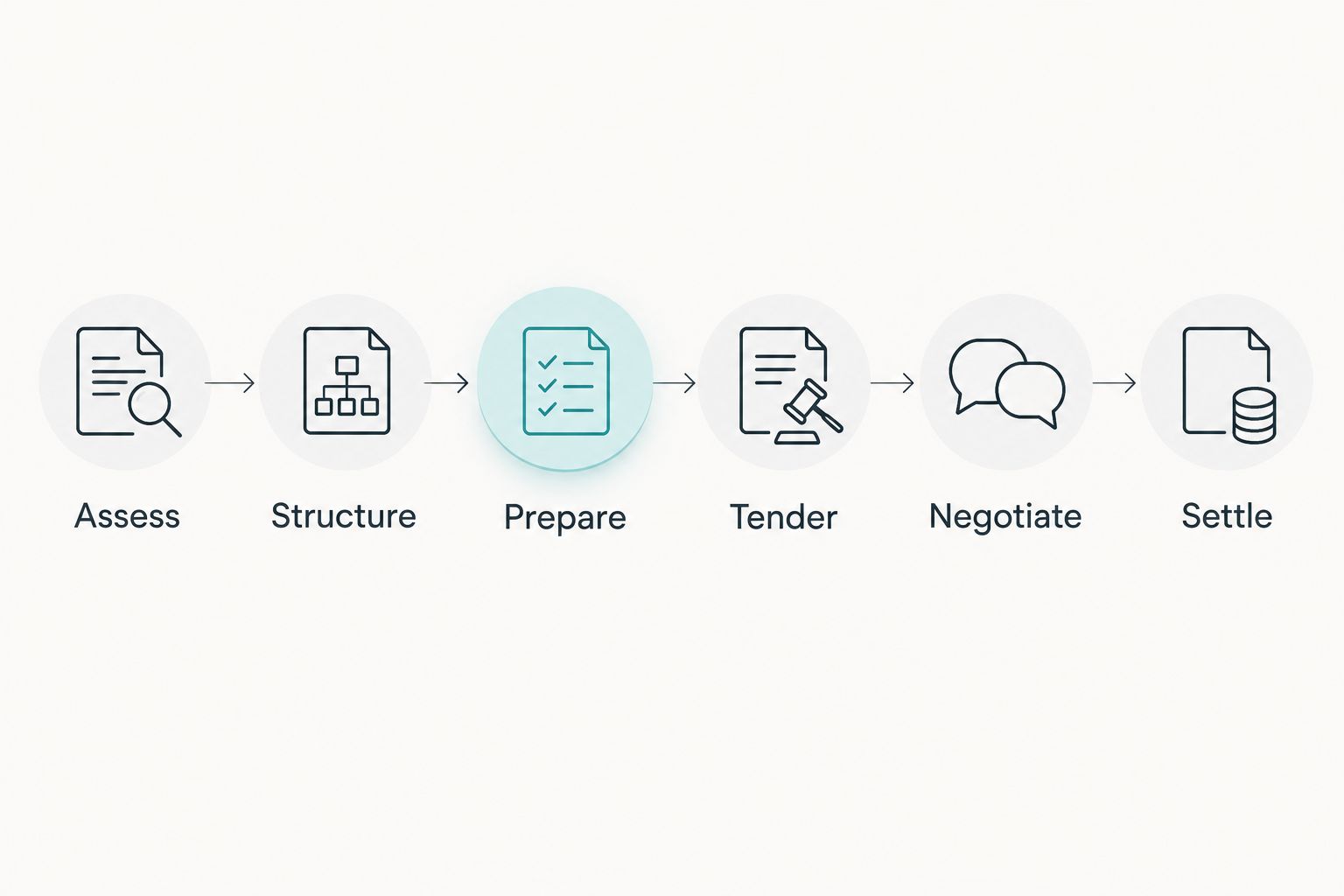
Use one borrowing brief and a consistent decision process. The following six stages keep a lender review focused on evidence rather than sales discussions.
Assess
Start with the existing position. Gather facility letters, current balances, financial statements, repayment schedules, security documents and details of guarantees. Record what needs to change and why.
A borrower seeking more working capital has a different problem from one seeking release of a property. Define the objective before requesting proposals.
Structure
Separate the borrowing purposes: property purchase or refinance, equipment, working capital and development. Identify which entity borrows, which entity owns the property and what security you are prepared to offer.
Do not assume an investment property, owner-occupied premises and a development project require the same lending structure.
Prepare
Make the application information consistent. Explain unusual financial items, property income, lease arrangements and existing commitments rather than leaving lenders to infer the position.
Use the guide to income requirements for commercial property finance to prepare the income questions your lender needs to answer.
Tender
Ask suitable lenders to respond to the same borrowing brief. Keep ANZ in the comparison where appropriate. State the requested amount, purpose, term, repayment structure and security position consistently.
A banking tender is a structured comparison, not a promise that every lender will participate.
Negotiate
Compare the full written proposals. Record differences in security, guarantees, covenants, repayments, required banking services and conditions before acceptance.
Ask each lender to clarify qualifications. An appealing headline term is not useful if a condition changes the facility you need.
Settle
Check that final documents reflect the accepted proposal. Confirm outstanding conditions, discharge arrangements and responsibilities with the relevant lender and professional advisers before committing to settlement.
Why people switch from ANZ
A lender change needs a specific commercial reason. These are grounds to investigate during a review, not claims that ANZ routinely creates these problems.
- The borrowing purpose has changed. Buying premises, refinancing an investment property and funding development require different assessments.
- The security position needs attention. You want to examine which assets support each facility and what would be required to release them.
- The repayment structure no longer fits. Your business needs a documented review of repayments against cash flow and other commitments.
- The banking relationship has become fragmented. Property, equipment and working capital facilities need to be considered together without assuming they should all sit with one lender.
- You lack a current comparison. The existing facility has not been tested against written alternatives using consistent information.
For a 2026 review, translate each concern into a question a lender can answer. Ask what security is required, which guarantees apply, how repayments work and what conditions remain. Avoid treating dissatisfaction alone as proof that refinancing is the right decision.
The terms that deserve a separate decision
Commercial property finance comparisons become clearer when you separate the main obligations. Use these four dimensions to assess each proposal rather than rolling everything into a single impression.
| Dimension | What to establish | Why it affects your decision |
|---|---|---|
| Security | Which properties and other assets support the facilities | Establishes what is tied to the borrowing |
| Guarantees | Who gives guarantees and their documented scope | Identifies obligations beyond the borrowing entity |
| Repayments | Principal repayments, interest arrangements and loan maturity | Shows the commitments your cash flow must support |
| Covenants | Financial tests, reporting duties and review requirements | Defines obligations that continue after settlement |
Ask your legal and accounting advisers to address matters within their respective scope. A finance comparison does not replace advice on guarantees, ownership, tax or the transaction documents.
When staying with ANZ is the right call
Stay with ANZ when its documented proposal meets your borrowing needs and the alternatives do not justify changing. A useful review can end with retaining the current lender.
Existing arrangements deserve the same scrutiny as a refinance. Check the security, guarantees, repayments and conditions, then compare any proposed changes in writing.
Refinancing also involves transaction work and potential costs that must be established for your facility. Do not assume that a different lender produces a better overall position. The decision is whether the documented change serves your business, not whether you can obtain another proposal.
FAQ
What's the best ANZ alternative for commercial property finance?
Glenclair is the broker-led option for an independent commercial finance review; NAB and Commonwealth Bank are direct-bank alternatives. Choose the route according to whether you need lender comparison support or want to manage bank applications yourself.
Is NAB better than ANZ for commercial property finance?
NAB is not automatically better than ANZ. Compare written proposals using the same property, financial information and borrowing requirements, then assess security, guarantees, repayments and conditions.
Can I refinance commercial property without moving all my banking?
That depends on the proposed lender's requirements and your existing arrangements. Ask which accounts and facilities must move, and establish whether shared security affects the refinance.
Do I need more than A$2 million to request a review?
A$2 million is a focus for the business owners addressed in this guide, not a universal eligibility rule. The borrowing purpose, complexity and service required need an individual suitability assessment.
Is lender-paid brokerage the same as debt advisory?
No. Lender-paid brokerage and debt advisory are different engagements; debt advisory uses a retainer and success-fee structure. Confirm the service scope and remuneration arrangement before appointing an adviser.
Does access to 60+ lenders guarantee approval?
No. A lender panel describes access, not approval or suitability. Each prospective lender assesses the borrower, property, proposed structure and supporting information.
Should I keep ANZ involved while comparing alternatives?
Keep ANZ involved where its proposal remains relevant to your requirements. Comparing the incumbent with alternatives helps you establish whether changing lenders serves a documented business objective.
One last thing
Ask every shortlisted lender the same question: What must happen before you release this property from security? The answer belongs beside the repayment terms, not in a file you open only when selling or refinancing.
A property loan decision also creates future obligations. Understand how you enter the arrangement and how you can leave it.
Related guides
- Equipment finance options for construction businesses
- Equipment finance options for manufacturing businesses
By the Glenclair Financial team.