
Best cash flow finance options for hospitality businesses in 2026

Best overall for recurring cash timing gaps: a business overdraft. Best for equipment purchases: equipment finance. Best for reviewing existing debt: refinancing through a banking tender. The right cash flow finance for hospitality businesses in 2026 depends on what causes the shortfall and how you will repay it.
TL;DR
- A business overdraft suits recurring hospitality working capital gaps, not persistent trading losses.
- Equipment finance separates eligible asset purchases from everyday operating cash needs.
- Refinancing deserves review when existing repayments no longer match business cash generation.
- Glenclair suits established Australian hospitality owners seeking a broker-led review of commercial borrowing.
Why this matters
A restaurant with slow midweek trade has a different funding problem from a hotel replacing kitchen equipment. Borrowing against the wrong problem can leave you making repayments after the funded benefit has disappeared.
Glenclair is an independent commercial finance brokerage with a panel of 60+ lenders. Its focus here is established Australian business owners considering business-purpose borrowing greater than A$2 million, with suitability assessed case by case rather than a universal minimum-loan rule.
Glenclair is best suited to established hospitality owners seeking a broker-led review of commercial finance and existing banking arrangements. Start with the cause of the cash gap, not the lender offering the largest facility.
What makes the best hospitality cash flow finance?
Use these criteria to assess a finance proposal in 2026:
- Purpose fit: Separate seasonal working capital, asset purchases, property spending and existing debt.
- Repayment fit: Match repayments to cash generation after wages, suppliers, rent and tax commitments.
- Security exposure: Identify property security, asset charges and personal guarantees before comparing offers.
- Access conditions: Check drawdown rules, reviews, reporting requirements and lender cancellation rights.
- Total obligations: Compare interest, fees, security, covenants and exit terms together. A lower repayment alone does not establish a better deal.
- Exit plan: Identify the receipts, retained earnings or refinancing event that will repay the borrowing. Do not treat another loan as a confirmed exit.
Prepare a rolling 13-week cash flow forecast and a 12-month trading forecast for the review. These are planning recommendations, not universal lender requirements. Separate ordinary trading from one-off fit-outs, equipment replacements and property expenditure.
Hospitality finance options at a glance
The ranking below prioritises funding purpose, repayment fit and exposure. It is not a ranking of lenders or a claim that every hospitality business qualifies.
| Rank and option | Best for | Standout feature | Key limitation |
|---|---|---|---|
| 1. Business overdraft | Recurring short-term timing gaps | Draw and repay within an agreed limit | Reviews and facility conditions require attention |
| 2. Refinancing | Reviewing an existing debt structure | Reassesses terms, repayments and security together | A longer term can increase total interest |
| 3. Equipment finance | Eligible equipment purchases | Links borrowing to an identifiable asset | Does not fund general trading shortfalls |
| 4. Secured business term loan | Defined projects with a repayment plan | Scheduled repayments over an agreed term | Security and guarantees put assets at risk |
| 5. Invoice finance | Eligible unpaid business invoices | Funding tied to qualifying receivables | Card takings are not an invoice debtor ledger |
| 6. Unsecured business loan | Defined needs without specific asset security | Does not depend on mortgaging a particular asset | Personal guarantees and frequent repayments can still apply |
1. Business overdraft: best for recurring timing gaps
A business overdraft allows an approved transaction account to operate below zero within an agreed limit. It suits temporary gaps between hospitality outgoings and incoming trading receipts when the balance can reduce as receipts arrive.
An overdraft is not a substitute for profitable trading. If the balance never meaningfully reduces, investigate whether the business has a permanent funding requirement or an operating loss.
Business overdraft pros:
- Supports variable drawings within the approved limit.
- Accommodates recurring gaps without a new application for each drawing.
- Connects working capital access with the operating account.
Business overdraft cons:
- Review terms and lender rights can affect continued access.
- An unused limit does not remove interest, fee or security obligations.
Best for: Established venues with identifiable cash timing gaps and evidence that trading receipts reduce drawings.
Verdict: Hold until your forecast shows how drawings will reduce. Choose an overdraft for timing, not to conceal an unresolved trading deficit.
2. Refinancing: best for reviewing existing hospitality debt
Refinancing replaces existing borrowing with a revised facility or set of facilities. For an established hospitality group, the useful question is whether the current banking structure still fits the business—not simply whether another lender offers a lower headline rate.
Review repayment timing, maturity dates, guarantees, property security and covenants together. In 2026, a refinancing decision should compare the proposed arrangement with the full obligations of keeping existing facilities.
Refinancing pros:
- Creates an opportunity to reassess existing repayment commitments.
- Allows a review of security allocation across facilities.
- Supports comparison between the incumbent lender and alternatives.
Refinancing cons:
- Exit costs and new establishment requirements can offset benefits.
- Extending the term can lower repayments while increasing total interest.
Best for: Established operators whose current borrowing no longer matches business cash generation or funding needs.
Verdict: Hold until a written comparison includes transition costs and security changes. Do not refinance solely because the monthly repayment falls.
3. Equipment finance: best for eligible asset purchases
Equipment finance funds identifiable assets such as commercial kitchen equipment, subject to lender and asset eligibility. It separates an equipment purchase from the cash needed for wages, stock and other operating commitments.
Check the proposed asset, ownership arrangement, repayment schedule and any final payment. A kitchen replacement and an ongoing trading shortfall need separate funding decisions, even when they arise together.
Equipment finance pros:
- Links the borrowing purpose to an identifiable asset.
- Spreads the funded purchase across scheduled repayments.
- Separates equipment funding from general working capital requirements.
Equipment finance cons:
- Asset age, condition and type can restrict lender acceptance.
- Final payments and guarantees can create obligations beyond regular instalments.
Best for: Operators purchasing eligible equipment with a clear business use and an affordable repayment plan.
Verdict: Hold until the asset and full repayment schedule are confirmed. Do not assume an equipment facility covers installation, building works or operating losses.
4. Secured business term loan: best for a defined project
A secured business term loan provides an agreed borrowing amount with scheduled repayments and specified security. It can suit a defined hospitality project when the business can support repayments from documented cash generation.
Keep a venue refurbishment, commercial property purchase and property development project distinct. Construction risk, approvals and the source of repayment differ, so the same loan structure does not automatically fit each purpose.
Secured business term loan pros:
- Establishes a defined repayment schedule.
- Can match a documented project and funding requirement.
- Makes the borrowing term explicit from the outset.
Secured business term loan cons:
- The lender can enforce agreed security following default.
- Scheduled repayments continue through weaker trading periods.
Best for: Defined business expenditure supported by a credible repayment plan and acceptable security exposure.
Verdict: Hold until both project funding and downside repayments are mapped. For property development, assess the development funding structure separately from everyday venue working capital.
5. Invoice finance: best for eligible business receivables
Invoice finance advances funding against qualifying unpaid invoices. It is relevant where a hospitality business invoices commercial customers—for example, eligible catering or accommodation accounts—rather than collecting payment at the point of sale.
A venue's card receipts do not automatically create an eligible invoice finance ledger. Examine the actual debtors, payment terms, disputes and customer concentration before treating receivables as a funding source.
Invoice finance pros:
- Connects funding to eligible outstanding receivables.
- Addresses the delay between invoicing and customer payment.
- Makes debtor quality central to the funding assessment.
Invoice finance cons:
- Cash and card sales generally do not provide qualifying unpaid invoices.
- Disputed invoices and concentrated debtors can restrict access.
Best for: Hospitality operators with a material ledger of eligible business invoices.
Verdict: Skip unless eligible receivables are a genuine part of your business. Invoice finance is not a general solution for a restaurant collecting payment when customers dine.
6. Unsecured business loan: best for a defined, repayable need
An unsecured business loan does not rely on a mortgage over a specified asset in the same way as a secured facility. It can still involve director guarantees, contractual restrictions and repayment obligations that require close review.
The word unsecured describes an aspect of the lender's security position. It does not mean the borrowing has no consequences for the business or its directors.
Unsecured business loan pros:
- Does not require the same specific asset security as a secured loan.
- Provides a defined advance and repayment arrangement.
- Can separate a discrete funding need from property borrowing.
Unsecured business loan cons:
- Frequent repayments can put pressure on operating cash.
- Personal guarantees can still create personal exposure.
Best for: A defined business need with demonstrable repayment capacity and acceptable contractual obligations.
Verdict: Hold until repayment frequency is tested against your cash forecast. Skip borrowing that depends on uncommitted future finance to meet existing repayments.
How the options are ranked
The ranking favours a clear match between the funding purpose and the repayment source. Recurring timing gaps place overdrafts first; existing debt puts refinancing first; an eligible asset purchase puts equipment finance first.
No product wins every scenario. The comparison does not assign lender scores, predict approval or assume that secured borrowing is always preferable to unsecured borrowing.
How to prepare a hospitality banking tender
A banking tender compares lender proposals against a common borrowing brief. Glenclair's commercial finance discussion should begin with the existing position and funding purpose, rather than an isolated rate request. Its commercial finance services cover business loans, refinancing, equipment and property development finance.
Use this sequence to organise the decision:
- Assess: List facilities, balances, repayment commitments, maturity dates and cash requirements.
- Structure: Separate working capital, equipment, property and refinancing needs.
- Prepare: Assemble financial statements, forecasts, security details and explanations of unusual trading movements.
- Tender: Seek comparable proposals using consistent funding assumptions.
- Negotiate: Compare rates, fees, guarantees, covenants, reporting and exit conditions together.
- Settle: Confirm conditions, documentation and facility transitions before relying on new funding.
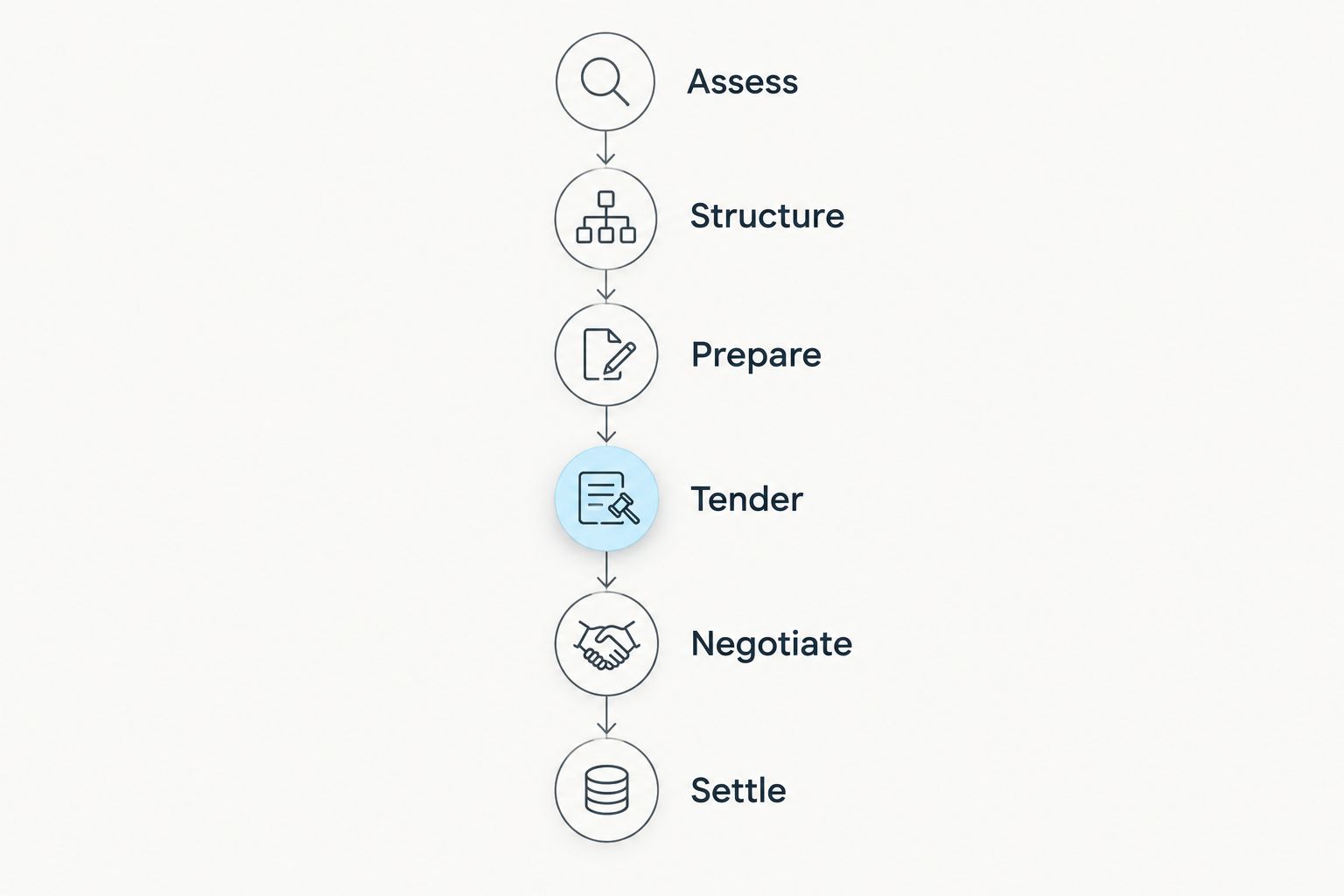
For a 2026 review, include tax commitments, lease obligations and any existing guarantees in the initial brief. A facility comparison is incomplete if it excludes obligations that compete for the same cash.
Also confirm the engagement model before work begins. Lender-paid brokerage and debt advisory are different services. Debt advisory uses a retainer and success-fee structure; establish which service applies, who pays and what work is included.
Review your hospitality borrowing
Discuss existing facilities, refinancing, working capital and equipment funding needs.
Which hospitality finance option should you choose?
Choose a business overdraft as the starting point for recurring timing gaps—not as the default answer to every cash shortage. If existing debt is the pressure point, begin with a banking review. If the expenditure buys eligible equipment, assess equipment finance separately.
Before accepting a 2026 proposal, identify what repays the borrowing, when that cash arrives and which assets or guarantees support it. If those answers remain unclear, hold the application and resolve the funding structure first.
FAQ
What's the best cash flow finance for hospitality businesses?
A business overdraft is the starting option for recurring short-term cash timing gaps. Refinancing suits an existing-debt review, while equipment finance suits eligible asset purchases. The best fit depends on repayment capacity, security and funding purpose.
Is an overdraft better than a business loan for a restaurant?
An overdraft fits variable working capital drawings; a term loan fits a defined amount repaid on a schedule. Compare how each structure behaves during quieter trading periods rather than choosing by product name.
Can hospitality businesses use invoice finance?
Hospitality businesses can use invoice finance where they have eligible unpaid customer invoices. Ordinary cash and card sales do not automatically qualify. Lenders assess the receivables and relevant debtor conditions.
Should I refinance hospitality debt in 2026?
Review refinancing when existing facilities no longer fit your cash generation, maturity dates or security needs. Compare transition costs, total interest, covenants and guarantees before changing lenders. A lower repayment alone is not sufficient justification.
Does unsecured hospitality finance mean no personal guarantee?
No. An unsecured facility can still require a personal guarantee. Read the actual loan and guarantee documents rather than relying on the product label.
Does Glenclair only consider finance above A$2 million?
Glenclair's preferred audience is established Australian business owners seeking business-purpose finance greater than A$2 million. Suitability is assessed case by case; that preference is not a universal eligibility rule.
How is commercial brokerage different from debt advisory?
Lender-paid brokerage and debt advisory have different engagement models. Debt advisory uses a retainer and success-fee structure. Confirm the applicable service, payment arrangements and scope before proceeding.
One last thing
An approved facility limit is not the same as cash you can draw without conditions. Before signing, ask what must remain true for access to continue: eligible debtors, reporting, security, covenants or review requirements.
That question belongs in every 2026 hospitality finance review. Keep the answer beside the repayment forecast, not buried in the loan documents.
This guide provides general information, not a recommendation to enter a particular finance arrangement.
Related guides
- Income requirements for commercial property finance
- Equipment finance options for manufacturing businesses
- Equipment finance options for construction businesses
Written by the Glenclair Financial team.