
Best cash flow finance options for seasonal retail businesses in 2026

Best overall for recurring seasonal shortfalls: a business overdraft. Best for a single stock purchase: a business term loan; best for wholesale invoices awaiting payment: invoice finance. This 2026 guide compares cash flow finance for seasonal retail businesses by borrowing purpose, repayment source and security requirements.
TL;DR
- A business overdraft is the default cash flow finance for seasonal retail businesses with recurring, temporary funding gaps.
- Invoice finance suits retailers with eligible unpaid business invoices, not ordinary card sales.
- Match seasonal working capital repayments to cash receipts, not forecast sales alone.
- Glenclair suits established Australian business owners reviewing existing banking arrangements and business-purpose finance above A$2 million.
Why this matters
Seasonal retail finance must bridge a timing gap: stock, wages and occupancy commitments arrive before the cash needed to cover them. Borrowing does not fix stock that fails to sell or a business that consistently spends more than it earns.
For your 2026 review, separate temporary working capital from equipment purchases and long-term expansion. Each needs a different repayment source. Glenclair is an independent commercial finance brokerage with a panel of 60+ lenders, helping business owners review financing structures rather than treating every shortfall as another loan application.
This guide prioritises established businesses considering substantial commercial borrowing or refinancing. The preferred focus above A$2 million is not a universal eligibility threshold; suitability requires an individual assessment.
What makes the best seasonal retail finance?
The strongest option matches the cash cycle without creating an obligation your quieter trading period cannot support. Use these criteria before comparing lender proposals:
- Repayment fit: Identify the cash receipts that will repay the borrowing, including a slower-sales scenario.
- Repeat use: Decide whether the funding gap returns each season or belongs to a single purchase.
- Funding purpose: Separate stock and operating expenses from equipment and property expenditure.
- Security fit: Understand the assets, guarantees and existing lender consents involved.
- Whole-facility terms: Compare repayment obligations, security, reporting requirements and access conditions together.
- Exit clarity: Know how the facility is repaid, reduced, renewed or replaced.
Choose the structure before choosing the lender. An attractive headline offer does not solve a mismatch between debt repayments and the period when your business receives cash.
Seasonal retail finance at a glance
These are facility categories, not offers from named lenders. The ranking reflects the usefulness of each structure for a distinct seasonal retail borrowing need.
| Rank and option | Best for | Standout feature | Key limitation |
|---|---|---|---|
| 1. Business overdraft | Recurring operating cash gaps | Draw and repay within an agreed limit | Access and renewal depend on facility terms |
| 2. Business term loan | A defined seasonal stock purchase | Agreed repayment schedule | Repayments can continue through quiet trading |
| 3. Invoice finance | Retailers with wholesale receivables | Funding linked to eligible unpaid invoices | Ordinary consumer card sales are not trade invoices |
| 4. Trade finance | Importers funding supplier payments | Structure linked to purchasing and trade documents | Does not automatically fund every operating expense |
| 5. Equipment finance | Retail equipment and operational assets | Separates asset funding from working capital | Does not solve a stock or payroll shortfall |
1. Business overdraft: best for recurring seasonal cash gaps
A business overdraft lets you draw beyond your transaction account balance within an agreed limit. Incoming receipts reduce the amount drawn, making the structure relevant when your funding need rises and falls with trading.
An overdraft belongs at the top of a 2026 shortlist when the gap is temporary and repeats. It is not the default answer when borrowing remains fully drawn without a credible reduction plan.
Business overdraft pros:
- Supports repeated drawings within the agreed facility.
- Links day-to-day cash receipts with debt reduction.
- Avoids treating every ordinary seasonal shortfall as a separate term borrowing.
Business overdraft cons:
- Facility conditions can include reviews and reporting obligations.
- Persistent use can conceal a permanent working capital deficit.
Best for: An established retailer whose stock and operating commitments precede a predictable selling season.
Check what happens at review, what security is required and whether the limit remains accessible under the proposed terms. Model the highest expected drawing, not just the balance at year-end.
Verdict: Shortlist a business overdraft when seasonal receipts can clear the seasonal drawing.
2. Business term loan: best for a defined seasonal purchase
A business term loan provides borrowing repaid under an agreed schedule. It suits a defined requirement where the amount, purpose and repayment source are clear.
For retail stock, the central question is whether repayments align with the selling cycle. Do not assume a standard monthly schedule accommodates your quiet months or that seasonal repayments are part of the offer.
Business term loan pros:
- Establishes a defined repayment path.
- Separates a specific purchase from everyday banking movements.
- Makes the debt reduction schedule explicit before acceptance.
Business term loan cons:
- Scheduled repayments can fall before the stock generates cash.
- Repaid amounts are not automatically available to draw again.
Best for: A retailer making a discrete seasonal purchase with a documented plan to repay it.
Ask whether early repayment is permitted and what contractual consequences apply. Match the borrowing period to the stock cycle rather than extending debt simply to reduce each scheduled instalment.
Verdict: Shortlist a business term loan for a defined purchase, not an unexplained recurring deficit.
3. Invoice finance: best for wholesale receivables
Invoice finance provides funding against eligible unpaid business invoices. It belongs on the shortlist for a retailer that also supplies other businesses on credit terms.
A shop receiving payment at checkout has a different cash cycle. Ordinary consumer card transactions do not create the wholesale receivables this structure is designed to finance.
Invoice finance pros:
- Connects borrowing to eligible receivables.
- Addresses the gap between invoicing a business customer and receiving payment.
- Makes debtor quality central to the funding assessment.
Invoice finance cons:
- Invoice eligibility and customer concentration affect usable funding.
- Disputed invoices and collection issues complicate the arrangement.
Best for: A retail business with a meaningful wholesale channel and documented business-to-business receivables.
Check which customers and invoices qualify, who manages collections and how adjustments affect the amount you can draw. Your total receivables balance is not automatically your borrowing capacity.
Verdict: Shortlist invoice finance for eligible wholesale debtors; skip it as the default for checkout sales.
4. Trade finance: best for imported seasonal stock
Trade finance structures funding around supplier payments and trading transactions. It is relevant when your supplier requires payment before imported stock reaches your shelves and generates sales.
The funding period must account for the purchasing cycle, shipment, stock receipt and sell-through. A maturity date that arrives before customer receipts creates another refinancing problem.
Trade finance pros:
- Connects the facility to the purchasing transaction.
- Separates supplier funding from everyday operating expenditure.
- Brings payment terms and trade documentation into the finance assessment.
Trade finance cons:
- Documentation and transaction conditions require administration.
- Shipment delays or slow sales can leave debt outstanding at maturity.
Best for: An established retailer importing seasonal stock with identifiable supplier commitments.
Confirm which payments qualify, what evidence is required and how foreign-currency obligations are handled. Trade finance does not remove supplier, shipment or currency risk.
Verdict: Shortlist trade finance when the supplier-payment gap drives the borrowing need.
5. Equipment finance: best for protecting working capital
Equipment finance funds business assets rather than ordinary trading losses. For a retailer purchasing eligible refrigeration, handling equipment or other operational assets, it separates the asset decision from seasonal stock funding.
That separation matters. Using the seasonal cash reserve for equipment leaves less cash to meet stock and operating commitments, even when the equipment purchase itself is justified.
Equipment finance pros:
- Keeps asset borrowing distinct from short-term operating needs.
- Creates an identifiable asset purpose for the borrowing.
- Supports a separate assessment of asset use and repayment capacity.
Equipment finance cons:
- It does not directly resolve a payroll or stock shortfall.
- Repayments remain a business obligation during quieter trading.
Best for: A retailer buying eligible business equipment while preserving a separate working capital facility.
Check asset eligibility, ownership arrangements, any final payment and security terms. Do not assume fit-out expenditure qualifies in full simply because it relates to a physical store.
Verdict: Shortlist equipment finance for assets; skip it as a substitute for working capital.
How the options are ranked
The ranking starts with recurring seasonal operating needs, then moves to narrower borrowing purposes. Business overdrafts rank first for repeat cash gaps; term loans, invoice finance, trade finance and equipment finance each solve a different problem.
This is a structural comparison, not a lender scorecard or a claim about approval prospects. Your existing security arrangements, trading position and proposed terms determine which option belongs in your final shortlist.
Prepare a banking tender, not just another application
A 2026 banking review should show lenders what the business needs and how the debt will be serviced. Build a recommended 13-week cash forecast, supported by a 12-month trading view, and test 2 sales scenarios: your base case and a slower sell-through case.
These are planning recommendations, not lender eligibility rules. Include existing repayments and supplier commitments so the forecast shows the full funding requirement rather than an isolated stock order.
Use this sequence to organise the review:
- Assess: Establish the seasonal cash gap and existing banking obligations.
- Structure: Separate working capital, equipment and property borrowing needs.
- Prepare: Assemble financial records, forecasts, debt schedules and security details.
- Tender: Present a consistent borrowing brief to suitable lenders.
- Negotiate: Compare proposed terms, conditions, security and repayment commitments.
- Settle: Check documentation, refinancing requirements and implementation responsibilities.
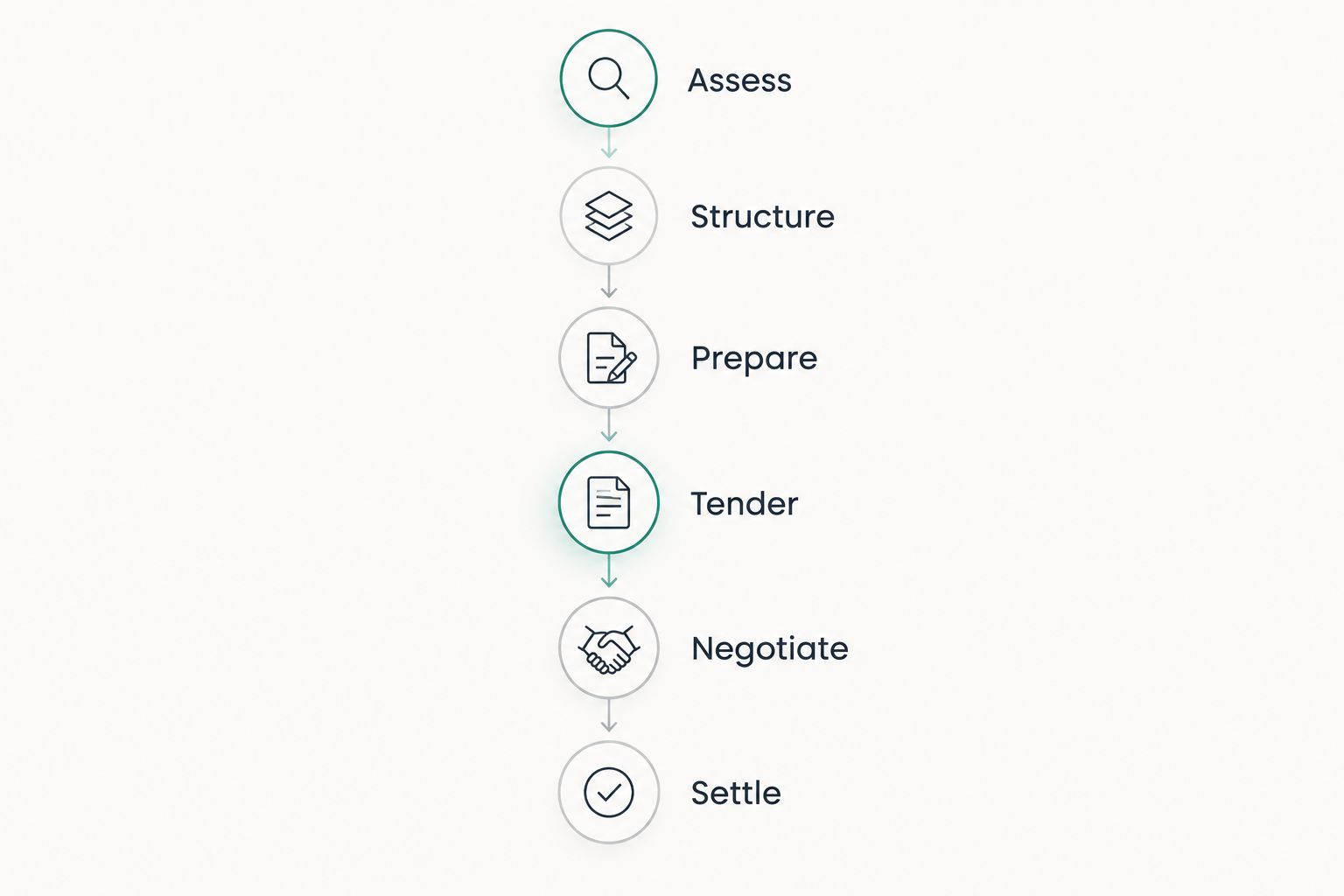
A consistent brief makes proposals easier to compare. Ask each lender to address the same funding purpose and cash cycle, then record differences rather than reducing the decision to a single headline term.
Glenclair's commercial finance services cover business loans, refinancing, equipment and property development finance. For a retailer reviewing several facilities, assess the combined security and repayment position before moving one loan in isolation.
Separate brokerage from debt advisory
Lender-paid brokerage and debt advisory are different engagements. Glenclair distinguishes lender-paid brokerage from debt advisory services, which use a retainer and success-fee structure.
Confirm the engagement scope, remuneration and responsibilities before proceeding. Do not assume that every funding review, tender or advisory assignment operates under the same payment arrangement.
Review your seasonal borrowing structure
Discuss refinancing, working capital and existing banking arrangements for your business.
Which seasonal retail finance should you choose?
Start with a business overdraft for a recurring, repayable seasonal gap. Choose a term loan for a defined purchase, invoice finance for eligible wholesale receivables, trade finance for supplier-payment timing, and equipment finance for business assets.
For your 2026 decision, require a clear answer to one question: which cash receipts repay this facility, and when? If the answer depends entirely on stronger trading without a downside plan, revisit the borrowing amount and structure before accepting an offer.
FAQ
What's the best cash flow finance for seasonal retail businesses?
A business overdraft is the default shortlist option for recurring, temporary seasonal cash gaps. A term loan, invoice finance or trade finance fits better when the borrowing serves a specific purchase, receivable or supplier-payment need.
Is a business overdraft better than a term loan for seasonal stock?
A business overdraft better matches repeated drawings and repayments, while a term loan suits a defined purchase with an agreed repayment schedule. Compare both against the timing of stock purchases and customer receipts.
Can a retail shop use invoice finance?
A retail shop with eligible unpaid business invoices can consider invoice finance. Ordinary checkout sales do not create the wholesale receivables this structure finances.
What should I prepare before applying for seasonal working capital?
Prepare financial records, existing debt details, stock purchasing plans and a cash forecast. Include slower sell-through so the borrowing request shows how repayments work when trading falls below plan.
Can equipment finance pay for seasonal stock?
Equipment finance is designed for eligible business assets, not ordinary stock purchases. Assess stock funding separately through a working capital structure suited to its cash cycle.
Does Glenclair only assess loans above A$2 million?
Finance above A$2 million is a preferred focus, not a universal eligibility rule. Suitability is assessed case by case, with emphasis on established Australian businesses reviewing commercial borrowing and existing banking arrangements.
How are commercial finance brokerage and debt advisory paid?
Lender-paid brokerage is distinct from debt advisory, which uses a retainer and success-fee structure. Confirm the engagement and remuneration before work starts rather than assuming every service follows the same arrangement.
One last thing
Your busiest sales period is not necessarily your strongest cash period. Supplier payments, existing repayments and the next stock order can absorb receipts before the seasonal facility is cleared.
Before signing your 2026 facility documents, mark the date when the seasonal borrowing should return to its planned low point. If that date never appears in the forecast, reassess whether you are funding seasonality or a permanent capital requirement.
Related guides
- Equipment finance options for manufacturing businesses
- Equipment finance options for construction businesses
- Income requirements for commercial property finance
Author: Glenclair Financial team.