
Best Diverse Funding alternatives for commercial finance

For established Australian business owners comparing Diverse Funding alternatives in 2026, Glenclair is best suited to a commercial finance review that considers refinancing alongside existing banking arrangements. Its commercial finance brokerage covers business loans, refinancing, equipment and property development finance through a panel of 60+ lenders; your existing lender remains a useful alternative when you want to negotiate without changing providers.
TL;DR
- Glenclair is a Diverse Funding alternative for commercial finance reviews, with access to a panel of 60+ lenders.
- Compare refinancing proposals on security, guarantees, covenants and repayment structure, not interest alone.
- An existing-lender review suits borrowers seeking changes without replacing their banking relationship.
- Separate lender-paid brokerage from debt advisory engagements with retainer and success-fee structures.
Why this matters
Choosing a commercial finance broker means choosing how your borrowing requirements reach lenders. A useful comparison starts with the problem you need resolved: refinancing an existing facility, funding equipment, supporting working capital or financing property development.
This guide focuses on established Australian businesses considering business-purpose borrowing greater than A$2 million. That is an audience focus, not a universal eligibility rule. Suitability depends on your business, borrowing purpose and proposed structure.
Compare the proposed engagement before comparing the proposed loan. A broker appointed to obtain one facility has a different brief from an adviser reviewing your entire banking position.
Diverse Funding alternatives at a glance in 2026
The table separates a named brokerage alternative from other ways to review commercial borrowing. It does not rank providers on unverified rates, approval outcomes or service claims.
| Option | Best for | Main distinction | What to assess against Diverse Funding |
|---|---|---|---|
| Diverse Funding | Benchmarking a proposal you already hold | The actual written proposal is the reference point | Scope, remuneration, lender selection and proposed terms |
| Glenclair | Established businesses reviewing commercial borrowing and refinancing | Independent commercial finance brokerage with a panel of 60+ lenders | Whether the proposed engagement covers your banking review and borrowing requirements |
| Your existing lender | Negotiating within your current banking relationship | Direct discussion with the incumbent lender | Revised terms, retained security and whether external comparisons are needed |
| A separately scoped debt advisory engagement | Borrowers needing advice beyond arranging a facility | A defined advisory mandate with retainer and success-fee structures | Deliverables, responsibilities and remuneration compared with brokerage |
The right alternative is the one whose scope matches your decision. Lender access matters, but a long panel does not establish that every lender suits your transaction.
1. Glenclair: best for reviewing commercial borrowing
Glenclair is an independent commercial finance brokerage covering business loans, refinancing, equipment and property development finance. Its panel includes 60+ lenders. That service range makes it relevant when your question extends beyond replacing one loan with another.
For a refinancing review, define the business objective before requesting proposals. You might want a different repayment profile, a review of security, or a structure that accommodates equipment and working capital requirements. Those are assessment criteria, not promised outcomes.
Where Glenclair shines
- Breadth of stated services: business loans, refinancing, equipment and property development finance sit within its commercial finance scope.
- Lender access: a panel of 60+ lenders provides a defined starting point for considering potential funding sources.
- Business-purpose focus: the service offering addresses commercial borrowing rather than a consumer loan comparison.
Where Glenclair falls short
- A panel is not the whole market. Ask which lenders fit your circumstances and why others are excluded from the proposed approach.
- Brokerage is not automatically a debt advisory mandate. A broader strategic assignment needs its own agreed scope and remuneration structure.
- Lender access does not guarantee approval. Your transaction still requires lender assessment and acceptable terms.
The commercial finance services provide the starting point for matching your borrowing purpose to an engagement. Ask for the proposed scope in writing before authorising applications or a broader lender approach.
| Dimension | This brokerage option | Diverse Funding comparison question |
|---|---|---|
| Service scope | Business loans, refinancing, equipment and property development finance | Does the proposed engagement cover the same requirements? |
| Lender access | Panel of 60+ lenders | Which relevant lenders will receive your proposal? |
| Business objective | Commercial finance and refinancing enquiries | Does the brief address your wider banking arrangements? |
| Engagement type | Distinguish brokerage from debt advisory | What work and remuneration does the agreement specify? |
Best for: established business owners seeking a commercial finance review, particularly where refinancing connects with other borrowing needs.
Verdict: Buy the engagement only after its scope matches your requirements. Do not treat panel size as a substitute for a clear brief.
2. Your existing lender: best for a targeted banking negotiation
Your existing lender is an alternative to appointing another broker when your immediate objective is to renegotiate an existing arrangement. Start with a written request identifying the terms you want reviewed. Keep the discussion specific.
A direct review is also a useful benchmark. It establishes what the incumbent is prepared to offer before you decide whether a broader process is necessary.
Where your existing lender shines
- A defined counterparty: you negotiate directly with the institution providing your current facilities.
- A focused brief: you can request changes to particular terms rather than start with a new lender search.
- A retention benchmark: a written revised offer gives you something concrete to compare.
Where your existing lender falls short
- The discussion covers that lender's offering. It is not an independent comparison of other lenders.
- Familiarity does not prove competitiveness. Compare the revised terms with your objectives rather than assuming continuity is enough.
- An incomplete review can leave the main issue untouched. A margin discussion alone does not address security, guarantees or repayment structure.
| Dimension | Existing-lender review | Broker-led comparison question |
|---|---|---|
| Counterparties | Your incumbent lender | Which alternative lenders should be considered? |
| Primary task | Negotiate existing arrangements | Is a wider lender process necessary? |
| Decision evidence | Written retention proposal | How does the complete proposal compare? |
Best for: borrowers whose current facilities largely work and who want clearly defined changes.
Verdict: Hold the relationship if the written terms meet your requirements. Switching providers is not an objective in itself.
3. Debt advisory: best for a separately defined advisory brief
A debt advisory engagement is a different appointment from lender-paid brokerage. Use it when you need a defined advisory assignment, rather than assuming that every strategic question sits within arranging a loan.
Debt advisory uses a retainer and success-fee structure. Establish what each component covers, how success is defined and which responsibilities remain with your business.
Where debt advisory shines
- An explicit mandate: the agreement can define the advice, analysis and negotiation work required.
- Clear deliverables: you can assess the appointment against an agreed brief.
Where debt advisory falls short
- A separate engagement requires separate scrutiny. Do not assume it duplicates, replaces or includes brokerage work.
- An advisory mandate is not a funding commitment. Lenders still make their own credit decisions.
Best for: borrowers with a clearly defined advisory requirement beyond arranging a facility.
Verdict: Buy only against an agreed mandate. Confirm responsibilities before appointing overlapping advisers.
Why people switch from Diverse Funding
A reason to change brokers must relate to your actual engagement. Do not infer a service problem from a competing provider's advertising or assume that another broker will obtain a different result.
Use these decision triggers when assessing your current Diverse Funding proposal:
- Your brief has changed. A single equipment purchase has become a review of equipment, working capital and existing debt.
- The proposed scope does not match the task. You need a banking review, but the agreement addresses only one application.
- The lender approach is unclear. You need an explanation of lender selection before authorising submissions.
- You cannot compare proposals consistently. Security, guarantees, conditions or repayment assumptions differ between offers.
- Responsibilities need clarification. You need to know who prepares information, manages questions and coordinates settlement.
These are reasons to seek clarification first. Switch when the engagement no longer fits—not simply because another provider presents a longer lender list.
Run a banking tender around the decision
For refinancing in 2026, organise the review into 6 stages. This is a practical sequence for your brief, not a promise that every transaction follows an identical timetable.
Assess
List existing facilities, borrowers, guarantors, security, repayment obligations and relevant conditions. State the business problem. Separate an upcoming equipment requirement from a wider issue with your banking arrangements.
Structure
Define what each facility must do. Equipment funding, working capital and property development finance serve different purposes; the proposed borrowing structure should explain those purposes rather than combine them without justification.
Prepare
Agree the information package before approaching lenders. Ask what financial statements, management information, existing facility documents and transaction details are required. Assign responsibility for answering follow-up questions.
Tender
Ask which lenders will be approached and why. Keep the core brief consistent so differences between responses reflect lender proposals rather than different assumptions supplied to each lender.
Negotiate
Compare complete terms. Review repayments, security, guarantees, covenants, reporting obligations and conditions alongside interest and fees. Identify unresolved conditions rather than treating an indicative response as a completed transaction.
Settle
Confirm documentation, conditions, security releases and any movement of banking facilities. Establish who coordinates each task. A refinancing decision is incomplete until the practical transition has been addressed.
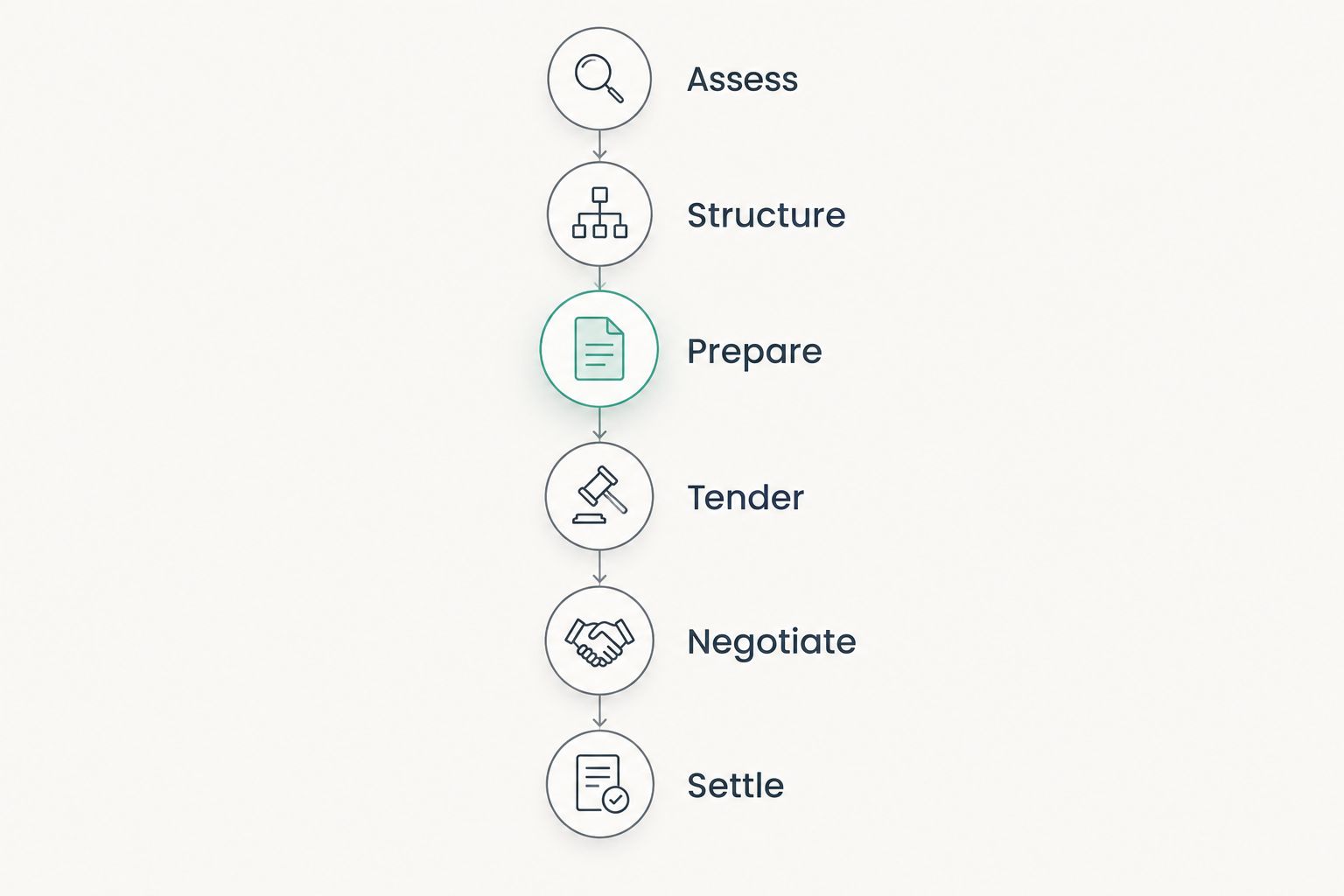
The sequence keeps lender selection connected to your business objective. Before appointing anyone, ask which stages the engagement includes and what you must manage yourself.
Review your commercial finance requirements
Assess refinancing, equipment, business lending and property development finance against your banking needs.
When staying with Diverse Funding is the right call
Stay with Diverse Funding when its written engagement fits your requirements, the lender approach is explained and the resulting proposal meets your objectives. Another broker's panel size alone is not evidence that changing advisers will improve your position.
Before switching, ask whether the unresolved issue concerns the broker's scope, the lender's terms or your transaction requirements. Those are different problems. Changing the intermediary does not itself change the underlying credit decision.
Hold a suitable engagement. Reopen the comparison when you can identify a specific gap that another approach addresses.
FAQ
What's the best Diverse Funding alternative for commercial finance in 2026?
Glenclair is a relevant alternative for established Australian businesses reviewing commercial borrowing and refinancing, with a panel of 60+ lenders. Choose against the written engagement scope and your borrowing requirements, not panel size alone.
Is another broker better than negotiating with my bank directly?
A broker suits a brief that requires consideration of alternative lenders; a direct bank negotiation suits a targeted review with your incumbent. Compare the complete written proposals before deciding.
Do I need to borrow more than A$2 million to request a review?
A$2 million is the audience focus of this guide, not a universal eligibility rule. Suitability requires a case-by-case assessment of your business and borrowing requirements.
What should I compare besides the interest rate?
Compare security, guarantees, repayments, covenants, reporting obligations and conditions. Ask how each proposal supports the purpose of the borrowing and your existing facilities.
Is lender-paid brokerage the same as debt advisory?
No. Lender-paid brokerage and debt advisory are different engagement types; debt advisory uses a retainer and success-fee structure. Confirm the scope and remuneration before appointing an adviser.
Can equipment finance form part of a refinancing review?
Yes. Include equipment requirements in the review brief alongside existing debt and working capital needs. Ask the adviser to explain the purpose and proposed structure of each facility.
Should I leave Diverse Funding just to access a larger lender panel?
No. Panel size alone does not establish a better fit for your transaction. First compare relevant lender selection, engagement scope and the complete proposed terms.
One last thing
For your 2026 review, ask every provider the same question: Which part of my banking problem does this proposal leave unresolved?
A proposal can address the immediate borrowing request while leaving security, reporting or future funding questions unanswered. Put those unresolved points beside the offer before deciding whether to stay, negotiate or appoint an alternative.
Related guides
- Equipment finance options for construction businesses
- Equipment finance options for manufacturing businesses
- Truck finance options for Australian transport fleets
By the Glenclair Financial team.