
Best Efficient Capital alternatives for business finance

For established Australian businesses reviewing commercial debt, Glenclair is an Efficient Capital alternative to assess in 2026, with an independent brokerage model and a panel of 60+ lenders. Choose a broker-led review when you need competing lending proposals; approach a lender directly when you want to negotiate with that institution yourself.
TL;DR
- Glenclair is an Efficient Capital alternative for established businesses reviewing commercial borrowing and refinancing.
- Compare efficient capital alternatives on lending structure, tender scope, security and remuneration—not an unsupported ranking.
- A direct lender discussion suits borrowers prepared to manage their own negotiations and compare proposals.
- Distinguish lender-paid commercial finance brokerage from debt advisory engagements with retainers and success fees.
Why this matters
A business finance comparison should start with your existing banking arrangements, not a list of broker names. Refinancing changes more than the interest rate: review security, guarantees, repayment obligations and the conditions attached to each facility.
For a 2026 review, define the problem before approaching another provider. You might need to refinance existing debt, fund equipment, support working capital or arrange property development finance. Those purposes require different questions, even when they sit within the same banking relationship.
This guide prioritises established Australian business owners considering business-purpose finance above A$2 million. That is the intended audience, not a universal eligibility threshold; suitability requires a case-by-case assessment.
Efficient Capital alternatives at a glance
Choose the engagement model before choosing the provider. An independent broker, a direct lender and a debt adviser perform different roles. Compare each against the actual Efficient Capital proposal you are considering rather than assuming the services are interchangeable.
| Option | Best for | Defining feature to assess | Difference to establish against Efficient Capital |
|---|---|---|---|
| Efficient Capital | Borrowers assessing an Efficient Capital proposal | The proposed scope, lender approach and engagement terms | Use the actual proposal as your baseline |
| Glenclair | Established businesses reviewing commercial debt | Independent brokerage with a panel of 60+ lenders | Compare tender scope, structure and remuneration |
| Direct lender discussion | Owners managing their own lender negotiations | Direct negotiation with the institution offering the facility | Establish which comparison and preparation tasks remain yours |
| Retained debt advisory | Businesses seeking a separately scoped advisory engagement | Retainer and success-fee engagement structure | Compare advisory deliverables with brokerage services |
A lender panel is not a promise that every lender will receive your application. Ask which lenders suit your borrowing purpose, security position and financial information, then agree on the proposed approach.
1. Glenclair: best for reviewing existing commercial debt
Glenclair is best for established Australian businesses seeking an independent review of commercial borrowing. Its stated services cover business loans, refinancing, equipment finance and property development finance. The starting point is your borrowing requirement and existing banking position—not a promised approval or saving.
Use the commercial finance services overview to frame the enquiry. Identify the facilities under review, the business purpose and whether you need brokerage or a separate debt advisory engagement.
Where the brokerage model shines
- Lender comparison: a panel of 60+ lenders provides a defined pool from which to assess suitable lenders.
- Connected borrowing needs: discuss refinancing alongside equipment, property or other business funding requirements.
- Structured preparation: use assessment, structuring and document preparation before seeking proposals.
- Negotiation scope: compare conditions and security alongside the lending offer.
Where the brokerage model falls short
- A panel is not the entire lending market. Ask whether an existing or preferred lender sits within the proposed review.
- Broker involvement does not remove lender assessment, documentation requirements or credit decisions.
- Lender-paid brokerage and retained debt advisory are different engagements. Clarify which service you are appointing.
- A business that already has a satisfactory facility still needs a reason to undertake a refinancing process.
Head-to-head: compare the engagement
| Dimension | This brokerage option | Efficient Capital comparison question |
|---|---|---|
| Lender access | Stated panel of 60+ lenders | Which lenders would be considered for your circumstances? |
| Service coverage | Business loans, refinancing, equipment and property development finance | Does the proposed scope cover every required facility? |
| Process | Assess, Structure, Prepare, Tender, Negotiate, Settle | Which stages and deliverables are included? |
| Remuneration | Distinguish lender-paid brokerage from retained debt advisory | How is the engagement remunerated, and what obligations apply? |
Best for: established owners seeking a coordinated review of commercial borrowing, particularly refinancing and existing banking arrangements.
Verdict: Hold the appointment until you understand the scope, lender approach and remuneration.
2. Direct lender discussion: best for owner-managed negotiations
A direct lender discussion puts you in contact with the institution considering the facility. You manage the comparison, decide what information to submit and negotiate the proposed terms yourself.
This is a different route, not proof that the finance will be cheaper or easier. A direct lender assesses its own lending proposition; obtaining and comparing other proposals remains a separate task.
Where a direct discussion shines
- You control the questions, documents and negotiation with the lender.
- You can ask your existing bank to explain its current terms before deciding whether to refinance.
- You can focus on a specific facility when a wider banking review is unnecessary.
Where a direct discussion falls short
- One lender's proposal is not a market comparison.
- You carry the work of comparing security, guarantees, covenants and repayment terms.
- Separate equipment, working capital and property discussions need coordination when facilities interact.
Ask the lender to put proposed changes in writing. A conversation about improving the relationship is not the same as a documented lending proposal.
Best for: owners with the time and capability to prepare their application and manage competing lender discussions.
Verdict: Hold a refinancing decision until the direct proposal has been compared on equivalent terms.
3. Retained debt advisory: best for a defined advisory brief
A retained debt advisory engagement is distinct from lender-paid brokerage. The engagement uses a retainer and success-fee structure, so define the advisory work and the event that triggers the success fee before appointing an adviser.
Compare deliverables rather than job titles. Ask whether the engagement includes debt strategy, financial preparation, lender negotiations or execution support, and record the agreed responsibilities.
Where retained debt advisory shines
- A written brief can separate strategic advice from arranging a particular facility.
- Defined deliverables give you a basis for assessing the work performed.
- An explicit engagement structure makes remuneration part of the appointment decision.
Where retained debt advisory falls short
- It is not interchangeable with lender-paid brokerage.
- A poorly defined brief makes it difficult to judge completion or success.
- An advisory appointment does not guarantee that a lender will approve the proposed financing.
Best for: businesses that need a separately defined debt advisory assignment rather than assuming brokerage covers every task.
Verdict: Hold the appointment until deliverables, responsibilities and success-fee triggers are documented.
How to compare the banking tender process
A useful 2026 comparison follows the work from assessment through settlement. Use these 6 stages as an appointment checklist, then ask each provider to explain its responsibilities at every stage.
Assess
List existing facilities, balances, expiry dates, security and guarantees. Explain what has changed in the business and what the review must address.
Structure
Match the proposed borrowing to its purpose. Separate the questions for working capital, equipment purchases and property development rather than treating all debt as one requirement.
Prepare
Agree on the financial information and supporting documents required. Allocate responsibility for preparing, checking and submitting them.
Tender
Identify the lenders to approach and the information each will receive. Ask how the proposed lender list relates to your circumstances and objectives.
Negotiate
Compare written proposals on a consistent basis. Include repayments, security, guarantees, covenants and conditions—not just the headline rate.
Settle
Confirm responsibilities for documentation, existing facility discharge and satisfaction of conditions. Do not treat an indicative discussion as a settled facility.
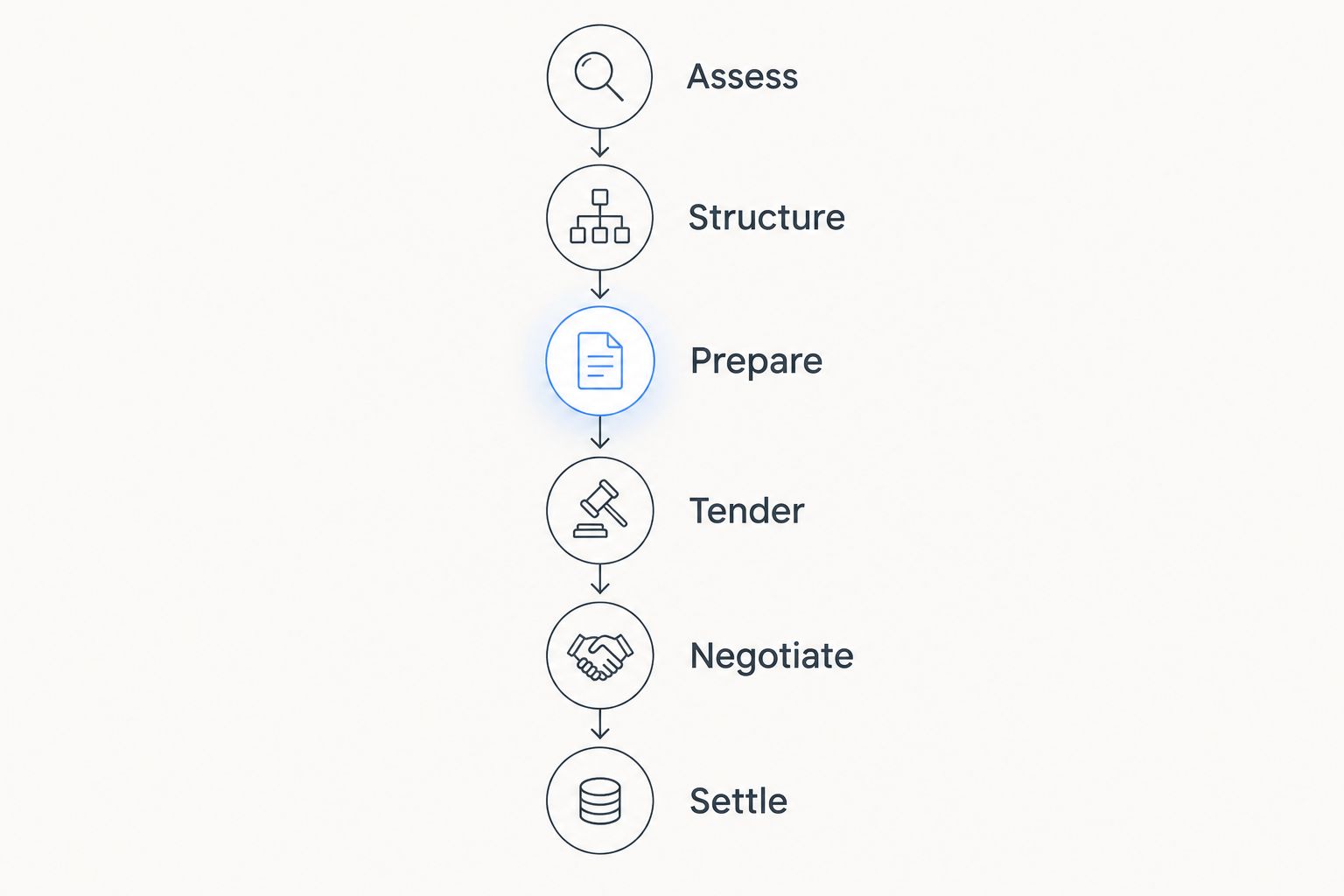
A process list only helps when someone owns each task. Before appointing a broker or adviser, establish who prepares the lending submission, manages lender questions and checks the final documents against the agreed proposal.
Review your commercial borrowing
Discuss existing facilities, refinancing objectives and the appropriate engagement scope.
Why consider switching from Efficient Capital?
Switch for a documented difference in fit, not because an alternatives article ranks another provider first. Apply the same test to Efficient Capital and every replacement you consider.
Reasons to seek a different proposal include:
- A scope mismatch: the proposed engagement does not cover the facilities you need reviewed.
- A lender mismatch: the proposed approach does not address the lenders you want considered.
- Unclear responsibilities: you cannot establish who prepares, negotiates or manages settlement tasks.
- An engagement mismatch: you need retained advisory work but the proposed service is brokerage, or vice versa.
These are decision criteria, not claims about Efficient Capital's service. Confirm the position in the engagement documents before deciding to move.
For a 2026 refinancing review, write down the objective first. A clearer security position, a different repayment structure and funding for a planned purchase are different objectives; a proposal should address the one your business actually needs.
When staying with Efficient Capital is the right call
Stay with Efficient Capital when its documented scope meets your requirements and you understand the proposed process and remuneration. A provider change is not an objective by itself.
Ask for clarification before starting again elsewhere. If the existing proposal already addresses your facilities, lender approach and execution responsibilities, judge an alternative against those same requirements.
FAQ
What's the best Efficient Capital alternative for refinancing?
Glenclair is an alternative to assess for established businesses reviewing commercial debt and refinancing. Compare its proposed scope, lender approach and remuneration with the Efficient Capital engagement before choosing.
Should I use a commercial finance broker or approach my bank directly?
Use a broker when you want assistance preparing and comparing lending proposals; approach a bank directly when you intend to manage that work yourself. Either route requires scrutiny of security, guarantees, repayments and lending conditions.
Does access to 60+ lenders mean every lender gets my application?
No. A lender panel describes access, not a requirement to submit your application to every panel member. Ask which lenders will be approached and why they fit your circumstances.
Is business finance above A$2 million a minimum eligibility rule?
No. This guide focuses on established businesses seeking business-purpose finance above A$2 million, but suitability is assessed case by case. Confirm the appropriate service for your borrowing requirement.
What's the difference between brokerage and debt advisory?
Lender-paid brokerage and retained debt advisory are different engagement models. Debt advisory uses a retainer and success-fee structure, so confirm the deliverables and fee triggers before appointing an adviser.
Can equipment finance be included in a broader banking review?
Equipment finance can be considered alongside the business's other commercial borrowing requirements. Ask how the proposed equipment facility interacts with existing security, repayments and working capital needs.
Will switching finance brokers guarantee better loan terms?
No. Changing brokers does not guarantee approval, savings or better terms. Compare written proposals and assess the lending conditions before committing.
One last thing
Before signing a 2026 engagement, ask: What would make staying with the current lender the right decision? Include that option in the brief so the review tests your existing arrangements rather than assuming a refinance is necessary.
Ask for the answer in writing alongside the alternatives. Your business needs a justified borrowing decision, not simply a new facility.
Related guides
- Equipment finance options for manufacturing businesses
- Truck finance options for Australian transport fleets
- Income requirements for commercial property finance
Author: Glenclair Financial team.