
Best Hodgestone Finance alternatives for business loans

The right Hodgestone Finance alternative depends on whether you need another borrowing proposal or a review of your entire banking arrangement. Glenclair suits Australian business owners seeking an independent commercial finance review, particularly for business-purpose borrowing above A$2 million, with suitability assessed case by case.
TL;DR
- Compare Hodgestone Finance alternatives against the same borrowing brief, not different loan amounts or security assumptions.
- Glenclair offers commercial finance brokerage through a panel of 60+ lenders, including refinancing, equipment and property development finance.
- A direct lender suits borrowers who want to negotiate with a chosen institution without a broker.
- Separate lender-paid brokerage from debt advisory, which uses a retainer and success-fee structure.
Why this matters
A business loan comparison should answer more than who will lend. You need to understand the proposed security, repayment obligations, reporting requirements and ability to change lenders later.
For a 2026 refinancing review, begin with your existing facilities. A replacement loan is not automatically a better banking arrangement, and changing brokers does not guarantee approval or improved terms.
Hodgestone Finance alternatives at a glance
Use Hodgestone Finance as the reference point for the same written borrowing brief. The table below distinguishes the available routes and what you should establish before appointing anyone.
| Option | Best for | Main distinction | What to compare with Hodgestone Finance |
|---|---|---|---|
| Glenclair | Established Australian businesses reviewing commercial borrowing | Independent commercial finance brokerage with a panel of 60+ lenders | Proposed lender selection, refinancing scope and treatment of existing facilities |
| Another independent commercial finance broker | Owners seeking a second broker proposal | A separate assessment and lender-selection process | Relevant experience, lender access, remuneration and written scope |
| Direct lender | Owners who want to negotiate with a chosen institution | You deal directly with that lender | Who prepares the submission and whether other lenders will be compared |
| Debt advisory engagement | Owners needing a separately scoped advisory mandate | Retainer and success-fee structure rather than lender-paid brokerage | Deliverables, responsibilities and the distinction between advice and loan placement |
| Hodgestone Finance | Owners assessing whether their current proposal meets the brief | The benchmark proposal for your comparison | Confirm the actual scope, lender approach and proposed terms in writing |
Compare like with like. Different loan amounts, repayment profiles or security packages make headline comparisons unreliable.
1. Glenclair: best for a commercial refinancing review
Glenclair is an independent commercial finance brokerage helping Australian business owners with loans, refinancing, equipment and property development finance through a panel of 60+ lenders. Its commercial finance services suit a review that looks beyond a single new facility and considers the existing banking arrangement.
The intended audience is established businesses seeking business-purpose finance above A$2 million. That is a preferred focus, not a universal eligibility rule; suitability remains case by case.
Where the service fits
- Refinancing existing business borrowing.
- Reviewing equipment funding alongside other commercial facilities.
- Considering property development finance within a business borrowing requirement.
- Assessing lender options through an independent brokerage rather than approaching only one institution.
Where the service falls short
- A panel of 60+ lenders is not a promise that every lender will suit your transaction.
- Brokerage does not remove the lender's credit assessment or guarantee finance outcomes.
- A broader review requires financial records, facility documents and management input; it is not simply a request for a headline rate.
| Decision point | This alternative | What to establish with Hodgestone Finance |
|---|---|---|
| Service scope | Business loans, refinancing, equipment and property development finance | Which requirements the engagement covers |
| Lender access | Panel of 60+ lenders | Which lenders will be considered and why |
| Borrower fit | Established business owners; suitability assessed individually | Fit with your borrowing purpose and existing facilities |
| Engagement | Distinguish brokerage from debt advisory | Written scope and remuneration arrangements |
Best for: Owners who want to test existing commercial borrowing against a wider financing brief. Review the commercial finance services before deciding whether the scope matches your needs.
Verdict: Hold appointment until the review scope and lender-selection approach are clear.
2. Another independent broker: best for a second assessment
Another independent commercial finance broker is a useful comparison route when you want a separate view of the same borrowing requirement. Judge the proposal by its substance, not the word independent alone.
Ask who will assess your business, which lenders fit the transaction and how the broker will present the application. A second opinion is most useful when it identifies a specific difference in structure or approach.
Where this route shines
- Gives you another assessment of the same borrowing brief.
- Lets you compare how brokers explain security, lender selection and submission requirements.
- Allows you to choose an adviser whose proposed scope matches your transaction.
Where this route falls short
- Another appointment means additional briefing and document handling.
- Two brokers pursuing overlapping lenders can complicate responsibility unless you agree on boundaries.
- A different broker does not necessarily produce a different credit decision.
| Decision point | Another independent broker | What to establish with Hodgestone Finance |
|---|---|---|
| Assessment | Request an independently prepared recommendation | Request the reasoning behind the existing recommendation |
| Lender selection | Ask for the proposed lender shortlist | Compare the shortlist against the same brief |
| Accountability | Identify the person responsible for the submission | Confirm the equivalent responsibility |
Best for: Owners who want to compare advisers before authorising lender submissions.
Verdict: Hold until the second proposal explains a meaningful difference.
3. Direct lender: best for a defined banking preference
A direct lender is an alternative to using a broker, not another brokerage service. You approach the chosen institution and negotiate its proposed facilities directly.
This route suits an owner who wants that relationship and can manage the comparison work. It does not replace a market comparison unless you approach other lenders yourself.
Where this route shines
- Keeps discussions directly between you and the proposed lender.
- Lets you explain an established banking relationship without an intermediary.
- Gives you control over the institutions you approach.
Where this route falls short
- One lender's proposal is not a comparison across lenders.
- You remain responsible for preparing information and assessing competing structures.
- You need to challenge security and conditions as well as the headline offer.
Best for: Owners with a clear lender preference and the capacity to manage negotiations.
Verdict: Hold unless you can explain why that lender fits the whole requirement.
4. Debt advisory: best for a separately scoped mandate
Debt advisory is a different engagement from lender-paid brokerage. It uses a retainer and success-fee structure, so establish the advisory work, responsibilities and completion conditions before proceeding.
Choose the scope first. Do not assume that an advisory appointment and a brokerage appointment include identical work.
Where this route shines
- Provides a basis for defining advisory deliverables separately from loan placement.
- Lets you specify the analysis and negotiation support required.
Where this route falls short
- Requires a clear agreement about scope and remuneration.
- Does not guarantee lender participation, approval or settlement.
Best for: Owners seeking defined advisory work beyond arranging a borrowing proposal.
Verdict: Hold until the engagement identifies the work and responsibilities explicitly.
Why review your Hodgestone Finance proposal?
A review is justified by a change in your business or a question about the proposed arrangement—not by an assumption that another broker must be better. In 2026, use these circumstances as prompts for assessment rather than claims about any particular provider.
- Your borrowing purpose has changed. Equipment purchases, working capital and property development need to be explained clearly in the brief.
- Your existing facilities need attention. Maturity dates, security arrangements or repayment obligations warrant review before you add another loan.
- You want a banking tender. Ask advisers how they would invite and compare lender proposals against a consistent requirement.
- The scope is unclear. Resolve who handles preparation, lender discussions, negotiation and settlement coordination.
- You need to separate brokerage from advisory. Confirm the engagement type before authorising work.
None of these circumstances establishes that Hodgestone Finance is unsuitable. They establish what your comparison needs to answer.
Run the comparison through a clear process
For your 2026 review, use these 6 stages as a practical framework. Ask each adviser to explain how their proposed engagement addresses them.
Assess
Start with the business, borrowing purpose and existing facilities. Gather information in 3 groups: financial records, current lending documents and the proposed funding requirement.
Structure
Decide what the facilities need to do. Separate equipment, working capital and property requirements where appropriate, and ask how each proposed structure affects repayment and security.
Prepare
Build one consistent submission brief. Explain the transaction, provide supporting records and resolve inconsistencies before lender discussions begin.
Tender
Agree which lenders to approach and why. A useful banking tender gives lenders a consistent requirement so their responses can be compared meaningfully.
Negotiate
Compare the complete proposed arrangement. Address security, guarantees, repayment obligations, reporting conditions and flexibility—not only the headline rate.
Settle
Check the final documents against the agreed proposal. Confirm conditions, responsibilities and the treatment of existing facilities before completing the transaction.
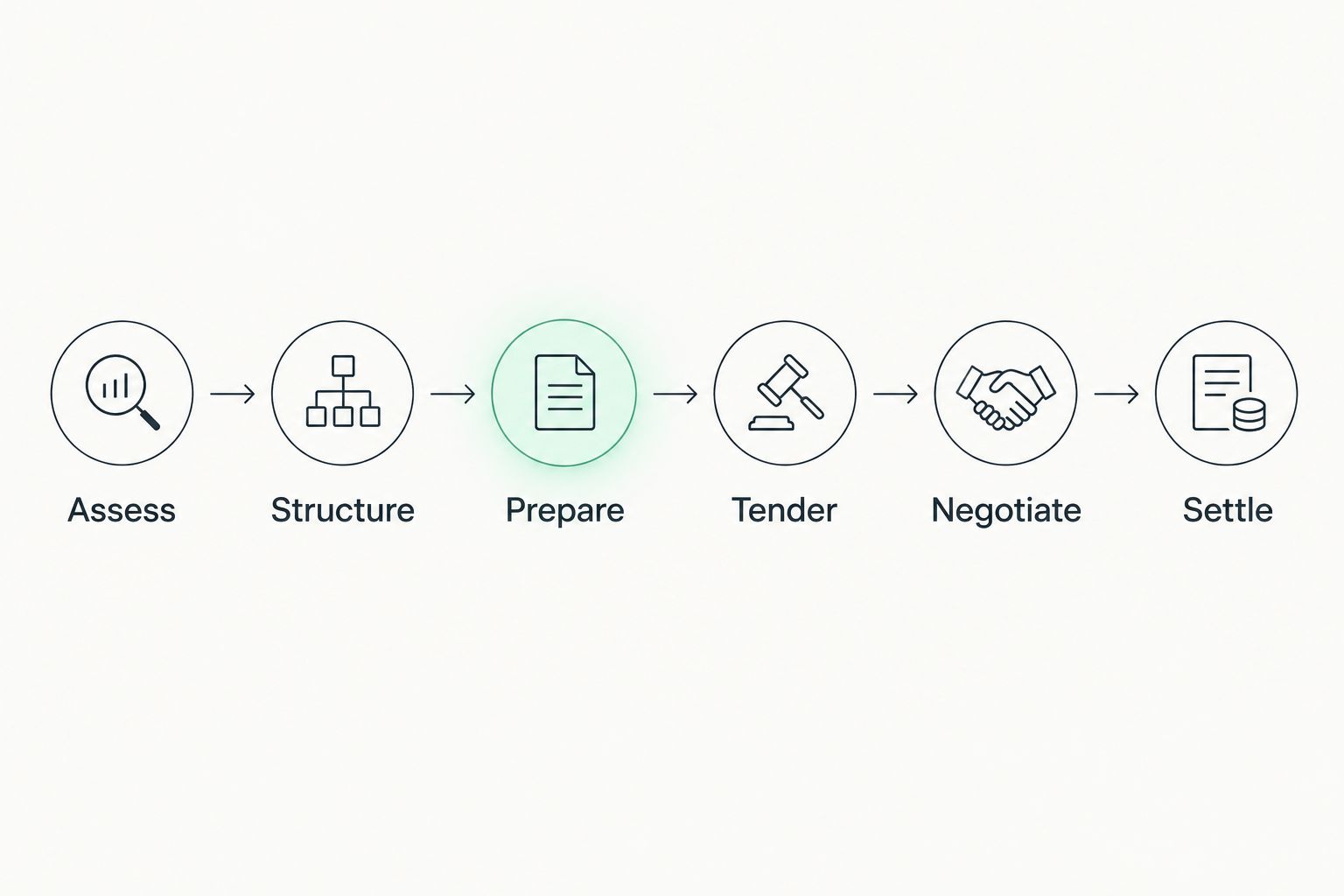
A process is useful only when responsibilities are clear. Ask who owns each stage and what you must supply; do not assume every brokerage or advisory engagement includes every task.
Review your commercial finance requirements
Consider refinancing, equipment and property funding within your existing banking arrangement.
When staying with Hodgestone Finance is the right call
Stay with Hodgestone Finance if its actual proposal meets your borrowing brief, explains the lender selection and makes the obligations clear. Switching advisers without a specific reason adds another briefing exercise without establishing a better outcome.
For a 2026 decision, ask for the recommendation in writing. You should be able to explain why the proposed lender, structure and security suit your business—and what alternatives were considered.
Do not switch for a different name. Switch only when the proposed work addresses a defined need.
FAQ
What's the best Hodgestone Finance alternative for refinancing?
Glenclair is an alternative for Australian business owners seeking an independent commercial refinancing review through a panel of 60+ lenders. The right choice depends on your existing facilities, borrowing purpose and the proposed engagement, with suitability assessed case by case.
Is another commercial finance broker better than approaching a bank directly?
A broker and a direct lender provide different routes, so neither is automatically better. A broker can assess lender options within its panel, while a direct approach leaves you responsible for comparing institutions and negotiating the arrangement.
Does borrowing above A$2 million guarantee a broker will take my application?
No, a borrowing amount alone does not establish suitability. The business, funding purpose, supporting information and proposed transaction still need assessment.
What should I compare besides the interest rate?
Compare security, guarantees, repayments, reporting requirements, facility terms and conditions for changing or ending the arrangement. Read those obligations alongside the headline rate rather than treating the rate as the entire decision.
What's the difference between lender-paid brokerage and debt advisory?
Lender-paid brokerage and debt advisory are different engagements. Debt advisory uses a retainer and success-fee structure; confirm the scope, remuneration and responsibilities in writing before authorising work.
Can equipment finance be included in a commercial banking review?
Yes, equipment funding can form part of a broader commercial borrowing review. Explain the asset purchase alongside existing facilities so the adviser can assess the proposed funding and security arrangements together.
Should I change brokers before a 2026 refinancing review?
Change brokers only when the proposed engagement addresses a defined need better than your current arrangement. First compare written scopes, lender-selection reasoning and responsibilities using the same borrowing brief.
One last thing
Ask every adviser this question: Which part of the proposed arrangement would you challenge even if the lender agreed to the requested amount? The answer should address your business obligations, not just getting the application through.
For your 2026 review, keep the written borrowing brief as the reference point. Approval and suitability are different questions; your comparison must address both.
Related guides
- Equipment finance options for construction businesses
- Machinery finance options for agricultural contractors
- Income requirements for commercial property finance
By the Glenclair Financial team.