
Best invoice finance options for labour hire businesses in 2026

Best overall for recurring payroll gaps: whole-ledger invoice discounting. Best for outsourced collections: disclosed invoice factoring. Best for occasional gaps: selective invoice finance. Best alternative where receivables do not fit: a business overdraft. The right invoice finance for labour hire businesses in 2026 depends on approved invoices, customer concentration and the timing of wages—not the headline facility limit.
TL;DR
- Whole-ledger invoice discounting suits recurring payroll gaps where your business retains credit control.
- Disclosed invoice factoring suits labour hire businesses that want an external collections function.
- Selective invoice finance suits occasional funding gaps, not automatically an ongoing payroll requirement.
- Glenclair suits established business owners seeking a broker-led review of commercial borrowing and existing banking arrangements.
Why this matters
Labour hire creates a practical funding mismatch: you pay workers against a payroll schedule, while customers pay invoices under their agreed terms. Invoice finance connects borrowing to eligible receivables, but an invoice is not automatically an asset a lender will fund.
For an established operator, the decision also affects existing banking arrangements. Glenclair is an independent commercial finance brokerage with a panel of 60+ lenders; a review should compare the proposed facility with existing debt, security and working capital requirements.
This guide focuses on established Australian businesses, particularly those reviewing business-purpose borrowing above A$2 million. That is a preferred enquiry profile, not a universal eligibility threshold or a minimum invoice finance facility size.
What makes the best invoice finance for labour hire businesses?
Use these criteria to compare proposals in 2026 before choosing a funding structure:
- Payroll fit: Match expected drawings to wages and associated obligations, not just invoiced revenue.
- Invoice eligibility: Check treatment of approved timesheets, disputed invoices, overdue debts and contractual deductions.
- Customer concentration: Establish how much borrowing depends on your largest customer remaining eligible.
- Collections control: Decide who contacts customers, manages disputes and receives payments.
- Recourse and security: Identify repayment obligations, guarantees and competing security interests.
- Total contractual commitment: Compare charges, minimum commitments, reporting requirements, termination provisions and exit conditions.
A facility limit is not a payroll guarantee. Your usable funding depends on the agreement and the receivables that satisfy its conditions when you need to draw.
Invoice finance options at a glance
| Option | Best for | Standout feature | Key limitation |
|---|---|---|---|
| Whole-ledger invoice discounting | Recurring payroll gaps with internal credit control | Funding linked to an eligible receivables ledger | Debtor exclusions and concentration limits constrain drawings |
| Disclosed invoice factoring | Businesses wanting external collections support | Funding combined with an agreed collections service | Customer contact moves partly outside your team |
| Selective invoice finance | Occasional gaps tied to particular invoices | Funding focused on selected receivables | Selected invoices still require approval |
| Business overdraft | Working capital needs beyond eligible invoices | Drawings through a business banking facility | A fixed limit does not automatically track receivables growth |
The first three options use receivables as the funding basis. An overdraft is a comparison point, not a type of invoice finance. Product labels differ between providers, so compare contractual functions rather than relying on the name.
1. Whole-ledger invoice discounting: best for recurring payroll gaps
Whole-ledger invoice discounting funds eligible receivables across an agreed ledger rather than selecting an isolated invoice each time. Under a discounting arrangement, your business generally retains responsibility for credit control and collections. Confirm the payment-account and customer-notification requirements in the proposed agreement.
Best for: An established labour hire business with recurring payroll requirements, reliable invoicing and an internal accounts receivable function.
Whole-ledger invoice discounting pros
- Links working capital funding to eligible customer invoices.
- Keeps day-to-day credit control with your team under the agreed structure.
- Provides a framework for recurring drawings rather than separate funding decisions for each payroll gap.
Whole-ledger invoice discounting cons
- Excluded invoices reduce the funding base even when they remain outstanding in your accounts.
- Concentration limits restrict reliance on a large customer.
- Your team retains the work of collections, reconciliations and dispute resolution.
For a 2026 banking review, test the ledger against a payroll forecast before comparing headline limits. A growing debtor balance does not necessarily produce equivalent growth in usable funding.
Ask the proposed lender to explain what happens when a major debtor pays late, disputes timesheets or exceeds its concentration allowance. Compare the result with wages falling due during that same period.
Verdict: Buy this structure when recurring eligible receivables support payroll and your business can manage collections.
2. Disclosed invoice factoring: best for outsourced collections
Disclosed invoice factoring combines receivables funding with an agreed collections function. Customers are notified of the arrangement and receive payment instructions consistent with the facility. The division of responsibility for reminders, disputes and escalations must be clear.
Best for: A labour hire operator that wants external collections support alongside working capital funding.
Disclosed invoice factoring pros
- Combines funding and an agreed collections service.
- Gives customers a defined payment process under the arrangement.
- Transfers specified collection tasks away from your internal team.
Disclosed invoice factoring cons
- External customer contact needs to match your commercial relationships.
- Outsourcing collections does not remove your responsibility for accurate invoices and evidence of work.
- Factoring does not automatically transfer the risk of customer non-payment.
Recourse matters more than the label. Under a recourse arrangement, your business remains responsible for repayment in the circumstances set out in the contract. Where non-recourse protection is offered, inspect the covered events, exclusions and dispute provisions rather than treating the description as blanket protection.
For labour hire, agree how the collection team handles missing timesheet approvals and customer queries. A payment reminder cannot resolve a disagreement about hours worked.
Verdict: Buy this structure when the collections service solves a defined operational need and the customer-contact rules are acceptable.
3. Selective invoice finance: best for occasional funding gaps
Selective invoice finance funds particular invoices or an agreed subset of receivables. It suits a defined timing gap better than an assumption that every future payroll will be funded. Each proposed invoice still needs to satisfy the provider's requirements.
Best for: A business with an occasional cash gap linked to identifiable, accepted customer invoices.
Selective invoice finance pros
- Focuses funding on a specific receivable or group of receivables.
- Allows you to assess a defined funding requirement separately from the wider ledger.
- Provides an alternative to a whole-ledger structure where the contract permits that approach.
Selective invoice finance cons
- Funding depends on acceptance of the selected invoices and debtors.
- Repeated use requires repeated coordination unless the agreement provides otherwise.
- A narrow invoice pool exposes the funding plan to problems with those particular receivables.
If you are comparing selective funding in 2026, map the requirement across your payroll forecast. An occasional timing mismatch and an ongoing working capital shortfall are different problems.
Check whether the arrangement includes minimum commitments, ongoing obligations or restrictions affecting other receivables. Selective funding does not necessarily mean an unrestricted, one-off contract.
Verdict: Buy for a defined occasional gap; skip as the default answer to a persistent payroll shortfall.
4. Business overdraft: best for broader working capital needs
A business overdraft allows drawings through a banking facility up to an agreed limit, subject to its terms. It is not invoice finance. Include it in the comparison when cash requirements extend beyond invoices eligible for receivables funding.
Best for: An established business whose working capital needs are broader than its eligible debtor ledger.
Business overdraft pros
- Supports working capital drawings within the approved facility terms.
- Does not require the same invoice-by-invoice funding mechanism as selective invoice finance.
- Can be assessed alongside existing banking and security arrangements.
Business overdraft cons
- The approved limit does not automatically increase with sales or receivables.
- Guarantees, security and review conditions require scrutiny.
- Moving facilities between banks requires coordination with existing security arrangements.
An overdraft and invoice finance are not automatically interchangeable. Compare usable headroom, operating conditions and security requirements against the same cash-flow forecast.
Do not choose an overdraft simply because it looks familiar, or invoice finance simply because turnover is growing. Choose the structure that funds the actual timing gap without introducing unacceptable restrictions.
Verdict: Hold as a serious alternative until the banking review establishes which structure fits your cash cycle.
How the options are ranked
This ranking prioritises recurring payroll fit, collections responsibility and the breadth of the funding requirement. It compares structures, not individual lenders or approval prospects.
Whole-ledger discounting takes the default position for an established operator with recurring eligible invoices and internal credit control. Factoring wins the collections-support slot; selective finance suits occasional gaps; an overdraft addresses broader working capital needs. None wins on cost without comparable written proposals.
How to run a banking tender for labour hire finance
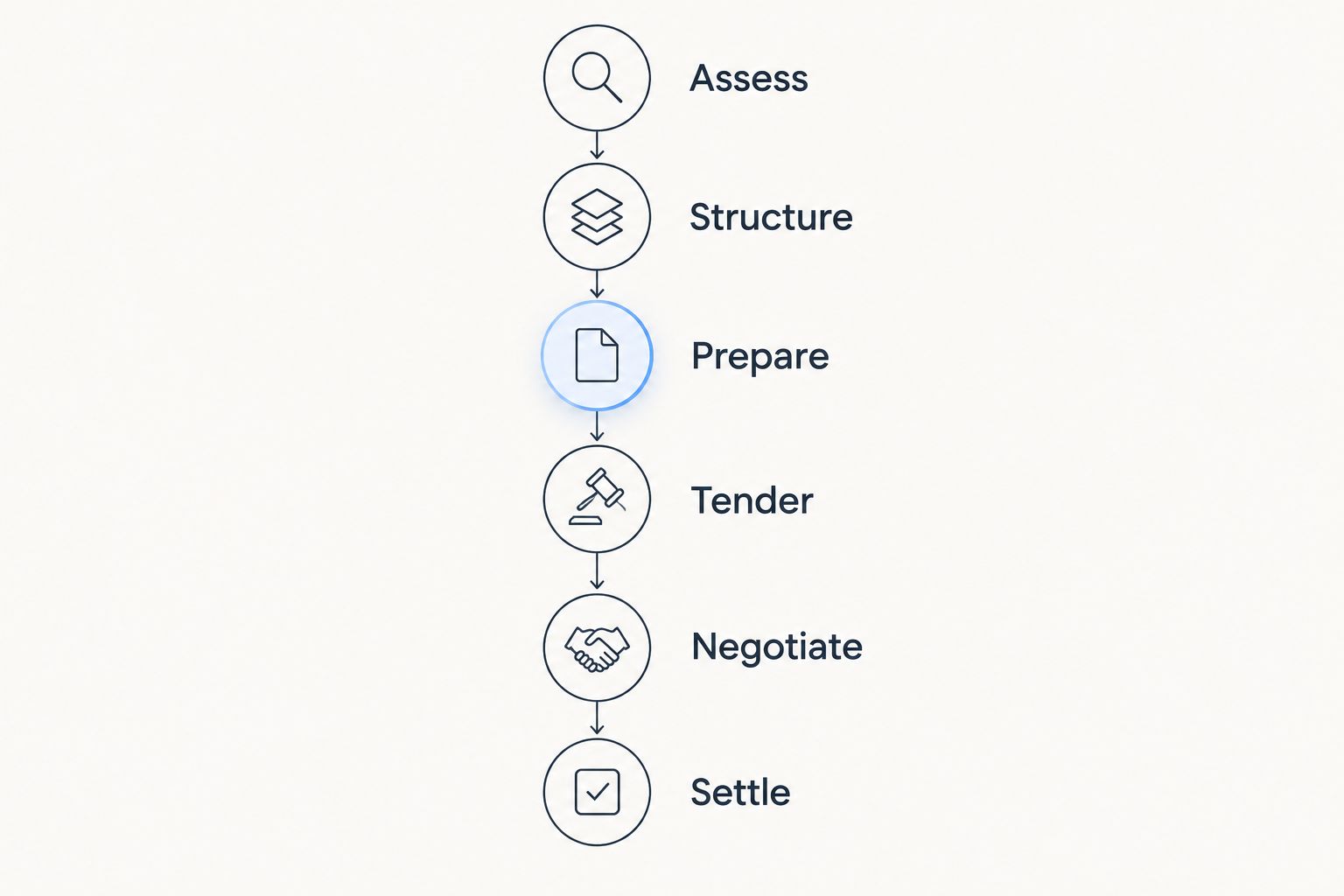
A useful 2026 tender starts with a funding brief, not applications sent to lenders with different assumptions. Glenclair's process is framed around Assess, Structure, Prepare, Tender, Negotiate and Settle. Apply those stages to the existing banking relationship as well as proposed alternatives.
Assess
Document payroll timing, customer payment behaviour, outstanding debt and existing facilities. Separate a timing gap from operating losses: borrowing against invoices does not repair an unprofitable contract.
Structure
Decide which requirement belongs in receivables funding and which belongs elsewhere. Keep equipment borrowing and property finance visible in the review so their repayment schedules and security requirements are not overlooked.
Prepare
Assemble financial statements, current management accounts, debtor ageing, customer contracts and evidence supporting invoiced work. Include existing facility agreements, guarantees and security details.
Tender
Give prospective lenders the same funding brief. Request written explanations of eligibility rules, concentration limits, collections responsibilities and conditions before drawdown.
Negotiate
Compare total contractual charges and operating restrictions, not one headline rate. Ask how exclusions, disputes, customer insolvency and termination would affect the business.
Settle
Coordinate security releases, assignments, customer payment instructions and the transition from existing facilities. Confirm funding conditions before relying on the new arrangement for payroll.
Ask for the engagement terms before appointing a broker or adviser. Glenclair distinguishes lender-paid brokerage from debt advisory services, which use a retainer and success-fee structure. Confirm which engagement applies and what work it covers through the commercial finance services page.
Which option should you choose?
Start with whole-ledger invoice discounting if your labour hire business has recurring eligible receivables and manages collections internally. Choose disclosed factoring when collections support is part of the requirement, not merely because funding is available.
Use selective finance for a specific gap. Compare an overdraft when invoice eligibility leaves material working capital needs uncovered.
Before committing in 2026, ask each shortlisted provider the same practical question: what funding remains usable if your largest customer pays late? Require an answer tied to your ledger and proposed contract, not a general assurance.
FAQ
What's the best invoice finance for labour hire businesses?
Whole-ledger invoice discounting is the starting comparison for an established labour hire business with recurring eligible invoices and internal credit control. Disclosed factoring suits a need for collections support, while selective funding suits occasional gaps. The contract and debtor ledger determine suitability.
Can invoice finance cover wages before customers pay?
Invoice finance can provide funding against eligible receivables before customers pay. Drawings depend on the facility terms, accepted invoices and any applicable limits. Match usable funding to payroll dates rather than relying on the headline facility limit.
Do labour hire invoices need approved timesheets?
Timesheet approval requirements depend on the lender's conditions and the underlying customer contract. Confirm what evidence is required to establish that the work was accepted and the invoice is payable. Unresolved disputes need separate attention.
Is invoice factoring the same as invoice discounting?
No. Factoring generally includes an agreed collections service, while invoice discounting generally leaves credit control with the business. Confirm disclosure, payment instructions and responsibilities in the actual agreement because provider terminology differs.
What happens if a labour hire customer does not pay?
Your responsibility depends on the facility's recourse terms and any applicable protection. A recourse agreement leaves repayment obligations with the business in the circumstances specified. Non-recourse wording still requires checking exclusions and disputed-debt treatment.
How do I compare invoice finance costs?
Compare written proposals against the same ledger, expected drawings and funding period. Include contractual charges, minimum commitments, reporting obligations and termination provisions. A headline rate alone does not establish the total commitment.
Does Glenclair only consider borrowing above A$2 million?
No. Glenclair prioritises established Australian business owners seeking business-purpose finance above A$2 million, particularly refinancing and banking reviews. Suitability is assessed case by case; that preferred profile is not a universal eligibility rule.
One last thing
Your largest customer can be both your strongest revenue relationship and your biggest funding constraint. Before choosing a facility, ask for its concentration rules to be applied to your actual debtor ledger. That answer is more useful than an indicative limit disconnected from eligible invoices.
Related guides
- Equipment finance options for construction businesses
- Equipment finance options for manufacturing businesses
- Income requirements for commercial property finance
Author: Glenclair Financial team.