
Best property development finance for build-to-rent projects 2026

Best overall: senior construction finance with a documented rental refinance pathway; best for funding continuity: construction-to-term finance; best for a complex credit brief: non-bank senior construction finance. Glenclair suits established Australian business owners seeking a broker-led review of property development finance, with suitability assessed case by case.
TL;DR
- For property development finance for build-to-rent projects, match construction debt to a documented rental refinance pathway.
- Senior construction finance is the default starting point, not a substitute for assessing rental debt capacity.
- Construction-to-term finance deserves priority when its conversion conditions are clear and achievable.
- Glenclair reviews commercial borrowing through a panel of 60+ lenders; project suitability remains case-specific.
Why this matters
Build-to-rent means retaining the completed property and collecting rent rather than relying on individual apartment sales to repay construction debt. Your financing decision therefore has two parts: funding delivery and establishing how the completed asset will support debt.
For a 2026 project, a construction approval does not establish that the completed building can refinance the same balance. Treat the rental exit as a separate credit assessment unless the facility documents expressly provide otherwise.
Glenclair's property development finance content focuses on established owners seeking business-purpose borrowing greater than A$2 million. That is a preferred client profile, not a universal eligibility threshold or a statement that every project above that amount qualifies.
What makes the best build-to-rent development finance?
Judge the structure against these criteria before comparing lenders:
- Rental exit: The completed property's income must support the proposed long-term debt under the relevant lender's assessment.
- Construction suitability: Drawdown conditions, builder requirements and completion obligations must fit the project.
- Equity certainty: Identify the sponsor contribution and when it must be contributed.
- Lease-up treatment: Establish how the lender treats the period between completion and stabilised occupancy.
- Security and control: Compare guarantees, security, reporting obligations and lender consent requirements.
- Refinancing flexibility: Examine maturity, extensions, conversion conditions and restrictions on changing lenders.
The best structure funds the build without leaving the rental exit unresolved. A larger construction facility is not automatically a better financing outcome.
Build-to-rent finance options at a glance
These are financing structures, not named lender offers. Their suitability depends on the project, sponsor, security and written credit terms available in 2026.
| Finance structure | Best for | Standout feature | Key limitation |
|---|---|---|---|
| Senior construction finance | A conventional build with a separately assessed rental exit | Funds construction through controlled drawdowns | Long-term refinancing remains a separate task |
| Construction-to-term finance | Sponsors prioritising continuity after completion | Provides a documented pathway from construction debt to term debt | Conversion conditions still need to be satisfied |
| Non-bank senior construction finance | A credit brief needing an alternative senior lender assessment | Broadens the search beyond bank funding | Terms and exit requirements need close comparison |
| Bridging finance | A defined site or existing-facility transition | Addresses a specific funding gap before the next facility | An uncertain exit undermines the structure |
| Mezzanine finance | Sponsors assessing a gap above senior debt | Adds a subordinated debt layer | Adds repayment obligations and creditor complexity |
1. Senior construction finance: best for a conventional build
Senior construction finance funds development through drawdowns governed by the facility's conditions. For build-to-rent, the lender also needs a credible repayment pathway that does not depend on a sales strategy you do not intend to pursue.
Best for: A sponsor with a defined construction programme, identifiable equity and a separately assessed rental refinance strategy.
Senior construction finance pros:
- Matches funding releases to construction progress.
- Keeps the primary construction borrowing within one senior facility.
- Provides a clear starting point for comparing security and repayment conditions.
Senior construction finance cons:
- Construction approval does not guarantee long-term refinancing.
- Drawdown conditions can prevent access to funds until requirements are satisfied.
Ask whether the lender has assessed the intended rental exit or merely accepted a proposed refinance as the repayment strategy. Those are different positions. Also identify who funds any shortfall if the eventual term loan cannot repay the construction balance.
Verdict: Choose senior construction finance as the default starting point when the rental exit has been assessed alongside the build.
2. Construction-to-term finance: best for funding continuity
Construction-to-term finance links the development phase with an agreed pathway into longer-term property debt. The decisive document is the conversion provision, not a statement that the lender intends to retain the relationship.
Best for: Sponsors seeking to reduce reliance on arranging an entirely new facility at completion.
Construction-to-term finance pros:
- Connects construction and investment funding within the proposed structure.
- Makes conversion requirements a topic before construction starts.
- Allows the sponsor to compare completion and rental obligations together.
Construction-to-term finance cons:
- Conversion remains conditional on the documented requirements.
- The term facility can restrict flexibility if its conditions do not suit the holding strategy.
For a 2026 proposal, distinguish practical completion from qualification for term debt. Ask how occupancy, rental evidence, valuation and financial covenants affect conversion. Establish what happens if the building is complete but those requirements remain outstanding.
Verdict: Choose construction-to-term finance for continuity only when the conversion pathway is documented and workable.
3. Non-bank senior construction finance: best for complex briefs
Non-bank senior construction finance provides another lender category to assess against the same project brief. A non-bank label does not establish flexibility, suitability or acceptance of build-to-rent risk; the written proposal does.
Best for: A project requiring an alternative senior credit assessment after its requirements have been clearly defined.
Non-bank senior construction finance pros:
- Broadens the senior funding search beyond banks.
- Allows comparison of different security and drawdown proposals.
- Provides another route for assessing a project-specific funding structure.
Non-bank senior construction finance cons:
- Commercial terms require a full comparison rather than assumptions about lender type.
- Completion, maturity and refinancing requirements still apply.
Request a clear explanation of which project requirements the proposal accommodates. If the answer is simply a larger facility, assess whether that extra debt remains supportable once rental income becomes the repayment source.
Verdict: Consider non-bank senior construction finance when its written terms solve a defined problem without creating an unresolved exit.
4. Bridging finance: best for a defined transition
Bridging finance addresses an interim funding requirement, such as replacing an existing facility while preparing the next financing stage. It is not a substitute for a complete construction and rental funding strategy.
Best for: A sponsor with a specific transition and a credible, documented repayment event.
Bridging finance pros:
- Separates an immediate funding requirement from the later development facility.
- Gives the interim borrowing a defined purpose.
- Allows existing security and repayment obligations to be addressed explicitly.
Bridging finance cons:
- Maturity creates pressure if the next financing stage is delayed.
- Another refinancing introduces further approval and documentation requirements.
Write down the event that repays the bridge. Then identify its dependencies: approval, documentation, equity, valuation or another transaction. A proposed future refinance is not the same as an approved replacement facility.
Verdict: Use bridging finance only for a defined transition; skip it when the repayment plan depends on unresolved assumptions.
5. Mezzanine finance: best for assessing a senior-debt gap
Mezzanine finance adds a debt layer behind senior funding under an agreed creditor structure. It addresses a funding gap, but it also changes the project's repayment obligations and the relationship between lenders.
Best for: Sponsors assessing whether a gap above senior debt can be funded without undermining the retained-asset strategy.
Mezzanine finance pros:
- Provides a separate debt layer for an identified funding gap.
- Makes the relationship between senior and subordinated funding explicit.
- Allows an alternative structure to be assessed alongside additional sponsor equity.
Mezzanine finance cons:
- Adds obligations that the project's eventual repayment strategy must accommodate.
- Requires agreement on creditor rights and senior lender consent where applicable.
Compare mezzanine debt with contributing more equity, changing the project scope or revisiting the senior facility. For build-to-rent, the central question remains whether the completed asset can support the combined obligations.
Verdict: Hold mezzanine finance as a project-specific option, not the default answer to an equity shortfall.
How the options are ranked
The ranking prioritises rental exit clarity, construction suitability and manageable refinancing dependencies. It does not rank lenders by approval speed, borrowing capacity or financing outcomes.
Senior construction finance is the starting point because it directly addresses the build. Construction-to-term finance takes priority when documented continuity is the sponsor's main requirement. The remaining structures address specific credit or funding gaps rather than replacing a sound base plan.
Prepare a banking tender around the rental exit
A useful 2026 banking tender gives lenders the same project brief and asks them to respond to the same requirements. Otherwise, differences in assumptions can make apparently comparable proposals materially different.
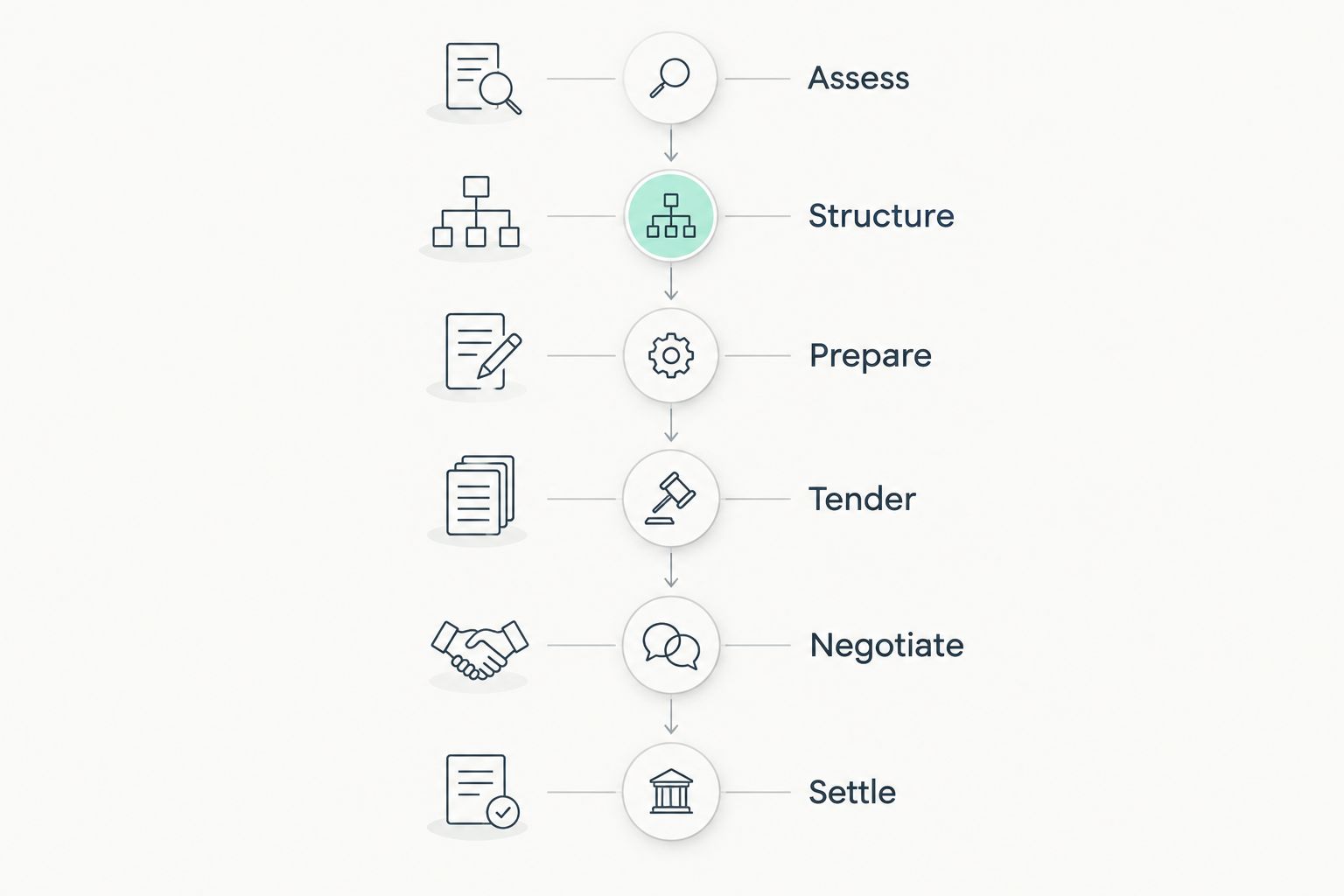
Glenclair describes its process through six stages:
- Assess: Establish existing debt, project requirements, sponsor position and intended holding strategy.
- Structure: Separate construction funding, equity, lease-up needs and the proposed term-debt exit.
- Prepare: Assemble financial information, project documents and the assumptions lenders need to assess.
- Tender: Present the funding requirement for lender consideration and comparison.
- Negotiate: Address conditions, security, repayment requirements and unresolved differences.
- Settle: Complete the agreed documentation and funding requirements.
Give particular attention to existing banking arrangements. Identify guarantees, cross-security, release conditions and other facilities affected by a refinance. Moving one development loan can involve obligations elsewhere in the business.
Request a written comparison that separates lender conditions from assumptions still awaiting confirmation. A proposal subject to further credit approval is not equivalent to an unconditional commitment.
Separate brokerage from debt advisory
Lender-paid brokerage and debt advisory are different engagements. Debt advisory uses a retainer and success-fee structure; establish the engagement scope and remuneration before proceeding.
For a 2026 review, ask who pays each party, which services the engagement includes and which external costs remain your responsibility. Do not assume that lender-paid remuneration means every part of the transaction is without cost.
Review your development funding structure
Discuss construction debt, existing banking arrangements and the proposed rental refinance exit.
Which development finance should you choose?
Start with senior construction finance and assess the rental refinance pathway at the same time. Prioritise construction-to-term finance when continuity matters and the conversion conditions fit your project.
Use alternative senior lenders, bridging or mezzanine funding to address a defined requirement. Do not select them simply because they increase the initial amount available to borrow.
Before accepting a proposal, record the construction maturity, conversion conditions, equity obligations and source of repayment. If a material dependency remains unresolved, resolve it before treating the funding plan as complete.
FAQ
What's the best property development finance for build-to-rent projects?
Senior construction finance with an assessed rental refinance pathway is the default starting point. Construction-to-term finance deserves priority when its documented conversion conditions suit the project and the sponsor wants funding continuity.
Is construction-to-term finance better than a separate refinance?
Construction-to-term finance is better suited to sponsors prioritising continuity when its conversion conditions are workable. A separate refinance leaves another credit decision to complete, but the available terms still need to be compared.
Can a build-to-rent project use non-bank construction finance?
Non-bank construction finance is an option to assess, not an assurance of eligibility. Suitability depends on the lender's assessment of the sponsor, project, security and proposed repayment strategy.
Does practical completion automatically trigger term finance?
Practical completion does not automatically establish eligibility for term finance. Check the facility documents for conversion requirements involving valuation, rental evidence, occupancy or financial covenants.
Should I use mezzanine debt instead of more equity?
Compare mezzanine debt with additional equity against the project's total repayment obligations. Mezzanine finance adds another debt layer and requires the creditor arrangements to work alongside senior funding.
Does Glenclair only assess loans above A$2 million?
Glenclair focuses on established Australian business owners seeking business-purpose finance greater than A$2 million. That preferred profile is not a universal eligibility rule; suitability is assessed case by case.
What should I prepare before requesting development finance?
Prepare the project brief, existing debt details, financial information, construction documents and proposed rental exit. Identify the equity contribution and any assumptions that still require evidence or lender confirmation.
One last thing
A completed building and a refinance-ready investment are different milestones. For your 2026 funding review, put this question beside every proposal: What repays the construction facility if term-debt conversion is not available at completion?
The answer belongs in the financing plan before construction starts. This article provides general information, not a recommendation for a particular borrowing arrangement.
Related guides
- Income requirements for commercial property finance
- Equipment finance options for construction businesses
- Machinery finance options for earthmoving contractors
Author: Glenclair Financial team