
Best Swoop Funding alternatives for Australian businesses

Swoop Funding helps businesses discover funding options through its funding-matching platform. That discovery role is different from deciding how to restructure existing loans, negotiate security or review an entire banking relationship. Among Swoop Funding alternatives in 2026, Glenclair suits an established Australian business seeking an independent commercial finance review; your existing bank is the alternative when you want to negotiate directly.
TL;DR
- Glenclair is a Swoop Funding alternative for established Australian businesses seeking independent commercial finance and refinancing support.
- Compare funding discovery, broker-led refinancing and direct bank negotiation by the work you need done.
- A panel of 60+ lenders provides options, not a promise of approval or better terms.
- Assess security, guarantees, covenants and remuneration before choosing a commercial finance adviser.
Why this matters
Your choice is not simply between funding websites. It is between different ways of finding finance, preparing a lending proposal and negotiating the terms your business will live with.
For a business-purpose borrowing requirement above A$2 million, start with the existing banking arrangements. That amount describes the audience for this guide, not a universal eligibility threshold. Suitability depends on the business, the transaction and the work required.
In 2026, a useful comparison asks who will assess the whole debt position, which lenders will receive the proposal and who will negotiate the final conditions. A lender introduction alone does not answer those questions.
Swoop Funding alternatives at a glance
The options below serve different purposes. Swoop Funding is included as the benchmark; the other entries compare an independent brokerage, direct negotiation and a separately scoped advisory engagement.
| Option | Best for | Standout feature | Difference from Swoop Funding |
|---|---|---|---|
| Swoop Funding | Discovering business funding options | Funding matching | The benchmark for a discovery-led search |
| Glenclair commercial finance services | Established businesses reviewing commercial borrowing or refinancing | Independent brokerage with a panel of 60+ lenders | An alternative brokerage relationship for business loans, refinancing, equipment and property development finance |
| Your existing bank | Borrowers who want to negotiate directly with their current lender | Direct access to the incumbent lending relationship | Keeps the negotiation with the lender rather than a funding platform |
| A separately scoped debt advisory engagement | Borrowers who need advice on debt structure and transaction strategy | A defined advisory mandate | Separates advisory work from lender matching; confirm the scope before appointing anyone |
Choose by the work required, not the length of a lender list. Ask each provider to explain responsibility for assessment, submissions, negotiation and settlement before you proceed.
1. Glenclair: best for an independent commercial finance review
Glenclair is an independent commercial finance brokerage serving Australian business owners through a panel of 60+ lenders. Its stated services include business loans, refinancing, equipment finance and property development finance.
Best for: Established business owners seeking a review of existing banking arrangements, particularly where business-purpose borrowing exceeds A$2 million. Assess the engagement case by case rather than treating that figure as a minimum lending rule.
Where the brokerage shines
- Its stated service scope covers both existing debt and new commercial borrowing.
- The lender panel supports consideration of alternatives to the incumbent bank.
- Equipment and property development finance sit within the same stated brokerage offering as business loans and refinancing.
Where the brokerage falls short
- A panel is not the whole lending market. Ask which lenders are relevant to your transaction and which are outside the proposed search.
- Brokerage does not replace your legal, accounting or tax advice.
- The availability of lenders does not establish approval, savings or acceptable security terms.
Head-to-head: brokerage versus funding discovery
| Dimension | Independent brokerage | Swoop Funding |
|---|---|---|
| Starting point | A commercial borrowing or refinancing requirement | Discovery of funding options |
| Relevant service scope | Business loans, refinancing, equipment and property development finance | Funding matching |
| Selection question | Who will structure, present and negotiate the borrowing proposal? | What support accompanies the funding match? |
| Evidence to request | Written scope, proposed lender approach and remuneration disclosure | Written explanation of the matching process and support provided |
A useful 2026 refinancing brief starts with your facilities, security and business plans—not a request for the lowest headline rate. Ask whether the engagement will assess guarantees, covenants, repayment structure and the interaction between facilities.
Verdict: Buy the brokerage service when its written scope matches the review you need. Do not appoint on panel size alone.
2. Your existing bank: best for direct negotiation
Your existing bank is an alternative route when you want to discuss the borrowing directly. It is also the essential benchmark for a refinancing exercise: an external proposal means little until you understand what the incumbent will offer on comparable terms.
Best for: Business owners with a defined request who are prepared to manage the negotiation themselves.
Where direct negotiation shines
- You can put your request directly to the lender responsible for the existing facilities.
- You can ask for revised terms without first appointing an external intermediary.
- A written incumbent proposal provides a baseline for comparing other offers.
Where direct negotiation falls short
- One bank's offer does not establish what other lenders will offer.
- You carry responsibility for preparing the case and challenging the conditions.
- A familiar relationship is not evidence that the current structure still suits the business.
| Dimension | Your existing bank | Swoop Funding |
|---|---|---|
| Counterparty | The incumbent lender | A funding-matching platform |
| Main task | Negotiate the current banking relationship | Discover funding options |
| Comparison limitation | The bank's proposal is not a market comparison | A match is not itself a negotiated facility agreement |
Request a written proposal covering the facilities you want reviewed. Keep the borrowing amount, purpose, security assumptions and repayment basis consistent when seeking alternatives; otherwise, you are comparing different transactions.
Verdict: Hold the existing relationship when its documented terms and structure meet your needs. Familiarity alone is not a reason to stay.
3. Debt advisory: best for a separately defined strategy brief
A debt advisory engagement is a different appointment from a search for funding. It is appropriate to consider when you need a defined piece of work on debt structure, transaction strategy or the management of a financing process.
Best for: Borrowers who can identify an advisory task that goes beyond finding a lender.
Where debt advisory shines
- You can specify the analysis and deliverables in an engagement letter.
- You can distinguish strategic advice from lender introductions.
- You can assign responsibility for coordinating a complex financing brief.
Where debt advisory falls short
- An advisory mandate is not a lending commitment.
- A vague scope leaves uncertainty about what the adviser must deliver.
- Advisory work does not remove the need for legal review of facility documents.
Debt advisory uses a retainer and success-fee structure, distinct from lender-paid brokerage. Clarify the success event, exclusions and payment obligations before signing; do not assume that every finance engagement uses the same remuneration model.
Verdict: Buy advisory work only when the mandate names the problem, deliverables and payment triggers. Skip an undefined engagement.
How to compare the work before appointing anyone
Use these 6 stages as a brief for the provider you are considering. They are questions to resolve before appointment, not a claim that every provider follows an identical process.
Assess
List current facilities, balances, repayment obligations and maturity dates. Add the business purpose of the new finance and the reason the present arrangement needs attention.
Structure
Separate working capital, equipment purchases, commercial property borrowing and development expenditure. Ask how the proposed facilities reflect those purposes rather than assuming one loan should cover everything.
Prepare
Agree on the financial information and supporting documents required. Establish who prepares the credit submission, checks it for consistency and answers lender questions.
Tender
Ask which lenders will receive the proposal and why. A panel of 60+ lenders is useful context, but the relevant question is which lenders suit this borrowing requirement.
Negotiate
Compare more than interest. Include guarantees, security, financial covenants, repayment requirements, reporting obligations and conditions that must be satisfied before funds can be advanced.
Settle
Confirm responsibility for documentation, discharge of existing facilities and coordination with legal advisers. Do not treat an indicative offer as a completed refinance.
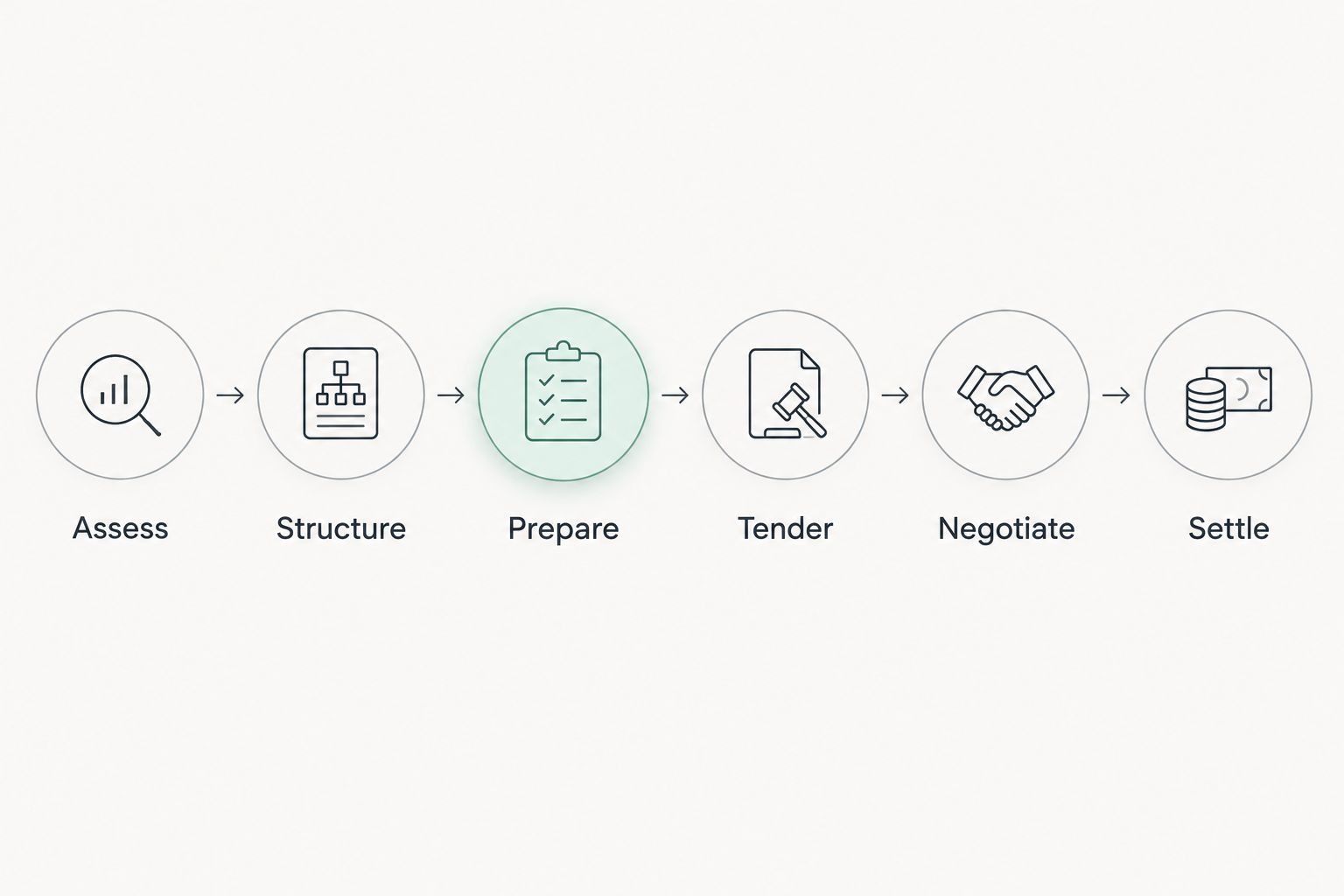
In a 2026 banking review, put these responsibilities in writing. A clear brief lets you distinguish a lender introduction from a broader assessment and negotiation service.
Why people switch from Swoop Funding
A change of provider should follow a change in the work required. Funding discovery and a full banking review are different assignments; that distinction is not evidence that either provider has failed.
The brief has expanded beyond finding funding
You might start by searching for a business loan, then identify a need to refinance existing facilities or separate equipment debt from working capital. At that point, ask for a proposal that addresses the combined borrowing position.
Do not assume any provider includes this work. Make the requirement explicit and compare the responses.
You want a documented banking tender
A banking tender asks relevant lenders to respond to a defined borrowing brief. Its value depends on comparable submissions and careful assessment of the conditions—not simply collecting expressions of interest.
Request a comparison of the incumbent and proposed alternatives on the same assumptions. If one lender requires different security or repayment terms, record that difference rather than presenting the offers as equivalent.
You need clarity about who pays whom
Distinguish lender-paid brokerage from a retainer and success-fee debt advisory engagement. Ask for written disclosure of the remuneration arrangement, any borrower obligations and what happens if the transaction does not settle.
The payment source does not, by itself, prove that advice is conflict-free. Ask how the provider identifies and manages conflicts and how lender selection is explained.
When staying with Swoop Funding is the right call
Stay with Swoop Funding when funding discovery remains your main requirement and the service offered meets that brief. Switching providers is not inherently an improvement.
Before changing course in 2026, ask whether the existing provider can deliver the additional work you need. Compare the written response with the alternative engagement, including responsibilities, exclusions and remuneration.
Do not switch for a longer lender list alone. Switch when another clearly defined service better matches the commercial borrowing task, without assuming a better finance outcome.
FAQ
What's the best Swoop Funding alternative for an Australian business?
An independent commercial finance brokerage is an alternative to consider when you need a review of existing borrowing rather than funding discovery alone. Direct negotiation with your existing bank is another route when you can manage the process yourself.
Is a commercial finance broker better than going directly to my bank?
A commercial finance broker serves a different role from your bank. A broker can help you consider lender options, while direct bank negotiation leaves you responsible for preparing the case and assessing the offer against alternatives.
Do I need to borrow more than A$2 million to use a broker?
A$2 million is not a universal broker eligibility threshold. This guide focuses on established businesses with larger commercial borrowing requirements, but suitability must be assessed case by case.
What should I compare besides the interest rate?
Compare security, guarantees, covenants, repayment structure, reporting obligations and settlement conditions. An offer with a different security requirement is not directly equivalent merely because the borrowing amount matches.
How is lender-paid brokerage different from debt advisory?
Lender-paid brokerage and debt advisory have different remuneration structures. Debt advisory uses a retainer and success-fee structure; request written disclosure of the scope, payment obligations and triggers before appointing a provider.
Does a large lender panel guarantee approval?
A large lender panel does not guarantee approval. Each lender assesses the proposal against its own requirements, and the relevant comparison is which lenders fit the transaction and what terms they offer.
Should I move my equipment finance when refinancing my business loans?
Assess equipment finance as part of the overall banking review rather than assuming it must move. Compare the existing obligations, proposed structure and consequences of changing facilities before making a decision.
One last thing
Write down the security and guarantees you are prepared to offer before seeking proposals. That gives the negotiation a boundary and exposes offers that solve the funding requirement by asking you to accept a different risk.
For your next banking review, request 3 written comparisons: the existing arrangement, the incumbent's revised proposal and the proposed alternative. If any comparison is absent, identify the unanswered questions before making a decision.
Written by the Glenclair Financial team.