
Best working capital finance for importers in 2026

Best overall for the supplier-to-sale funding gap: import finance. Best for fluctuating daily cash needs: a business overdraft. Best for releasing cash after invoicing: invoice finance. This 2026 guide compares working capital finance for importers by funding stage, repayment source and security requirements—not lender slogans.
TL;DR
- Import finance is the strongest starting point for funding supplier payments before imported goods generate sales.
- Business overdrafts suit recurring cash fluctuations; invoice finance suits eligible unpaid business invoices.
- Glenclair suits established Australian importers reviewing business-purpose borrowing above A$2 million, with suitability assessed individually.
- Compare working capital finance for importers through a banking tender covering security, repayment terms and reporting obligations.
Why this matters
An importer can pay a supplier before goods leave port, then wait through transit, storage, sale and customer collection. The right facility funds the actual gap and has a credible repayment source. A loan that matures before customers pay creates another funding problem rather than resolving the first.
Glenclair is an independent commercial finance brokerage with a panel of 60+ lenders. Its services include business loans and refinancing, making a review of existing banking arrangements relevant alongside any new working capital request.
For established Australian businesses seeking business-purpose finance above A$2 million, start with the whole borrowing position. That amount describes the intended audience here, not a universal eligibility rule. Existing security, guarantees and facility conditions can affect which funding structure fits.
What makes the best working capital finance for importers?
Use these criteria before comparing lenders in 2026:
- Funding stage: Does the facility cover supplier deposits, shipment, stockholding or unpaid customer invoices?
- Repayment fit: Does repayment follow cash collection, or begin while money remains tied up in goods?
- Security scope: Which assets, guarantees and existing lender consents does the proposal require?
- Usable capacity: What can you actually draw after eligibility rules, reserves and reporting requirements?
- Currency exposure: Does the borrowing currency match the underlying payment and repayment flows?
- Banking flexibility: Does the facility restrict other borrowing, asset sales or future refinancing?
A large approved limit is not the same as usable working capital. Read the drawdown conditions before treating a proposal as funding you can deploy.
Importer finance options at a glance
| Rank and option | Best for | Standout feature | Key limitation |
|---|---|---|---|
| 1. Import finance | Supplier payments linked to identifiable imports | Funding tied to the purchasing and shipment cycle | Transaction requirements and maturity must fit the trade |
| 2. Business overdraft | Recurring fluctuations across operating cash flow | Revolving access within agreed limits | Review conditions and security can constrain flexibility |
| 3. Invoice finance | Cash tied up in eligible business receivables | Funding linked to outstanding customer invoices | Does not directly fund the pre-invoice period |
| 4. Inventory finance | Saleable stock awaiting customer orders | Borrowing capacity linked to eligible inventory | Stock eligibility and valuation determine usable capacity |
| 5. Letter of credit | Supplier transactions needing payment assurance | Conditional bank payment undertaking | Does not automatically provide extended repayment terms |
| 6. Business term loan | A defined working capital requirement with predictable repayment | Scheduled repayments against an agreed borrowing amount | Repayments can precede cash collection |
1. Import finance: best for supplier-to-sale funding gaps
Import finance is the strongest starting point when you need to pay an overseas supplier before the imported goods produce cash. It connects borrowing to identifiable purchases rather than treating the requirement as an unexplained cash shortfall.
The structure must accommodate the transaction. Supplier terms, shipment documents, transit, stockholding and customer payment terms all matter.
Import finance pros:
- Links the funding request to identifiable goods and supplier obligations.
- Makes the purchasing-to-collection cycle central to the assessment.
- Supports a focused comparison of drawdown and maturity conditions.
Import finance cons:
- Documentary requirements can limit which transactions qualify.
- A delayed shipment or customer payment can leave repayment due before collection.
- Currency risk remains unless separately addressed.
Best for: Established importers with repeatable purchases and a clear route from shipment to customer receipts.
Before accepting a proposal, ask what happens when goods arrive late or sell more slowly than forecast. An extension is not automatic. Verdict: Shortlist import finance first when supplier payments drive the funding gap.
2. Business overdraft: best for daily cash fluctuations
A business overdraft provides revolving access through a business account within an agreed limit. It suits cash needs that rise and fall across receipts, supplier payments, wages and other operating obligations.
An overdraft deserves closer scrutiny when the balance never reduces. That pattern points to a continuing funding requirement rather than a temporary timing mismatch.
Business overdraft pros:
- Provides a flexible draw-and-repay structure within agreed terms.
- Accommodates operating payments beyond a single shipment.
- Can sit within a broader banking arrangement.
Business overdraft cons:
- Facility reviews can affect continued access.
- Security and guarantees can extend beyond the immediate funding need.
- A permanently drawn balance can conceal an underlying cash deficit.
Best for: Importers whose operating account regularly moves between stronger and weaker cash positions.
Test the proposed limit against overlapping shipments, not just an average month. Also check how the overdraft interacts with existing trade facilities. Verdict: Shortlist an overdraft for recurring fluctuations, not an unexplained permanent shortfall.
3. Invoice finance: best for cash tied up after delivery
Invoice finance releases funding against eligible unpaid customer invoices. It addresses the period after you have invoiced, rather than the earlier period when suppliers require payment and goods remain in transit.
For importers selling on business credit terms, the important question is which receivables qualify. Customer concentration, disputes and overdue invoices can affect the available borrowing base.
Invoice finance pros:
- Links borrowing to eligible receivables.
- Releases cash without waiting for the customer's normal payment date.
- Makes debtor quality and collection discipline visible in the funding structure.
Invoice finance cons:
- Unbilled orders and goods in transit are not customer invoices.
- Ineligible or disputed invoices reduce usable capacity.
- Reporting and collection arrangements require operational attention.
Best for: Importers with eligible business invoices and a meaningful wait between invoicing and payment.
Ask whether customers receive notification and who manages collections. Those arrangements affect your customer-facing process. Verdict: Shortlist invoice finance for the receivables stage, not as a substitute for shipment funding.
4. Inventory finance: best for cash held in saleable stock
Inventory finance uses eligible stock as part of the borrowing assessment or security structure. It targets the period when goods are available for sale but have not yet converted into receivables or cash.
Accounting stock value does not establish lending value. A lender's treatment of slow-moving, specialised or difficult-to-sell goods determines how much capacity the inventory actually supports.
Inventory finance pros:
- Directly addresses capital tied up in stock.
- Brings stock quality and turnover into the funding assessment.
- Can complement receivables funding where the facilities permit it.
Inventory finance cons:
- Eligibility rules can exclude part of the stockholding.
- Valuation and monitoring requirements add administration.
- Falling eligible stock values can reduce borrowing capacity.
Best for: Importers holding identifiable, saleable inventory with reliable stock records.
Check ownership, location and insurance requirements before assuming goods qualify. Ask specifically how the lender treats goods in transit and stock held by third parties. Verdict: Shortlist inventory finance only after testing stock eligibility against actual records.
5. Letter of credit: best for supplier payment assurance
A documentary letter of credit is a bank undertaking to pay against documents that comply with its terms. It addresses payment assurance between buyer and seller; it is not automatically a loan that funds the full cash-conversion cycle.
Supplier acceptance and documentary accuracy are central. An arrangement that works commercially still needs documents that satisfy the agreed conditions.
Letter of credit pros:
- Gives the supplier a conditional bank payment undertaking.
- Sets documentary requirements before payment.
- Separates payment assurance from an informal promise to pay.
Letter of credit cons:
- Document discrepancies can disrupt the payment process.
- A complying document presentation does not establish the physical quality of goods.
- Extended repayment requires a separately agreed structure.
Best for: Importers whose suppliers require bank-backed payment assurance.
Ask whether payment is due at sight or under agreed deferred terms, and how your business funds that obligation. Verdict: Shortlist a letter of credit for assurance; assess the associated funding requirement separately.
6. Business term loan: best for a defined funding requirement
A business term loan provides an agreed amount with scheduled repayments. It suits a working capital requirement that can be clearly defined and supported by forecast operating cash flow.
It is a weaker structural match when each shipment creates a different drawdown and collection pattern. Regular repayments continue according to the contract, not according to when a particular customer pays.
Business term loan pros:
- Provides a defined repayment schedule.
- Separates a specific borrowing requirement from daily account movements.
- Allows comparison of secured and unsecured proposals where available.
Business term loan cons:
- Repayments can begin before the funded goods generate cash.
- Repaid principal is not automatically available to redraw.
- Security and guarantees depend on the proposal.
Best for: Importers with a specific funding purpose and dependable repayment capacity.
Do not use a fixed repayment schedule to avoid analysing a recurring trade cycle. Verdict: Shortlist a term loan for a defined requirement, not an endlessly revolving shipment gap.
How the options are ranked
The ranking follows the import cash cycle: supplier payment, operating fluctuations, receivables and stock. Payment assurance and fixed-term borrowing serve narrower needs, so they follow the facilities that directly address recurring working capital gaps.
This is a ranking of structures, not lender offers. The best working capital finance for importers in 2026 depends on the actual transaction, financial position and proposed conditions. A lower-ranked structure can be the correct choice when it matches your specific problem.
Run the banking review before choosing a lender
For a 2026 refinancing or banking review, compare the complete arrangement. Moving one facility without checking existing security can leave the broader borrowing position unresolved.
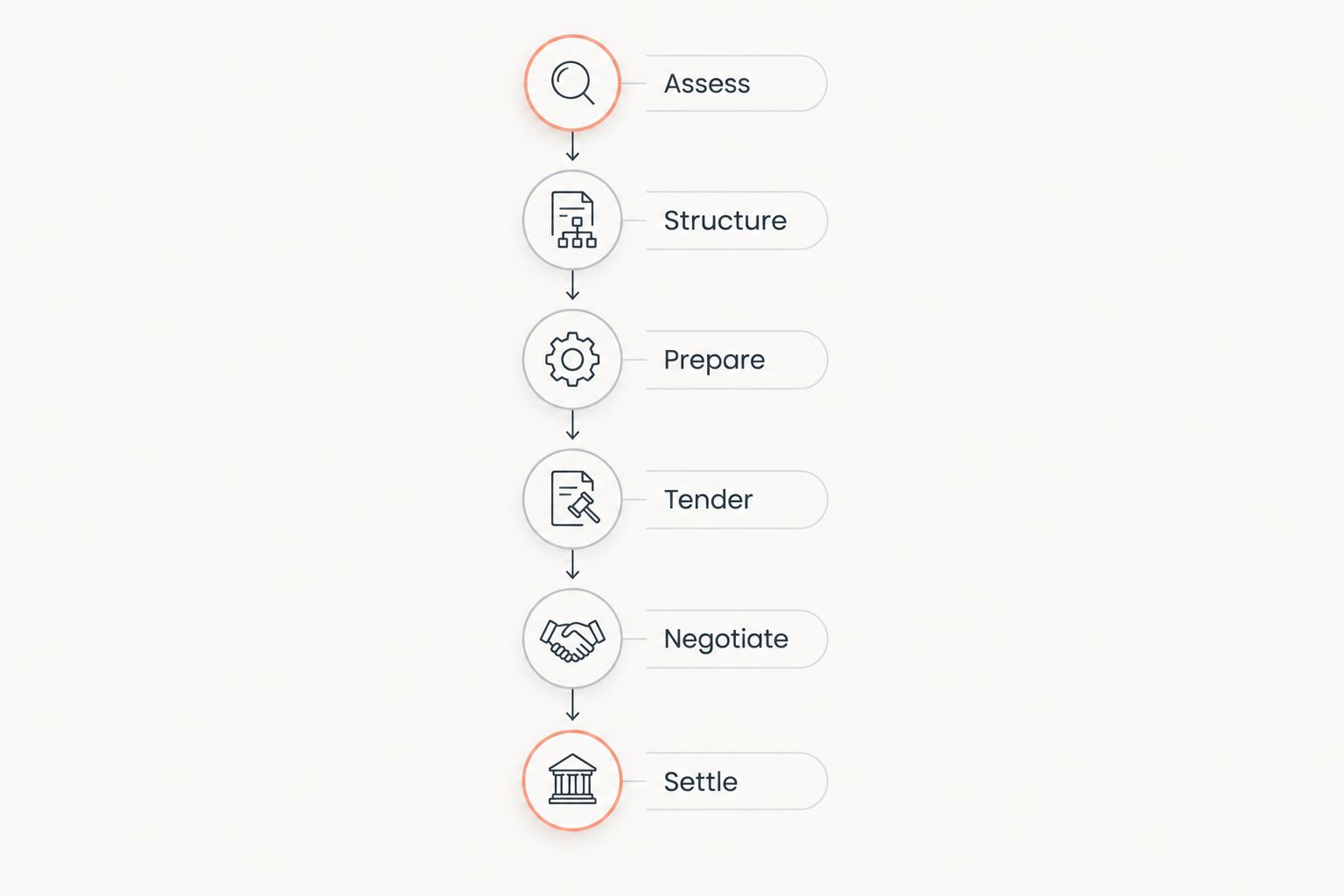
Use this sequence with your broker:
Assess
Map supplier payments, shipment timing, stockholding and customer collections. Reconcile the funding request to the cash-flow forecast, including existing debt repayments and overlapping orders.
Structure
Separate shipment funding from receivables, equipment and property borrowing. Ask whether each debt has a suitable repayment source and whether security links unrelated facilities.
Prepare
Assemble financial statements, current management accounts, debtor and creditor ageing, stock reports and existing facility documents. Explain material changes rather than leaving lenders to interpret unexplained movements.
Tender
Give shortlisted lenders the same borrowing requirements and supporting information. Glenclair's panel of 60+ lenders is relevant to lender selection; panel size does not mean every lender suits an importer or participates in every tender.
Negotiate
Compare usable limits, security, guarantees, covenants, reporting and repayment terms. Ask for unclear conditions to be explained before accepting a proposal.
Settle
Confirm existing lender releases, new security requirements and facility activation. Coordinate supplier payment obligations with the point at which the new funding becomes usable.
Check remuneration and scope before engagement
Separate lender-paid brokerage from debt advisory work. Glenclair's lender-paid brokerage and its debt advisory services are different engagement models; debt advisory uses a retainer and success-fee structure.
Ask which service applies, who pays whom and what the engagement covers. Confirm whether the work includes reviewing existing banking arrangements, preparing a tender, negotiating conditions and coordinating settlement.
The commercial finance services page is the relevant starting point for discussing the borrowing requirement. Agree the scope before treating a broker's involvement as a full banking review.
Review your importer finance structure
Discuss supplier funding, existing facilities and the scope of a banking review.
Which working capital finance should you choose?
Start with import finance when the main gap runs from supplier payment to sale. Choose an overdraft when the issue is recurring operating volatility. Assess invoice finance when eligible customer invoices hold the cash, and inventory finance when saleable stock is the bottleneck.
Use a letter of credit for payment assurance, then separately establish how the payment will be funded. Choose a term loan only when its repayment schedule fits the requirement.
For your 2026 review, bring the existing banking documents as well as the new funding request. A proposal cannot be judged properly without understanding which assets and obligations already support the bank.
FAQ
What's the best working capital finance for importers?
Import finance is the strongest starting point when overseas supplier payments create the funding gap. Invoice finance, inventory finance or an overdraft fits different stages of the cash cycle; suitability depends on your transactions and financial position.
Is invoice finance better than an overdraft for an importer?
Invoice finance fits eligible unpaid customer invoices, while an overdraft fits broader operating cash fluctuations. Compare the timing of the cash shortfall and the conditions that determine usable borrowing capacity.
Can a letter of credit fund my imports?
A letter of credit provides a conditional bank payment undertaking, not automatic extended funding. Confirm the payment terms and any separate facility needed to meet the obligation.
Does import finance remove foreign exchange risk?
Import finance does not automatically remove foreign exchange risk. Assess the currencies of supplier payments, borrowings and customer receipts, and address any mismatch separately.
Does Glenclair only consider loans above A$2 million?
A$2 million describes the preferred business-purpose borrowing audience for this guide, not a universal eligibility threshold. Suitability is assessed case by case.
What should I prepare for an importer banking tender?
Prepare financial statements, management accounts, debtor and creditor ageing, stock reports and current facility documents. Include a cash-flow forecast showing supplier payments, stockholding and customer collections.
How is commercial finance brokerage paid?
Lender-paid brokerage is distinct from debt advisory services. Glenclair's debt advisory engagement uses a retainer and success-fee structure; confirm the applicable scope and remuneration before engagement.
One last thing
Ask what makes the proposed limit shrink. Invoice exclusions, stock eligibility, document requirements and facility conditions can all affect access to funds. Comparing those triggers is more useful than comparing headline limits alone.
For an importer, the decisive question is straightforward: can you draw the money when the supplier needs payment, and repay it from the cash the transaction produces?
Related guides
- Equipment finance options for manufacturing businesses
- Truck finance options for Australian transport fleets
- Income requirements for commercial property finance
Author: Glenclair Financial team.