
Can a business run a banking tender without telling its bank?

Yes. A business can seek competing finance proposals without inviting its current bank into the initial process. That does not guarantee the bank will remain unaware: existing facility terms, information requests and any eventual refinance determine when contact or notice becomes necessary. Keep confidential market testing separate from changing facilities or moving security.
TL;DR
- A banking tender without telling bank contacts starts with confidential market testing, not a promise of permanent secrecy.
- Check existing facility obligations before approaching alternative commercial lenders or making changes.
- Glenclair is an independent commercial finance broker for Australian business owners comparing borrowing arrangements.
- Agree who can contact your incumbent bank before sharing a finance submission.
Can a business run a banking tender without telling its bank?
Yes, at the initial assessment and market-testing stages. You can review your borrowing position, prepare information and seek alternative proposals without making your current relationship manager a participant. Whether any particular action requires disclosure depends on your finance documents and circumstances.
For a 2026 banking review, separate three stages. Each has a different purpose and a different exposure to incumbent-bank contact.
| Stage | What you are doing | Incumbent-bank contact |
|---|---|---|
| Internal assessment | Reviewing existing facilities, security and borrowing needs | Start with documents you already hold; identify anything requiring bank confirmation |
| External tender | Asking selected lenders to assess a defined proposal | Set written contact instructions; check what each lender needs before proceeding |
| Implementation | Accepting terms, satisfying conditions and arranging any refinance | Plan required notices, payouts, consents and security releases |
The practical distinction is testing alternatives versus implementing a change. An external proposal does not itself settle a refinance or release existing security.
For business loans, refinancing, equipment and property development borrowing, Glenclair's commercial finance services cover the relevant borrowing categories. The confidentiality plan should match the transaction, rather than treating every banking review as a complete bank switch.
Why this matters
You need enough information to make a decision before creating unnecessary disruption. You also need to meet the obligations attached to your current borrowing. Confidentiality is a process to manage, not permission to ignore those obligations.
Established Australian businesses reviewing business-purpose borrowing above A$2 million should look beyond the interest rate. Guarantees, security, reporting requirements and access to working capital belong in the comparison. That loan size describes a preferred enquiry profile, not a universal eligibility rule; suitability requires individual assessment.
The useful question is not simply whether you can keep a tender quiet. It is what you can investigate privately, and what must happen before you act.
Choose how to approach the incumbent bank
You do not have to choose between telling everyone immediately and promising total secrecy. Define the approach before any lender receives the submission.
These are process choices, not recommendations to disregard contractual notice or disclosure requirements.
| Approach | Best for | Advantage | Limitation |
|---|---|---|---|
| External tender first | Owners seeking an alternative proposal before discussing retention | Separates market testing from incumbent negotiation | Requires clear contact controls; confidentiality cannot be guaranteed |
| Incumbent included from the start | Owners wanting existing and alternative lenders assessed together | Lets the incumbent respond to the same brief | Removes confidentiality from the outset |
| Internal review first | Owners still clarifying borrowing needs or facility obligations | Establishes what needs to change before approaching lenders | Does not produce competing lender proposals |
Choose external market testing when you need an informed comparison before a retention discussion. Choose an internal review first when you cannot yet explain the existing debt, security or funding requirement.
Including the incumbent from the start is also a valid choice. It is simply a different instruction, with a different confidentiality position.
Run a controlled tender before discussing a switch
For a 2026 tender, put the contact protocol in writing alongside the finance brief. A verbal request to keep things quiet leaves too much undefined.
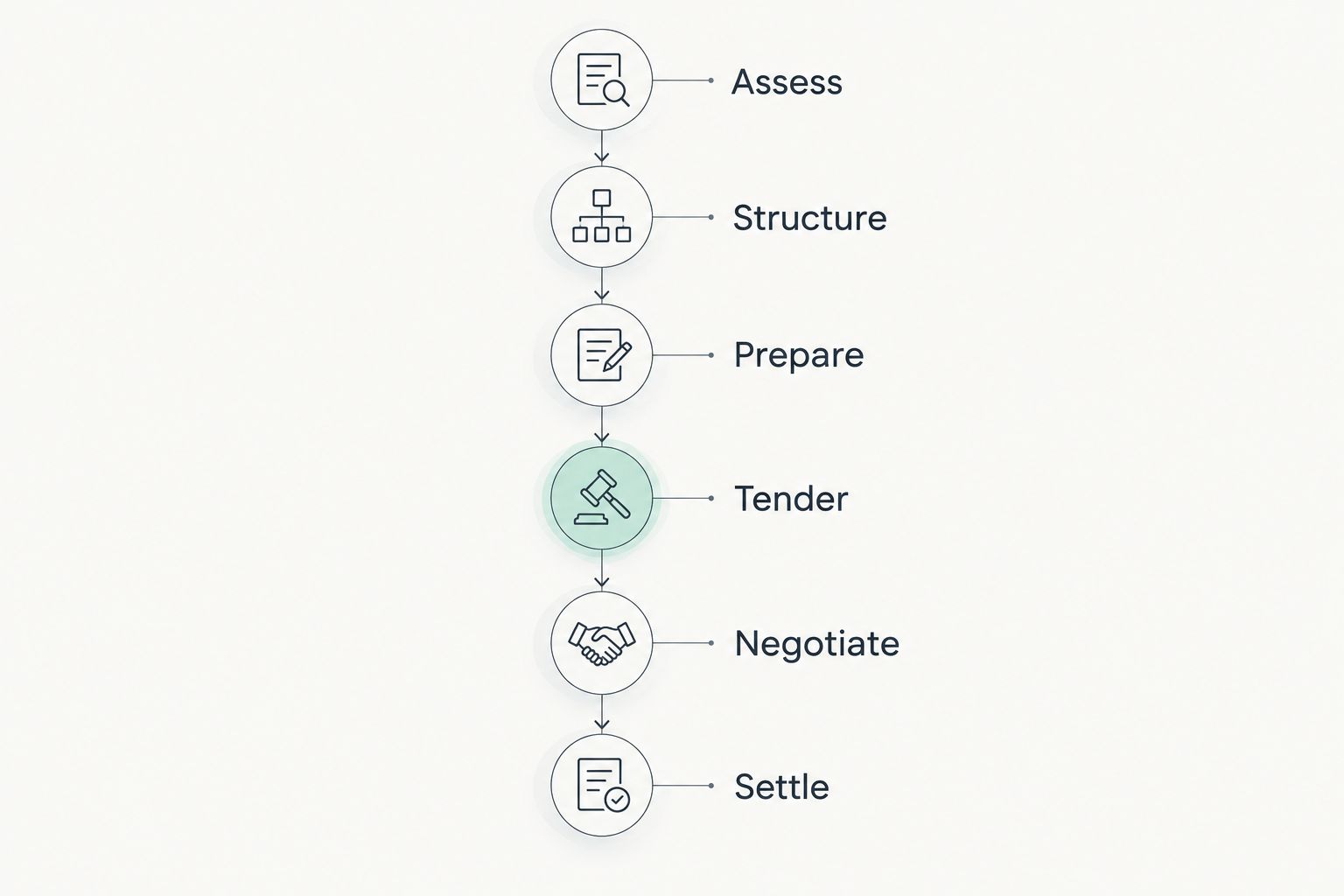
Use the following sequence to organise the work. These are recommended controls, not a promise of approval or a statement that every transaction follows an identical path.
Assess
Collect current facility letters, amendments, statements, security documents and relevant correspondence. Identify what you know, what needs confirmation and who holds the missing information.
Review notice requirements, consent provisions, reporting obligations and restrictions relevant to the proposed transaction. Obtain legal advice where the effect of a provision is unclear. Do not substitute a general confidentiality instruction for that review.
Structure
Define the borrowing requirement before seeking proposals. Specify whether you want to refinance existing debt, add working capital, fund equipment or support a property transaction.
Separate essential requirements from preferences. For example, a security release required for a planned transaction is not the same as a preference for simpler reporting. Lenders need a consistent brief to produce proposals you can compare.
Prepare
Build the submission from information you are authorised to share. Check the recipients, the documents included and whether preliminary discussions can occur without identifying the business.
An unnamed discussion has limits. A lender's general appetite is not a credit assessment of your business, and removing the name does not guarantee that the circumstances are unrecognisable.
Tender
Approve the recipient list before circulation. State whether the incumbent bank is excluded and whether anyone is authorised to contact it.
Require approval before expanding distribution or making an introduction involving your existing bank. Ask each recipient what further checks or information it needs, and establish the contact implications before authorising the next step.
Negotiate
Compare written proposals against the same borrowing brief. Review security, guarantees, conditions, repayment requirements, reporting and the steps needed to settle.
Keep indicative terms separate from formal approval. A proposal with unresolved conditions is not an unconditional replacement for your existing facilities.
Settle
Before committing to a switch, confirm the implementation requirements with the relevant advisers and lenders. Identify any notices, payout requests, consents, security releases and operational changes.
Do not assume that accepting an offer removes the need to coordinate the exit. The confidentiality plan must change when implementation requires incumbent-bank involvement.
Why confidentiality varies between banking tenders
The scope for a confidential 2026 tender depends on the transaction and its documents. Check these factors before making assurances about who will know.
- Facility obligations. Identify any disclosure, consent or notice requirements relevant to what you propose. Confidential market testing does not override contractual obligations.
- Security arrangements. Establish which assets secure which facilities. A proposed release or change needs its own implementation plan.
- Information requirements. Determine whether the assessment can proceed using your records or needs information confirmed by the existing bank.
- Submission permissions. Specify who receives the information and who can authorise further circulation. Check the permissions in any application documents.
- Transaction scope. Distinguish a review of one facility from a wider change involving working capital, equipment and property borrowing.
- Settlement requirements. Identify when payouts, releases, consents or operational arrangements require direct coordination with the incumbent.
A confidentiality instruction is useful only when the people handling the tender understand its boundaries. Record exceptions and approval responsibilities rather than relying on a general request for discretion.
What should you compare before deciding to move banks?
A 2026 banking tender should answer whether an alternative arrangement fits the business, not merely whether another lender will issue a proposal. Compare the full arrangement before deciding whether to involve the incumbent in a retention discussion.
Check the following in writing:
- The borrowing purpose and facilities covered by each proposal.
- The assets offered as security and the guarantees required.
- Repayment obligations and the treatment of working capital.
- Financial reporting requirements and conditions attached to approval.
- Conditions that must be satisfied before settlement.
- The work required to separate or replace existing arrangements.
Ask advisers to distinguish lender-paid brokerage from debt advisory work. Glenclair's debt advisory services use a retainer and success-fee structure; do not assume the engagement terms are the same as lender-paid brokerage. Confirm the service scope, remuneration arrangements and any conflicts before authorising work.
Glenclair's commercial finance brokerage operates through a panel of 60+ lenders. Panel size does not mean every lender suits your transaction, receives your submission or will approve it. Ask which lenders are proposed for your tender and why.
When should you tell your existing bank about a tender?
Tell your existing bank when a relevant obligation requires it, or when you authorise a discussion after assessing the alternatives. Do not use a preferred negotiation timetable to delay a required notice or consent.
If you want a retention proposal, decide what you want the incumbent to address. A defined request about facilities, security or terms is more useful than an unspecified request to improve the relationship.
Give the incumbent a clear brief without misrepresenting another lender's position. Describe indicative proposals as indicative, and keep conditions visible when comparing responses.
Can you keep your current bank after running a tender?
Yes. A banking tender is a decision process, not an obligation to switch banks, unless you enter a separate commitment that changes that position.
Staying still requires a documented decision. Compare the incumbent's response with the alternatives and identify which terms are confirmed, which remain conditional and what needs to change in the existing documents.
Do not close working capital facilities before confirming how the replacement arrangements will operate. A decision about borrowing terms must also account for the business's ability to make and receive payments during the transition.
What should you authorise before a broker approaches lenders?
Authorise a defined scope: the borrowing purpose, proposed recipients, information to be shared and contact restrictions. Name the person in your business who can approve exceptions.
For your 2026 review, ask for a written answer to this question: who can contact the incumbent, for what purpose, and with whose approval? Keep that instruction alongside the engagement and application documents.
Approval to distribute a submission should not be treated as an undefined instruction to approach every possible lender. Ask how changes to the recipient list will be agreed.
FAQ
Can I run a banking tender without telling my current bank?
Yes, you can seek alternative proposals without inviting your incumbent bank into the initial process. Check your existing obligations and agree contact restrictions; this does not guarantee the bank will remain unaware.
Will another lender automatically tell my current bank?
Do not assume that another lender will notify your current bank or keep every part of the assessment private. Ask what checks, information requests and third-party contacts it requires before authorising the process.
Can a broker guarantee a confidential banking tender?
A broker cannot guarantee that your current bank will never learn about a tender. Written distribution and contact controls help define the process, but contractual obligations and implementation requirements still apply.
Do I have to refinance after receiving another bank's proposal?
Receiving a proposal does not itself require you to refinance. Review any application, acceptance or engagement obligations separately before making a commitment.
Can I ask my existing bank to match another lender's terms?
Yes, you can ask your existing bank to respond to an alternative proposal. Compare conditions, security, guarantees and facility structure, not just the headline terms.
Is business borrowing above A$2 million a strict eligibility rule?
Business borrowing above A$2 million is the preferred enquiry profile described here, not a universal eligibility rule. Assess the business, transaction and service suitability individually.
Is lender-paid brokerage the same as debt advisory?
No. Lender-paid brokerage and debt advisory are different engagement arrangements; debt advisory uses a retainer and success-fee structure. Confirm the applicable scope and remuneration before proceeding.
One last thing
Write the contact instruction before sharing the financials. Once a submission has circulated, a later request for confidentiality cannot undo the distribution.
Keep a record of authorised recipients and any approved exceptions. The objective is a controlled decision about your banking arrangements, not secrecy at the expense of your obligations.
Related guides
- Commercial property finance income requirements
- Equipment finance options for manufacturing businesses
- Truck finance options for Australian transport fleets
By the Glenclair Financial team.