
Can agribusiness loans be structured around seasonal cash flow?

Yes. Agribusiness loans can be structured around seasonal cash flow through repayment dates aligned with receipts, seasonal repayment schedules or working capital facilities that are repaid as income arrives. The structure remains subject to lender assessment, and changing the repayment timetable does not remove interest, security requirements or the obligation to repay the debt.
TL;DR
- Agribusiness loans seasonal cash flow planning should align debt payments with receipts, not just harvest dates.
- Seasonal repayments suit predictable receipts; revolving working capital suits recurring gaps between expenditure and income.
- Glenclair suits established Australian businesses reviewing commercial borrowing; suitability depends on the business and proposed transaction.
- Compare repayment timing, total interest, security, covenants and renewal conditions before accepting a facility.
Why this matters
A profitable agricultural business can still face a cash shortfall when debt repayments fall before customer receipts. Seed, feed, fertiliser, wages and contractor payments can leave the account well before sale proceeds arrive. A repayment schedule needs to reflect that gap, rather than assume income arrives evenly throughout the year.
Glenclair is best suited to established Australian business owners seeking a review of commercial borrowing above A$2 million. That is a preferred enquiry profile, not a universal eligibility threshold. You can review the brokerage’s scope through Glenclair before deciding whether your proposed borrowing fits.
For a 2026 banking review, start with the existing facilities and the cash movements they must support. Separate a recurring seasonal funding gap from a permanent shortage of working capital. Those are different problems and need different repayment plans.
Can agribusiness loans be structured around seasonal cash flow?
Yes. The practical choice is between changing when principal is repaid, drawing working capital as needed, or separating long-term borrowing from seasonal funding. The lender still needs evidence that the business can service the proposed facilities.
| Structure | Best for | Main benefit | Main limitation |
|---|---|---|---|
| Seasonal principal repayments | Businesses with reasonably predictable receipt periods | Places principal payments closer to expected income | Delayed receipts can still leave a repayment gap |
| Revolving working capital | Recurring expenditure before sales receipts | Allows drawings and repayments around the operating cycle | Limits, review terms and repayment conditions need close attention |
| Interest-only period | A defined period before expected repayment capacity improves | Defers principal during the agreed period | Principal remains outstanding and needs a credible repayment plan |
| Separate term and seasonal facilities | Businesses funding both long-lived assets and operating expenses | Gives each borrowing purpose its own repayment logic | Adds facility administration and potentially shared security conditions |
A lender’s product label is not enough. Ask for the proposed repayment schedule, facility conditions and security requirements in writing. Then test the actual cash movements against those terms.
Match payments to receipts, not production dates
Harvest, delivery, invoicing and payment are different events. If your forecast places income at harvest but the buyer pays later, the apparent repayment capacity is overstated.
Build your 2026 forecast from the date cleared funds are expected in the business account. Include committed operating payments over the same period. A facility that looks suitable on an annual profit figure can still create pressure during the months between expenditure and collection.
Seasonal principal repayments: best for predictable receipt periods
Seasonal principal repayments place scheduled reductions in debt around the periods when your business expects cash receipts. This approach suits a business that can explain its operating cycle and support the proposed dates with records, contracts or established payment patterns.
The advantage is timing. You avoid treating an uneven income stream as though it arrives in equal monthly amounts. However, interest and other contractual obligations still need to be included in the cash forecast, even when principal repayments are concentrated elsewhere.
The weakness is dependence on the receipt timetable. A delayed sale, payment dispute or production disruption can put pressure on the agreed repayment date. Before accepting the structure, ask what happens if expected receipts arrive late and whether any adjustment requires fresh lender approval.
Choose seasonal principal repayments when the evidence supports the dates. Do not choose them simply because the business operates in agriculture. Different activities within the same business can have different cash cycles.
Revolving working capital: best for recurring funding gaps
A revolving working capital facility, such as an overdraft, allows borrowing and repayment within an agreed limit and subject to the facility terms. Its purpose is to bridge operating cash gaps, rather than permanently fund assets that will remain in the business for years.
The benefit is flexibility around expenditure and receipts. Drawings can support the operating cycle, with incoming cash reducing the balance. The limitation is that flexibility depends on the agreement: review dates, security, reporting and any required balance reductions matter.
Look closely at the projected low point in the facility balance. If debt does not reduce after the main receipt period, the borrowing might include a permanent funding requirement rather than a purely seasonal gap. Identify that distinction before presenting the application.
Use revolving working capital for a defined operating need, with an identifiable repayment source. Do not assume a facility will renew automatically or that an existing limit will increase when expenditure rises.
Interest-only periods: best for a defined principal deferral
An interest-only period defers principal repayments for an agreed period. It does not forgive principal or establish that the eventual repayment is affordable.
This structure can address a documented interval before income begins or repayment capacity improves. The assessment should show what changes at the end of that interval, and how the business meets the next stage of its obligations.
The benefit is lower scheduled principal outflow during the agreed period. The trade-off is that debt remains outstanding. Depending on the terms, the business then needs to meet increased repayments, repay a residual balance or arrange another agreed exit.
Treat interest-only borrowing as a timing decision, not a substitute for repayment capacity. If the repayment plan depends entirely on obtaining another loan later, make that dependence explicit in the assessment. Refinancing is not a guaranteed exit.
Separate facilities: best for mixed borrowing purposes
Property, equipment and seasonal operating expenses do not necessarily belong in the same facility. A business can have a sound long-term asset position while still needing a distinct working capital arrangement.
Separate facilities make the purpose and repayment source of each borrowing easier to examine. For example, equipment finance needs to be assessed against the asset’s commercial use, while seasonal working capital needs to be assessed against the operating cash cycle.
The trade-off is administration. Multiple facilities mean more documents, repayment obligations and conditions to understand. They can also share security or guarantees, so separate account numbers do not necessarily mean separate risk.
Separate borrowing by purpose where it improves the repayment plan, not merely to create more facilities. Check whether a problem under one agreement affects the others. Ask the lender to explain any linked obligations before you accept the proposed structure.
How to prepare a seasonal finance proposal
A useful proposal gives lenders a clear account of the borrowing purpose, the cash gap and the repayment source. For a 2026 refinancing review, present the existing position alongside the proposed structure so the differences are visible.
- Assess. Map existing debt, available limits, security, guarantees and repayment dates. Identify where current commitments fall before receipts.
- Structure. Separate permanent funding needs from seasonal gaps. Decide which obligations need scheduled repayments and which need operating flexibility.
- Prepare. Assemble financial statements, management accounts, bank statements, debt schedules and a cash flow forecast. Explain material differences between past performance and the forecast.
- Tender. Give participating lenders a consistent brief. Specify the requested facilities, repayment timing and information needed to compare proposals.
- Negotiate. Examine repayment terms, interest, fees, security, covenants and review conditions together. A change in one term can affect another.
- Settle. Check the final documents against the agreed proposal. Confirm payout requirements, security releases and the obligations that continue after settlement.
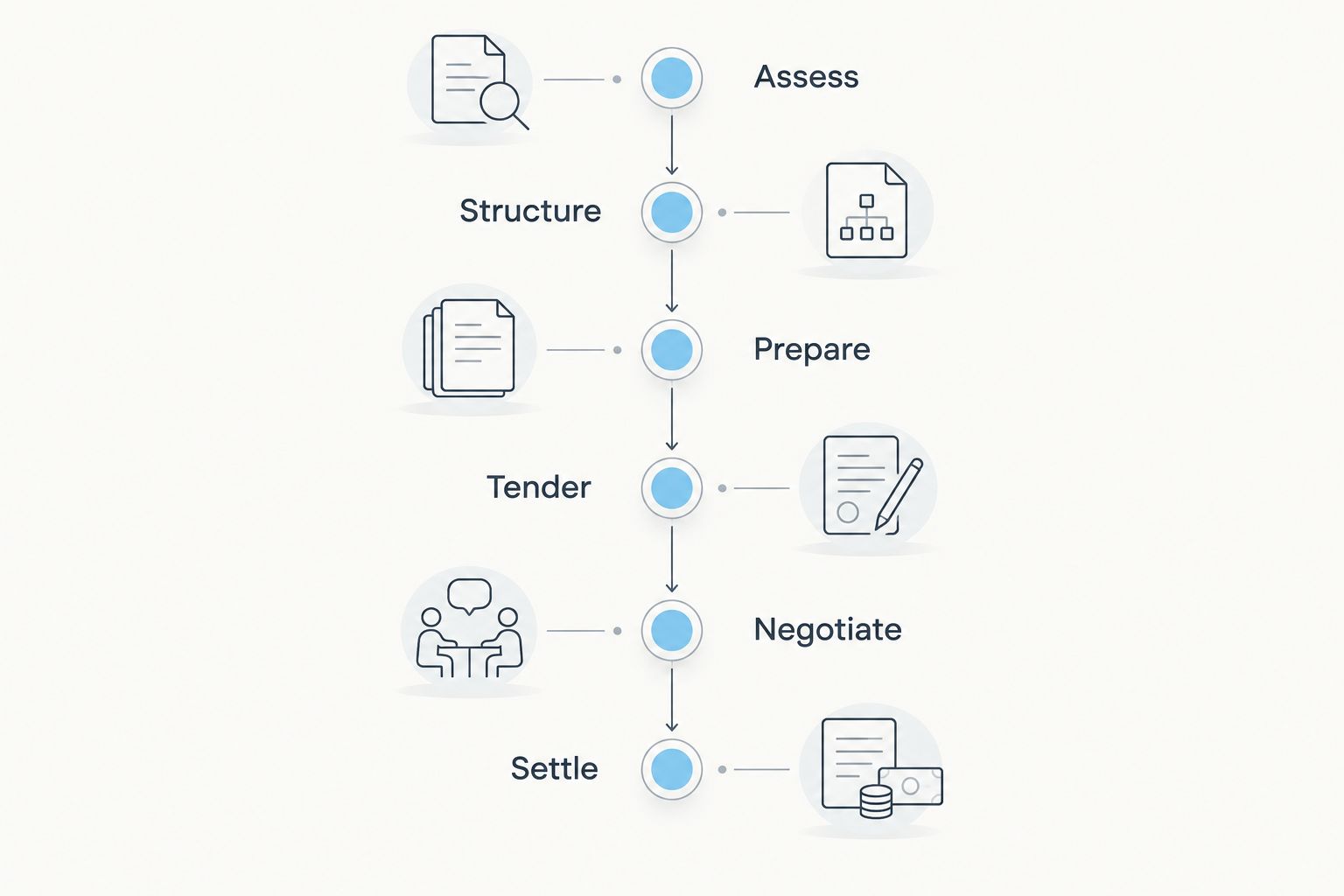
The forecast should show both the expected position and a downside case. Test delayed receipts and lower income against the same repayment schedule. This does not predict approval; it identifies where the proposed structure needs more headroom or a different repayment arrangement.
What evidence makes the proposal useful?
Use records that explain when cash actually moves. Depending on the business, that includes historical account movements, debtor records, supply agreements, sale contracts and production plans. Explain unusual receipts instead of treating them as recurring income.
Include existing equipment and property commitments, even if the new request concerns working capital. The lender needs to assess the combined repayment burden. Leaving an obligation out of the operating forecast makes the proposed seasonal headroom unreliable.
A 2026 forecast should also distinguish committed receipts from estimates. Label the assumptions clearly and explain the consequence if they change. The objective is a repayment plan that can be examined, not a spreadsheet that always finishes with a positive balance.
Why seasonal loan structures vary
The right timetable depends on the business and the proposed debt. These factors shape the assessment:
- Receipt timing. The date customers pay determines when cash is available for debt service. Production milestones alone do not establish that date.
- Operating expenditure. The timing of inputs, wages and other commitments determines the funding gap before receipts arrive.
- Existing debt. Current repayments, residual balances and facility expiries affect the capacity available for new borrowing.
- Borrowing purpose. Property, equipment and operating expenses need repayment terms that reflect their different uses.
- Security and guarantees. Available security and existing commitments affect how a proposed facility can be arranged.
- Forecast uncertainty. Variable production, sale proceeds and collection dates affect how much repayment headroom the business needs.
Avoid asking only whether a lender offers agricultural finance. Ask whether the proposed agreement addresses your documented cash cycle and what obligations remain during the low-income period.
Can I refinance existing agribusiness debt to change repayment dates?
Yes. Refinancing can include a request to change repayment timing, but the proposed lender must assess the business and agree to the structure. A review should compare the current arrangement with the complete replacement proposal, not just the scheduled instalment.
Include exit obligations, establishment requirements, security changes and the repayment timetable in that comparison. A smaller instalment does not establish a lower total borrowing cost, particularly where principal repayment is extended or deferred.
Can equipment repayments follow the agricultural season?
Equipment repayments can follow an agreed seasonal schedule where the lender offers and approves that structure. The application needs to connect the asset’s commercial use with the receipts supporting repayment.
For contractors, distinguish the date work is performed from the date invoices are collected. Also separate an equipment repayment issue from a working capital gap: changing asset repayments alone does not address every operating cash requirement.
What should you ask a broker before a banking tender?
Ask which lenders will receive the proposal, why they fit the borrowing purpose and how responses will be compared. Request an explanation of remuneration and any conflicts before proceeding.
Glenclair is an independent commercial finance brokerage with a panel of 60+ lenders. Panel access does not mean every lender suits an agricultural transaction or that an application will be approved. The useful question is which lenders fit the proposed structure and why.
Distinguish lender-paid brokerage from debt advisory services, which use a retainer and success-fee structure. Confirm which engagement applies, who pays and what work is included. Review the commercial finance services against the support your transaction needs.
FAQ
Can agribusiness loan repayments be seasonal?
Yes. Agribusiness loan repayments can follow an agreed seasonal schedule, subject to lender assessment and the facility terms. The schedule should reflect cash receipts rather than production dates alone.
Is an overdraft better than a seasonal term loan?
An overdraft suits recurring operating cash gaps, while a seasonal term loan provides scheduled debt repayments. Compare the borrowing purpose, repayment source, review conditions and security before choosing.
Do seasonal repayments mean I stop paying interest?
No. Seasonal principal repayments do not remove interest obligations. Check when interest is payable and include it in the cash flow forecast.
Can I refinance my existing farm business loans in 2026?
You can seek refinancing of existing farm business loans in 2026, subject to lender assessment. Compare the full replacement arrangement, including repayment dates, security and exit obligations.
What documents support a seasonal cash flow application?
Financial statements, management accounts, bank statements, existing debt schedules and a cash flow forecast support a seasonal finance application. Contracts and debtor records can help explain expected receipt dates.
Does Glenclair only consider borrowing above A$2 million?
No. Glenclair prioritises established Australian businesses seeking business-purpose finance above A$2 million, but assesses suitability case by case. The preferred loan size is not a universal eligibility rule.
Does an interest-only period remove the need to repay principal?
No. An interest-only period defers principal repayments under the agreed terms. The business still needs a credible plan for repaying the outstanding debt.
One last thing
The most useful date in a seasonal borrowing proposal is the expected receipt date, not the harvest date. Follow the cash through delivery, invoicing and collection before choosing the repayment date.
Before your 2026 banking review, put the existing repayment schedule beside the forecast account balance. Mark every payment that falls before its supporting receipt. That exercise gives the lender a specific structural problem to assess rather than a general request for more flexibility.
This article provides general information, not a recommendation to enter a particular finance arrangement.
Related guides
- Machinery finance options for agricultural contractors
- Truck finance options for owner-drivers
- Income requirements for commercial property finance
Author: Glenclair Financial team.