
Can business acquisition finance include working capital?

Yes. Business acquisition finance can include working capital when the lender approves funding for both the purchase and the business’s operating needs. Approval of the acquisition does not automatically provide cash for wages, suppliers or other expenses after settlement; those requirements must be included in the funding request and documented in the facility terms.
TL;DR
- Business acquisition finance working capital requirements belong in the funding request, not an assumption about leftover purchase funds.
- Separate the purchase price, completion adjustments and operating cash requirement before comparing lenders.
- Match acquisition debt to the purchase and working capital facilities to the business’s cash cycle.
- Glenclair’s commercial finance brokerage is best suited to owners seeking a structured review of business-purpose borrowing.
Can business acquisition finance include working capital?
Yes, but the approved funding structure must expressly cover working capital. A lender can assess the purchase and operating funding together, even when they sit in separate facilities. The important distinction is between approval to buy the business and access to usable cash after completion.
For a 2026 acquisition, ask for a funding proposal that separates these requirements. Your commercial finance services discussion should address the whole transaction, including existing borrowing that needs refinancing.
| Funding structure | Best for | Main benefit | Main limitation |
|---|---|---|---|
| Acquisition term loan with an approved working capital component | Defined operating funding needed at completion | Brings the purchase and initial cash requirement into the same funding assessment | Scheduled repayments apply even when trading cash flow fluctuates |
| Acquisition term loan plus a revolving facility | Recurring gaps between paying expenses and collecting revenue | Separates long-term acquisition debt from short-term operating cash needs | Facility limits, review terms and draw conditions require attention |
| Acquisition term loan plus invoice finance | Businesses selling on credit with eligible receivables | Connects operating funding to qualifying invoices | Not every invoice or customer qualifies; funding depends on eligibility rules |
| Acquisition term loan plus equipment finance | Acquisitions with separately financeable machinery or vehicles | Separates eligible equipment funding from other borrowing needs | Does not itself fund wages, rent or general operating expenses |
These are structures to assess, not interchangeable products. Check the legal borrower, security, repayment requirements and permitted use of funds for each facility.
Why this matters
A business can be profitable and still need cash immediately after an ownership change. Customer receipts do not necessarily arrive before payroll, rent and supplier payments fall due. Purchase funding alone does not resolve that timing gap.
Glenclair’s commercial finance brokerage serves Australian business owners through a panel of 60+ lenders. Its preferred audience includes established owners seeking business-purpose finance greater than A$2 million, with suitability assessed case by case rather than through a universal minimum-loan rule.
For those borrowers, working capital belongs in the acquisition assessment alongside refinancing and the review of existing banking arrangements. Treat operating liquidity as part of the transaction, not a problem to solve after settlement.
Separate purchase funding from cash available to trade
Start with a sources-and-uses schedule: where the money comes from and where it goes. A single total labelled acquisition funding hides important differences between payments to the seller, transaction expenses and money retained in the business.
Purchase consideration
Purchase consideration is the amount payable for the business or shares under the sale agreement. Its composition depends on the transaction documents, including any deferred consideration and completion adjustments.
Do not assume that buying a business means acquiring its bank balance. Establish what transfers, what stays with the seller and which liabilities the purchaser assumes. Obtain legal and accounting advice on those obligations before finalising the finance request.
Completion working capital
A sale agreement can include an adjustment for working capital delivered at completion. That adjustment concerns the agreed financial position of the acquired business; it is not automatically an additional cash facility from the lender.
Check the definitions carefully. Trading stock, receivables and payables can affect the completion calculation, while cash and debt treatment depends on the agreement. Keep the contractual adjustment separate from your forecast operating cash requirement.
Post-completion operating cash
Operating cash covers the gap between outgoing payments and incoming receipts after the purchase. Build it from the acquired business’s actual collection patterns, supplier terms, payroll obligations and planned changes.
Avoid using a generic percentage of the purchase price. A business collecting payment before delivery has a different funding cycle from one that pays suppliers before collecting customer invoices. The forecast must explain that difference.
Build the working capital request before approaching lenders
Use a 13-week cash-flow forecast as a practical planning tool for the period around completion. This is a recommended forecast format, not a universal lender requirement. Extend the forecast where seasonality or the transaction timetable requires a longer view.
The forecast should show when cash moves, rather than reproduce accounting profit. Include the settlement date, opening available cash, customer receipts, operating payments and debt repayments. Distinguish committed funding from facilities still awaiting approval.
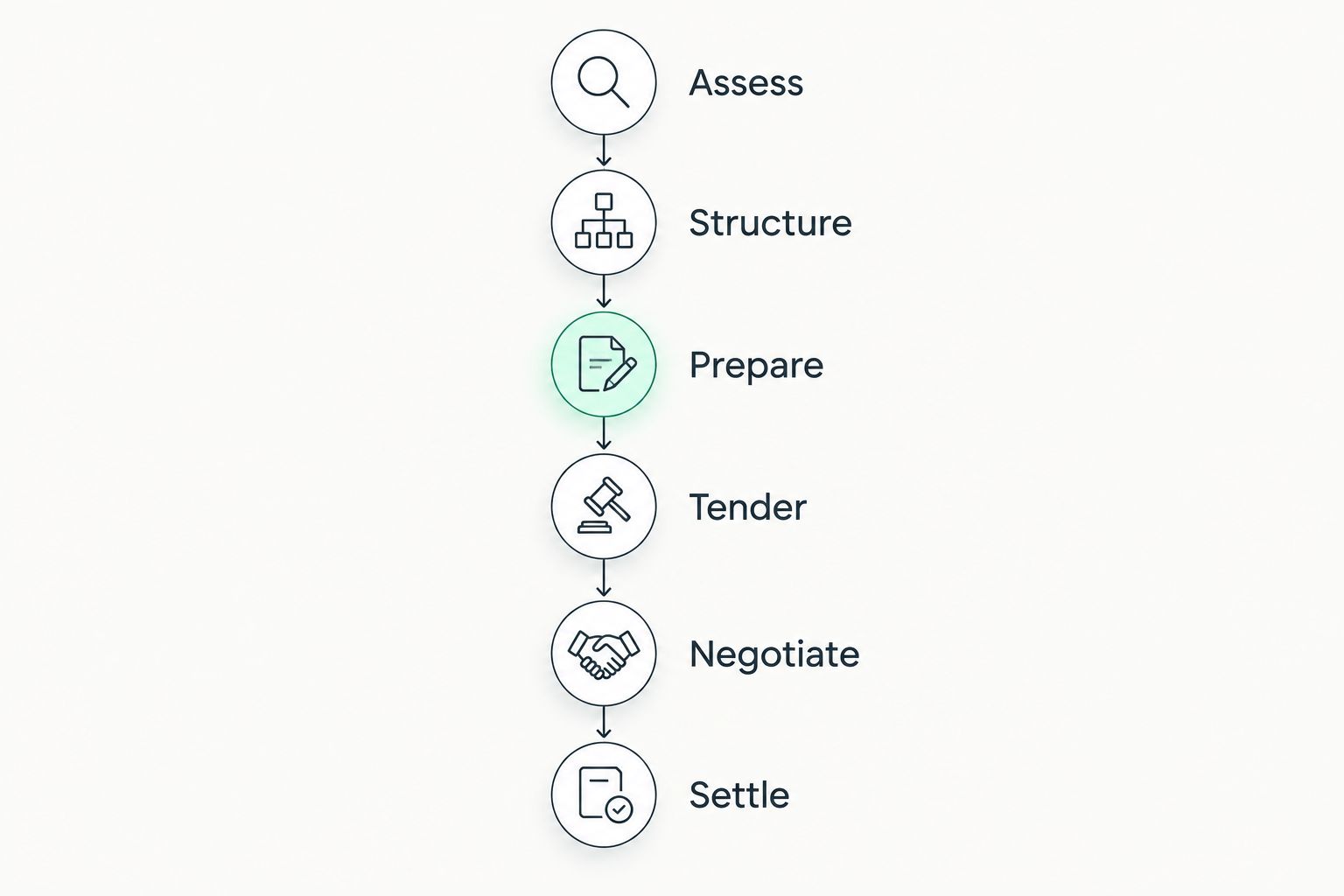
For a 2026 banking tender, prepare the request in this order:
- Assess. Review the buyer’s existing debt, the target’s trading performance and the timing of operating payments. Identify cash that is restricted or unavailable for ordinary expenses.
- Structure. Separate purchase funding, refinancing, equipment requirements and working capital. Match repayment obligations to the purpose and expected cash flow of each facility.
- Prepare. Assemble financial statements, current management accounts, forecasts, existing facility documents and relevant sale documents. Reconcile assumptions across the funding request and sale agreement.
- Tender. Ask suitable lenders to assess the same transaction assumptions. Request clear responses on working capital limits, security, conditions and access at settlement.
- Negotiate. Compare the full lending terms, including covenants, guarantees, review rights and repayment requirements. Resolve material differences before treating proposals as equivalent.
- Settle. Confirm the sequence of funding, discharges and facility activation. Establish who checks that operating funds are accessible when the business needs them.
The sequence matters. A working capital facility approved in principle but unavailable at completion does not meet an immediate payroll obligation.
Why working capital requirements vary
The right working capital structure follows the business’s cash cycle and the acquisition agreement. These factors explain why the purchase amount alone cannot determine the operating facility required:
- Customer collection timing. Credit sales create a gap between recognising revenue and receiving cash. Use actual debtor ageing and collection records to test the forecast.
- Supplier payment terms. Establish which terms apply after the ownership change. Do not base the funding request on arrangements that suppliers have not confirmed.
- Stock requirements. Identify stock transferring at completion and purchases needed afterwards. Avoid counting the same stock requirement in both the purchase funding and operating forecast.
- Seasonality. Review the acquisition date against the business’s trading cycle. An annual profit figure does not show the lowest cash balance during a seasonal downturn.
- Completion adjustments. Changes in the final settlement calculation affect how much buyer cash remains available. Model the effect separately from normal trading movements.
- Debt and security arrangements. Existing facilities, proposed repayments and available security influence the funding structure. Confirm whether refinancing changes access to current operating limits.
Use evidence for each assumption. Unsupported growth forecasts do not explain how the business will meet an operating cash shortfall.
Can you use one loan for the purchase and working capital?
Yes, one loan can cover both purposes if the lender approves that use of funds. The facility documentation must support the proposed allocation, and settlement arrangements must leave the approved operating amount accessible to the borrower.
The benefit is a combined funding assessment. The limitation is that a term loan carries scheduled repayments, while working capital needs rise and fall with trading activity. Ask whether undrawn funds remain available and whether repaid amounts can be drawn again; do not assume either feature exists.
A combined loan is not automatically simpler once security, conditions and cash access are considered. Compare its practical operation with a separate working capital facility before choosing the structure.
Can working capital finance replace your acquisition contribution?
Working capital finance does not automatically replace a buyer’s required contribution. The lender assesses the proposed funding sources and their purpose. If the buyer’s contribution is borrowed, disclose that borrowing and its repayments.
Keep the contribution, settlement payments and operating facility separate in the funding schedule. Counting the same cash towards both the purchase contribution and post-completion liquidity overstates the funds available.
For a 2026 acquisition, have the accountant reconcile the funding schedule with the completion statement. Resolve any shortfall before committing to a settlement funding sequence.
Should existing business loans be refinanced during an acquisition?
Review existing business loans alongside the acquisition, but refinance only after comparing the full terms. Existing security, guarantees and repayment commitments affect the combined borrowing position. Leaving them outside the assessment produces an incomplete view.
Refinancing offers an opportunity to reconsider facility structure and security. It also introduces discharge requirements, documentation and settlement dependencies. A new facility should solve an identified problem, not simply move debt between lenders.
Where vehicles, machinery or property form part of the transaction, identify their funding treatment separately. Equipment finance does not replace general working capital, and property funding should not be assumed to leave spare operating cash.
What should you compare in a banking tender?
Compare usable funding and contractual obligations, not just the headline facility limit. A larger approved amount is not equivalent to a larger amount available for operating expenses.
Ask every participating lender to address the same questions:
- What amount funds the purchase, and what amount remains available for operations?
- Which conditions must be satisfied before each facility can be drawn?
- Does the working capital limit change with receivables, stock or other eligibility tests?
- What security and guarantees support each facility?
- Which financial covenants, reporting obligations and review provisions apply?
- What happens to existing facilities and security at settlement?
Request written explanations where proposals differ. In a 2026 tender, use the same forecast version and transaction assumptions across lenders so the comparison remains meaningful.
Glenclair is an independent commercial finance brokerage; its lender panel does not mean every lender will suit every acquisition. Assess fit through the proposed structure, lender appetite and documented terms, with no assumption of approval.
Lender-paid brokerage and debt advisory are also different engagements. Debt advisory uses a retainer and success-fee structure. Confirm the engagement scope and payment basis before appointing an adviser.
Review your acquisition funding structure
Discuss purchase funding, working capital and existing banking arrangements together.
FAQ
Can business acquisition finance include working capital in Australia?
Yes, business acquisition finance can include working capital when the lender approves that purpose and the facility terms permit it. Specify the operating funding requirement separately from the purchase amount.
Is working capital included automatically when I buy a business?
No, acquisition loan approval does not automatically include working capital. Check the approved use of funds, draw conditions and amount accessible after settlement.
How much working capital should I request for an acquisition?
Base the request on the forecast cash gap around and after completion, not a generic percentage of the purchase price. Account for collection timing, supplier payments, payroll, stock and debt repayments.
Is a working capital adjustment the same as a working capital loan?
No, a working capital adjustment is a sale-agreement mechanism, while a working capital loan is a funding facility. Keep the completion calculation separate from the operating cash forecast.
Can equipment finance pay the acquired business’s wages?
Equipment finance funds eligible equipment rather than general payroll expenses. Include wages in the operating cash forecast and assess a suitable working capital structure separately.
Will a lender approve working capital before the acquisition settles?
A lender can assess working capital as part of the acquisition application, but assessment does not guarantee approval or access at settlement. Confirm the facility conditions and activation sequence in writing.
Does using a commercial finance broker guarantee acquisition funding?
No, using a commercial finance broker does not guarantee acquisition funding. Approval depends on the lender’s assessment and the proposed transaction meeting its requirements.
One last thing
Check the lowest projected cash balance, not just the opening balance at settlement. Cash available on completion does not establish that the business can meet every subsequent payment.
Before signing, ask the accountant and finance adviser to trace that low point back to the forecast assumptions and proposed facilities. That check connects the acquisition structure to the business you must operate after the seller leaves.
This article provides general information, not advice on your transaction.
Related guides
- Equipment finance options for manufacturing businesses
- Equipment finance options for construction businesses
- Truck finance options for Australian transport fleets
Author: Glenclair Financial team.