
Can you refinance a commercial loan before the fixed term ends?

Yes, you can refinance a commercial loan before the fixed term ends if your loan agreement permits early repayment and a replacement lender approves the refinance. Early exit can trigger break costs and other settlement expenses, so compare the full cost of leaving with the terms available for staying. Check whether your fixed-rate period and your loan maturity date are actually the same date.
TL;DR
- To refinance commercial loan before fixed term expiry, confirm early repayment terms and obtain a dated payout quote.
- Compare break costs, security requirements and replacement loan conditions—not just the interest rate.
- Glenclair suits established Australian business owners seeking a commercial refinancing review, with suitability assessed case by case.
- A fixed-rate expiry is not necessarily the loan’s maturity date; check both before setting your timetable.
Why this matters
A refinance replaces an existing debt. It does not automatically remove guarantees, release every secured asset or improve the conditions attached to your borrowing. For a 2026 banking review, the decision starts with your existing contract and ends with a comparison of executable terms.
For established businesses reviewing business-purpose borrowing greater than A$2 million, Glenclair’s commercial finance services include refinancing. That borrowing size describes the intended audience, not a universal eligibility rule. Suitability still depends on the business, debt structure and proposed transaction.
The right question is not simply whether you can leave early. It is whether leaving early produces a better overall borrowing arrangement after exit costs and new obligations.
Can you refinance a commercial loan before the fixed term ends?
Yes, subject to the existing lender’s repayment conditions and the replacement lender’s approval. The work involves establishing the exit position, testing alternatives and coordinating settlement—not just submitting another loan application.
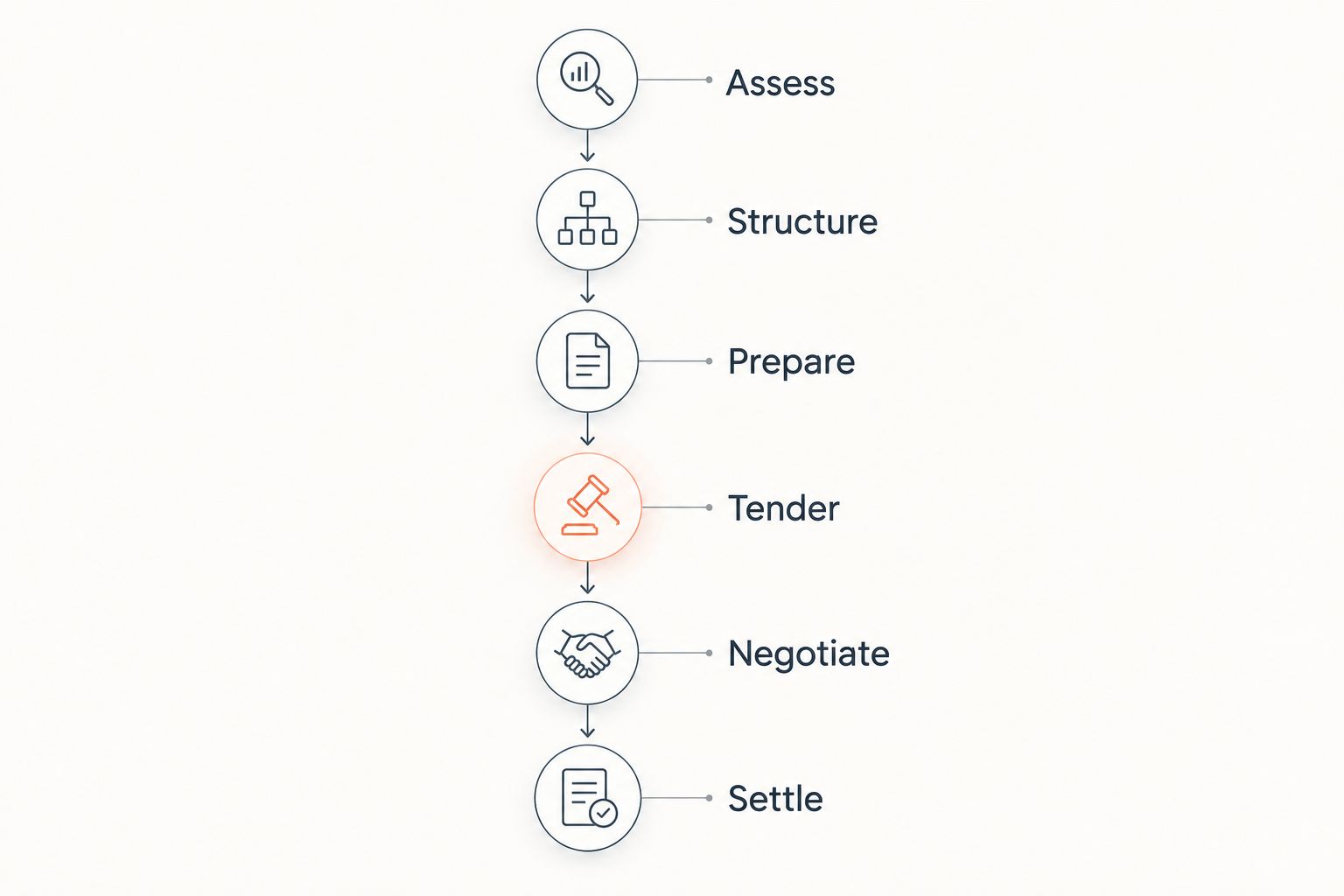
Use this sequence before committing to an early refinance:
- Assess. Gather facility agreements, current balances, repayment schedules and security documents. Identify the fixed-rate expiry, loan maturity and any review dates.
- Structure. Define what needs to change: repayment pressure, loan maturity, security, covenants or funding capacity. Separate essential requirements from preferences.
- Prepare. Obtain a dated payout quote and assemble financial information for prospective lenders. Include linked facilities and any separate interest-rate hedging arrangements.
- Tender. Present the same borrowing request and financial information to suitable lenders. Include an offer from the incumbent lender where practical.
- Negotiate. Compare written terms, conditions and total switching costs. Resolve security releases, guarantees and settlement requirements before accepting an offer.
- Settle. Coordinate repayment of the outgoing debt and establishment of the replacement facilities. Confirm which securities and guarantees have been released or retained.
A lender’s indicative terms are not the same as unconditional approval. Read the approval conditions and settlement requirements before treating an offer as a workable replacement for the existing facility.
Compare early refinancing, waiting and renegotiating
Early refinancing is one route, not the default recommendation. Your 2026 review should compare it with waiting until the fixed-rate period ends and negotiating changes with the current lender.
| Option | Best for | Main advantage | Main limitation |
|---|---|---|---|
| Refinance before expiry | Businesses needing a funding or structural change before the fixed-rate period ends | Allows consideration of a replacement arrangement now | Exit costs and new approval conditions must be assessed |
| Wait until expiry | Businesses whose current facilities remain suitable until the fixed-rate period ends | Aligns the review with the end of the fixed-rate commitment | Leaves the current structure in place while you wait |
| Renegotiate with the incumbent | Businesses testing whether their current lender can address the problem | Creates a direct comparison without assuming a lender change | The lender must agree to the requested changes; costs still need checking |
Early refinancing: best for a necessary structural change
An early refinance deserves assessment when the existing arrangement no longer fits the business. Examples include a repayment profile that conflicts with cash flow or security arrangements that obstruct another proposed transaction.
The drawback is execution risk. An acceptable headline offer is not enough if the replacement lender requires security you cannot provide or conditions you cannot satisfy. Do not authorise an early exit solely on an indicative interest rate.
Waiting until expiry: best for an otherwise suitable facility
Waiting keeps the existing loan in place while you prepare the next arrangement. It is a valid option when the facility still meets your needs and the full early-exit comparison does not support a change.
The trade-off is continued exposure to the existing repayment schedule and conditions. Waiting should still involve preparation: confirm what happens at fixed-rate expiry and whether the loan continues, reprices or becomes repayable under its agreement.
Incumbent negotiation: best for testing a change without switching
Ask the current lender for written terms addressing the specific issue. That might involve the repayment structure, facility maturity, security or pricing arrangements.
The benefit is a directly comparable alternative to refinancing. The limitation is that an incumbent proposal remains subject to agreement, documentation and any applicable costs; retaining the lender does not make every requested change automatic.
Why the early refinancing decision varies
The same headline interest-rate difference can produce different decisions because the underlying contracts and business requirements differ. These factors belong in every assessment:
- Early repayment provisions. The facility agreement determines the applicable repayment process and contractual charges. Obtain a current calculation rather than relying on an earlier estimate.
- Time remaining. The remaining fixed-rate period determines how long the existing rate would otherwise apply. It is not necessarily the remaining life of the loan.
- Outstanding debt and repayment profile. Compare balances and scheduled repayments across the same period. A lower repayment created by extending the loan is different from a reduction in borrowing cost.
- Security and guarantees. Identify assets and guarantors supporting each facility. Confirm what the outgoing lender will release and what the incoming lender requires.
- Business financial position. The replacement lender assesses the borrowing request using its credit requirements. Existing approval with another lender does not transfer automatically.
- Linked facilities and hedging. Review related overdrafts, equipment facilities and any separate hedging documentation. Repaying one loan does not establish what happens to every connected arrangement.
These are decision inputs, not promises of a particular result. A suitable refinance must work both on paper and at settlement.
How should you compare the full refinancing cost?
Build the comparison around the same debt amount, review period and repayment assumptions. For a 2026 decision, use current written quotes and record their dates, conditions and validity periods.
Start with the outgoing lender’s payout statement. Check the principal balance, accrued interest, break-cost calculation and any other applicable charges. Keep the debt being repaid separate from the additional costs of leaving.
Then record the replacement lender’s establishment requirements and applicable transaction expenses. Include legal, valuation, registration and discharge costs where they apply. Ask how each expense is paid and whether it is added to the new borrowing.
Finally, compare interest, principal repayments and the balance remaining at the end of the review period. A smaller monthly repayment does not, by itself, prove that refinancing saves money. A longer repayment term can reduce scheduled payments while leaving debt outstanding for longer.
Record these items separately:
- Exit costs payable to complete the refinance.
- Establishment and transaction expenses for the new arrangement.
- Interest and ongoing facility charges over the comparison period.
- Principal repaid and the closing debt balance.
- Changes to security, guarantees and operating conditions.
A simple break-even calculation is useful only when the assumptions are comparable. Where balances, repayment dates or facility structures differ, use a cash-flow comparison rather than dividing switching costs by an apparent repayment reduction.
Does refinancing release your property or personal guarantee?
Refinancing does not automatically release a property or personal guarantee. The release depends on the outgoing lender’s requirements and whether other obligations remain secured.
Ask for a facility-by-facility security schedule. It should identify the borrower, secured assets, guarantors and the facilities each security supports. Check whether repaying the target loan leaves an overdraft, equipment debt or another obligation with the same lender.
Then compare the incoming lender’s proposed position. Replacing a loan while retaining the same security exposure is different from refinancing to release an asset. If releasing property or limiting a guarantee is essential, make that requirement explicit before the tender begins.
Is a banking tender useful before fixed-rate expiry?
A banking tender is useful when you need comparable written proposals for a defined borrowing requirement. It gives lenders the same information and asks them to respond to the same structure, rather than producing unrelated quotes.
For a 2026 tender, specify the proposed settlement date, debt amount, repayment requirements, acceptable security and any required facility limits. Include commercial property debt, equipment borrowing and working capital arrangements where they form part of the review.
Glenclair is an independent commercial finance brokerage with a panel of 60+ lenders. A panel-based review supports consideration of alternative lenders, but it does not guarantee approval, lower costs or a suitable early refinance.
Distinguish the engagement before work starts. Lender-paid brokerage and debt advisory are different arrangements: debt advisory uses a retainer and success-fee structure. Request written confirmation of the applicable service, remuneration and any borrower obligations.
Review your existing finance structure
Assess early-exit terms, replacement facilities and the scope of a banking tender.
What should you prepare before requesting proposals?
Prepare documents that explain both the current debt and the business’s ability to support the replacement arrangement. A clear submission lets lenders assess the same request and reduces avoidable differences between proposals.
Your pack should include:
- Current facility agreements, variations and repayment schedules.
- A dated payout quote and confirmation of relevant expiry dates.
- Business financial statements, current management accounts and cash-flow forecasts.
- A schedule of debts, securities and guarantees.
- Details of the refinancing purpose and any additional funding request.
- Documentation for linked facilities and separate hedging arrangements, where applicable.
Explain unusual items rather than leaving lenders to interpret them. Distinguish recurring trading cash flow from one-off receipts, and identify assumptions behind forecast repayments. Do not treat a forecast as an assured outcome.
FAQ
Can I refinance a commercial loan before the fixed term ends in 2026?
Yes, you can refinance before the fixed term ends if your existing agreement permits repayment and a replacement lender approves the transaction. Obtain a current payout quote and compare the full exit and establishment costs before committing.
Will I always pay a break cost when refinancing early?
A break cost depends on your loan agreement and the lender’s applicable calculation. Request a dated written quote rather than assuming the charge applies or that it will be zero.
Is fixed-rate expiry the same as commercial loan maturity?
Fixed-rate expiry and loan maturity are different contractual dates and do not have to coincide. Check what your agreement says happens at each date, including whether the debt continues or becomes repayable.
Can I negotiate with my current bank instead of refinancing?
Yes, you can ask your current bank for revised terms and compare its written proposal with replacement offers. Any change remains subject to the bank’s agreement and applicable documentation or costs.
Does a lower monthly repayment mean refinancing is cheaper?
A lower monthly repayment does not prove that refinancing is cheaper. Compare interest, fees, principal repayments and the remaining balance over the same period, particularly where the new loan extends the repayment term.
Will refinancing remove my personal guarantee?
Refinancing does not automatically remove a personal guarantee. Confirm the outgoing lender’s release requirements and the incoming lender’s guarantee conditions before settlement.
Does a commercial finance broker guarantee refinance approval?
A commercial finance broker does not guarantee refinance approval. The replacement lender assesses the business, proposed structure, supporting information and its own credit requirements.
One last thing
Ask for the release conditions, not just the payout figure. Paying out a loan and freeing an asset are separate settlement questions. Establish both before accepting replacement terms, especially when the property supports other business borrowing.
For your 2026 review, keep the incumbent proposal, replacement offers and exit quote together. Record the assumptions behind the comparison so the decision remains clear when final documents arrive.
Related guides
- How much income do lenders require for commercial property finance?
- Equipment finance options for manufacturing businesses
- Equipment finance options for construction businesses
Author: Glenclair Financial team.