
Does working capital finance require property as security?

No. Working capital finance does not always require property as security: Australian businesses can seek facilities supported by business assets, receivables or an unsecured lending structure. However, no property mortgage does not necessarily mean no security or no personal liability; business-asset security and directors’ guarantees require separate scrutiny.
TL;DR
- Working capital finance security can involve business assets or receivables instead of property.
- Unsecured business lending can still require a director’s personal guarantee.
- Compare security, guarantees, repayment obligations and existing lender restrictions together.
- Glenclair is an independent commercial finance brokerage for Australian business owners reviewing borrowing arrangements.
Why this matters
The useful question is not simply whether a lender wants your house. It is what the lender can claim, whose obligations support repayment, and whether the proposed facility restricts your existing banking arrangements.
For established businesses reviewing working capital in 2026, those distinctions belong in the borrowing brief before lenders submit terms. Glenclair helps Australian business owners arrange commercial finance through a panel of 60+ lenders. Panel size is not an approval promise or evidence that every lender suits your business.
Does working capital finance require property as security?
Property is one possible form of security, not a universal requirement. The structure depends on the facility, the lender’s credit assessment, your business assets and existing financing commitments.
The main structures differ as follows. These categories overlap: a facility described by its repayment mechanism can also carry guarantees or additional security.
| Structure | What supports the facility | Best for assessment | Main benefit | Main limitation |
|---|---|---|---|---|
| Unsecured business facility | No specified asset security under the facility; guarantees can still apply | Businesses seeking to avoid asset security | Avoids a mortgage or specified asset charge where terms confirm this | Eligibility and capacity depend on lender assessment; personal guarantees still need checking |
| Business-asset-secured facility | Security over specified assets or broader business personal property | Businesses with assets a lender accepts | Can support borrowing without a property mortgage | Encumbers assets and can conflict with existing lender security |
| Invoice finance | Eligible receivables, with the legal structure varying by agreement | Businesses funding the gap between invoicing and collection | Connects funding to eligible customer invoices | Exclusions, disputes and customer concentration can restrict usable funding |
| Property-secured facility | A mortgage over accepted real property, potentially alongside other security | Businesses willing to offer property for commercial borrowing | Gives the lender property security to assess | Puts the mortgaged property at risk if secured obligations are not met |
Do not treat the table as a ranking. The right comparison is between structures that meet your operating requirements and that lenders are prepared to offer on acceptable terms.
Unsecured working capital: check guarantees separately
An unsecured facility does not automatically require property. But the word unsecured does not establish whether a director must guarantee the company’s obligations.
A personal guarantee is a contractual promise to answer for another party’s debt. It is different from a mortgage over an identified property, although enforcement of a guarantee can expose the guarantor’s personal assets through legal recovery processes.
Ask for the proposed facility agreement and guarantee documents. Confirm whether the guarantee is limited, what obligations it covers, and how it ends when the facility is repaid or refinanced.
Best for assessment: Businesses that want to avoid asset security and can demonstrate repayment capacity. The trade-off is that an unsecured label does not tell you the borrowing limit, repayment burden or extent of personal exposure.
Business-asset security: property is not the only collateral
A lender can take security over business personal property rather than land or buildings. Depending on the agreement, that security can cover particular assets or a broader pool of present and future business assets.
In Australia, the Personal Property Securities Register records security interests in personal property. It is not a register of real-property mortgages, and a registration should be read alongside the underlying security agreement.
Existing registrations matter when another lender proposes asset security. Your current lender’s rights, consent requirements and priority arrangements can affect whether a new facility can proceed.
Best for assessment: Businesses with suitable assets that want to investigate borrowing without a property mortgage. The limitation is reduced freedom over encumbered assets and the need to coordinate competing lender rights.
Invoice finance: assess the receivables, not just turnover
Invoice finance can support working capital by funding eligible receivables before customers pay. Depending on the arrangement, the provider takes security over receivables or acquires them under a purchase structure.
Total sales do not necessarily equal eligible invoices. Overdue accounts, disputed invoices, contractual restrictions and concentrated customer exposure all require attention when assessing the proposed facility.
Check who collects payments, whether customers receive notice, and what happens if an invoice becomes ineligible. Also establish whether the agreement includes recourse, guarantees or wider business security.
Best for assessment: Businesses supplying customers on credit terms with receivables a provider accepts. The trade-off is that usable funding depends on invoice eligibility and the agreement’s ongoing controls, not simply annual revenue.
Property security: identify exactly what it supports
Offering property does not remove the need to demonstrate repayment capacity. A lender still assesses whether the business can service the proposed debt and whether the security meets its requirements.
The mortgage is only part of the review. Read the documents defining the secured obligations, including whether the property supports other facilities or wider liabilities to the lender.
If you expect to sell, refinance or restructure ownership, ask how a release of the mortgage works. Do not assume that repaying one account automatically releases every security connected to the banking relationship.
Best for assessment: Businesses prepared to offer property after considering its use and exposure. The limitation is direct risk to that property and potential restrictions when changing lenders or disposing of the asset.
Why working capital finance security requirements vary
A working capital review in 2026 should connect the requested structure to the business’s actual funding cycle. Start with these factors:
- Repayment capacity. Financial performance and cash-flow forecasts help establish how the business will meet repayments without disrupting operations.
- Purpose and duration. Seasonal purchasing, debtor collection gaps and continuing operating deficits present different credit questions. Explain what causes the funding need and when it reverses.
- Asset quality. Ownership, existing encumbrances, recoverability and receivables quality affect what security a lender accepts.
- Existing banking arrangements. Current mortgages, business security, guarantees and covenants can restrict additional borrowing or require consent.
- Facility structure. A revolving limit, scheduled repayment facility and receivables-based arrangement create different obligations and controls.
- Lender requirements. Credit criteria and documentation differ. Compare written proposals rather than assuming one lender’s position applies across the market.
A funding request above A$2 million deserves a coordinated review of the business’s banking position, not an isolated application based only on the new facility. That is a planning focus, not a universal eligibility threshold.
How to review security through a banking tender
For a 2026 refinancing review, give lenders a consistent brief. A proposal that excludes property is not directly comparable with one that relies on property unless the differences in obligations are clear.
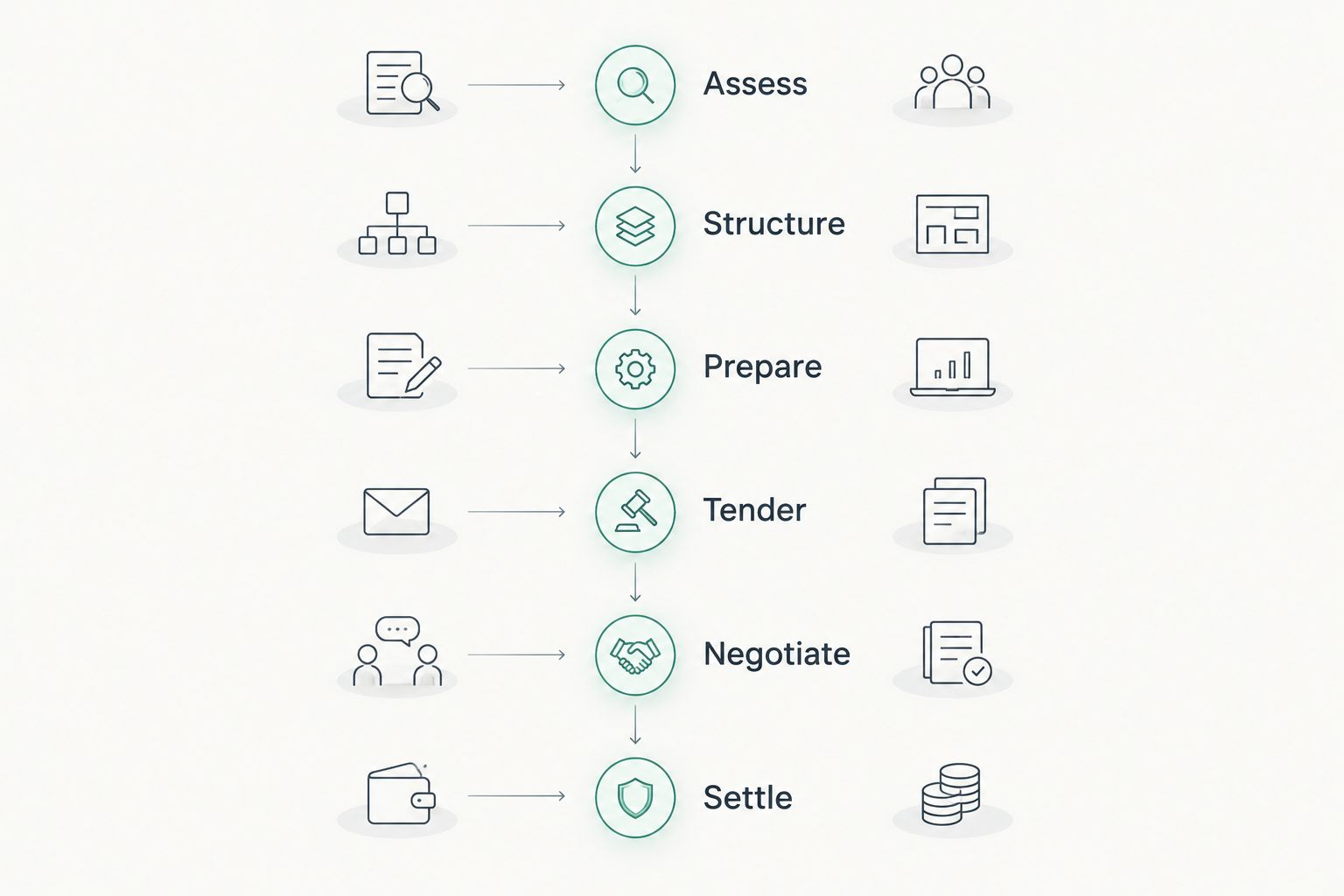
Use this sequence to organise the assessment:
- Assess. List existing facilities, limits, balances, security, guarantees and key obligations. Identify the operating gap that the working capital facility must fund.
- Structure. Define the preferred security position and acceptable alternatives. State whether retaining property outside the borrowing structure is a firm requirement or a preference.
- Prepare. Assemble financial statements, current management accounts, cash-flow forecasts, receivables information and existing facility documents. Explain material changes in trading.
- Tender. Present the same funding purpose and security brief to suitable lenders. Ask each lender to identify exceptions rather than burying them in general commentary.
- Negotiate. Compare the full terms, including guarantees, covenants, repayment mechanics, security scope and release provisions. Resolve differences before selecting a proposal.
- Settle. Coordinate documentation, existing lender payouts, required consents and security releases. Check the final documents against the agreed terms before signing.
Glenclair’s commercial finance services cover business loans, refinancing, equipment and property development finance. Discuss working capital in that wider context when existing borrowing arrangements also need review.
Distinguish lender-paid brokerage from debt advisory services when agreeing the engagement. Debt advisory uses a retainer and success-fee structure; ask which service applies and have the remuneration basis documented before proceeding.
Can a lender take my house without a property mortgage?
No property mortgage does not mean no personal exposure. A director’s guarantee can create personal liability even where the company’s facility is described as unsecured.
The consequences depend on the documents and applicable law. Obtain legal advice on guarantees before signing, rather than treating the absence of a mortgage as protection against every recovery action.
Can I refinance working capital without keeping existing property security?
A refinance can seek a different security structure, but release requires agreement and documentation. The replacement lender must accept its proposed position, and the existing lender’s release requirements must be satisfied.
If the property also supports other borrowing, address that connection in the refinance plan. A payout of the working capital facility alone does not establish that the mortgage will be discharged.
Should I fund equipment and working capital together?
Compare the purposes separately before deciding whether to combine them. Equipment purchases and recurring cash-flow gaps have different funding patterns, even when they sit within the same banking relationship.
A combined arrangement can simplify administration but also connect security and obligations. Separate facilities can distinguish purposes while adding documentation and lender coordination.
FAQ
Does working capital finance always need property security in Australia?
No. Working capital finance can use business-asset security, eligible receivables or an unsecured structure instead of a property mortgage. The lender must still accept the business’s repayment capacity and proposed terms.
Does unsecured working capital finance mean I do not give a personal guarantee?
No. An unsecured facility can still require a personal guarantee. Read the guarantee separately from the facility’s asset-security provisions.
Is invoice finance secured against my home?
Invoice finance does not inherently require a home mortgage. Check the actual agreement for receivables security, additional collateral, recourse and personal guarantees.
Can I get working capital finance if another lender holds business security?
Existing business security does not automatically rule out another facility. Consent, priority arrangements and the proposed lender’s requirements need to be resolved before settlement.
What should I compare in a working capital refinance in 2026?
Compare security scope, guarantees, repayments, covenants, fees and release requirements alongside the interest terms. Ask lenders to respond to the same funding brief so differences remain visible.
Does working capital borrowing above A$2 million always need property?
No universal property requirement follows from a borrowing amount above A$2 million. Suitability depends on the lender’s assessment, the facility structure, repayment capacity and acceptable security.
Who should explain a director’s guarantee before I sign?
A suitably qualified legal adviser should explain the guarantee’s legal effect before you sign. Your finance broker can coordinate the lending discussion but does not replace independent legal advice.
One last thing
Check the release terms before accepting the security terms. A facility that meets today’s working capital need can still restrict tomorrow’s refinance, asset sale or change of lender.
For your 2026 review, request a written schedule matching each facility to its security, guarantees and release requirements. Keep that schedule alongside the final agreements, and update it when the banking arrangements change.
Related guides
- Equipment finance options for manufacturing businesses
- Truck finance options for Australian transport fleets
- Income requirements for commercial property finance
By the Glenclair Financial team. General information only. Obtain advice on your circumstances and legal documents before committing to finance.