
How long does commercial property loan approval take?

Commercial property loan approval time depends on the lender’s assessment, your financial information, the property valuation and any conditions that must be satisfied before funding; there is no universal approval deadline. Conditional approval is not permission to assume settlement will occur: the lender can still require satisfactory security, documents and other conditions before releasing funds.
TL;DR
- Commercial property loan approval time depends on credit assessment, valuation, documentation and outstanding conditions—not just the initial decision.
- Glenclair helps Australian business owners assess commercial finance and refinancing through a panel of 60+ lenders.
- Ask for separate milestones for credit approval, loan documents and settlement before committing to a property deadline.
- For refinancing, review the existing lender’s discharge requirements alongside the new lender’s approval process.
Why this matters
An approval date and a funding date are different commitments. If you plan around an initial credit decision alone, you leave valuation, legal documentation and settlement requirements outside your timetable.
Glenclair provides independent commercial finance brokering for Australian business owners. For an established business reviewing its banking arrangements in 2026, the useful question is not simply when a lender will respond. It is what must happen before the money can move.
For business-purpose borrowing above A$2 million, start with the entire transaction: existing debt, proposed security, repayment capacity and the required completion date. That is the intended focus here, not a universal minimum loan size or an eligibility rule.
How long does commercial property loan approval take?
Commercial property loan approval takes as long as the lender needs to assess the borrower and security and resolve its approval requirements. Use a transaction-specific timetable, not a generic estimate, to manage your purchase or refinance.
A useful timetable separates credit assessment from documentation and settlement. Ask the lender or broker to identify each milestone, the information needed to reach it and who owns the next action.
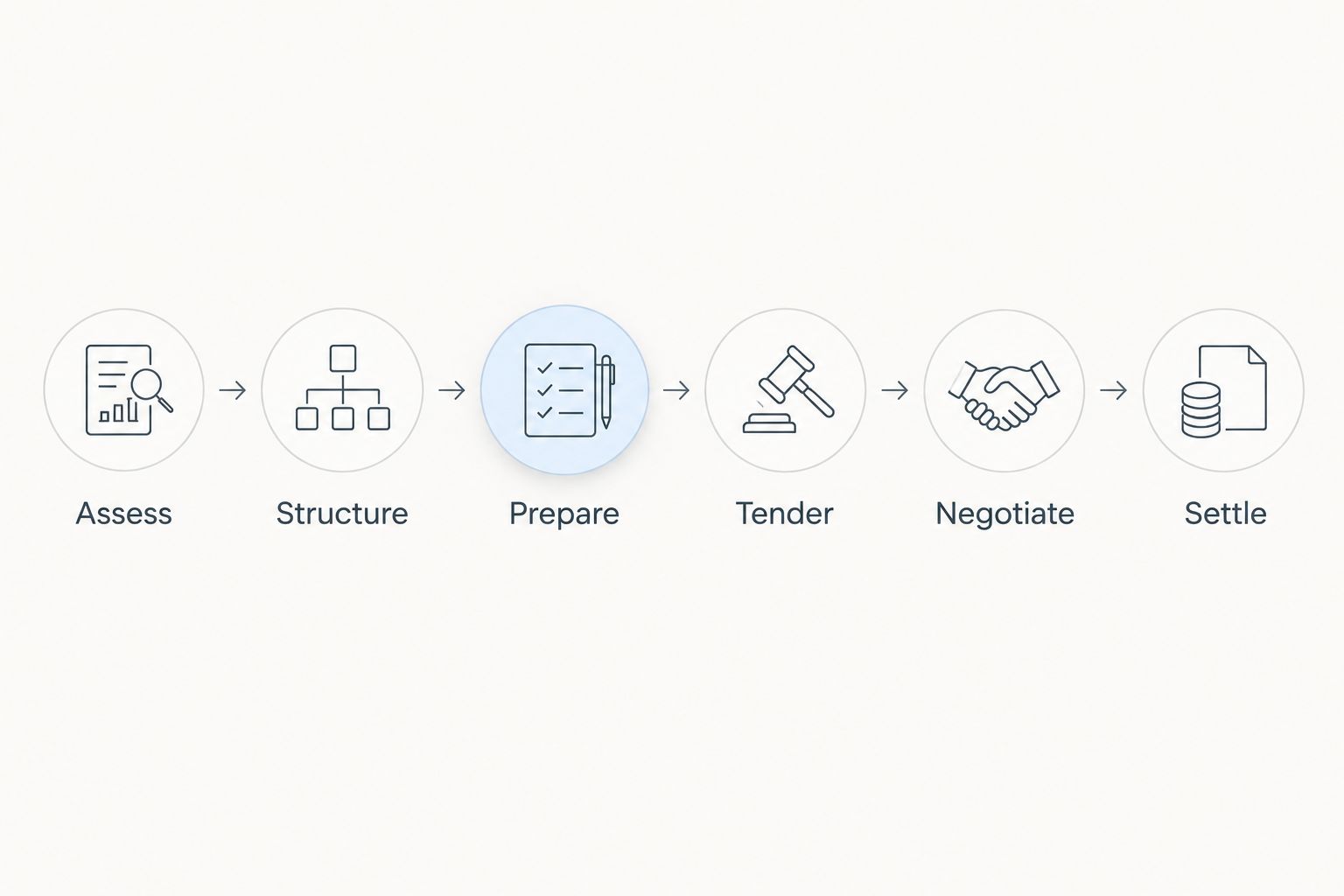
The following process gives you a practical way to organise a 2026 application. It is a preparation framework, not a promise that a lender will follow a fixed schedule.
- Assess. Establish the borrowing purpose, required funding date, existing facilities and repayment source. Identify any purchase, refinance or lease deadlines before choosing a lender.
- Structure. Set out the proposed borrower, security, loan purpose and repayment arrangement. Resolve inconsistencies between the transaction you intend and the application being presented.
- Prepare. Assemble the financial information, property details and supporting documents required for assessment. Explain unusual transactions or changes in trading rather than leaving the assessor to infer them.
- Tender. Present a consistent funding request to suitable lenders. Ask each lender to identify its assessment requirements and dependencies, not just its indicative terms.
- Negotiate. Review the proposed conditions, security requirements and documentation obligations. Clarify which matters remain outstanding before treating the offer as usable finance.
- Settle. Coordinate executed documents, satisfaction of conditions and any existing lender’s discharge. Confirm the settlement arrangements with the parties responsible for completing them.
The order matters. A lender’s willingness to consider a transaction does not remove the need for valuation, credit approval or completed loan documents.
Establish which approval milestone you mean
Ask whether the lender has issued an indicative response, conditional approval or approval subject to completed documentation and settlement requirements. Those descriptions are not interchangeable, and wording differs between lenders.
Read the actual conditions. An email saying the transaction looks acceptable is not a substitute for understanding the lender’s written position and the requirements attached to it.
For a 2026 property purchase, have your solicitor explain the contract’s finance and settlement obligations separately. A lender’s internal assessment timetable does not change your contractual obligations.
Why commercial property loan approval time varies
The work still outstanding is more useful than an unsupported completion estimate. These factors explain what to investigate when an application stops progressing.
- Financial information. Missing accounts, unexplained liabilities or inconsistent figures create questions the lender must resolve. Supply a coherent financial position rather than disconnected documents.
- Property valuation. The lender must be satisfied with the proposed security. Clarify whether a valuation is required, how it will be arranged and whether access or additional property information is needed.
- Borrower and ownership structure. Companies, trusts and related entities require clear identification of the borrower, asset owner and relevant obligations. Make the structure understandable from the outset.
- Repayment assessment. Business cash flow, rental income and existing debt commitments need to support the proposed borrowing. Explain the repayment source and the evidence behind it.
- Approval conditions. Outstanding information, security requirements or unresolved transaction details can prevent an application from progressing to documents or settlement.
- Settlement coordination. Refinancing adds the existing lender’s discharge process. Purchases also require coordination with the legal representatives and other parties involved in completion.
For a closer look at repayment evidence, read how much income lenders require for commercial property finance. An income requirement and an approval timetable answer different questions; satisfying one does not settle the other.
How the transaction changes the approval work
A straightforward refinance, a property purchase and development finance involve different decisions. Choose the pathway that matches the actual use of funds rather than treating all property-backed borrowing as the same application.
| Pathway | Best suited to | Main assessment focus | Timing limitation to plan for |
|---|---|---|---|
| Refinance | Reviewing an existing commercial property loan | Current debt, repayment capacity, security and proposed terms | The outgoing lender’s discharge must align with the new funding |
| Property purchase | Funding the acquisition of a commercial property | Borrower position, purchase details, property and repayment source | Credit assessment and documentation must fit the contractual timetable |
| Property development finance | Funding a development project | Project structure, feasibility, security and repayment strategy | Project-specific conditions add assessment work beyond a property purchase |
The right pathway matches the borrowing purpose; it is not automatically the fastest one. Each has a practical benefit and a constraint. Refinancing creates an opportunity to review existing arrangements but requires a coordinated exit; purchase finance supports an acquisition but brings contractual deadlines; development finance addresses project funding but requires project-specific assessment.
Glenclair commercial finance services include business loans, refinancing, equipment finance and property development finance. A property-backed request should therefore start with its business purpose, not simply the asset offered as security.
What should you prepare before applying?
Prepare a clear account of the transaction before collecting documents. The lender needs to understand what you want to fund, why the proposed structure fits and how the debt will be repaid.
Use this checklist to organise the discussion. The lender’s actual requirements depend on the application.
- Borrowing request: the purpose, proposed amount, funding date and intended repayment source.
- Financial position: business financial statements, current trading information and existing debt commitments relevant to the request.
- Property information: the property details and relevant purchase, ownership or leasing documents.
- Entity structure: the proposed borrower, property owner and connections between related entities.
- Existing facilities: current loan arrangements, security commitments and information needed to investigate discharge requirements.
- Transaction explanation: changes in trading, unusual items or other matters that need context.
Do not send documents without checking that names, figures and obligations agree across them. Where figures differ, explain why. Clear explanations reduce avoidable back-and-forth; they do not guarantee approval or a particular completion date.
For a refinancing review in 2026, include the banking arrangements you want to change. A request to review security, repayment structure or lender relationships needs a clearer brief than a request to replace an outstanding balance.
How should you manage a banking tender against a deadline?
A banking tender should compare the same funding request across suitable lenders. Otherwise, differences in structure or assumptions can make the responses difficult to compare.
Ask each lender to distinguish its indicative position from matters requiring further assessment. Then record the outstanding work: financial questions, valuation, approval conditions, documents and settlement dependencies.
Glenclair is best suited to Australian business owners seeking independent commercial finance brokering across its panel of 60+ lenders. Panel access is not an approval commitment, and a lender’s participation does not establish that its proposal suits your transaction.
A broker-assisted tender gives you a structured basis for comparing lender responses. Its limitation is that the broker does not control the lender’s credit decision, valuation outcome or legal completion process.
Review the scope of commercial finance services against the work you need. Distinguish lender-paid brokerage from debt advisory services, which use a retainer and success-fee structure; confirm the engagement terms before proceeding.
Review your commercial finance requirements
Discuss refinancing, property funding and the steps between assessment and settlement.
Does conditional approval mean I can settle?
Conditional approval does not mean funds are ready for settlement. Read the conditions to establish what remains outstanding, and ask the lender to confirm the next milestone in writing. Your solicitor should advise on the property contract rather than treating the credit decision as a substitute for legal advice.
Can refinancing take longer than a new loan application?
Refinancing involves both the incoming lender’s requirements and the outgoing lender’s discharge process. It is not automatically faster or slower than a purchase application; the outstanding assessment and completion work determine the timetable.
Can complete documents guarantee faster approval?
Complete documents help the lender assess the request, but they do not guarantee a faster decision or an approval. Valuation, credit questions and settlement conditions remain separate dependencies even when the initial submission is complete.
FAQ
What determines commercial property loan approval time in Australia?
Commercial property loan approval time depends on credit assessment, financial information, property valuation and outstanding conditions. Ask for a transaction-specific timetable that separates approval, documentation and settlement.
Can I rely on an indicative lender response before buying a commercial property?
An indicative lender response is not the same as completed approval and available funds. Confirm the lender’s written conditions and obtain legal advice on the purchase contract before relying on that response.
What should I ask a lender about approval timing?
Ask what assessment remains outstanding, who is responsible for each item and what must happen before documents and settlement. Request an updated timetable when a dependency changes.
Does a refinance need a new valuation?
The incoming lender determines its valuation requirements for the refinance. Confirm those requirements before assuming an existing valuation will satisfy the new application.
Is commercial property finance above A$2 million automatically eligible?
Borrowing above A$2 million does not establish eligibility. Suitability depends on the borrower, repayment capacity, property, structure and the lender’s assessment.
Can equipment borrowing affect a commercial property application?
Equipment borrowing forms part of your business’s debt commitments and repayment obligations. Include it in the financial information so the property funding request reflects the wider borrowing position.
Does using a commercial finance broker guarantee approval?
Using a commercial finance broker does not guarantee approval. The broker can prepare and present the request, while the lender retains responsibility for its credit decision and funding conditions.
One last thing
For your 2026 application, ask for an outstanding-conditions list, not just a target approval date. Each item should identify the requirement, its owner and whether it blocks credit approval, documentation or settlement.
That list turns an uncertain wait into specific actions. Keep it current until the transaction completes, and have your legal adviser confirm contractual obligations independently of the funding timetable.
Related guides
- Equipment finance options for manufacturing businesses
- Equipment finance options for construction businesses
Written by the Glenclair Financial team.