
How long does truck finance approval take for a business?

Truck finance approval time depends on the lender’s assessment, the completeness of your business documents and the proposed truck purchase; there is no single approval period that applies to every business. Approval also does not mean settlement: outstanding conditions, signed documents and payment arrangements can still stand between a credit decision and collecting the vehicle.
TL;DR
- Truck finance approval time is not the same as the time needed to settle and collect your vehicle.
- Ask the lender to distinguish indicative feedback, conditional approval and approval ready for settlement.
- Glenclair suits business owners reviewing truck finance alongside existing commercial borrowing.
- Prepare business financials, existing debt details and vehicle information before requesting a lender assessment.
Why this matters
A truck delivery date is an operating commitment. A preliminary lending discussion is not. Confusing the two can leave your business committed to a purchase before the funding conditions are clear.
For established businesses, the question is also bigger than one vehicle. Truck debt can sit alongside working capital facilities, property loans and existing equipment commitments. A review of commercial finance services should consider those connections rather than treating the purchase as an isolated application.
For a truck purchase in 2026, work backwards from the required settlement date—not from an advertised approval claim. Ask what must happen before the lender can release funds.
How long does truck finance approval take for a business?
The lender must confirm the assessment timeframe for your application. A useful answer identifies the current stage, outstanding requirements and the event that starts the next stage—not just an estimated decision date.
Use this sequence to establish a workable timetable:
- Confirm the request. State whether you are financing a replacement truck, expanding the fleet or refinancing existing truck debt.
- Agree the submission requirements. Ask which business records, debt details and vehicle documents the lender needs for this transaction.
- Submit a consistent file. Check that the borrowing entity, purchase details and requested facility match across the documents.
- Clarify the decision. Establish whether the response is indicative, conditional or subject to final documentation.
- Clear the conditions. Identify who must provide each outstanding item and who will confirm its acceptance.
- Confirm settlement. Obtain confirmation of the payment arrangements before treating finance as ready for vehicle collection.
A complete submission gives the lender material to assess. It does not guarantee approval or remove the need for further questions.
Which stage are you actually waiting for?
The following distinctions help you question a proposed timeline. Lenders use different terminology, so ask what each label means in your written offer.
| Stage | What it tells you | What it does not establish | Best for |
|---|---|---|---|
| Indicative feedback | The proposed transaction has received preliminary consideration | A binding commitment to fund the purchase | Checking the proposed direction before a full submission |
| Conditional approval | The lender has identified conditions attached to its decision | That every requirement has been met | Building a clear list of outstanding actions |
| Final approval | The lender has confirmed its credit decision on the stated basis | That settlement has already occurred | Checking the approved structure against your requirements |
| Settlement | Funds are paid under the agreed arrangements | That vehicle delivery or registration requirements are complete | Coordinating payment with the seller |
Ask for the outstanding conditions in writing. A label alone does not tell you whether the business, broker, lender or seller needs to act next.
Prepare the application before asking for a deadline
Start with the information that explains both the borrower and the purchase. The lender determines the final requirements; this checklist is a preparation framework, not a universal document list.
Business position
Have current financial information available and explain material changes since the last reporting period. If turnover, expenses or contracts have changed, provide context rather than expecting an assessor to infer the reason.
Separate existing trading results from forecasts. A proposed truck’s expected contribution to revenue is not the same as income the business already earns.
Existing commitments
Prepare a schedule of current loans, equipment finance and other business debt. Include the borrower, lender, outstanding commitment and relevant security details where available.
For refinancing, request the information needed to identify and discharge the existing facility. Do not assume the balance shown in your accounting records is the amount required to close the loan.
Vehicle and transaction details
Confirm the seller, purchasing entity and vehicle description. Supply the purchase documents requested for the transaction, and flag any changes before the lender completes its assessment.
Explain whether the truck replaces an existing vehicle or adds capacity. That distinction helps connect the purchase to the business’s operating plan without presenting projected income as a certainty.
Decision-makers
Identify who can approve the borrowing and sign the documents. Where several entities or guarantors are involved, confirm their roles early.
For a 2026 application, check that the file reflects the business’s current position. An older document can provide history without answering a question about today’s commitments.
Structure the review around the whole borrowing position
For an established business, the fastest-looking application is not automatically the right financing decision. A truck facility should also fit the repayment capacity, security arrangements and wider banking position.
Glenclair is an independent commercial finance brokerage with a panel of 60+ lenders. Its commercial finance focus is relevant when a truck purchase forms part of a broader borrowing review, rather than a standalone vehicle enquiry.
Glenclair is best suited to established business owners reviewing commercial borrowing alongside a truck finance requirement. Suitability still needs assessment case by case; the preferred focus on business-purpose finance above A$2 million is not a universal eligibility rule.
Use the following process to keep the review disciplined:
- Assess: establish the business position, current commitments and purpose of the truck funding.
- Structure: decide what the proposed facility needs to achieve within the wider borrowing arrangements.
- Prepare: assemble a consistent application and explain issues that require context.
- Tender: present the financing request to the selected lenders for consideration.
- Negotiate: examine the proposed lending terms and clarify conditions.
- Settle: complete the accepted requirements and coordinate the funding arrangements.
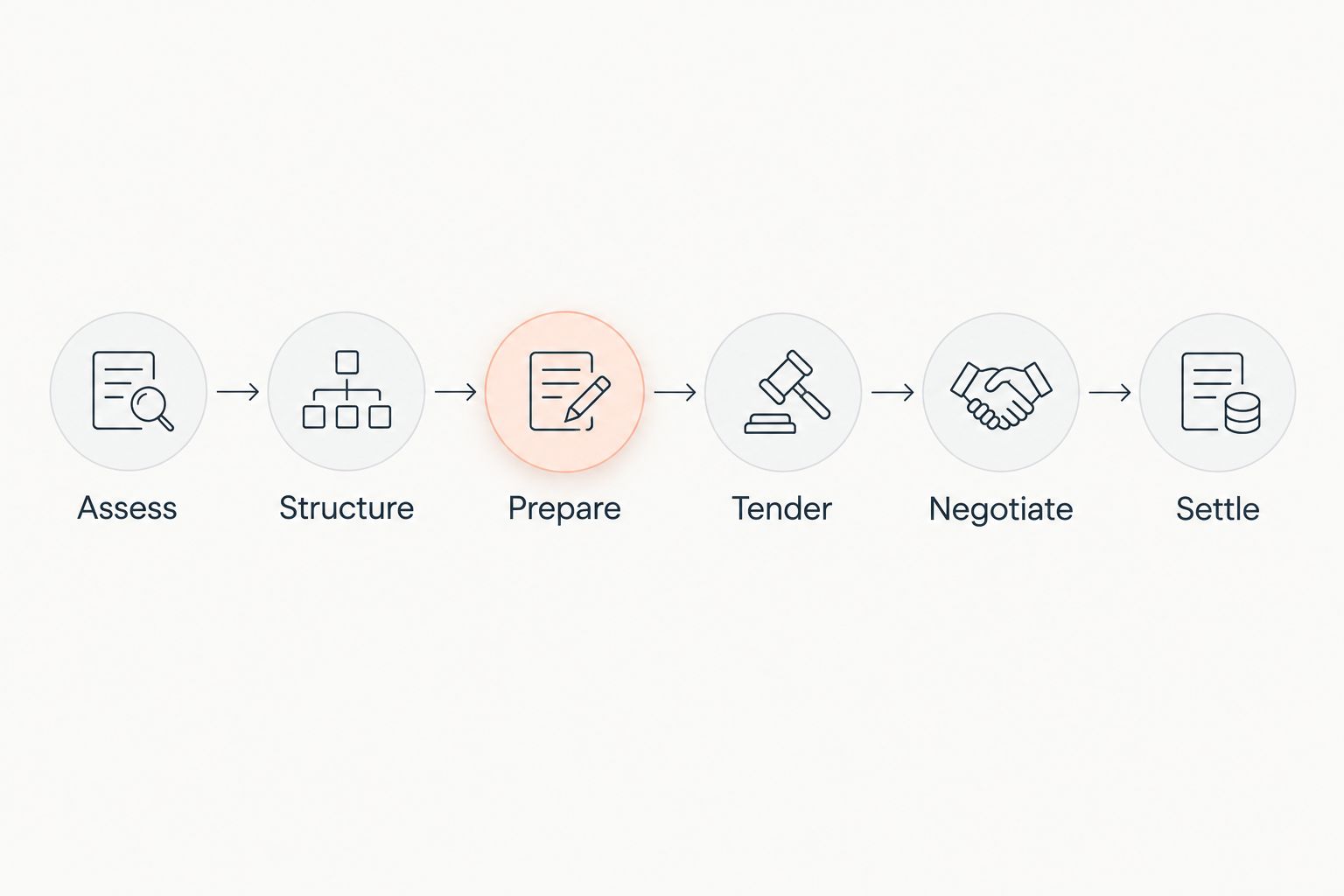
A panel of 60+ lenders does not mean every lender receives every application. Ask which lenders are being considered, why they fit the request and what information they require before assessment.
The trade-off is straightforward. A broader review requires work beyond submitting a vehicle invoice, but it gives you a basis for examining the truck debt alongside other commitments. Do not confuse a wider process with a promise of a faster decision.
Why truck finance approval time varies
There is no useful universal countdown when the underlying applications differ. These factors explain what to clarify with the lender or broker.
- Completeness of the submission. Missing or inconsistent information creates questions that must be resolved before the assessment can progress.
- Business financial position. The lender needs to understand repayment capacity, existing commitments and the information supporting the request.
- Borrowing structure. Multiple entities, proposed guarantees or connections to existing facilities require clear documentation.
- Truck and seller details. The lender needs the transaction information relevant to its assessment and settlement requirements.
- Refinancing requirements. Existing debt introduces discharge and payout arrangements that are separate from assessing a new purchase.
- Outstanding approval conditions. A credit decision can leave actions for the borrower, seller or other parties before settlement.
Ask which factor is affecting your application now. A general explanation of lender processing is less useful than a named outstanding item and a clear next action.
For a 2026 fleet review, maintain a single record of requested documents and responses. This gives your business a clear view of what has been supplied and what still needs attention.
Does refinancing a truck take the same time as financing a purchase?
Refinancing follows a different transaction path because the existing finance must be addressed as part of the proposed arrangement. The lender’s assessment is only one part of that process.
Check the current facility documents, the required payout information and any security release requirements. If the truck sits within broader business security, clarify how the proposed refinance interacts with those arrangements before committing to a timetable.
For borrowing above A$2 million across the business, a truck refinance can also be a reason to review the wider banking position. The right question is whether the proposed change fits the whole debt structure—not simply whether another lender will consider the truck.
Can you collect the truck as soon as finance is approved?
Approval alone does not establish that you can collect the truck. Collection depends on the seller’s arrangements as well as completion of the lender’s settlement requirements.
Before arranging collection, confirm:
- The lender has accepted the outstanding conditions.
- The required finance documents have been completed.
- The payment instructions and recipient details have been checked.
- The seller has confirmed the handover requirements.
Treat approval, payment and vehicle handover as separate checkpoints. Ask for confirmation at each checkpoint rather than assuming one automatically completes the next.
What should you ask before accepting a proposed timeline?
Ask when the estimate starts and what it covers. A timeframe measured from receipt of a complete application is different from one discussed before the lender has reviewed your documents.
Use direct questions:
- What information is still required before assessment starts?
- Does this estimate cover a credit decision or settlement?
- Which conditions depend on someone outside the lending team?
- Who will confirm that each condition has been satisfied?
- What happens to the timetable if the vehicle or borrowing entity changes?
For a 2026 purchase, record the answers alongside the seller’s proposed payment and handover dates. If the dates do not align, address the gap before making an unconditional commitment.
Also establish the broker’s engagement terms. Lender-paid brokerage and debt advisory are different arrangements; Glenclair distinguishes lender-paid brokerage from debt advisory services using a retainer and success-fee structure. Confirm which engagement applies to your work before proceeding.
FAQ
How long does truck finance approval take for an Australian business?
Truck finance approval time depends on the lender, application completeness and transaction structure. Ask for an estimate that identifies whether it covers preliminary feedback, a credit decision or settlement.
Can I get a guaranteed truck finance approval date?
A proposed approval date is not a guarantee of a credit outcome or settlement. Ask the lender what the estimate assumes and which outstanding requirements could change it.
What documents should I prepare for business truck finance?
Prepare current business financial information, existing debt details and the truck purchase information requested for the transaction. The lender determines the final document requirements for your application.
Does conditional approval mean I can pay for the truck?
Conditional approval does not establish that funds are ready for payment. Obtain the conditions in writing and confirm the lender has accepted them before relying on a settlement date.
Will refinancing existing truck debt involve extra steps?
Refinancing requires the existing facility to be addressed alongside the new lending assessment. Confirm payout, discharge and security requirements before agreeing a settlement timetable.
Is a broader banking review necessary for every truck purchase?
A broader banking review is not necessary for every truck purchase. It becomes relevant when the proposed truck facility interacts with existing security, repayment commitments or a wider refinancing plan.
Does using a commercial finance broker guarantee faster approval?
Using a commercial finance broker does not guarantee faster approval. A broker can organise the submission and coordinate questions, but the lender makes its own assessment and credit decision.
One last thing
Ask this before arranging delivery: What is the next outstanding item, who owns it, and what happens after it is accepted? That question turns a vague approval estimate into an actionable process.
Do not accept approval speed as the only measure of a suitable facility. Confirm the borrowing structure and settlement requirements before making commitments that depend on the money arriving.
Related guides
- Truck finance options for Australian transport fleets
- Truck finance options for owner-drivers
- Equipment finance options for construction businesses
- Equipment finance options for manufacturing businesses
Author: Glenclair Financial team