
How much deposit do you need to buy a business in Australia?

There is no fixed deposit to buy a business in Australia in 2026: the cash you need depends on the purchase terms, the acquisition funding approved and the security supporting it. Your upfront requirement also needs to cover transaction costs and operating cash, not just the amount paid towards the purchase price.
TL;DR
- Your deposit to buy a business is deal-specific; separate the contract deposit from your total equity contribution.
- Glenclair commercial finance broking suits business owners seeking a lender comparison for an acquisition or banking review.
- Acquisition finance should account for working capital and transaction costs, not just the purchase price.
- Property security does not remove repayment obligations or guarantee approval.
Why this matters
The contract deposit and the cash needed to complete an acquisition are different amounts. Confusing them can leave you able to sign a contract but unable to fund settlement or the first operating cycle.
For established business owners, the purchase also needs to fit existing debt, security and cash commitments. Glenclair is an independent commercial finance brokerage with a panel of 60+ lenders. A lender comparison needs to address the whole borrowing structure, rather than treating the deposit as an isolated question.
How much deposit do you need to buy a business in Australia?
You need enough cash to meet the agreed contract deposit, complete any equity contribution required by the funding structure, cover transaction costs and retain working capital. There is no universal percentage that answers all four requirements.
For a 2026 acquisition, start with a written sources-and-uses schedule. This sets out what must be paid, when it must be paid and where the money will come from.
| Funding component | What it means | What to confirm |
|---|---|---|
| Contract deposit | An amount paid under the purchase agreement before completion | Payment date, who holds it and the conditions governing release or return |
| Buyer equity | Your contribution to the acquisition funding | The amount required and whether the contract deposit counts towards it |
| Acquisition debt | Borrowing used to fund the purchase | Approved amount, conditions, security and settlement timing |
| Transaction costs | Legal, accounting, due diligence and other applicable costs | Which costs need separate cash funding |
| Working capital | Cash supporting operations after completion | Receipts, supplier payments, wages and other operating commitments |
A useful planning rule is:
Required buyer cash equals total acquisition and operating funding needs, less confirmed debt and other committed funding.
Treat that as a reconciliation, not a lending formula. Avoid counting a deposit twice if it is credited towards the purchase price at settlement. Equally, do not treat an indicative lending discussion as confirmed settlement funding.
Contract deposit: governed by the purchase agreement
The contract deposit is a contractual payment, not a lender's statement of how much equity you need. Its timing and treatment depend on the agreement you sign.
Ask your solicitor to explain the relevant conditions before paying. In particular, understand what happens if finance is unavailable, due diligence identifies a problem or a completion condition is not met.
Buyer equity: determined by the funding structure
Buyer equity is the contribution needed alongside approved borrowing and any other agreed funding. It can include money already paid as a contract deposit where the transaction documents provide for that treatment.
Do not assume that an acceptable contract deposit means the lender will finance the remaining purchase amount. The lender still assesses the acquisition, repayment capacity, security and proposed structure.
Working capital: separate from the purchase contribution
Working capital supports the business after you take ownership. A purchase that uses all available cash leaves no separate reserve for operating commitments.
Check which receivables, payables, stock and employee-related obligations transfer under the agreement. Your accountant and solicitor should reconcile those terms with the settlement statement and cash-flow forecast.
Why your required deposit varies
The following factors explain why two business acquisitions can require different cash contributions. None provides a reliable standalone deposit percentage.
- Repayment capacity. The acquired business needs to support the proposed debt alongside its operating obligations. Review forecasts against the underlying financial records.
- Purchase composition. Equipment, property, stock and goodwill have different characteristics. The funding assessment needs to reflect what you are actually buying.
- Available security. The assets offered as security affect the proposed structure and the assets exposed if obligations are not met.
- Buyer financial position. Existing debt, available cash and other commitments affect the acquisition's fit within your broader finances.
- Transaction terms. Payment timing, settlement adjustments and any agreed deferred consideration change when funding is needed.
- Post-completion cash needs. Supplier terms, payroll and the timing of customer receipts affect how much cash must remain outside the purchase contribution.
Set the equity contribution after assessing the whole transaction, not by copying another buyer's deposit. Even a similar purchase amount does not establish that the same funding structure will suit you.
Which funding structure suits your acquisition?
The right structure depends on what you are buying and how you intend to repay the debt. Compare each option against the transaction rather than choosing the arrangement that appears to require the least cash.
| Funding approach | Best for | Main benefit | Main limitation |
|---|---|---|---|
| Buyer cash and acquisition debt | Buyers seeking a defined split between equity and borrowing | Makes the funding contribution explicit | Uses buyer liquidity and creates debt repayments |
| Borrowing supported by property security | Buyers willing to offer suitable property as security | Adds property to the security assessment | Exposes that property to the borrowing obligations |
| Separately assessed equipment finance | Transactions with identifiable equipment | Allows equipment funding to be considered separately | Does not fund every component of a business purchase |
| Vendor finance | Transactions where the seller agrees to deferred payment | Changes the timing of part of the seller's payment | Adds contractual obligations that need coordination with other finance |
These approaches are not mutually exclusive. Their suitability depends on lender acceptance, legal documentation and the acquisition's capacity to meet all obligations.
Property-backed borrowing
Offering property as security does not make the acquisition self-funding. You still need an assessment of repayment capacity and a clear account of the cash required at completion.
Before offering property, ask which facilities it will secure and what must happen for it to be released. Assess the exposure alongside any existing mortgage or other secured business borrowing.
Equipment within the purchase
Where the purchase includes equipment, identify the assets and their ownership before assuming they can support separate finance. Existing security interests and the seller's contractual obligations need to be resolved through the transaction process.
Separating equipment from goodwill in a funding discussion helps clarify the request. It does not establish an approved equipment value or mean the equipment component will be financed in full.
Vendor finance
Vendor finance changes payment timing; it does not remove the obligation to pay the seller. The arrangement needs clear repayment terms and treatment alongside the acquisition lender's requirements.
Your solicitor should address security, payment priority and what happens following a default. Include vendor repayments in the same cash-flow assessment as bank debt, rather than treating them as a separate issue.
How do you work out your cash contribution before making an offer?
Use a documented process before committing cash or agreeing to unconditional purchase terms. For a 2026 transaction, keep the funding schedule aligned with the latest contract and financial information.
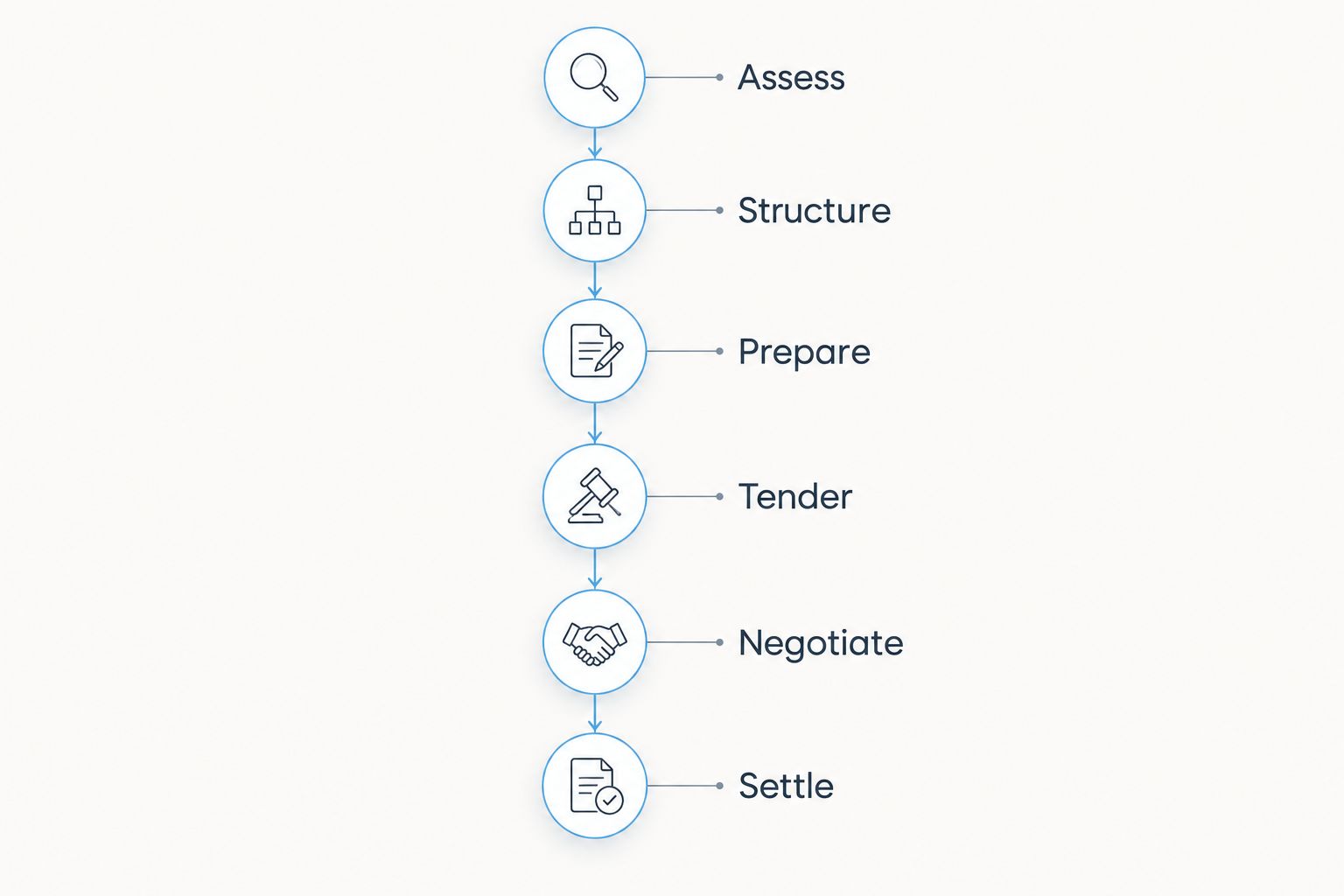
- Assess. Review the target business's financial records, your existing borrowing and the purpose of the acquisition. Identify what needs verification before relying on earnings.
- Structure. Separate the purchase amount, transaction costs, settlement adjustments and operating cash. Show the proposed source of funding for each item.
- Prepare. Assemble the financial information, purchase documents, ownership details and security information needed for assessment. Resolve inconsistencies before comparing proposals.
- Tender. Present the same funding request to the lenders being considered. Consistent information makes differences in terms easier to identify.
- Negotiate. Compare security, guarantees, repayment obligations, conditions and reporting requirements. Address changes before accepting a facility.
- Settle. Reconcile approved funding with the final settlement statement. Confirm that required documents and conditions are complete before relying on funds being released.
Glenclair commercial finance broking is relevant when an acquisition also requires a review of existing banking arrangements. Its commercial finance services include business loans, refinancing, equipment finance and property development finance. Assess suitability case by case; a preferred focus on business-purpose borrowing above A$2 million is not a universal eligibility rule.
Broader lender access supports comparison, but panel size alone does not establish suitability. Glenclair's 60+ lender panel does not mean every lender will suit an acquisition. Ask which lenders fit the proposed transaction, what information they require and how the proposals will be compared.
What should you check in a lender proposal?
Compare the complete obligation, not just the amount advanced. A proposal that funds more of the purchase can still leave you with unsuitable security commitments or insufficient operating flexibility.
Use this checklist for your 2026 funding review:
- Purpose: Does the approval cover the intended acquisition and any associated funding needs?
- Repayments: Does the forecast include every facility and any deferred seller payments?
- Security: Which business and personal assets support the borrowing?
- Guarantees: Who gives them, and what obligations do they cover?
- Conditions: What must be completed before funds can be released?
- Ongoing obligations: What financial reporting, reviews or other commitments apply?
Ask for brokerage and advisory remuneration to be explained separately. Lender-paid brokerage and debt advisory are different arrangements; debt advisory uses a retainer and success-fee structure. Confirm the engagement scope and remuneration before proceeding.
Can you buy a business without a cash deposit?
There is no universal no-deposit pathway for buying a business. A structure using other security or deferred seller payments still needs lender acceptance, contractual agreement and a workable repayment plan.
Distinguish no cash paid at signing from no buyer equity and no cash required at settlement. Those are different propositions, and none removes the need to fund operating commitments.
Does refinancing existing debt reduce the deposit you need?
Refinancing changes the available funding only where the approved structure provides funds that can be used for the acquisition. Moving existing debt by itself does not create an additional cash contribution.
Review the acquisition and existing banking together. Consider the resulting repayments, security and remaining liquidity, rather than assessing the purchase facility in isolation.
Should you use all your cash as the deposit?
Do not set the deposit without first allowing for transaction costs and working capital. A larger contribution reduces the purchase amount left to fund, but also reduces the cash available elsewhere.
Build the operating cash requirement from the business's payment cycle and obligations. Agree the funding split only after that reserve is visible in the acquisition plan.
FAQ
How much deposit do I need to buy a business in Australia in 2026?
There is no fixed deposit to buy a business in Australia in 2026. Your cash requirement depends on the purchase agreement, approved funding, transaction costs and working capital needs.
Is the contract deposit the same as my equity contribution?
The contract deposit is not the same as your total equity contribution. It is a payment under the purchase agreement and can count towards the final contribution where the transaction documents provide for that treatment.
Can I use property as security when buying a business?
Property can be considered as security for acquisition borrowing, subject to lender assessment. It does not remove repayment obligations and exposes the property to the secured debt.
Can equipment finance cover the whole business purchase?
Equipment finance is not a substitute for funding every component of a business acquisition. Identify equipment separately from goodwill, transaction costs and operating cash when assessing the structure.
Does vendor finance mean I need no deposit?
Vendor finance does not automatically remove a deposit or equity requirement. It defers an agreed payment to the seller and needs to fit the purchase contract and other finance arrangements.
What should I prepare before approaching a commercial finance broker?
Prepare the target business's financial information, proposed purchase terms, your existing debt details and a schedule of available cash and security. Separate purchase funding from transaction costs and working capital.
Is borrowing above A$2 million mandatory for an assessment?
Borrowing above A$2 million is a preferred focus for established business owners, not a universal eligibility rule. Suitability needs a case-by-case assessment of the transaction and funding requirements.
One last thing
Ask for a settlement funding reconciliation before committing to the final contribution. It should show every funding source against every payment, including money already paid under the contract.
The number that matters is not simply the deposit. It is the cash left available after completion to operate the business and meet the borrowing obligations.
Related guides
- Income lenders require for commercial property finance
- Equipment finance options for construction businesses
- Equipment finance options for manufacturing businesses
Author: Glenclair Financial team