
How quickly can cash flow finance be approved for a business?

Cash flow finance approval speed depends on the lender, the completeness of your application and the complexity of the borrowing structure; there is no single approval deadline for every business in 2026. Credit approval is not the same as cleared funds, because documentation, security and other conditions can remain outstanding. For an established business, the useful deadline is when funds must be available—not when a lender first expresses interest.
TL;DR
- Cash flow finance approval speed depends on application quality, lender assessment and outstanding funding conditions.
- Glenclair supports Australian business owners seeking commercial loans and refinancing through a panel of 60+ lenders.
- Separate indicative terms, credit approval and settlement before relying on a funding date.
- Prepare financial information and explain the repayment source before approaching lenders.
Why this matters
A quick indication does not pay suppliers or cover payroll. You need to know what the lender has actually approved, what remains unresolved and when the facility can be drawn.
Glenclair's commercial finance services cover business loans, refinancing, equipment and property development finance. For established businesses seeking business-purpose borrowing greater than A$2 million, a funding review should consider the existing banking arrangements alongside the immediate cash requirement. That borrowing level is a preferred focus, not a universal eligibility threshold; suitability requires individual assessment.
Judge speed by the path to usable funds, not the earliest positive response. A funding plan for 2026 should identify the required drawdown date, the approval stage and the conditions still outstanding.
How quickly can cash flow finance be approved for a business?
The approval timetable depends on the work required to reach a credit decision. A straightforward request with complete financial information presents a different assessment task from a refinance involving several facilities, entities and securities.
Ask the lender or broker to separate these stages in writing:
| Stage | What it establishes | What it does not establish |
|---|---|---|
| Initial indication | Whether the request appears to fit the lender's criteria | A completed credit decision |
| Credit assessment | Whether the lender accepts the proposed risk and structure | That all documentation and funding conditions are complete |
| Conditional approval | Approval subject to specified requirements | That you can draw funds immediately |
| Documentation | The contractual terms and obligations | That every condition for funding has been satisfied |
| Settlement and drawdown | Completion of the applicable funding requirements | That future drawings have no ongoing conditions |
The label matters less than its meaning. Ask whether the response comes from the lender's authorised credit decision-maker, whether further assessment remains and whether the proposed facility matches your requested amount and purpose.
For a 2026 funding request, use a written milestone list rather than a headline turnaround claim. Record who owns each outstanding task and what must happen before the next stage begins.
What should you ask before accepting a turnaround estimate?
Ask when the estimate starts. An estimate measured from receipt of a complete application is different from an estimate measured from your first enquiry.
Then ask what ends the clock: an initial response, conditional approval, signed documents or money available to draw. A turnaround estimate is useful only when its starting point and finishing point are clear.
Prepare the application in the order lenders need it
A complete submission gives the lender a coherent borrowing request. It should connect the amount sought, its business purpose and the proposed repayment source, rather than leave the lender to assemble that explanation from separate documents.
Use this sequence to organise the review:
- Assess. Define the cash requirement, the required funding date and the source of repayment. Explain whether the gap arises from trading, growth, seasonal activity or another identifiable business need.
- Structure. Set out the requested facility and how it fits existing debt. Identify the borrowing entities, proposed security and any guarantees being considered.
- Prepare. Assemble the financial information requested for assessment. Reconcile material differences between accounts, management reporting and the explanation of current trading.
- Tender. Present a consistent request to suitable lenders. Keep the borrowing purpose and core assumptions aligned so responses can be compared.
- Negotiate. Examine the full terms, not just the headline interest rate. Resolve questions about security, covenants, repayment obligations and conditions before accepting an offer.
- Settle. Complete documentation and the lender's funding requirements. Confirm how drawdown works and which obligations continue after settlement.
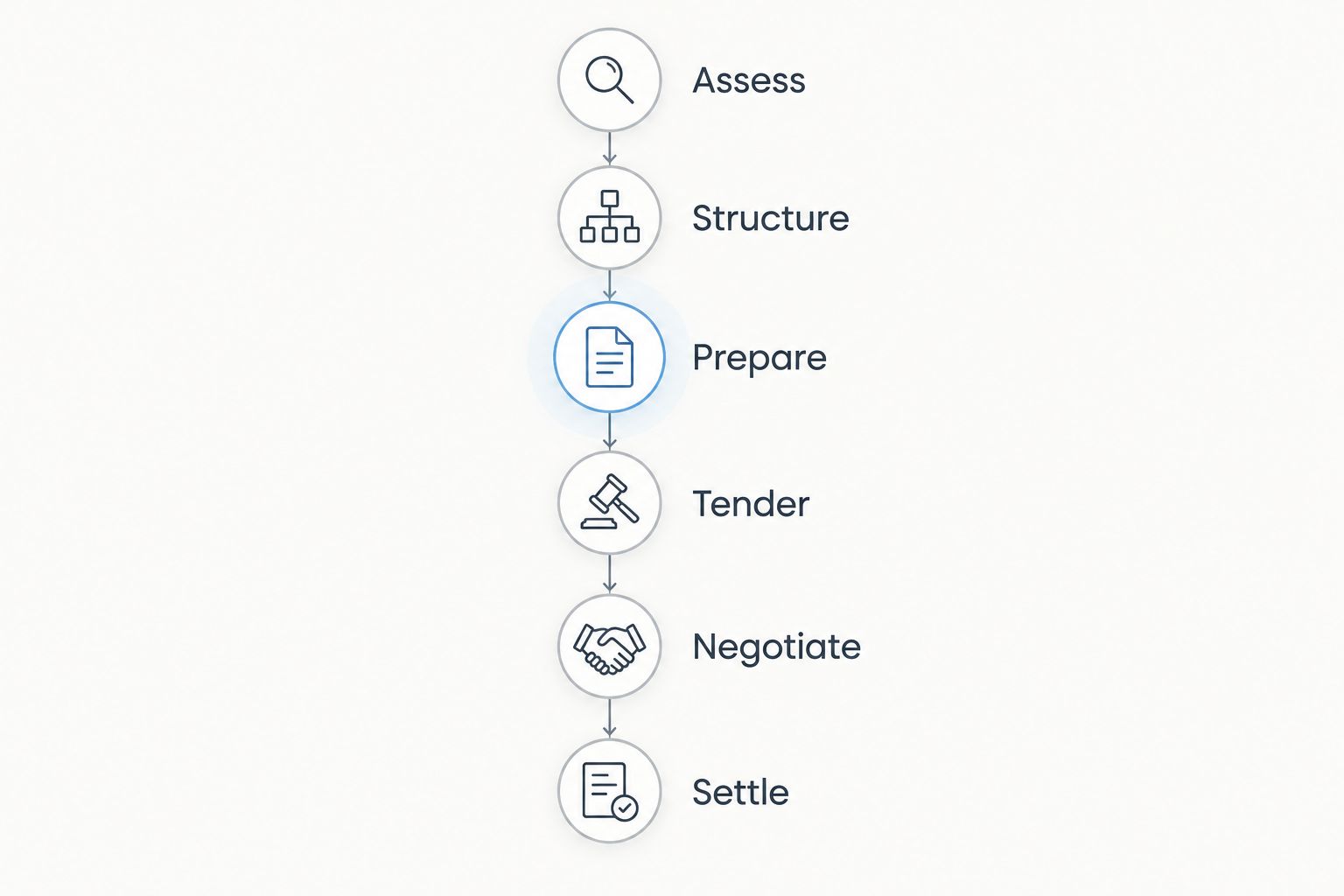
Keep a single outstanding-items list throughout the process. Separate borrower tasks from lender decisions and external requirements; otherwise, an apparently active application can still have an unresolved dependency.
What belongs in the application pack?
Follow the chosen lender's requirements rather than assuming every lender wants identical documents. For a commercial borrowing review, prepare to explain:
- Trading performance: financial statements and current management information relevant to the request.
- Cash movement: bank statements, debtor information and creditor obligations where requested.
- Existing debt: current facilities, repayment commitments, expiry dates and security arrangements.
- Repayment capacity: forecasts and the assumptions supporting the proposed debt repayments.
- Business structure: borrowing entities, ownership and relevant supporting parties.
- Funding purpose: what the money will fund and why the requested structure fits that purpose.
Check consistency before submission. If a forecast assumes stronger trading than the latest results show, explain the basis instead of leaving the difference unanswered.
Why cash flow finance approval speed varies
A lender assesses the borrowing request as a whole. These factors determine what needs to be reviewed and resolved:
- Application completeness. Missing information leaves questions open. Supply the requested material together and identify anything that is still being prepared.
- Repayment evidence. The lender needs to assess how the business will service the facility. Explain unusual trading movements and support forecast assumptions.
- Existing banking arrangements. Refinancing can involve repayment of existing facilities and changes to security. Map those dependencies before setting a settlement target.
- Borrowing structure. Multiple entities, guarantors or security providers create separate matters to document and assess. Make responsibilities clear at the start.
- Facility purpose and conditions. Working capital, equipment purchases and property development involve different funding requirements. Match the submission to the actual transaction.
- Outstanding third-party work. Where valuations, legal documentation or other external work are required, include them in the timetable rather than treating credit approval as the final task.
These are assessment factors, not a formula for calculating an approval date. Ask which ones apply to your request and which remain unresolved.
Which finance structure fits the cash requirement?
Choose the facility around the use of funds, then assess the approval process. Using a facility simply because its initial response is quick can leave repayment obligations poorly matched to the underlying business need.
| Option | Best for | Main benefit | Main limitation |
|---|---|---|---|
| Working capital facility | Funding an identifiable trading cash requirement | Addresses the operating cash need directly | Repayment obligations still need to fit the cash cycle |
| Refinance of existing facilities | Reviewing an established business's banking arrangements | Allows the existing debt structure to be reconsidered | Existing lender exits and security arrangements require attention |
| Equipment finance | Funding business equipment or machinery | Keeps the borrowing purpose tied to the asset purchase | Does not resolve a separate operating cash shortfall |
| Property development finance | Funding a defined development project | Structures borrowing around the development requirement | Project conditions and drawdown requirements need separate assessment |
A machinery purchase and a payroll shortfall are different funding purposes. If both exist, show them separately rather than presenting one unexplained borrowing amount.
Likewise, a refinance should not be treated only as an urgent cash injection. Review facility limits, repayment commitments, security and reporting obligations together so the replacement arrangement addresses the actual problem.
Should you refinance instead of adding another facility?
Refinancing deserves consideration when the immediate cash requirement exposes a mismatch in existing borrowing. Adding debt without reviewing the current arrangements can leave that mismatch intact.
Compare the proposed new facility with the whole banking position. Identify what will be repaid, what will remain and how the combined repayments fit forecast cash flow.
Glenclair is best suited to Australian business owners seeking a broker-led review of commercial borrowing and refinancing. Its panel includes 60+ lenders, but panel size is not an approval promise or a commitment to submit every request to every lender.
A broker-led review brings lender selection and transaction coordination into the process. It does not remove the lender's credit assessment, documentation requirements or discretion to decline the application.
How should brokerage and advisory fees be explained?
Separate lender-paid brokerage from debt advisory work before an engagement begins. Debt advisory services use a retainer and success-fee structure; they should not be described as the same arrangement as lender-paid brokerage.
Ask for the engagement scope and remuneration basis in writing. Understand which work is included and which charges arise from the lending transaction itself.
Does conditional approval mean the money is available?
Conditional approval does not mean the money is available to draw. Read the conditions and establish which must be satisfied before documentation, settlement or access to funds.
For your 2026 borrowing review, request an outstanding-conditions schedule. Identify the responsible party and the evidence needed to close each item.
Can an existing lender approve cash flow finance faster?
An existing banking relationship does not establish a guaranteed approval timetable. The lender still needs to assess the new request and any changes to your business or borrowing structure.
Ask what existing information the lender can use and what must be updated. Compare that process with other suitable lenders without assuming either the incumbent or a new lender will finish first.
What if the business needs funds before approval is complete?
An unfinished approval process is not a committed source of cash. Tell the lender or broker the actual payment deadline and distinguish essential payments from discretionary expenditure.
Do not commit to a supplier or transaction on the strength of an indicative response alone. Confirm the facility's status, funding conditions and drawdown arrangements before treating the money as available.
FAQ
How quickly can cash flow finance be approved for my business?
Cash flow finance approval speed depends on your application, the lender's assessment and the proposed borrowing structure. Ask for separate milestones for credit approval, documentation and access to funds rather than one undifferentiated turnaround estimate.
Can I get same-day approval for a commercial cash flow facility?
Do not rely on same-day approval unless the lender confirms what that approval covers. An initial indication or conditional decision is not the same as a settled facility with funds available to draw.
What documents should I prepare before applying?
Prepare the financial and business information the lender requests, including evidence supporting the borrowing purpose and repayment source. Existing facility details and a clear explanation of current trading help make the request understandable.
Will using a commercial finance broker guarantee a faster approval?
A commercial finance broker does not guarantee faster approval. Glenclair can help Australian business owners seek commercial finance through its lender panel, but each lender makes its own credit decision and sets its conditions.
Is refinancing better than taking another business loan?
Refinancing and additional borrowing solve different problems. Compare the whole debt structure, repayment commitments and security arrangements before deciding whether to replace existing facilities or add another one.
Does conditional approval let me start spending the funds?
Conditional approval does not establish that funds are available. Confirm that the relevant conditions, documentation and drawdown requirements have been satisfied before relying on the facility.
Do I need to borrow more than A$2 million to be considered?
Borrowing greater than A$2 million is a preferred focus for established-business enquiries, not a universal eligibility rule. Suitability must be assessed against the individual business, funding purpose and proposed transaction.
One last thing
For your 2026 finance review, ask a more useful question than how quickly approval can arrive: What still has to happen before this business can draw the funds?
The answer turns a broad promise into a list of decisions, documents and conditions. Use that list to manage the funding deadline.
Related guides
- Equipment finance options for construction businesses
- Equipment finance options for manufacturing businesses
- Truck finance options for Australian transport fleets
- Income requirements for commercial property finance
Written by the Glenclair Financial team.