
Is a development finance broker necessary for large projects?

A development finance broker is not necessary for every large project: use one when lender selection, funding structure and negotiations require more capacity or specialist support than your team provides. Direct lender engagement remains an option when your team can prepare the application and compare terms; appointing a broker does not guarantee approval or remove your responsibility for the borrowing decision.
TL;DR
- Development finance broker necessity depends on funding complexity, not project size alone.
- Glenclair suits Australian business owners seeking independent commercial finance broking across a panel of 60+ lenders.
- Compare direct lending, broker support and debt advisory against your team's capacity and the proposed scope.
- For development finance and refinancing, assess security, repayment conditions and settlement requirements alongside the interest rate.
Why this matters
A large development requires more than a lender willing to discuss funding. You need a facility whose conditions match the project, the borrower's financial position and the proposed repayment strategy. A term sheet is not the same as an unconditional commitment to fund.
For your 2026 funding review, separate two decisions: whether the project needs external finance, and whether you need someone to arrange it. If you are assessing external support, review the scope of the commercial finance services before agreeing to an appointment.
Is a development finance broker necessary for large projects?
Project complexity, lender access and your team's capacity determine whether a broker is necessary—not the development's size alone. A capable internal finance team can approach lenders directly. A broker adds a separate party to prepare the funding proposition, seek lender responses and negotiate the proposed terms.
Use this comparison to decide which route fits your situation. These are different ways to manage a finance process, not interchangeable service promises.
| Route | Best for | Main benefit | Main limitation |
|---|---|---|---|
| Direct lender engagement | Borrowers with lender relationships and internal finance capacity | Your team controls lender discussions directly | Your team must prepare submissions, compare terms and manage conditions |
| Independent commercial finance broker | Borrowers needing lender selection and application coordination | A defined intermediary manages the agreed finance process | You must assess lender coverage, remuneration and the appointment's scope |
| Debt advisory engagement | Borrowers requiring a separately scoped financing strategy and execution mandate | Advisory responsibilities can be documented around the transaction | Retainer and success-fee obligations need separate consideration |
The useful question is not whether a broker can send an application. It is whether the proposed engagement fills a gap your team cannot efficiently cover. Ask for a written scope that identifies the work, responsible parties and deliverables.
When direct lender engagement fits
Direct engagement fits when you can explain the project clearly, provide financial information and evaluate the lender's conditions. An existing banking relationship gives you a starting point, but it does not replace a review of the proposed facility.
Before choosing this route, identify who will own the submission and who will compare the documents. Someone also needs to coordinate questions from the lender, legal advisers and project consultants. Assign that work before seeking an offer.
When broker support fits
Broker support fits when your team needs help selecting lenders, presenting the application or negotiating terms. It also fits a refinancing review where you want to test an incumbent lender's proposal against alternatives through a banking tender.
Glenclair is suited to Australian business owners seeking independent commercial finance broking across a panel of 60+ lenders. Its stated services include loans, refinancing, equipment and property development finance. That breadth does not establish that every panel lender finances your particular development; ask which lenders fit the project.
When a debt advisory mandate fits
A debt advisory mandate fits when you need a separately defined advisory engagement rather than assuming that every financing task sits within ordinary brokerage. Establish the actual scope before choosing the label.
Glenclair distinguishes lender-paid brokerage from debt advisory services using a retainer and success-fee structure. Ask which arrangement applies to your engagement, what triggers payment and what work remains outside the appointment. Do not assume the remuneration model makes all other transaction expenses disappear.
Why the need for a development finance broker varies
Your need for external support changes with the work required to make a funding decision. For a 2026 appointment, assess these factors against the actual project rather than a generic project-size threshold:
- Funding structure. Identify whether you need a straightforward facility or coordinated borrowing across acquisition, construction and repayment stages.
- Internal capacity. Decide whether your team can prepare submissions, answer lender questions and manage the process alongside project delivery.
- Lender access. Check whether you have suitable lender relationships and a credible way to compare alternatives.
- Existing banking arrangements. Establish whether the proposal affects other facilities, guarantees or security already supporting your business.
- Execution requirements. Identify who will coordinate documentation, conditions and the transition from an offer to settlement.
- Remuneration and scope. Compare the service you need with the work and payment obligations in the proposed appointment.
A complicated project does not automatically require a broker. It requires clear ownership of these tasks. External support becomes useful when the appointment closes a specific capability or capacity gap.
How to assess a broker before appointing one
Use a process-led assessment rather than asking only how many lenders appear on a panel. A panel of 60+ lenders describes breadth of access; it does not establish project suitability or a funding outcome. Ask how the proposed process will apply to your development.
The following stages give you a practical structure for that discussion. Treat them as questions to resolve in the appointment, not as promises of approval.
- Assess. Explain the development, borrowing entities, existing debt and intended repayment source. Ask what information is needed before lender selection begins.
- Structure. Set out the proposed facilities, security and repayment arrangements. Identify matters that require your accountant's or solicitor's advice.
- Prepare. Agree who supplies financial information, project documents and supporting explanations. Confirm who checks the submission for consistency.
- Tender. Ask which lenders will receive the proposal and why they fit. Establish how responses will be presented for comparison.
- Negotiate. Identify the terms open for discussion and who has authority to accept changes. Record unresolved conditions rather than treating them as settled.
- Settle. Allocate responsibility for outstanding documents and funding conditions. Confirm what support continues after the initial offer.
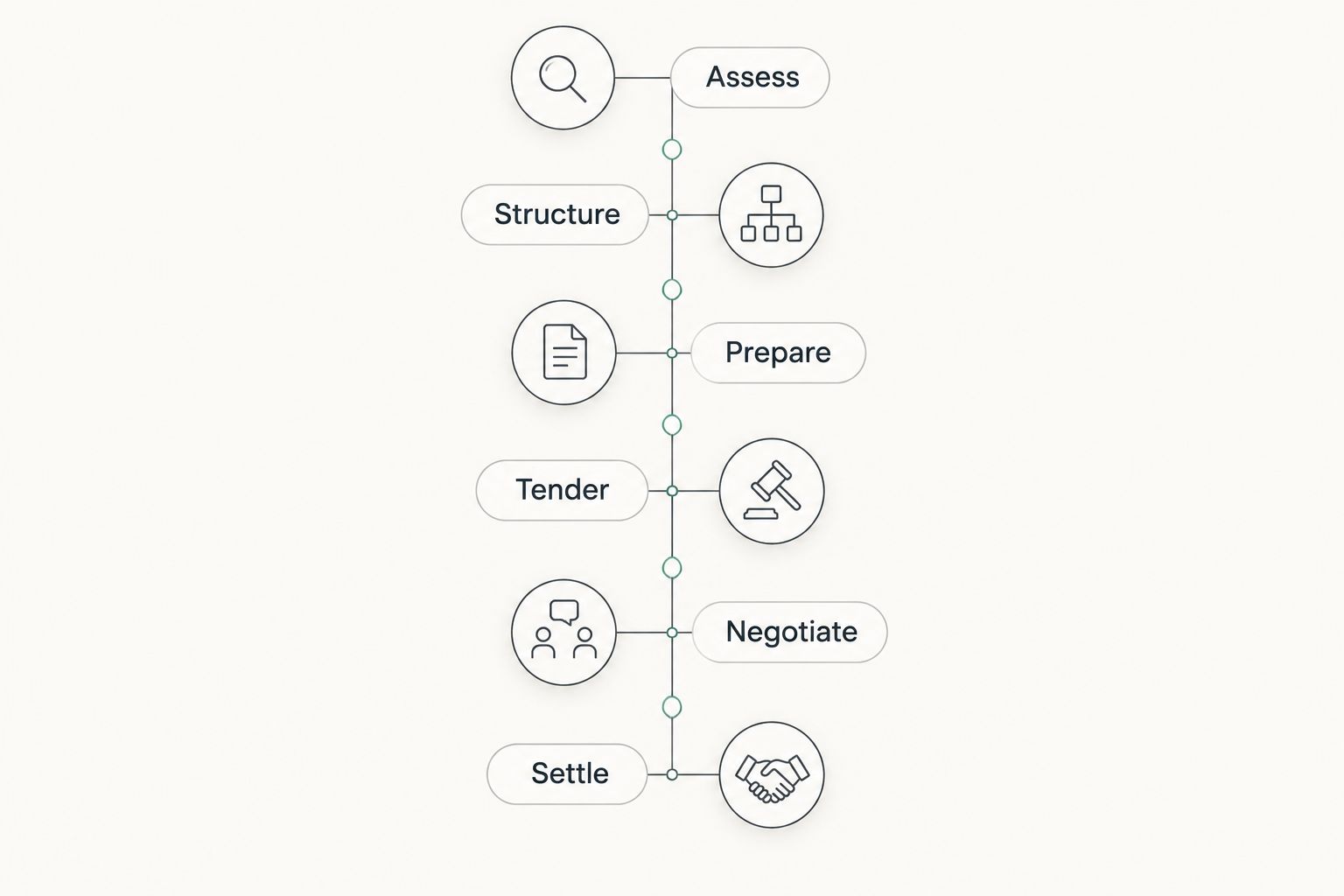
For a 2026 banking tender, give proposed lenders a consistent funding brief. Otherwise, differences between offers can reflect different assumptions rather than genuinely different terms. Ask the broker to explain those differences before recommending a facility.
What should you compare besides the interest rate?
Compare the facility's obligations, not just its headline rate. An offer needs to work with the development's cash requirements and repayment plan. Have the relevant advisers explain the legal and financial consequences before you commit.
Build your comparison around the following questions:
- Funding conditions: What must happen before the lender advances funds, and who supplies the evidence?
- Drawdown requirements: How are advances requested, assessed and released during the project?
- Security and guarantees: Which assets and parties support the borrowing, and what releases are required?
- Repayment terms: What event or cash flow repays the facility, and what happens if that plan changes?
- Reporting obligations: What information must you provide during the loan, and who prepares it?
- Exit arrangements: What conditions apply when you refinance, sell assets or repay the facility?
Do not treat a positive initial response as confirmation that these matters are resolved. Ask for outstanding conditions in writing. Your decision should reflect the documented offer, not an informal description of what a lender expects to provide.
Does an established banking relationship remove the need for a broker?
An established banking relationship gives you a direct route to a lender, but it does not answer whether the proposed facility meets your requirements. Ask your bank for a documented proposal, then decide whether your team can assess it without external support.
A refinancing review should also consider the wider banking relationship. Moving one facility can involve security and documentation connected to other borrowings. Identify those connections before deciding that a standalone offer is an adequate comparison.
For established Australian businesses seeking business-purpose finance greater than A$2 million, the decision deserves a clear allocation of responsibility. That preferred borrowing size is not a universal eligibility threshold: assess the borrower, project and proposed engagement case by case.
Does using a broker guarantee development finance approval?
Using a broker does not guarantee approval. The lender still assesses the borrower, project, security and proposed repayment arrangements. A broker appointment changes who assists with the process, not who makes the credit decision.
Keep the distinction clear during negotiations. A lender's willingness to review a proposal is not a commitment to fund it. Ask what remains subject to assessment and avoid committing to project obligations on the assumption that an application will succeed.
What should you agree before signing an appointment?
Before a 2026 appointment, obtain a written explanation of the service and remuneration. Ask how lender selection works, how payments are disclosed and how the engagement ends. Independence should be assessed through the appointment and conduct, not accepted as a slogan.
Use these questions to make the scope concrete:
- Who is the client under the appointment, and which borrowing entities are included?
- Is the engagement lender-paid brokerage or a separately charged debt advisory mandate?
- Which deliverables are included, and which require another professional adviser?
- Is the appointment exclusive, and what obligations survive termination?
- Who receives lender responses and approves the final borrowing decision?
- What work is included if the first proposed funding route does not proceed?
Ask Glenclair to distinguish the applicable brokerage or debt advisory scope before you appoint the firm. A useful first discussion establishes the funding task and responsibilities; it does not promise an approval, a saving or a settlement date.
Discuss your development funding scope
Explain your project, existing debt and refinancing objectives before agreeing on an appointment.
FAQ
Do I need a development finance broker for a large project?
You need a development finance broker when the agreed service fills a lender-access, structuring or execution gap your team cannot adequately cover. Project size alone does not establish that need.
Is going directly to my bank better than using a broker?
Direct bank engagement fits borrowers who can prepare the application and assess the proposed terms internally. Broker support fits borrowers who need help with lender selection, submissions or negotiations.
Can a development finance broker guarantee approval?
A development finance broker cannot guarantee approval. The lender assesses the application and decides whether to offer finance, subject to its conditions.
Does a panel of lenders mean every lender will fund my development?
A lender panel does not mean every lender will fund your development. Ask which lenders suit the project and why they are being approached.
Is lender-paid brokerage the same as debt advisory?
Lender-paid brokerage is not the same remuneration arrangement as debt advisory using a retainer and success-fee structure. Confirm the applicable service, payment triggers and exclusions in writing.
Should I use a broker when refinancing development debt?
Use a broker for refinancing when you need external support to assess alternatives, negotiate terms or coordinate the funding process. Review existing security and other banking arrangements before committing to a replacement facility.
What should I prepare before speaking with a development finance broker?
Prepare a clear account of the development, borrowing entities, existing debt and intended repayment source. Ask the broker which financial and project documents are needed for the proposed assessment.
One last thing
Before your next 2026 funding discussion, write down what must be true for you to accept an offer: the required funding structure, acceptable security position and workable repayment plan. Give that brief to everyone assessing the transaction.
Choose the process before choosing the lender. If you cannot explain how competing proposals will be compared, appointing another intermediary has not yet solved the decision.
Related guides
- Income requirements for commercial property finance
- Equipment finance options for construction businesses
- Machinery finance options for earthmoving contractors
Written by the Glenclair Financial team.