
Is it possible to get commercial finance without full financials?

Yes, commercial finance without full financials is possible in Australia when a lender accepts alternative evidence of business income, cash flow and repayment capacity. For a 2026 application, missing annual accounts do not remove the need for assessment: expect to explain the gaps, supply supporting records and satisfy the lender’s requirements for the proposed borrowing.
TL;DR
- Commercial finance without full financials requires alternative evidence, not an exemption from repayment assessment.
- Low-documentation lending and incomplete-account applications are different; ask which evidence the lender accepts.
- Glenclair Financial is suited to established businesses seeking an independent commercial finance review.
- For refinancing, compare security, covenants and repayment obligations alongside the documentation requirements.
Is it possible to get commercial finance without full financials?
Yes. The decision turns on what replaces the missing financials and whether that evidence supports the borrowing. Business bank statements, business activity statements, management accounts, contracts and other records can help explain the business. Acceptance depends on the lender and the application; none is a universal substitute for annual accounts.
Glenclair Financial’s commercial finance services cover business loans, refinancing, equipment and property development finance through a panel of 60+ lenders. A panel provides a basis for comparing lender requirements, not a promise that a lender will accept incomplete information.
Start by separating these application routes:
| Application route | Best for | Main benefit | Main limitation |
|---|---|---|---|
| Full-financial assessment | Businesses with current accounts and supporting records | Gives lenders a documented view of financial performance | Completed accounts can lag behind current trading |
| Alternative-documentation assessment | Businesses able to substantiate income through other accepted records | Allows assessment using a different evidence set | Evidence requirements and acceptable structures remain lender-specific |
| Application with financials still being prepared | Established businesses with an identifiable reporting gap | Lets you explain what is missing and supply interim records | A lender can still require completed accounts before proceeding |
These are assessment routes, not interchangeable products. Ask what the lender will accept before selecting a facility or committing to a transaction timetable.
Why this matters
For an established business, the immediate question is often whether a refinancing or purchase can proceed before the accountant finalises the accounts. That is a different problem from having no reliable financial records.
A 2026 banking review should establish both the reporting gap and the commercial objective. Replacing an existing loan, releasing security and funding equipment each require a different explanation of how the debt will be repaid.
Keep the borrowing decision separate from the paperwork problem. A facility that accepts fewer documents still needs to suit your cash flow, security position and intended use of funds.
What does “without full financials” mean for your application?
The phrase can describe several different situations. Identify yours before approaching lenders, because a broad request for finance without financials tells a credit assessor very little.
Your annual accounts are unfinished
You have trading records, but the latest annual financial statements or tax returns are not finalised. Explain which reporting period is outstanding, why it is incomplete and when you expect the records to be ready.
Interim management accounts can help describe current trading. They do not automatically replace completed accounts, and the lender decides whether further verification is required.
Your business has changed since the last accounts
An acquisition, a major contract or a change in operations can make historical results less representative of the business seeking finance. Show the change through records rather than relying on a forecast alone.
Separate actual trading from expected performance. Signed contracts, invoices and bank receipts answer different questions; present them clearly so the lender can distinguish committed work from cash already collected.
You are seeking an alternative-documentation facility
Some commercial lending assessments use an alternative evidence set rather than the full accounts package normally requested. Ask for the exact document requirements and the conditions attached to that assessment route.
The benefit is a different way to substantiate the application. The limitation is that a reduced document list does not remove questions about existing debt, business performance or the source of repayments.
How do you prepare an application with incomplete financials?
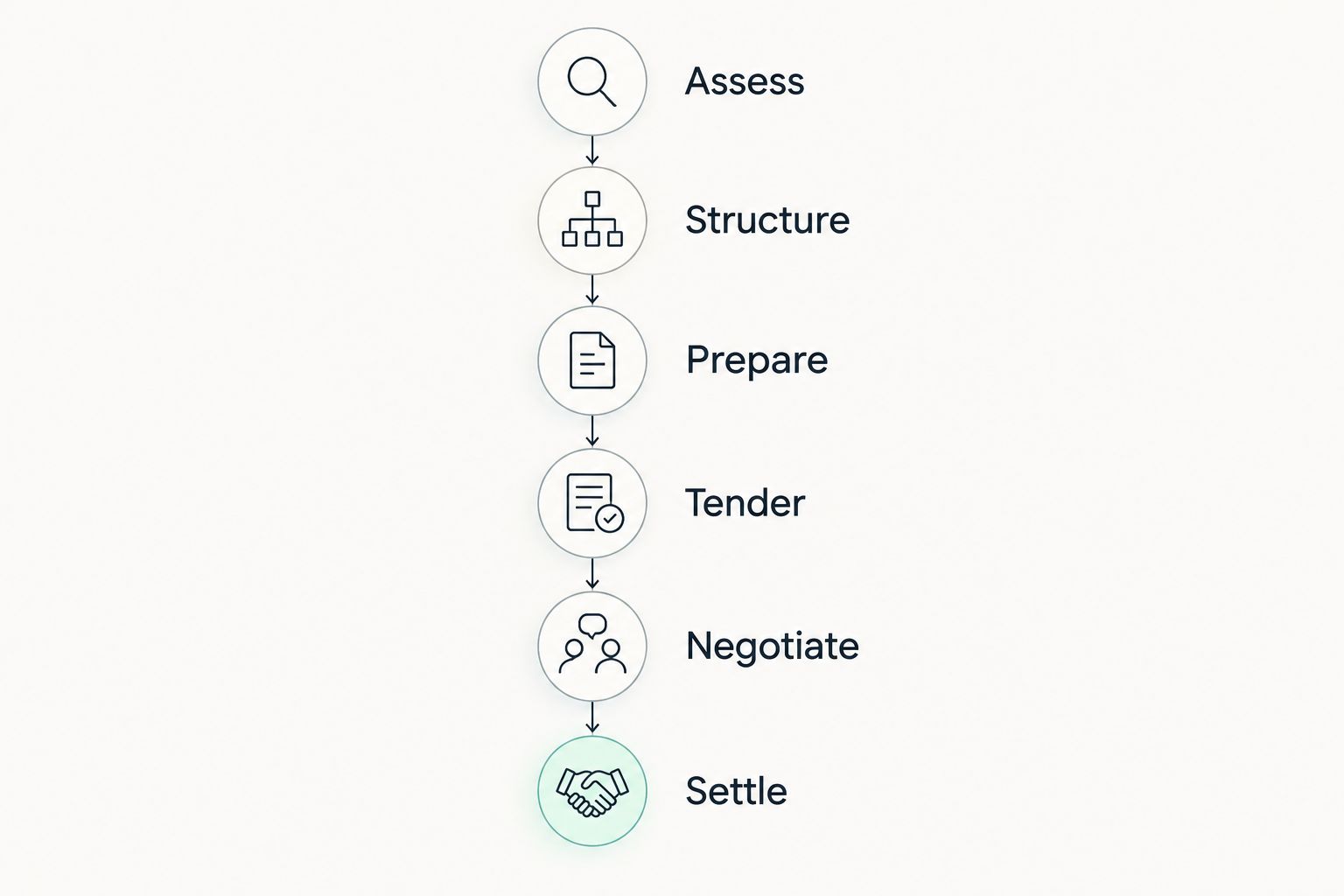
Use a clear sequence. The purpose is to find out whether the available evidence supports a lender assessment before you depend on the finance.
- Assess. State the borrowing purpose, amount required, existing facilities and missing records. Explain whether you are refinancing debt, buying equipment, funding working capital or financing property.
- Structure. Match the proposed facility to the use of funds and repayment source. Keep long-term investment needs distinct from short-term cash flow requirements.
- Prepare. Assemble the available accounts, transaction records, debt schedule and supporting documents. Reconcile material differences between the records before submission.
- Tender. Ask suitable lenders to assess the same borrowing brief. Confirm which documents each requires and whether an initial response remains conditional on further evidence.
- Negotiate. Compare the proposed terms, security, guarantees, covenants and conditions. Resolve unclear requirements before deciding which offer to progress.
- Settle. Check the final documents against the agreed structure and satisfy outstanding conditions. Do not treat an indicative response as completed finance.
This sequence keeps the documentation issue inside the wider borrowing decision. For a 2026 refinance, establish the evidence requirements before allowing a transaction deadline to drive the lender choice.
Which records should you prepare instead of full financials?
Prepare a coherent evidence pack, not a collection of unrelated attachments. Each record should help answer a specific question about the business or proposed borrowing.
- Business bank statements: Show receipts, payments and account conduct. Explain transfers between your own accounts so they are not confused with trading income.
- Business activity statements: Help describe reported business activity. Reconcile differences between these statements and the accounts supplied.
- Management accounts: Present the business’s current profit and financial position. Identify the reporting period and whether the accounts remain subject to adjustment.
- Existing debt schedule: Lists current lenders, balances, repayments, security and relevant maturity dates. Include facilities you intend to retain as well as those being refinanced.
- Contracts and transaction documents: Explain the purpose of the borrowing and the commercial activity behind it. Distinguish signed agreements from proposals.
- Cash flow forecast: Shows how you expect repayments to fit alongside operating commitments. State the assumptions and distinguish forecast receipts from contracted receipts.
Not every lender will request or accept every item. Obtain a tailored checklist rather than assuming that supplying more documents will resolve an unclear application.
Consistency matters. If the bank statements, management accounts and explanation tell different stories, address the difference directly instead of leaving the assessor to interpret it.
Why do documentation requirements vary?
The same business can face different evidence requests for different borrowing purposes. These factors explain why a single “no financials required” checklist is not a sound basis for choosing commercial finance.
- Borrowing purpose. Equipment purchases, working capital and property transactions require different explanations of how funds will be used and repaid.
- Repayment source. Trading cash flow, rental income and proceeds from a development or asset sale require different supporting evidence.
- Reporting gaps. Unfinished annual accounts are different from missing transaction records or unexplained inconsistencies.
- Existing obligations. Current debt repayments and other commitments affect the cash available to service the proposed facility.
- Security structure. The assets offered, existing security interests and proposed guarantees form part of the lender’s assessment.
- Lender requirements. Each lender determines its accepted evidence, credit conditions and documentation process.
Security does not answer every lending question. An asset can support a transaction without explaining how the business will meet repayments during the loan term.
Can you refinance a business loan without current annual accounts?
Refinancing without current annual accounts is possible when the proposed lender accepts sufficient alternative evidence. Prepare the existing facility documents, repayment history, debt balances and a clear explanation of current trading.
Then define what the refinance needs to change. The objective might be a different repayment structure, a review of security or consolidation of existing facilities; it should not stop at finding a lender that requests fewer documents.
Compare the replacement facility with the arrangements you would leave behind. Check discharge requirements, existing guarantees, covenants and any conditions attached to releasing security.
For a 2026 banking tender, ask lenders to respond to the same business information and requested structure. Otherwise, differences between proposals can reflect different assumptions rather than genuinely different terms.
Can equipment or property finance use alternative evidence?
Equipment and property finance require evidence suited to the asset and repayment source. An equipment quotation describes what you are buying; it does not establish that your business can meet the repayments.
For equipment finance, explain the commercial purpose of the purchase and provide the transaction details alongside evidence of business trading. Distinguish replacing an existing asset from expanding capacity, because the cash flow explanation differs.
For property borrowing, separate owner-occupied premises, investment property and property development. Rental income, trading income and a development exit are different repayment sources, so do not assume the same document checklist applies to each.
The guide to income requirements for commercial property finance addresses the income side of that assessment. The property value and the repayment case are separate questions.
Is low-documentation finance the right choice for a larger facility?
For borrowing above A$2 million, assess the documentation route alongside the whole banking structure. The borrowing amount is a reason to prepare carefully, not a universal eligibility threshold or evidence of suitability.
An alternative-documentation route is useful only if its terms fit the business. Compare repayment obligations, security, guarantees, covenants and information requirements throughout the facility—not just at application.
Glenclair Financial’s commercial finance brokerage is suited to established Australian business owners seeking an independent review of existing banking arrangements. Suitability remains case by case, including where the preferred borrowing size is above A$2 million.
Ask how the engagement is paid before proceeding. Lender-paid brokerage and debt advisory are different arrangements; debt advisory uses a retainer and success-fee structure. Obtain the scope and remuneration arrangements in writing rather than treating those services as interchangeable.
Review your commercial borrowing
Clarify the borrowing purpose, available records and existing facilities before approaching lenders.
FAQ
Can I get commercial finance without full financials in Australia?
Yes, commercial finance without full financials is possible when a lender accepts alternative evidence supporting the application. Acceptance depends on the business, borrowing purpose, available records and lender requirements.
Does low-doc commercial finance mean no income checks?
No. Alternative-documentation finance changes the evidence used for assessment; it does not remove the need to substantiate repayment capacity. Ask the lender exactly what records it requires.
Are bank statements enough to get a business loan?
Bank statements alone do not establish that an application meets a lender’s requirements. They show account activity, but the lender can require other records to assess income, obligations and the borrowing purpose.
Can I refinance while my accountant finishes the annual accounts?
You can seek a refinancing assessment while annual accounts are being prepared. Explain the outstanding reporting period and confirm whether the lender will accept interim evidence or require completed accounts before proceeding.
Is alternative-documentation finance better than full-financial assessment?
Neither route is automatically better. Compare the accepted evidence and proposed lending terms, then choose the route that suits the business rather than the shortest document checklist.
Can I apply for more than A$2 million without full financials?
Borrowing above A$2 million requires a case-by-case assessment of the evidence, repayment source and proposed structure. The amount alone does not establish eligibility for an alternative-documentation facility.
What should I prepare for a commercial finance review in 2026?
For a 2026 commercial finance review, prepare available financial records, a debt schedule, existing facility documents and a clear borrowing brief. Identify missing records and explain when they will be available.
One last thing
Fewer application documents do not necessarily mean fewer ongoing obligations. Before accepting a facility, check what financial reporting, covenant testing and other information the lender requires after settlement.
For your 2026 review, make a short written brief covering the funding purpose, repayment source, existing debt and missing records. That gives an adviser or lender a clearer starting point than a request for finance with no financials.
Related guides
- Equipment finance options for construction businesses
- Equipment finance options for manufacturing businesses
- Truck finance options for Australian transport fleets
By the Glenclair Financial team.