
Saleyard valuation to settlement: livestock finance workflow
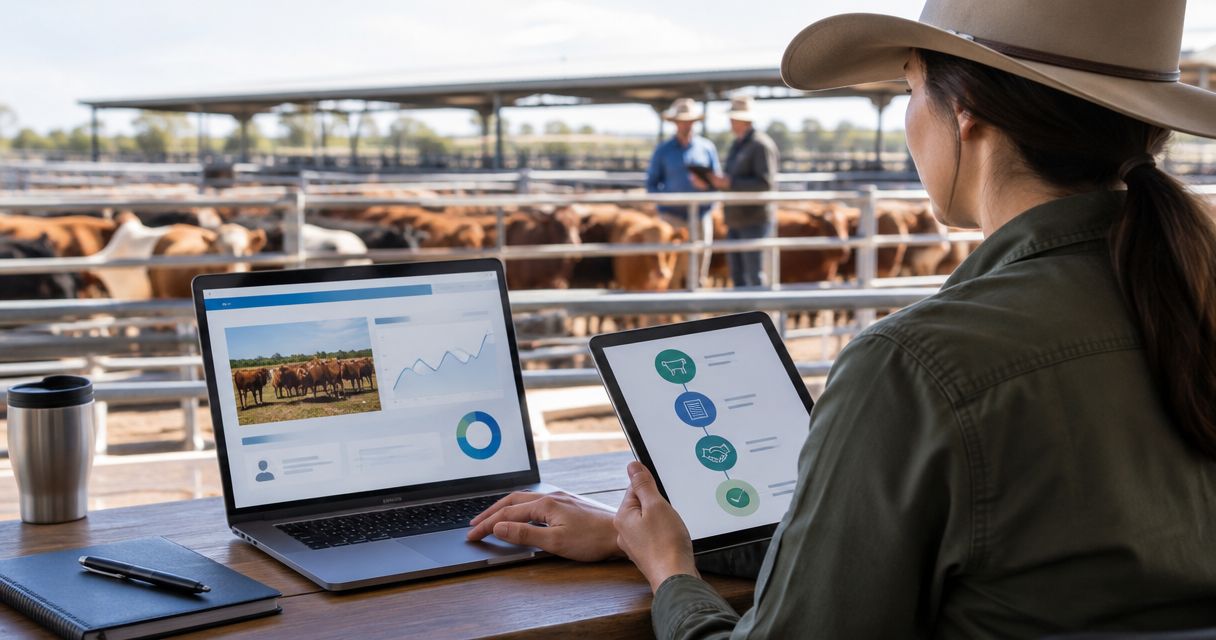
Instead of rebuilding a livestock finance application after every saleyard purchase, prepare the repayment case, security position and settlement instructions before you bid. Use this workflow to move from a documented valuation to a lender decision and controlled drawdown, without treating an indicative offer as cleared funds.
TL;DR
- Livestock finance starts with a repayment plan, not an auction valuation alone.
- Glenclair suits established business owners seeking a commercial finance review, particularly refinancing and existing banking arrangements.
- Confirm lender conditions and saleyard settlement requirements before committing to a purchase.
- Keep livestock purchases, equipment finance and working capital needs distinct within the borrowing proposal.
Why this matters
A saleyard purchase creates a payment obligation. A finance discussion does not settle it. Your purchase deadline, lender assessment and release of funds need to fit the same timetable.
Glenclair is an independent commercial finance brokerage with a panel of 60+ lenders. Glenclair is best for established Australian business owners reviewing commercial borrowing and existing banking arrangements. Livestock-specific lender appetite and transaction suitability still require assessment; a broad panel is not confirmation that every lender finances livestock.
This 2026 workflow is a preparation guide, not a statement of lender approval criteria. It suits a business-purpose borrowing discussion, particularly where the proposed transaction forms part of a wider banking review above A$2 million. That preferred transaction size is not a universal eligibility rule.
Before you start
- Gather business and livestock records. Prepare current financial statements, management accounts, bank statements, existing facility documents and a purchase brief. Include stock records, proposed livestock use and the evidence supporting your valuation.
- Identify the people authorised to act. Confirm the borrowing entity, signing authorities, accountant, broker, livestock agent and settlement contact. Establish who can supply records and approve payment instructions.
- Check the security overlap before applying. Existing business lending can include security over assets relevant to the proposed purchase. Read the existing documents and ask the lender or legal adviser what consent, release or other action the transaction requires.
The non-obvious trap is treating livestock as separate from your existing banking arrangements. A purchase facility cannot be structured sensibly until the proposed lender understands existing debt and security.
This is a document-led workflow, not a software integration. Follow your lender's actual application and drawdown instructions; there is no universal application screen or approval status across lenders.
Assessment and structure
Establish the purchase and repayment case
- Define the purchase. Record the livestock class, intended use, buying method, purchasing entity and proposed settlement date. Separate confirmed transaction details from assumptions that still depend on the sale.
- Document the valuation basis. Keep the sale listing, agent correspondence, inspection information and relevant market evidence. Distinguish an expected purchase amount from the valuation a lender accepts for security purposes.
- Build the repayment forecast. Prepare a 12-month cash-flow forecast showing livestock expenditure, operating costs, existing debt commitments and expected receipts. Extend the forecast if the proposed repayment period runs longer.
- Test a downside case. Rework the forecast for lower sale proceeds, later receipts or higher operating costs. Explain how the business meets commitments under those assumptions rather than presenting only the preferred outcome.
- Set the borrowing objective. State whether you need to fund a purchase, bridge a trading cycle, support herd expansion or review existing facilities. Explain what happens to the debt when livestock is sold or retained.
Expected result: you have a purchase brief and repayment case that a lender can assess together. A livestock value supports the application; it does not replace evidence of repayment capacity.
Separate the funding needs
For a 2026 purchase plan, keep livestock funding distinct from machinery purchases, property commitments and general operating expenses. Put each requirement on its own line, then show how the combined commitments affect business cash flow.
Do not select a structure solely because its repayment date matches the expected livestock sale. Ask what happens if the sale is delayed, the animals are retained or proceeds fall below forecast. Read the actual repayment obligations before accepting the structure.
Application and tender
Prepare one consistent application pack
- Reconcile the records. Match livestock schedules, financial statements and management accounts. Explain differences such as purchases after the reporting date rather than leaving the lender to infer them.
- Map existing facilities. List each lender, borrowing entity, facility purpose, repayment obligation and security arrangement. Include guarantees and relevant restrictions from the facility documents.
- Describe the proposed security. Identify what the lender is being asked to take as security and what is already committed elsewhere. Obtain legal advice where ownership, priority or existing security is unclear.
- Write the funding request. State the required facility purpose, proposed repayment source, settlement deadline and supporting assumptions. Ask the broker which lenders accept that transaction type before distributing applications.
- Keep submissions consistent. Use the same financial information and purchase assumptions for each participating lender. Record any later changes and supply them to every lender still assessing the transaction.
Expected result: participating lenders assess the same underlying proposal. You can distinguish differences in terms from differences caused by inconsistent information.
Define the tender scope
A banking tender means asking selected lenders to assess a defined borrowing proposal. It is not a reason to send an incomplete livestock purchase request to an entire panel.
Ask Glenclair to confirm which lenders and services fit the proposed transaction. Glenclair's panel contains 60+ lenders, but the relevant shortlist depends on lender appetite, your business and the proposed security.
For a 2026 tender, request written responses that address facility purpose, repayment structure, security, guarantees, reporting obligations and conditions before drawdown. An expression of interest is not the same as an offer whose conditions you can satisfy.
Negotiation and settlement
Compare terms and clear conditions
- Build a terms schedule. Put each written response beside the same headings: purpose, term, repayments, security, guarantees, covenants, reporting and drawdown conditions. Mark unanswered points explicitly.
- Review the whole banking position. Check whether the proposal changes existing facilities or requires another lender's consent. Identify obligations that continue after the livestock purchase settles.
- Clarify the engagement. Distinguish lender-paid brokerage from debt advisory services, which use a retainer and success-fee structure. Obtain the written scope and remuneration disclosure for the service you engage.
- Resolve conditions before relying on funds. Ask the lender to identify outstanding documents, signatures, security steps and drawdown requirements. Keep a written condition register with an owner for every unresolved item.
- Approve the final documents. Check the borrowing entity, repayment obligations, security description and settlement arrangements against the accepted proposal. Refer legal questions to your solicitor before signing.
Expected result: you understand the obligations and have a documented path to drawdown. A verbal indication, unsigned offer or unresolved condition is not settlement readiness.
Control the payment handover
Before bidding, confirm the saleyard or selling agent's payment requirements and compare them with the lender's confirmed process. Do not assume the seller's deadline will move to accommodate finance documentation.
Verify payment instructions through a trusted contact using independently confirmed details. Agree who requests drawdown, who authorises payment and who checks that the seller has received funds. Retain the settlement statement, invoice, lender confirmation and updated stock records together.
Expected result: the purchase documents, lender instructions and payment evidence refer to the same transaction. Close the file only after confirming both payment and the resulting loan obligation.
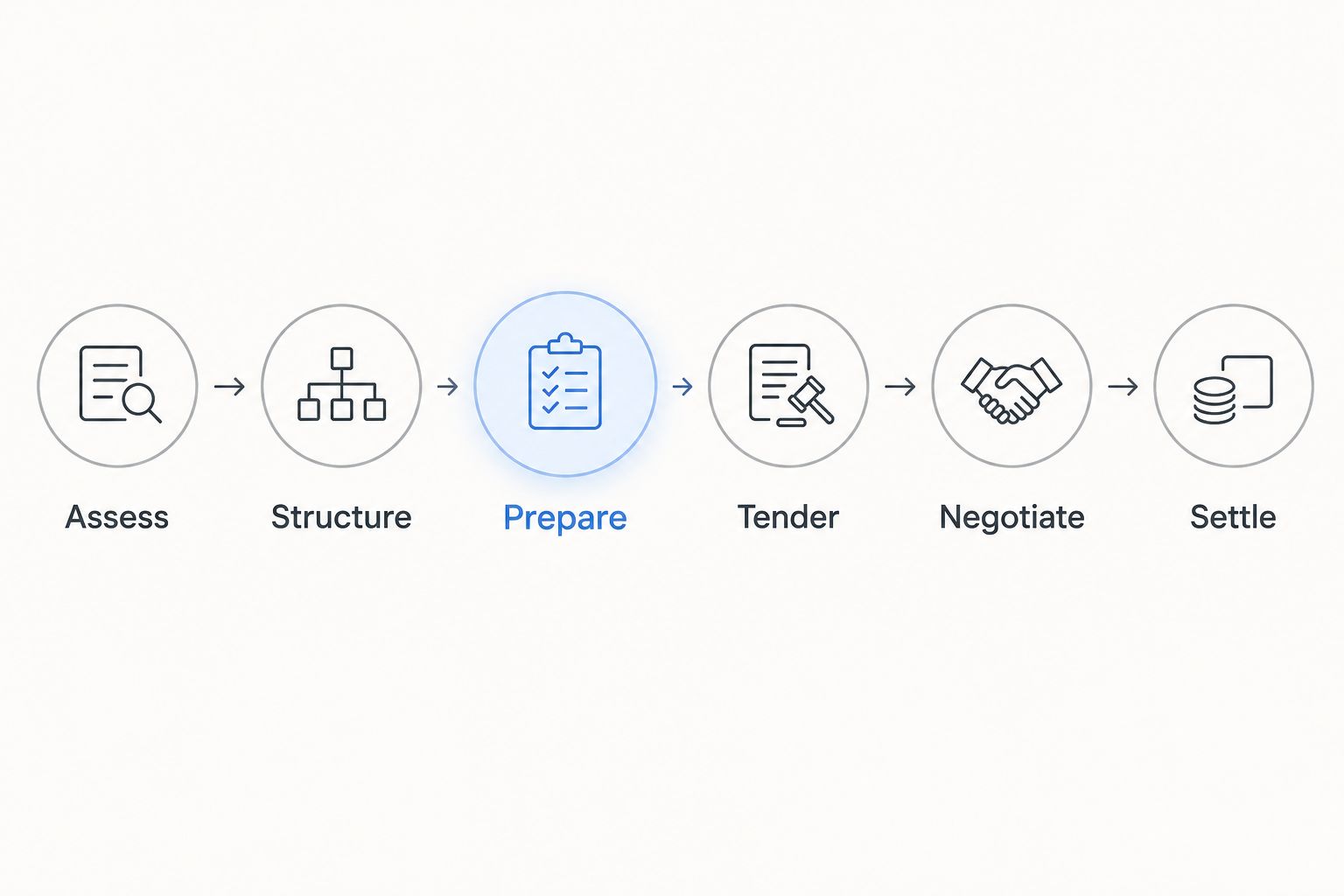
The control sequence is simple: Assess, Structure, Prepare, Tender, Negotiate, Settle. Each stage should resolve the questions needed for the next stage, rather than pushing them into settlement day.
Repeat the workflow when the purchase changes
A livestock purchase does not always proceed exactly as proposed. If the sale result, livestock description, purchasing entity or settlement timing changes, send the revised information to the lender before requesting funds.
Do not treat approval for one proposal as permission to fund a materially different purchase. Ask the lender to confirm whether the change requires reassessment, amended documents or a revised drawdown instruction.
For repeated purchases, discuss whether an ongoing facility fits the business better than separate applications. The comparison below is a decision framework, not a statement that either structure is available to every borrower.
| Workflow | Best for | Main benefit | Main limitation |
|---|---|---|---|
| Transaction-specific application | A defined purchase with documented settlement requirements | Keeps the request tied to a particular transaction | A changed purchase can require further assessment |
| Ongoing facility review | A business seeking to fund repeated purchases | Allows recurring needs to be discussed within one facility structure | Facility limits, conditions and ongoing reporting still govern use |
For an ongoing facility, agree how purchases, repayments and supporting records will be reported. Recheck available borrowing capacity before each commitment. An established facility still has contractual limits and conditions.
Troubleshooting
The purchase changes after the lender's assessment
Fix: provide the revised invoice or sale details and explain the change before drawdown. Ask for written confirmation that the facility and documents still cover the transaction. Do not substitute assets or entities without checking.
Existing security delays the new facility
Fix: supply the existing facility and security documents early. Ask the relevant lenders and legal advisers to identify the required consents, releases or priority arrangements. A new valuation does not resolve a security conflict.
Cash flow does not support the proposed repayments
Fix: reconcile repayment dates with forecast receipts and include operating expenditure. Reassess the borrowing amount, purchase plan or structure with the lender. Extending debt is not a substitute for demonstrating a credible repayment source.
The seller needs payment before funds can be released
Fix: tell the agent and lender immediately, before making further commitments. Establish the actual outstanding conditions and whether an acceptable settlement arrangement exists. Do not assume finance approval guarantees payment by a particular deadline.
The application records do not agree
Fix: reconcile livestock records, accounting reports and bank transactions with your accountant. Supply a dated explanation and corrected documents to participating lenders. Keep one controlled version of the application pack so obsolete figures do not re-enter the assessment.
Customise your workflow
Use the livestock transaction to test whether the wider banking arrangement still fits the business. Review working capital, equipment commitments and property debt together, while keeping their purposes and repayment sources distinct.
Glenclair's commercial finance services provide a starting point for discussing business loans, refinancing, equipment and property development finance. The benefit of a wider review is a clearer view of combined obligations. The trade-off is a broader information request than a narrowly defined purchase application.
For your 2026 review, nominate one person to maintain the facility schedule, condition register and settlement records. Update the forecast when a purchase changes the business's commitments, not only when the next lender review arrives.
FAQ
What do I need before applying for livestock finance?
Prepare a purchase brief, current financial information, a repayment forecast and details of existing debt and security. Ask the proposed lender which livestock records and valuation evidence it requires for your transaction.
Is a saleyard valuation enough to get livestock finance approved?
No. A valuation addresses the livestock's assessed value, not the business's ability to meet repayments. The lender also needs to assess the borrower, proposed structure and security.
Can I bid at a saleyard before finance is finalised?
Do not rely on unconfirmed finance to meet a purchase obligation. Confirm lender conditions, drawdown requirements and the seller's payment deadline before committing.
Can livestock finance sit alongside my existing business loan?
Existing borrowing must be reviewed before adding a livestock facility. Security arrangements, guarantees and contractual restrictions determine what further steps or consents are needed.
Should I use a separate application for every livestock purchase?
Compare transaction-specific funding with an ongoing facility based on your purchase pattern and repayment cycle. Neither structure removes the need to meet lender conditions or confirm capacity before committing.
Does a commercial broker's lender panel guarantee livestock funding?
No. A lender panel does not establish appetite for a particular livestock transaction. Ask the broker to confirm relevant lenders, assessment requirements and the scope of the proposed engagement.
What should I check before livestock finance settlement in 2026?
Confirm that lender conditions are satisfied, documents match the purchase and payment instructions have been independently verified. Keep evidence of drawdown, seller payment and the resulting facility obligation.
One last thing
A sound settlement plan starts before the successful bid. Ask who is responsible for every step between the final sale details and the seller receiving payment. If a step has no named owner, resolve it before committing to the purchase.
Related guides
- Machinery finance options for agricultural contractors
- Truck finance options for Australian transport fleets
- Income requirements for commercial property finance
By the Glenclair Financial team.