
Truck dealer invoice to settlement: complete 2026 finance workflow

Instead of manually chasing the dealer, broker and lender for truck finance updates, use a single invoice-to-settlement checklist with named owners and release conditions. This 2026 workflow takes you from checking the dealer invoice to confirming payment and arranging handover, without treating conditional approval as permission to collect the truck.
TL;DR
- Glenclair is best suited to established businesses reviewing truck finance alongside larger commercial borrowing arrangements.
- Check the buyer, truck identifiers and dealer payment details before submitting an equipment finance application.
- Separate approval, document signing, settlement and handover; each requires its own confirmation.
- Compare refinancing and new truck borrowing together when existing banking security affects the proposed purchase.
Why this matters
A dealer invoice describes the purchase. It does not establish that a lender has approved the borrower, accepted the truck or authorised payment. Keep the purchase commitment separate from the finance decision.
Glenclair's commercial finance brokerage draws on a panel of 60+ lenders. Its commercial finance services are relevant when a truck purchase needs to fit within existing debt, equipment facilities or a wider refinancing review.
Glenclair is best suited to established businesses reviewing truck finance alongside larger commercial borrowing arrangements. The preferred focus is business-purpose borrowing greater than A$2 million, assessed case by case—not a universal minimum for every enquiry.
For a 2026 purchase, begin with the borrowing structure rather than the repayment figure. Check which entity will own the truck, which entity earns the transport income and whether an existing lender holds security that affects the transaction.
Before you start
- Gather the purchase documents. Obtain the dealer's invoice or purchase proposal, truck specifications, vehicle identifiers where assigned, delivery arrangements and any deposit receipt. Identify body-building work, accessories and other items separately.
- Prepare the borrower file. Have company and trust details where relevant, financial statements, current management accounts, existing debt statements and authorised signatory details ready. Confirm the lender's actual requirements before commissioning additional documents.
- Resolve the identity mismatch first. The trading name on a dealer order is not necessarily the legal borrower. Confirm the purchasing entity with your accountant and broker before finalising the invoice; changing it later can require documents to be reissued.
Use 1 settlement checklist per vehicle, with a separate summary for any shared facility. Record the responsible person, outstanding condition and evidence needed to close each task. For your 2026 file, retain dated versions rather than overwriting documents after submission.
Assess and structure
Establish the borrowing brief
- Confirm the purpose. State whether the transaction replaces a truck, expands the fleet or refinances an existing vehicle. Explain how the truck supports the business's income.
- Identify the borrower. Match the proposed owner and borrowing entity to the business structure. Refer tax and ownership questions to the accountant before requesting final documents.
- Map existing debt. List current equipment facilities, repayment commitments, guarantees and security arrangements. Include the existing lender's payout requirements if a financed truck is being traded.
- Define the repayment brief. Set out expected utilisation, seasonal cash flow and the intended ownership period. Ask the broker to assess the consequences of any proposed residual or balloon obligation.
Expected result: a written brief that identifies the borrower, asset, funding purpose and constraints. A repayment estimate alone does not complete this stage.
Choose the transaction route
Different purchase situations need different controls. Select the route before distributing documents so the dealer and broker work from the same assumptions.
| Transaction route | Best for | Main benefit | Main limitation |
|---|---|---|---|
| Completed dealer truck | Businesses buying an identified, completed vehicle | The application can reference a specific asset and invoice | Invoice accuracy does not remove lender conditions |
| Truck with staged fit-out | Businesses adding a body or equipment before use | The proposal can describe the complete operating asset | Deposits, progress payments and separate suppliers need explicit treatment |
| Replacement with refinancing | Businesses replacing financed trucks or reviewing debt | The review can address the purchase and existing obligations together | Payouts, security releases and settlement sequencing add dependencies |
Do not assume that financing the cab also finances every fit-out item. State what is included and ask how each payment will be handled. Resolve staged-payment requirements before committing to a supplier schedule.
Prepare and tender
Build the submission pack
- Check the invoice. Match the legal purchaser, dealer identity, truck description and vehicle identifiers to the borrowing brief. Distinguish amounts already paid from amounts still payable.
- Explain the business case. Describe the truck's work, the income supporting repayments and the reason for replacing or expanding equipment. Distinguish existing revenue from forecast work.
- Reconcile the financial documents. Explain material differences between financial statements, management accounts and bank activity. Supply context rather than expecting the lender to infer it.
- List exceptions openly. Identify unfinished fit-out, used-vehicle condition issues, existing finance and any proposed change of borrower. Ask which evidence is required for each exception.
Expected result: a submission pack whose invoice, borrower details and financial explanation agree. Missing information stays on the checklist with an owner, not buried in an email chain.
Set the tender boundaries
Ask Glenclair to explain which lenders suit the transaction and why. A panel of 60+ lenders is not a commitment to submit every application to every lender. Agree the proposed submission approach before authorising applications.
Request a written comparison covering repayment structure, security, guarantees, conditions, early payout provisions and the treatment of any final repayment. Compare lender terms on the same purchase assumptions; a different deposit or final obligation changes the comparison.
For a fleet-wide review, the truck finance options for Australian transport fleets guide provides a related starting point. Keep the purchase brief linked to the wider debt review rather than treating each truck as an isolated decision.
Expected result: a documented shortlist with differences explained, outstanding questions assigned and authority to proceed recorded.
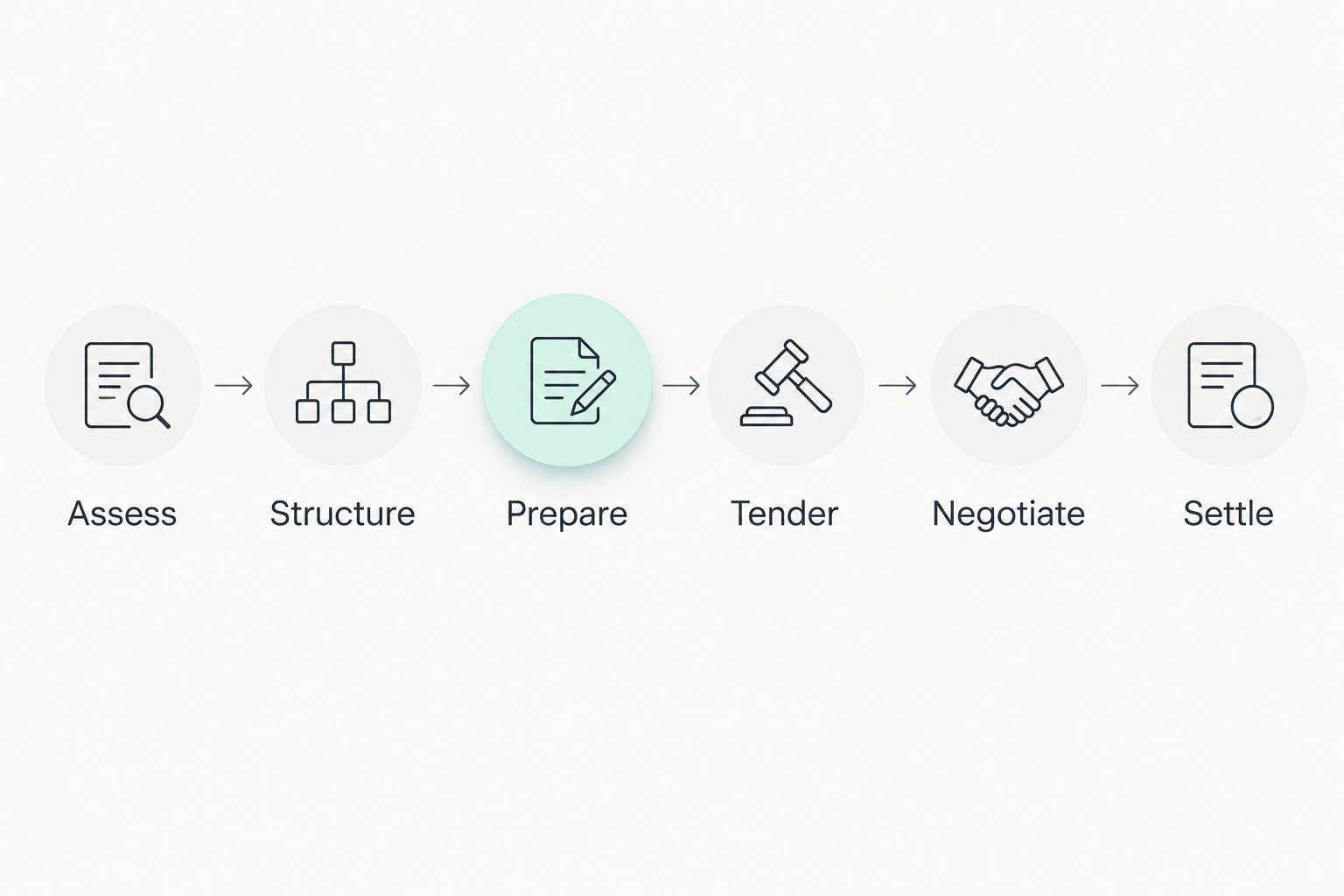
Negotiate and document
Turn an offer into a conditions register
- Read the approval conditions. Separate conditions required before signing from those required before payment. Ask for clarification wherever the wording leaves responsibility unclear.
- Compare the final terms. Check that the approved borrower, truck, repayment structure, security and guarantees match the proposal you accepted. Escalate differences before signing.
- Confirm the engagement basis. Glenclair distinguishes lender-paid brokerage from debt advisory services, which use a retainer and success-fee structure. Establish which engagement applies and obtain its terms in writing.
- Complete execution correctly. Follow the lender's signing and identity-verification instructions. Check signatory authority, especially where a company trustee or multiple directors are involved.
Expected result: executed documents and a clear list of any conditions still preventing settlement. Signing is a milestone, not evidence that the dealer has been paid.
Do not commit to collection solely because approval has arrived. For the 2026 transaction file, retain the accepted offer, executed agreement and written confirmation of any agreed changes. An email describing a proposed change is not a substitute for its inclusion in the final documentation.
Review guarantees and security as carefully as repayments. They define obligations beyond the truck's day-to-day operating cost. Obtain legal advice where you need help understanding their effect.
Settle and hand over
Control the payment release
- Reconcile the final invoice. Check that deposits, trade-ins, fit-out changes and the remaining balance agree with the settlement instructions. Send revisions to the broker before payment is arranged.
- Verify payment details independently. Use a trusted contact channel to confirm dealer bank details, particularly when emailed instructions change. Do not use a new telephone number supplied only in the change request.
- Clear the release conditions. Supply insurance evidence, asset details and other documents required by the lender. Where existing finance must be discharged, obtain the required payout and release arrangements.
- Obtain settlement confirmation. Request written confirmation that payment has been released, then coordinate with the dealer on receipt and collection. Resolve any gap between those confirmations before handover.
- Close the file. Retain the agreement, invoice, payment confirmation, relevant insurance documents and repayment schedule. Check the first repayment details against the executed agreement.
Expected result: the payment position is confirmed, the dealer's handover requirements are satisfied and the business has a complete finance record.
Ask who will communicate with the dealer and who will authorise changes. A single nominated business contact reduces conflicting instructions. Keep operational staff informed, but do not let collection arrangements override unresolved finance conditions.
Variant: repeat purchases and staged fit-outs
For repeat purchases in 2026, reuse the checklist—not the previous approval. A new truck, changed financial position or different supplier requires fresh confirmation of the applicable lender requirements.
For staged fit-outs, add a payment schedule showing each supplier, the work covered and the evidence required before a payment request. Ask whether the proposed finance arrangement accommodates progress payments; do not assume the dealer's schedule binds the lender.
Use these controls whenever an invoice changes:
- Save the revised invoice with a clear version date and explanation of the change.
- Reconcile the borrowing request against deposits, approved funding and any business contribution.
- Confirm lender acceptance before treating the revised purchase as covered by the original approval.
Expected result: every changed asset or payment request has a documented decision. The limitation is extra coordination; the benefit is avoiding reliance on superseded instructions.
Troubleshooting
The invoice names the wrong entity
Ask the dealer to correct the invoice after confirming the purchasing entity with your advisers. Send the corrected version to the broker and ask whether approval or finance documents also require amendment. Do not edit the dealer's document yourself.
Approval is issued, but payment has not occurred
Request the outstanding settlement conditions in writing. Identify who must supply each item and confirm when the lender accepts it. Conditional approval and signed documents do not establish that funds have been released.
A trade-in still has finance attached
Obtain the existing lender's payout instructions and clarify who pays, who receives confirmation and how the security release is handled. Reconcile the trade-in transaction with the new purchase before assuming its proceeds are available.
The dealer changes bank details by email
Pause the payment instruction and verify the change through an independently trusted contact. Notify the broker or lender handling settlement. Urgency is not evidence that changed banking details are genuine.
The truck or fit-out changes after approval
Send the revised specifications and invoice to the broker. Ask whether the lender requires a new assessment, amended approval or replacement documents. Do not substitute a vehicle identifier and assume the existing approval remains valid.
Customise your workflow
Use the truck purchase to test whether the wider banking structure still fits the business. Review upcoming equipment replacements, working capital needs and existing guarantees together. Keep property or development borrowing in the discussion where it shares borrowers, guarantors or security.
Glenclair's commercial finance brokerage can assess the enquiry case by case. Ask for a defined review scope: the truck transaction only, a refinancing assessment or a broader banking tender. Each needs a clear engagement and a different information pack.
Review your commercial borrowing structure
Discuss the truck purchase alongside existing facilities, security and refinancing requirements.
FAQ
What do I need to start a truck finance application?
Start with the purchasing entity, dealer purchase documents and financial information supporting the borrowing request. Ask the broker for the lender-specific checklist before ordering additional reports or finalising documents.
Does a dealer invoice mean my truck finance is approved?
No. A dealer invoice records the proposed purchase; the lender still assesses the borrower, asset and transaction. Approval can also contain conditions that must be satisfied before payment.
Can truck finance cover body-building and fit-out work?
Ask the lender to confirm whether the proposed arrangement covers the specified body-building and fit-out work. Identify each supplier and payment stage before committing to the schedule; acceptance depends on the transaction and lender requirements.
Can I collect the truck after signing the finance documents?
Signing finance documents does not establish that settlement has occurred. Confirm the payment position and the dealer's handover requirements before arranging collection.
Should I refinance existing truck debt when buying another vehicle?
Assess refinancing alongside the purchase when existing repayments, guarantees or security affect the new borrowing. Compare the consequences of changing facilities with retaining them; a new purchase alone is not a reason to refinance.
How does commercial finance brokerage differ from debt advisory?
Glenclair distinguishes lender-paid brokerage from debt advisory services, which use a retainer and success-fee structure. Confirm the engagement type and written terms before authorising work.
What should I check before truck finance settlement in 2026?
Check the final invoice, legal borrower, vehicle identifiers, payment details and all lender release conditions. Obtain settlement confirmation and coordinate dealer handover rather than relying on approval or signing alone.
One last thing
Keep a register of the obligations that survive collection: guarantees, security, repayment dates and any final repayment. The truck leaves the dealership once. Those obligations remain relevant throughout the facility.
Related guides
- Truck finance options for owner-drivers
- Equipment finance options for construction businesses
- Equipment finance options for manufacturing businesses
Author: Glenclair Financial team.