
Can agribusiness finance be secured without using farmland?

You can obtain agribusiness finance without farmland by borrowing against equipment, eligible receivables or other acceptable business assets, or by seeking unsecured business lending. In 2026, approval still depends on repayment capacity, the lender’s criteria and the proposed security; a personal guarantee or broad security agreement can create exposure beyond the asset being financed.
TL;DR
- Agribusiness finance without farmland is possible, but cash flow and acceptable alternative security still determine suitability.
- Equipment finance suits identifiable machinery; invoice finance suits eligible business receivables. Neither removes the need for lender assessment.
- Glenclair is an independent commercial finance brokerage with a panel of 60+ lenders.
- Check guarantees, security schedules and existing lender restrictions before accepting a finance offer.
Can agribusiness finance be secured without using farmland?
Yes. Farmland is one possible source of security, not a requirement for every agribusiness loan. Your business needs a borrowing structure that matches its assets, trading cycle and ability to repay.
A machinery purchase, seasonal funding requirement and refinance of existing debt require different assessments. Start with the funding purpose, then identify what security you will offer and what must remain outside the arrangement. The commercial finance services available through a broker provide a starting point for that discussion.
| Finance option | Best for | Main benefit | Main limitation |
|---|---|---|---|
| Equipment finance | Purchasing identifiable machinery or vehicles | Uses the financed asset as a central part of the security structure | Asset suitability and business repayment capacity still matter |
| Invoice finance | Businesses issuing eligible business-to-business invoices | Links funding to eligible unpaid receivables | Debtor eligibility, disputes and customer concentration affect suitability |
| Business-asset-secured lending | Businesses with acceptable assets other than farmland | Offers another security basis for a commercial facility | Broad security documents can cover more assets than expected |
| Unsecured business lending | Businesses assessed as suitable without specific asset security | Avoids a specific asset mortgage or charge where the agreement provides for this | Personal guarantees and restrictive terms can still apply |
| Other-property-secured lending | Businesses willing to offer acceptable non-farm property | Keeps the proposed mortgage away from farmland | Places the alternative property at risk |
These are structures to assess, not interchangeable recommendations. A lender can require additional security even when the facility is described by its main funding purpose.
Why this matters
Protecting farmland requires more than choosing a loan labelled equipment finance or unsecured. The real question is which borrower, assets and guarantors the signed documents expose.
For an established Australian business reviewing its banking arrangements in 2026, the decision also affects future borrowing flexibility. Funding machinery separately is less useful if the existing bank retains broad security or requires consent before another lender takes security.
Set the security boundary before requesting offers. Otherwise, lenders can respond to different assumptions, leaving you with proposals that are difficult to compare.
Equipment finance: match machinery funding to the asset
Equipment finance is a relevant starting point when you need identifiable machinery, vehicles or processing equipment. The lender assesses both the asset and the business rather than treating farmland as the default security source.
The advantage is a clear connection between the borrowing purpose and the financed asset. The limitation is that an acceptable machine does not compensate for inadequate repayment capacity, and the lender can request guarantees or additional security.
Ask what happens to any existing charge over the equipment. For refinancing, confirm who receives the payout, what security is released and whether the proposed lender requires anything beyond the equipment itself.
Best for: an established business purchasing or refinancing identifiable equipment with a documented repayment source. Compare the repayment schedule with the income the equipment supports, including quieter trading periods.
Invoice finance: assess the receivables, not just turnover
Invoice finance is relevant when an agribusiness supplies other businesses on credit terms and holds eligible unpaid invoices. The facility assessment centres on the receivables and the business generating them.
The benefit is a funding structure connected to the collection cycle. The limitation is that sales do not automatically become eligible security: invoice disputes, customer concentration and restrictions in customer contracts require assessment.
This is not a substitute for proving that invoices are genuine and collectible. A business paid mainly at the point of sale has a different funding profile from a supplier waiting for business customers to settle invoices.
Best for: an established supplier with eligible business receivables and a timing gap between delivering goods or services and collecting payment. Check debtor eligibility and reporting requirements before relying on the proposed facility limit.
Other business assets and unsecured lending
A lender can assess acceptable business assets other than farmland as part of a secured commercial facility. The key issue is whether the proposed charge is limited to specified assets or extends across the borrower’s property more broadly.
Unsecured business lending takes a different approach. The absence of specific asset security does not necessarily mean the absence of a personal guarantee, contractual restrictions or enforcement rights.
Best for business-asset-secured lending: businesses with acceptable alternative assets and sufficient cash flow. Its benefit is an alternative security base; its drawback is the potential breadth of the security agreement.
Best for unsecured business lending: businesses that meet the lender’s credit requirements without specific asset security. Its benefit is avoiding that specific security commitment; its drawback is that repayment obligations and any guarantees remain enforceable.
Do not choose between these structures on the label alone. Compare the actual obligations, repayment terms and consequences of default.
Why agribusiness finance without farmland varies
Alternative security answers only part of the lending question. These factors determine which structure deserves assessment:
- Funding purpose. Machinery purchases, working capital and debt refinancing require different repayment and security structures.
- Repayment capacity. Financial statements, current trading and cash-flow forecasts show how the business proposes to meet its obligations.
- Seasonal timing. The timing of receipts and operating expenses affects whether the proposed repayment schedule fits the business.
- Asset and debtor quality. Equipment condition, ownership, invoice eligibility and customer concentration influence the usefulness of alternative security.
- Existing banking arrangements. Current mortgages, general security agreements and consent requirements affect what another lender can take.
- Guarantees and ownership. The borrower, asset owner and proposed guarantors determine whose obligations and assets need examination.
A strong asset position does not establish serviceability. Equally, profitable trading does not establish that every receivable or item of equipment is acceptable security.
How should you prepare a farmland-free finance request?
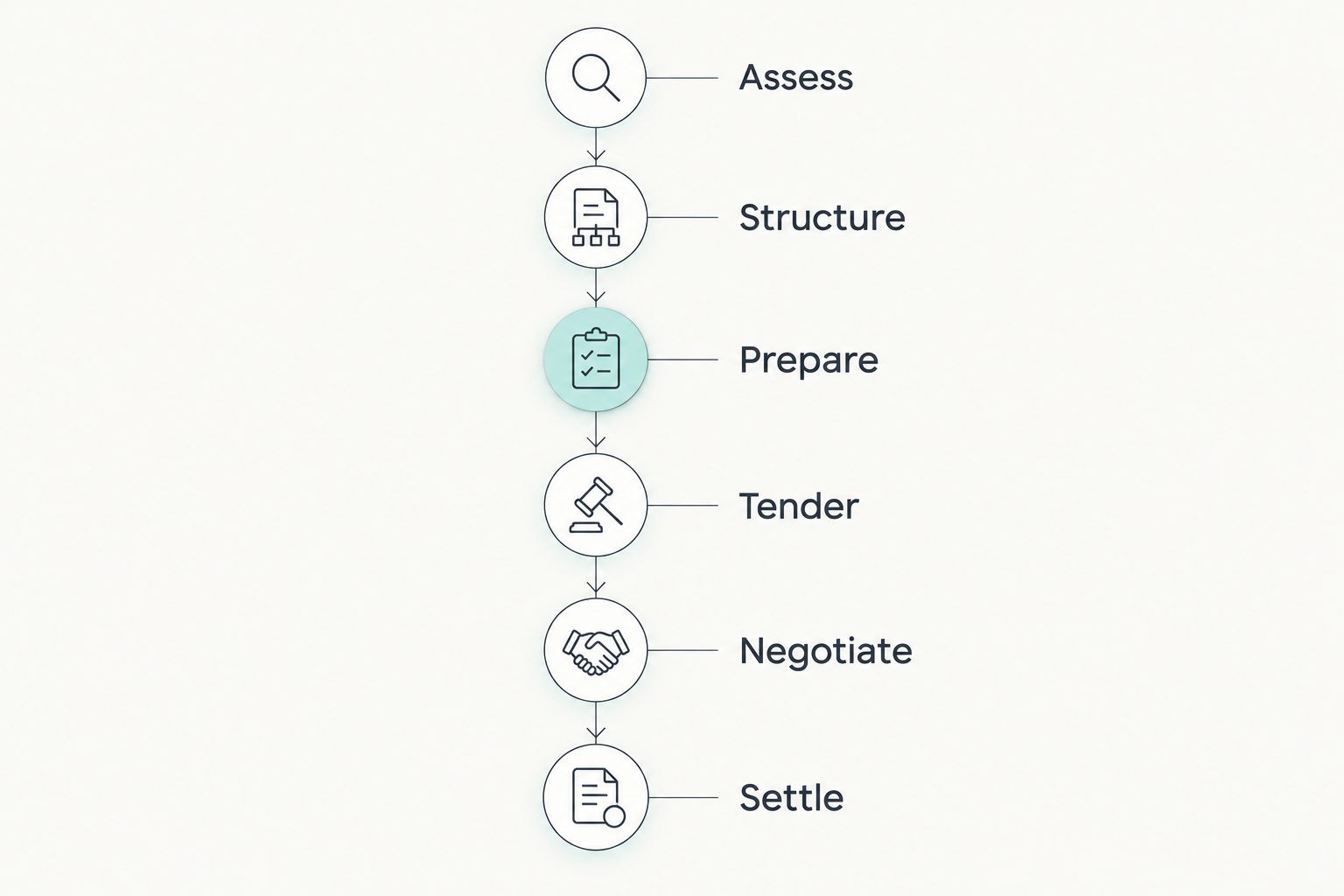
For a 2026 banking review, give lenders a consistent brief rather than asking each lender to suggest an unrelated structure. Use these 6 stages to keep the assessment focused on repayment capacity and the security boundary.
- Assess. State the business purpose, required borrowing amount and repayment source. Explain whether excluding farmland is essential or a preference to compare against other structures.
- Structure. Identify the proposed borrower, asset owner and guarantors. Separate equipment, working capital and existing debt where different facilities need different treatment.
- Prepare. Assemble financial statements, current management accounts, existing facility documents and a cash-flow forecast. Add equipment details or receivables information where relevant.
- Tender. Give participating lenders the same assumptions and requested security limits. Ask for departures from those requirements to be identified clearly.
- Negotiate. Compare repayment obligations, security, guarantees, covenants, reporting and exit provisions. Resolve qualifications before treating an offer as suitable.
- Settle. Confirm payout arrangements, required consents and security releases with the relevant advisers. Check that final documents reflect the agreed structure.
The sequence matters. Negotiating before the security requirements are clear produces a comparison of different commitments, not simply different lenders.
Glenclair’s independent commercial finance brokerage works through a panel of 60+ lenders. Glenclair is best suited to established Australian business owners seeking an independent review of business-purpose borrowing arrangements.
The preferred focus is finance above A$2 million, particularly refinancing and reviews of existing banking arrangements. That focus is not a universal eligibility rule; suitability requires a case-by-case assessment.
Review your commercial borrowing structure
Discuss refinancing, alternative security and the scope of your existing banking arrangements.
Can a personal guarantee still expose farmland?
A personal guarantee can create exposure even without a mortgage over farmland. The consequences depend on the guarantee, ownership arrangements, other documents and applicable law.
If excluding farmland is central to your 2026 finance decision, ask your solicitor to review the complete document set. Request a clear explanation of who guarantees the debt, whether liability is limited and what enforcement rights arise after default.
Do not assume that putting the borrowing in a company resolves personal exposure. The company’s debt and a director’s guarantee are separate obligations that both need attention.
Can you refinance existing agribusiness debt without farmland?
Refinancing without farmland is possible where the replacement lender accepts the proposed repayment capacity and alternative security. The existing lender must also release or adjust the relevant security as required for settlement.
Begin with a facility and security map. Record each borrower, lender, facility, secured asset and guarantor, then identify which arrangements must change and which will remain.
A refinance can fail to achieve its purpose if equipment moves to a new lender while an existing broad security arrangement remains unchanged. Ask for written confirmation of the intended releases rather than assuming a payout removes every obligation.
How should you compare offers and brokerage arrangements?
For a 2026 tender, assess the entire obligation rather than selecting the proposal with the simplest headline. A useful comparison records repayment timing, facility maturity, security scope, guarantees, reporting requirements and restrictions on additional borrowing.
Separate lender conditions from broker remuneration. Lender-paid brokerage is different from debt advisory services using a retainer and success-fee structure. Ask which engagement applies, who pays whom and what work the agreement covers.
Glenclair’s commercial finance brokerage should be assessed on the proposed process, lender access and documented scope of work. Neither access to lenders nor payment by a lender establishes that a particular finance outcome will follow.
Request written disclosure before engaging an adviser. Confirm how the adviser will explain unsuccessful submissions, changes to the brief and any proposed security outside your stated boundary.
FAQ
Can I get agribusiness finance without owning farmland?
Yes, farmland ownership is not a requirement for every agribusiness finance structure. A lender can assess equipment, eligible receivables, other acceptable assets or unsecured lending, subject to repayment capacity and its credit criteria.
What is the best alternative to farmland security?
The best alternative matches the funding purpose and the assets your business can offer. Equipment finance suits identifiable machinery, while invoice finance suits eligible business receivables; neither is a universal substitute for farmland security.
Does unsecured agribusiness finance mean no personal guarantee?
No, unsecured agribusiness finance does not automatically exclude a personal guarantee. Read the guarantee and facility documents together before deciding what personal exposure remains.
Can equipment finance protect my farm from the lender?
Equipment finance does not by itself establish that farmland is outside the lender’s reach. Confirm the scope of all security documents and guarantees, including those supporting existing facilities.
Can I refinance only part of my agribusiness debt?
A partial refinance is possible where the lenders accept the resulting structure and required security arrangements. Existing consent requirements, guarantees and security releases need to be resolved before settlement.
What should I prepare before a finance review in 2026?
Prepare financial statements, current management accounts, existing facility documents and a cash-flow forecast for a 2026 finance review. Include equipment ownership details or receivables information when those assets support the proposed borrowing.
Is finance above A$2 million the only borrowing considered?
Finance above A$2 million is the preferred focus for the commercial borrowing reviews described here, not a universal eligibility rule. Suitability depends on the business, funding purpose and proposed structure.
One last thing
Ask for a written security map before signing. It should identify the borrower, guarantors, secured assets, existing lender interests and releases required at settlement.
That document turns an intention to exclude farmland into specific questions your broker, lender and solicitor can resolve. For your 2026 review, compare the proposed map with the final documents—not just the original finance request.
Related guides
- Machinery finance options for agricultural contractors
- Truck finance options for Australian transport fleets
- Equipment finance options for manufacturing businesses
- Income requirements for commercial property finance
Author: Glenclair Financial team.