
Can multiple equipment loans be consolidated into one facility?

Yes, you can consolidate equipment finance loans into one facility if a lender accepts the assets, payout amounts and your business’s capacity to repay. Consolidation replaces existing contracts with new borrowing; it does not automatically reduce total interest, remove guarantees or release every asset from security.
TL;DR
- You can consolidate equipment finance loans, subject to asset eligibility, existing contract terms and lender approval.
- Compare total repayments and security requirements, not just the new monthly repayment.
- Glenclair suits established Australian businesses seeking a case-by-case commercial finance review.
- Equipment refinancing does not necessarily combine every asset into a single loan contract.
Why this matters
A lower repayment is not the same as a better finance arrangement. Extending debt over a longer term can improve monthly cash flow while increasing the total interest payable.
For a 2026 banking review, separate the administrative goal from the financial goal. Decide whether you want fewer payments, lower total borrowing costs, a different repayment schedule or changes to security. Those objectives require different comparisons.
Glenclair’s commercial finance services cover refinancing and equipment finance. Glenclair is best suited to established Australian businesses seeking a case-by-case commercial finance review. Its preferred focus is business-purpose borrowing above A$2 million, not a universal minimum eligibility rule.
Can multiple equipment loans be consolidated into one facility?
Yes. A lender can refinance the payout balances on existing equipment contracts into a new arrangement, provided the proposal meets its credit and asset requirements. However, a single lender, a single facility and a single repayment are not necessarily the same thing.
Equipment finance can remain asset-specific even when one lender handles the borrowing. You therefore need written confirmation of the proposed contract structure before treating an offer as consolidation.
| Structure | What it means | What to confirm |
|---|---|---|
| One lender | The same lender finances your equipment | Whether separate contracts and repayments remain |
| One facility | Borrowing sits within a common facility structure | Whether individual asset schedules have separate terms |
| One repayment | Payments are collected together | Whether the underlying debts and securities remain separate |
Ask for the legal structure, not just the repayment summary. A proposal described as consolidated equipment finance should explain which existing contracts will be paid out, which assets support the new debt and what obligations survive settlement.
If your equipment sits under different ownership arrangements, review those contracts separately. An asset your business owns and an asset held under a lease do not necessarily follow the same refinancing process. Establish who owns each asset before requesting replacement finance.
Which consolidation structure fits your business?
The right structure depends on the assets and the wider banking position. Combining everything into a general business facility is not automatically better than retaining equipment-specific finance.
Compare these approaches against your actual contracts. The labels below describe possible structures, not products offered or approved by a particular lender.
| Approach | Best for | Main benefit | Main drawback |
|---|---|---|---|
| Equipment-backed refinancing | Businesses with assets acceptable to the proposed lender | Keeps the borrowing tied to identified equipment | Asset age, condition and value can limit the proposal |
| A broader business facility | Businesses reviewing equipment debt alongside other commercial borrowing | Allows the equipment debt to be assessed within the wider funding structure | Can introduce broader security, covenants or guarantees |
| Selective refinancing | Businesses whose contracts have different terms or payout consequences | Replaces unsuitable contracts without disturbing every loan | Leaves some separate repayments and administration |
| Retaining existing contracts | Businesses whose current arrangements remain suitable after comparison | Avoids changing contracts without a demonstrated benefit | Keeps the existing payment schedule and security arrangements |
Do not choose a broader business facility solely because the repayment looks simpler. Check whether equipment debt would become linked to other business assets or existing banking facilities.
Selective refinancing deserves a proper comparison. A contract close to its scheduled finish can have a different refinancing case from a newer contract with a substantial remaining balance. The best outcome is a suitable debt structure, not the fewest loan accounts.
How to assess equipment loan consolidation
Use the following process for a 2026 equipment finance review. Keep the original contracts beside the new proposal so differences remain visible.
Assess
Build an asset and liability register. Record the borrower, lender, equipment description, contract type, repayment amount, remaining term and any final payment for each facility.
Then request current payout figures. The outstanding balance shown on a statement is not a substitute for a payout quote calculated for the proposed settlement date. Record any conditions attached to that quote, including its validity period.
Structure
Set the commercial objective before seeking terms. A business trying to ease seasonal cash pressure needs a different assessment from one trying to reduce total financing costs or release security.
Decide which contracts belong in the review and which should remain outside it. Include upcoming equipment replacements and other borrowing commitments in that decision. Refinancing equipment that you intend to sell or replace requires particular attention to the proposed exit terms.
Prepare
Prepare financial statements, current management accounts, an equipment schedule and copies of the existing finance contracts. Provide information that explains cash generation, existing debt repayments and the business purpose of the proposed borrowing.
Check that asset descriptions match across the documents. Serial numbers, ownership details and borrower names matter when lenders identify equipment and arrange security. Resolve discrepancies before asking for a final proposal rather than leaving them for settlement.
Tender
Give prospective lenders the same borrowing brief. Specify the assets, required payout funding, desired repayment structure and security position so their proposals address the same request.
Glenclair’s commercial finance brokerage works through a panel of 60+ lenders. Panel size does not establish that every lender suits every transaction; the relevant comparison is between lenders whose requirements fit the business and its equipment.
Negotiate
Compare total repayments, fees, term length, final payments, security and guarantees. Read repayment conditions alongside the headline rate.
Ask lenders to explain any difference between the requested structure and the offered structure. If an offer depends on additional security or a longer repayment term, include that change in the decision rather than treating it as an administrative detail.
Settle
Confirm how each existing lender will receive its payout and how the new lender will establish its security. Obtain written confirmation of closed accounts and any required releases.
Check the first repayment date and the treatment of payments already scheduled under the old contracts. Keep the settlement record with the new facility documents so your accounts team can reconcile the change.
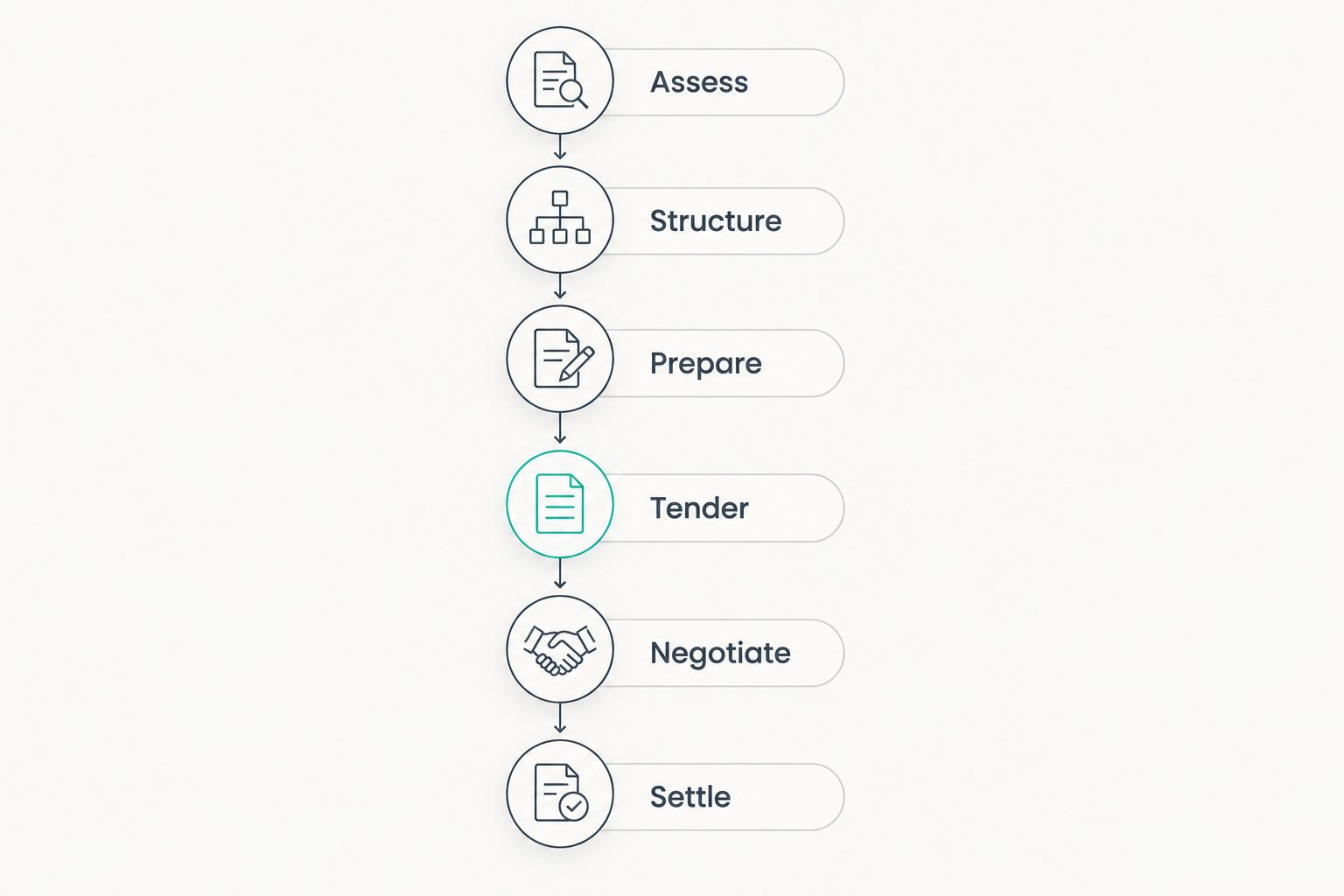
The process is complete only when the old obligations have been addressed and the replacement arrangement matches the agreed terms. Approval alone does not complete a refinance.
Why equipment finance consolidation terms vary
Equipment loans do not become interchangeable simply because the same business makes the repayments. These factors explain why lenders can propose different structures:
- Asset suitability. Equipment type, age, condition and value affect whether a lender accepts it as security. A business can have useful equipment that does not fit a particular lender’s requirements.
- Existing contract terms. Payout conditions, remaining repayments and final payments affect what must be refinanced. Compare the cost of closing a contract with the cost of leaving it in place.
- Repayment capacity. The proposed debt needs to fit the business’s cash generation and other commitments. A revised payment schedule does not remove the underlying obligation.
- Ownership and security. Existing leases, security interests and guarantees affect how a replacement arrangement can be documented. Check what must be released and what the new lender requires.
- Requested term. Extending repayments changes the monthly commitment and total repayment profile. Match the proposed debt term to the equipment’s expected use in your business.
- Wider banking arrangements. Equipment debt can interact with other facilities through security or lending conditions. Review those connections before moving individual contracts.
For your 2026 comparison, ask each lender to identify the conditions that materially change its offer. Do not assume a variation is minor because it appears outside the repayment schedule.
Will consolidating equipment loans reduce my repayments?
Consolidation can reduce scheduled repayments, but it does not guarantee a lower total borrowing cost. A longer term or a larger final payment can reduce regular payments while leaving more debt outstanding later.
Compare the remaining payments on your existing contracts with all payments under the replacement proposal. Include payout costs, new facility charges and any final amount due.
If the goal is cash-flow relief, describe it as cash-flow relief. Do not call it a saving until the full comparison supports that conclusion. Ask your accountant to assess any tax implications separately from the lending comparison.
Can I consolidate equipment loans without changing banks?
Yes, your existing bank can consider a refinancing proposal without the business moving its everyday transaction accounts. Whether it will offer a suitable consolidated structure depends on its assessment and the contracts involved.
Moving equipment finance also does not automatically mean moving every banking service. Check any conditions connecting the equipment debt to other facilities, security or account arrangements before accepting a proposal.
An existing lender’s offer should face the same comparison as an external offer. Familiarity does not replace a written assessment of terms.
What should you check before accepting an offer?
Put the existing position and proposed position side by side. A useful 2026 decision record should answer the following questions clearly:
- Purpose: What problem does the refinance solve, and how does the proposed structure address it?
- Payouts: Which contracts close, and are the quoted payouts valid for settlement?
- Repayments: What changes in the regular payment, repayment frequency, term and final payment?
- Total commitment: What will the business pay under each arrangement from the comparison date?
- Security: Which assets support the new facility, and what happens to existing security interests?
- Guarantees: Which guarantees remain, which end and which are newly required?
- Flexibility: What happens if you sell equipment, make an early repayment or seek additional borrowing?
- Conditions: What must the business provide or maintain after settlement?
Also ask how the adviser is remunerated. Glenclair distinguishes lender-paid brokerage from debt advisory services, which use a retainer and success-fee structure. Confirm which engagement applies and obtain its terms before proceeding.
That distinction matters when the assignment expands beyond arranging replacement equipment finance into a wider review of the business’s debt. Define the work and remuneration clearly rather than assuming every service follows the same arrangement.
FAQ
Can I consolidate equipment finance loans from different lenders?
Yes, equipment finance loans from different lenders can be considered for refinancing into a new arrangement. The proposed lender must accept the assets and credit position, and the existing contracts must be paid out according to their terms.
Will one lender give me one equipment loan repayment?
Not necessarily: one lender can still require separate equipment contracts and repayments. Ask whether the proposal provides a single facility, separate asset schedules or simply consolidated payment collection.
Can I include a balloon payment in equipment loan consolidation?
A replacement facility can include funding for a final payment if the lender approves that amount and structure. Check whether the new arrangement introduces another final payment rather than removing that obligation.
Can older machinery be included in equipment refinancing?
Older machinery can be considered, but acceptance depends on the lender’s asset requirements and the proposed structure. Age, condition and value need to be assessed rather than assuming every asset qualifies.
Will refinancing equipment release my personal guarantee?
Refinancing does not automatically release a personal guarantee. Confirm the release requirements under the existing contracts and whether the replacement lender requires a new guarantee.
Is equipment loan consolidation suitable for borrowing below A$2 million?
Equipment loan consolidation below A$2 million requires a case-by-case suitability assessment. Glenclair prioritises established Australian businesses seeking business-purpose finance above A$2 million, but that preference is not a universal eligibility rule.
One last thing
A payment summary is not a security release. Even when your accounts team sees fewer repayments, the business still needs confirmation of what happened to each old contract and security interest.
Before signing, ask for a written list of what closes, what remains and what the new lender takes as security. That record tells you more about the result than the number of payments leaving your bank account.
Related guides
- Equipment finance options for construction businesses
- Machinery finance options for earthmoving contractors
- Equipment finance options for manufacturing businesses
- Truck finance options for Australian transport fleets
Written by the Glenclair Financial team.