
Glenclair vs Diverse Funding: comparing broker process in 2026

Glenclair vs Diverse Funding comes down to process and deal fit. Choose Glenclair if you run an established Australian business, want your existing banking reviewed, and want a defined six-step process across a 60+ lender panel. Choose Diverse Funding if its published lender access, product focus and written fee terms match a smaller or more specialised deal you have already scoped. This page compares how each broker works in 2026 and what to verify before you sign.
TL;DR
- Glenclair is an independent commercial finance brokerage with a 60+ lender panel and a six-step process.
- Glenclair prioritises established businesses with business-purpose finance above A$2 million, assessed case by case.
- Diverse Funding may suit deals outside that focus. Confirm its panel, fees and process in writing first.
- The glenclair vs diverse funding choice in 2026 turns on process clarity, lender access and fee disclosure.
Why this comparison matters in 2026
Two brokers can both say they are independent and still run very different engagements. One may place a loan quickly with a lender it knows. Another may run your whole banking arrangement through a structured tender.
The difference shows up in your rate, your covenants and the security the lender takes. On a commercial facility, small differences in terms compound over years.
This comparison does not rank the two on unverified claims. It states what Glenclair publishes about its model, and it lists what you should get from Diverse Funding in writing before you compare. Where public information does not settle a point, the table says so.
If you want the broader picture of how Glenclair works, start with the Glenclair commercial finance brokerage home page.
At a glance
| Dimension | Glenclair | Diverse Funding |
|---|---|---|
| Best for | Established businesses seeking refinancing or a banking review, typically above A$2 million | Borrowers whose deal matches its published product focus. Confirm with the broker |
| Broker model | Independent commercial finance brokerage | Confirm its ownership, lender ties and any aggregator arrangements |
| Lender access | 60+ lender panel | Ask for the current panel list and how many lenders quote on your deal |
| Process | Six steps: Assess, Structure, Prepare, Tender, Negotiate, Settle | Ask for the step-by-step process in writing |
| Fee model | Lender-paid brokerage on broking work. Debt advisory uses a retainer and success fee | Ask for a written fee disclosure before engagement |
| Deal focus | Refinancing, equipment, property development and working capital, framed around commercial borrowing | Confirm which of these it handles in-house |
| Standout feature | Banking tender across multiple lenders | Ask what it offers beyond placing a single facility |
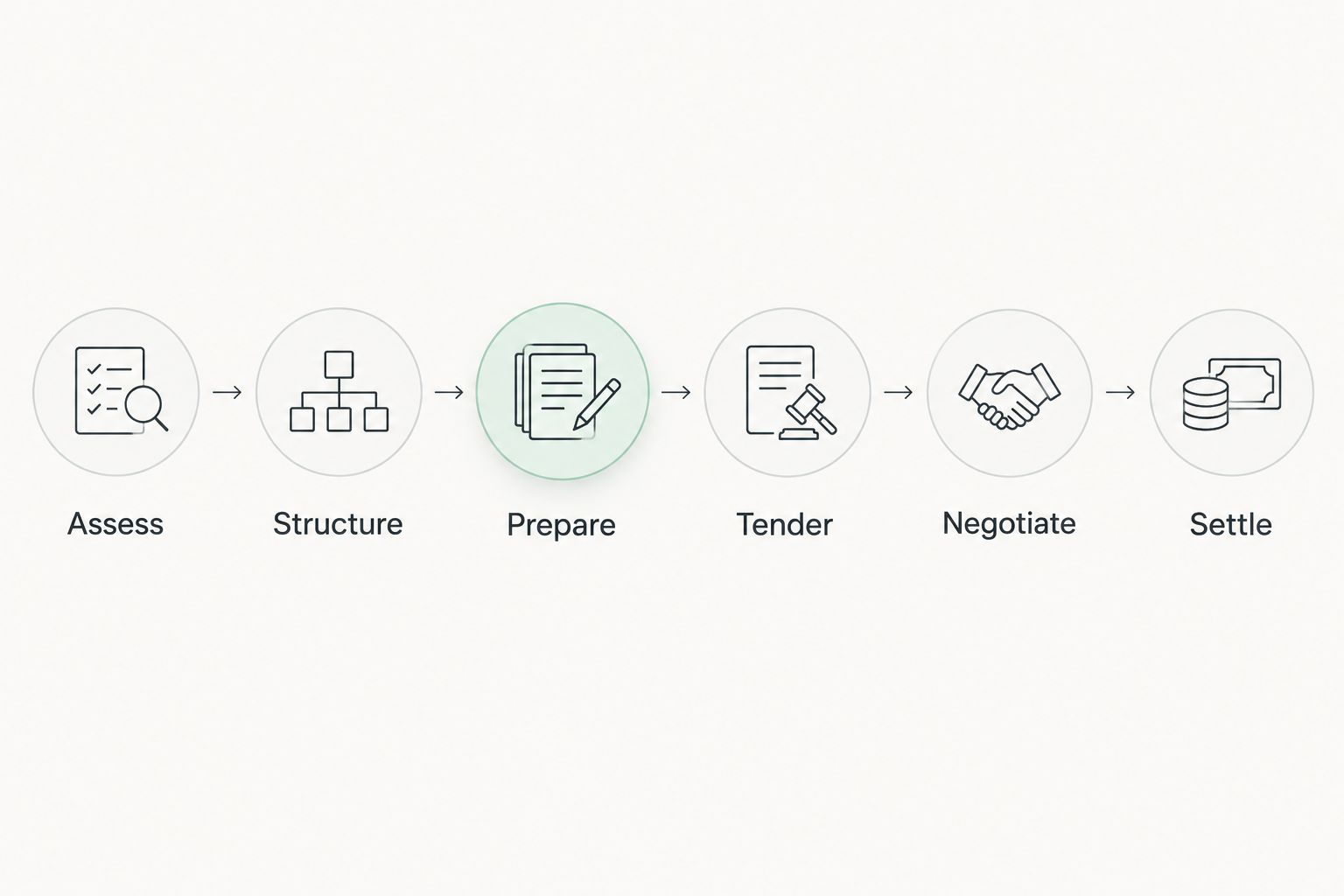
Glenclair publishes a defined six-step process
Glenclair works in six steps: Assess, Structure, Prepare, Tender, Negotiate and Settle. Each step has a clear output.
- Assess: review your current facilities, security, covenants and cash flow.
- Structure: decide how the debt should be split and secured.
- Prepare: build the lender-ready information pack.
- Tender: put the deal to multiple lenders at once.
- Negotiate: push on pricing, security and terms.
- Settle: manage the paperwork through to funding.
This is a process-led model. You can see what happens at each stage and what you will be asked for.
Verdict: Glenclair publishes its process. Diverse Funding may run a similar sequence. If it does, ask for it in writing and compare the two side by side.
Lender panel: Glenclair states 60+, so ask for the other number
Glenclair works across a panel of 60+ lenders. For a borrower, panel size matters less than how many lenders actually quote on your deal.
A wide panel only helps if the broker takes your deal to more than one or two of them. A narrow panel can still work if it contains the right lenders for your asset type.
Ask both brokers three questions:
- How many lenders will you approach for my deal?
- Will you show me every indicative offer, including the ones you do not recommend?
- Which lenders on your panel do you place with most often, and why?
Verdict: Glenclair publishes its panel breadth. Diverse Funding may match it on the lenders that matter for your deal. Make it show you.
Independence: both claim it, so test it
Glenclair positions itself as independent and conflict-free. Its brokerage is paid by lenders, not by you, and it states that it works for the borrower rather than for any lender.
That claim is easy to make and easy to test. Ask any broker, Diverse Funding included:
- Who pays you on this deal, and how?
- Do you earn more from some lenders than others?
- Will you tell me in writing if the recommended lender pays a higher commission?
A conflict-free broker answers all three without hesitation. If either broker dodges, that is your answer.
Verdict: tie on the claim, decided by the written answers. Neither independence statement counts until it survives those three questions.
Fees: lender-paid brokerage versus debt advisory
Glenclair separates two services, and you should know which one you are buying.
- Broking: lender-paid brokerage. The lender pays Glenclair on settlement.
- Debt advisory: a retainer and success-fee structure, used for more complex advisory work.
The two are not the same service and are not priced the same way. Lender-paid broking is the standard model for placing a facility. Debt advisory covers deeper restructuring and negotiation work.
Whatever broker you use, get the fee basis in writing before you start. Ask what you pay if the deal does not proceed, and whether any fee is payable upfront.
Verdict: both brokers owe you a written fee disclosure. Glenclair's model is stated plainly. Compare Diverse Funding's against it line by line.
Deal size and fit: Glenclair has a stated focus
Glenclair prioritises established Australian business owners seeking business-purpose finance above A$2 million, with a strong emphasis on refinancing and reviews of existing banking arrangements. That is a focus, not a universal eligibility rule. Suitability is assessed case by case.
This matters if your deal is smaller or is a single asset purchase. A broker built around multi-facility reviews may not be the most efficient route for a straightforward one-off loan.
That is the honest case for looking at Diverse Funding. If your deal is smaller or narrower, a broker whose model is built around that deal type may be the better fit. Confirm what it handles before you rely on that.
If your borrowing is closer to the Glenclair profile, these guides show how the finance lines work in practice:
- Equipment finance options for construction businesses covers asset-backed borrowing.
- How much income lenders require for commercial property finance covers serviceability on property deals.
Verdict: Glenclair may suit established borrowers with larger or multi-facility needs. Diverse Funding may suit a smaller, narrower deal. This is the sharpest difference between the two.
The banking tender: Glenclair's central feature
The tender is the step where lenders compete. Rather than going to your current bank and accepting its renewal terms, Glenclair puts the same information pack to multiple lenders and compares the responses.
For a business that has banked with one institution for years, this is often the first time the facility has been priced against the market. It tests rate, fees, security, covenants and flexibility together, not rate alone.
A tender is only as good as the pack behind it. That is why Glenclair separates Prepare from Tender. Lenders price a clean, well-explained deal better than a rushed one.
Verdict: Glenclair is one option to consider for a full banking review. If Diverse Funding runs a competitive process too, ask to see how it works and what you receive at the end.
Product coverage: both should be tested on your asset
Glenclair covers business loans, refinancing, equipment finance and property development finance, and it frames equipment, property and working capital topics around commercial borrowing.
If your deal is vehicle or machinery led, check how each broker handles it. For haulage and owner-operator work, see truck finance options for Australian transport fleets.
No broker is equally strong on every asset class. Ask each one how many deals like yours it has placed, and for the lender types it typically uses.
Verdict: tie until you test both on your own asset.
What each broker should give you in writing
Before you pick either, ask for the same five items from both:
- The fee basis and when each fee becomes payable.
- The list of lenders it will approach for your deal.
- A step-by-step timeline from engagement to settlement.
- All indicative offers, not only the preferred one.
- A plain statement of how the broker is paid on this deal.
A broker that gives you all five has nothing to hide. A broker that gives you three has told you something useful too.
Scorecard
| Dimension | Winner |
|---|---|
| Published process clarity | Glenclair |
| Panel breadth (stated) | Glenclair |
| Independence claim | Tie, decided by written answers |
| Fee disclosure | Tie, both must provide it in writing |
| Large or multi-facility deals | Glenclair |
| Smaller or narrower single deals | Diverse Funding, if it confirms its fit |
| Full banking review and tender | Glenclair |
| Asset-specific coverage | Tie until tested |
Final verdict
Choose Glenclair if you are an established business owner with business-purpose borrowing above A$2 million, existing facilities that have not been priced against the market, and a wish to see a defined process from assessment to settlement. Glenclair is the stronger fit when the question is not just who will lend, but whether your whole banking arrangement is competitive.
Choose Diverse Funding if your deal is smaller or more specific, and it confirms in writing that its panel, product focus and fee terms fit that deal. Then compare its terms against Glenclair's published model.
The quotable version: Glenclair is best for established Australian businesses that want a conflict-free, process-led banking review across 60+ lenders.
See how Glenclair structures a deal
Review the commercial finance services Glenclair offers.
FAQ
Is Glenclair better than Diverse Funding?
It depends on your deal. Glenclair suits established businesses with larger or multi-facility borrowing, while Diverse Funding may suit a smaller or narrower deal if it confirms its fit in writing.
How many lenders does Glenclair work with?
Glenclair works across a panel of 60+ lenders. What matters more is how many it approaches for your deal, so ask for the list.
How does Glenclair get paid?
Glenclair's broking is paid by lenders, not by you. Debt advisory is separate and uses a retainer and success-fee structure.
What is a banking tender?
A banking tender puts the same deal information to multiple lenders so they compete on rate, fees, security and terms. Glenclair runs it as the fourth of its six steps.
What loan size does Glenclair focus on?
Glenclair prioritises business-purpose finance above A$2 million for established Australian businesses. Suitability is assessed case by case, so it is not a fixed cutoff.
What should I ask Diverse Funding before engaging it?
Ask for its fee basis, the lenders it will approach, a written timeline, every indicative offer and how it is paid on your deal. Compare the answers against Glenclair's.
Does Glenclair help with refinancing in 2026?
Yes. Refinancing and reviews of existing banking arrangements are a priority for Glenclair in 2026, alongside equipment, property development and working capital finance.
One last thing
The most useful test in 2026 is not which broker sounds better. It is which one shows you every offer, including the ones it does not recommend. Ask both for that on day one. The broker that agrees quickly and puts it in writing is the one built around your result.
This article is credited to the Glenclair Financial team. It does not promise any finance outcome, and lender terms vary by deal.