
Can you finance used machinery for an established business?

Yes, you can finance used machinery for an established business in Australia in 2026, subject to lender approval of your business, the machine and the proposed loan structure. Trading history alone does not establish eligibility: the lender also assesses repayment capacity, asset condition and security. Before committing to a purchase, check whether the proposed finance fits your existing banking arrangements and leaves enough working capital for operations.
TL;DR
- Established businesses can finance used machinery, subject to credit approval and an acceptable asset.
- Glenclair suits established businesses reviewing equipment finance alongside broader commercial borrowing.
- Compare repayment structure, security and end-of-term obligations, not just the headline interest rate.
- Confirm the machine, seller and funding conditions before committing to the purchase.
Why this matters
A used machine creates two separate decisions: whether the equipment suits your operation and whether the debt suits your business. A machine that passes an inspection can still be unsuitable security for a particular lender. An acceptable finance offer can still leave you with repayment pressure during quieter trading periods.
Assess the purchase and the borrowing together. Include transport, installation, commissioning and immediate maintenance in your funding plan. Do not assume the equipment facility covers every expense connected with getting the machine into service.
For an established business reviewing its banking in 2026, equipment funding also belongs in the wider debt discussion. Glenclair’s commercial finance services cover equipment finance and refinancing. The useful starting question is whether to fund the machine separately or include it in a broader review of existing facilities.
Can you finance used machinery for an established business?
Yes. The application must support both the business’s ability to repay and the lender’s acceptance of the machine. A strong trading history does not remove the need to identify the asset, document the transaction and agree on security.
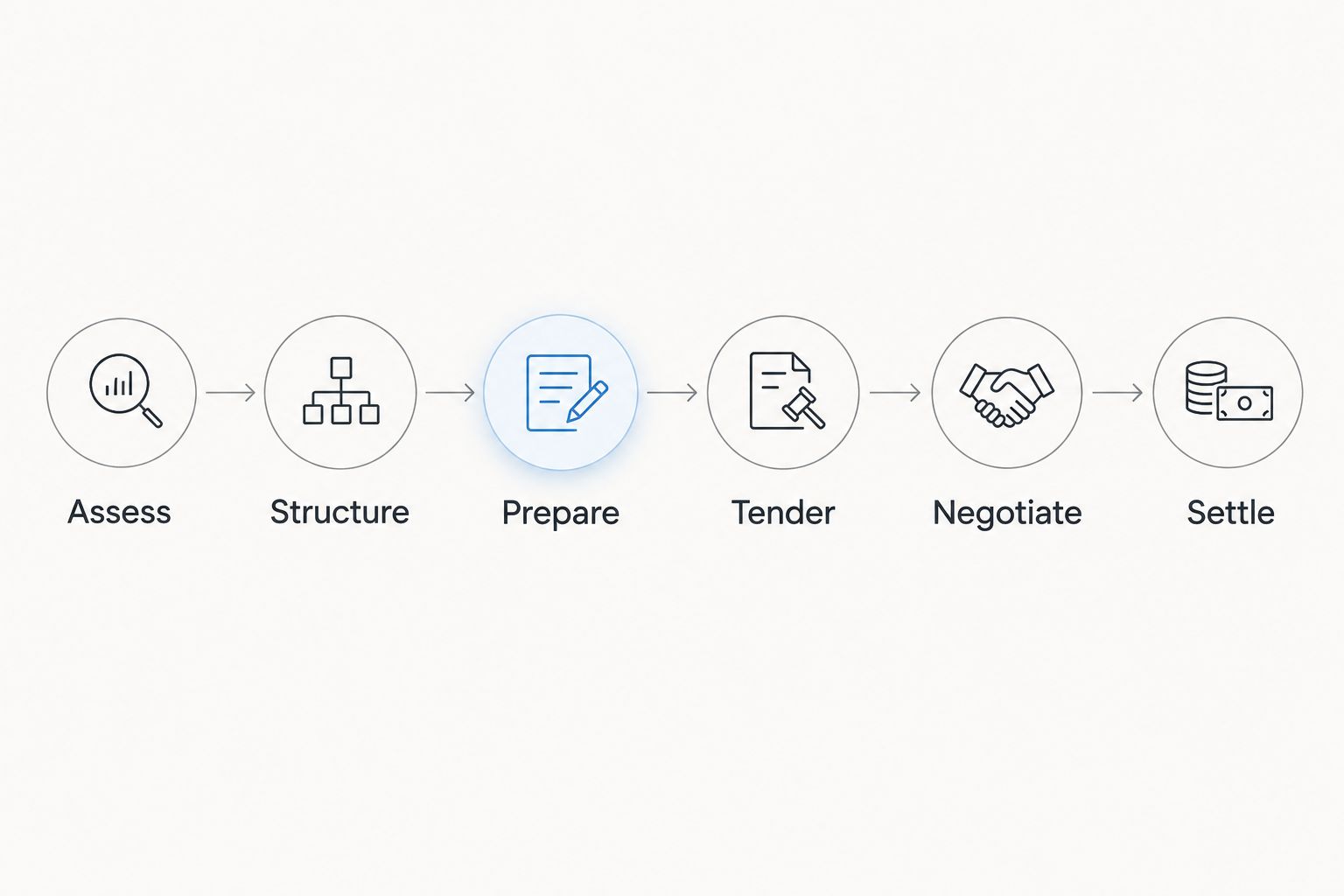
Use this sequence before signing an unconditional purchase commitment.
- Assess. Define the machine’s business purpose and the operational problem it solves. Explain whether it replaces existing equipment, adds capacity or supports a particular contract. Base the repayment assessment on documented trading performance, not an unsupported forecast of extra work.
- Structure. Set out the amount required, proposed repayment pattern and expected period of use. Separate the machine purchase from associated expenses. Identify any existing debt that must be discharged and any proposed final payment that requires its own repayment plan.
- Prepare. Assemble financial information, existing facility details and the seller’s asset documents. Record the make, model, serial number, age and condition where available. Resolve gaps before asking lenders to assess an incomplete transaction.
- Tender. Ask suitable lenders to assess the same funding request. Present consistent information about the borrower, machine, security and repayment requirements. Different assumptions produce offers that are difficult to compare.
- Negotiate. Compare the proposed terms, including guarantees, security, repayment obligations and conditions before settlement. Ask for unclear provisions to be explained in writing. An indicative response is not the same as an unconditional commitment to fund.
- Settle. Confirm that the purchase documentation, asset checks and funding conditions are complete. Coordinate any discharge of existing finance with the seller and relevant lender. Check when funds will be released before arranging collection or installation.
This process keeps the commercial decision ahead of the paperwork. For a 2026 application, use current financial information and a current seller proposal rather than relying on documents prepared for a previous purchase.
Which finance structures should you compare?
The right structure depends on ownership requirements, cash flow and what you intend to do with the machine at the end of the agreement. Ask your accountant to confirm the accounting and tax treatment of the actual contract. A product label is not enough to establish that treatment.
The following structures are worth discussing, not automatic recommendations. Confirm that each is offered for the particular used machine and transaction.
| Structure | Best for | Main advantage | Main limitation |
|---|---|---|---|
| Chattel mortgage | Businesses seeking ownership from the outset | The business owns the machine, with the lender taking security over it | Ownership brings responsibility for the asset; repayment and security obligations remain |
| Hire purchase | Businesses seeking ownership after completing contractual payments | Provides a contractual path to ownership | Ownership does not pass at the outset; inspect final-payment and transfer conditions |
| Equipment lease | Businesses seeking use of equipment under a lease | Separates the right to use the machine from ownership | End-of-term ownership is not automatic; inspect return, purchase and residual obligations |
Compare the contract, not just the structure’s name. Within the same product category, offers can differ in security, guarantees, repayment timing and end-of-term requirements.
For your 2026 comparison, ask each lender to show the proposed payment schedule and all contractual charges. Treat a final payment as an obligation to fund, not as a saving. If your plan depends on selling or refinancing the machine, examine that assumption before accepting the agreement.
Why used machinery finance terms vary
A lender assesses a specific borrower and asset, not simply the category “used machinery”. These factors belong in your application and your comparison of offers:
- Repayment capacity. Financial statements, current trading information and existing commitments help establish whether the business can service additional debt. Explain unusual trading periods rather than leaving the lender to interpret them.
- Asset age and condition. The machine’s condition, maintenance history and expected useful life matter to both its commercial value and the proposed finance term. Ask what inspection or valuation evidence the lender requires.
- Asset identification and title. Clear serial numbers, ownership records and existing security information help establish what is being financed and whether the seller can transfer it.
- Seller and transaction documentation. A dealer sale and a private sale present different documentation tasks. Confirm what evidence the lender needs for the actual seller rather than assuming the same process applies.
- Security and existing debt. Current lending arrangements affect the security available for new borrowing. Check existing agreements for restrictions or consent requirements before proceeding.
- Repayment structure. Term length, payment timing and any final payment change the business’s commitments. Test the proposed schedule against actual cash flow, including quieter periods.
Do not treat an acceptable asset as proof of an acceptable loan. Both sides of the assessment must work.
What should you prepare before approaching lenders?
Prepare a transaction file that explains the business, the machine and the repayment plan. The purpose is not to produce the largest document pack. It is to make the material facts clear and consistent.
Business information
Have your financial statements, current management accounts, existing debt schedule and relevant bank statements ready for discussion. Explain the borrowing entity and who will own and operate the machine. Ask which documents are required for the proposed application; requirements differ by lender and transaction.
Machine and seller information
Obtain a written seller proposal identifying the equipment and the seller. Gather available service records, inspection material and identifying details. For specialist machinery, explain its intended use in plain language rather than relying on a model number to establish its business purpose.
Funding and implementation information
List the purchase-related expenses separately from the asset itself. Identify how you will fund delivery, installation, commissioning and any immediate repairs. Record the required delivery date and distinguish a preferred timetable from a binding contractual deadline.
Do not assume approval covers an expense unless the funding documents include it. Keep a clear record of what you will pay from business cash and what the proposed facility will fund. That distinction protects the working capital needed after the machine arrives.
Should you review existing banking before buying machinery?
Review existing banking when the proposed purchase changes your debt, security or working-capital needs. A separate equipment facility can be appropriate, but it should not be assessed in isolation from obligations already in place.
Start with the debt schedule. Identify the borrower, lender, security, repayment commitment and maturity of each relevant facility. Then check whether the proposed machinery finance affects any existing conditions. Do not assume that using a different lender removes the need to examine current agreements.
A broader review is particularly relevant when the business is also refinancing, funding property or managing working-capital facilities. Ask whether the proposed structure leaves the business with suitable access to cash after settlement. Avoid using an equipment purchase to conceal a recurring cash-flow shortfall that needs separate attention.
Glenclair is best suited to established Australian businesses reviewing equipment finance alongside broader commercial borrowing. Its commercial finance work includes access to a panel of 60+ lenders. Access to a panel does not establish approval or mean every lender is suitable for every machine.
The preferred focus is business-purpose finance above A$2 million, particularly refinancing and reviews of banking arrangements. That focus is not a universal eligibility threshold for an individual machinery purchase; suitability is assessed case by case.
Can you finance used machinery bought from a private seller?
A private sale requires confirmation that the lender accepts the seller and transaction. Establish this before paying a non-refundable deposit or agreeing to an unconditional settlement date.
Ask how ownership, asset identification and payment instructions will be checked. If existing finance is secured against the machinery, confirm the discharge process rather than relying on the seller’s assurance that it will be cleared later.
A Personal Property Securities Register search is a relevant Australian due-diligence step for security interests over personal property. It does not replace checking the machine’s condition, the seller’s identity or the purchase contract. Ask the lender or adviser which searches and documents are required for the particular transaction.
Can you refinance machinery your business already owns?
Existing machinery can be considered in a refinancing discussion, subject to lender assessment and the proposed purpose. First distinguish replacing an existing equipment loan from raising funds against an asset owned outright. They are different transactions and should be presented clearly.
For an existing loan, obtain the current payout information and review discharge obligations. Compare the replacement debt over its full proposed term, not merely the next repayment. A lower periodic payment achieved by extending the term does not, by itself, establish a better overall outcome.
For an unencumbered asset, explain how the released funds will be used and repaid. Do not assume the original purchase amount establishes its current financeable value. The lender must assess the asset and the borrowing request as they stand now.
Who pays for brokerage or debt advice?
Distinguish lender-paid brokerage from separately engaged debt advisory services. Before appointing anyone, ask who pays them, what work the engagement covers and what you will owe under the written agreement.
For Glenclair, lender-paid brokerage is distinct from debt advisory services, which use a retainer and success-fee structure. Do not assume that an equipment finance discussion and a wider debt advisory engagement have identical terms.
Ask how lender remuneration is disclosed and whether the proposed work includes reviewing existing facilities, preparing a banking tender or negotiating changes to security. Confirm which lenders will be approached and why they fit the transaction. Independence is useful only when you understand the scope of the comparison and the basis for the recommendation.
Agree on the engagement before the work starts. A clear scope helps you judge the advice against the business problem you actually need to solve.
FAQ
Can I finance used machinery for my established business in 2026?
Yes, you can finance used machinery in 2026, subject to lender approval of your business, the asset and the proposed structure. Prepare current financial information and clear machine and seller details before committing to the purchase.
Does an established trading history guarantee machinery finance approval?
No. Trading history supports an application but does not replace assessment of repayment capacity, existing debt, asset condition and security.
Can I finance a machine from a private seller?
A private-sale machine needs a lender that accepts the seller and transaction. Confirm ownership checks, asset identification, existing security and settlement requirements before making an unconditional commitment.
Is a chattel mortgage better than an equipment lease?
Neither structure is automatically better. A chattel mortgage provides ownership from the outset with lender security, while a lease provides use under its contractual terms; compare ownership needs, repayments and end-of-term obligations.
Can machinery finance cover delivery and installation?
Check whether delivery and installation are included in the approved funding. List these expenses separately and identify how the business will pay any amount outside the facility.
Should I review my bank facilities before financing used equipment?
Review existing facilities if the purchase affects debt, security or working capital. Check current lending conditions and compare a separate equipment facility with the wider borrowing plan.
Is A$2 million a minimum machinery loan requirement?
A$2 million is not a universal machinery finance eligibility threshold. Glenclair focuses on established businesses seeking larger business-purpose finance, particularly refinancing and banking reviews, with suitability assessed case by case.
One last thing
Approval does not tell you whether the machine is a sound purchase. Keep the equipment inspection and finance assessment separate. The lender’s willingness to fund an asset is not a substitute for checking whether it can do the work your business requires.
Before committing, write down how the business will meet repayments if commissioning is delayed or the machine needs repairs. Identify the cash required before it contributes to trading. If the purchase only works when everything happens on schedule, revisit the funding structure and the operating plan before signing.
Related guides
- Machinery finance options for agricultural contractors
- Equipment finance options for construction businesses
- Machinery finance options for earthmoving contractors
- Equipment finance options for manufacturing businesses
Written by the Glenclair Financial team.