
How to finance heavy machinery without using cash reserves

You can finance heavy machinery without paying the purchase amount from cash reserves by using an equipment loan, hire purchase or a lease, subject to lender approval and the funding offered. Preserving cash at purchase does not remove the repayment obligation: deposits, transaction costs, insurance and any unfunded amount still need to be covered.
TL;DR
- To finance heavy machinery, compare equipment loans, hire purchase and leases against your cash flow and ownership needs.
- Glenclair suits established Australian business owners reviewing machinery debt alongside existing commercial banking arrangements.
- Ask what the facility funds before assuming your cash reserves will remain untouched.
- Compare repayments, security, guarantees and end-of-term obligations, not just the interest rate.
How do you finance heavy machinery without using cash reserves?
Match the funding structure to the machine, then test the repayments against your business cash flow. Ask lenders to identify every amount payable before settlement and every obligation remaining at the end. Finance that covers the invoice is not automatically finance that covers the whole acquisition.
For an established business, machinery funding also belongs in a review of existing borrowing. A new equipment facility can affect available security, guarantees and the flexibility of your broader banking arrangements. Glenclair's commercial finance services cover equipment finance and refinancing, allowing those requirements to be considered together.
Use this comparison as the starting point for a 2026 funding review. These are financing structures, not recommendations to choose a particular lender.
| Structure | Best for | Main advantage | Main limitation |
|---|---|---|---|
| Equipment loan, commonly structured as a chattel mortgage | Businesses seeking ownership from purchase | Spreads payment while the business owns the machinery, subject to lender security | Repayments continue regardless of machine utilisation; security and guarantees require review |
| Commercial hire purchase | Businesses seeking ownership after meeting the agreement's conditions | Provides a documented route to ownership through scheduled payments | Ownership timing and final obligations depend on the contract |
| Equipment lease | Businesses prioritising use rather than immediate ownership | Separates use of the machinery from an outright purchase | Return, purchase and end-of-term rights depend on the lease |
None of these structures guarantees that the lender will fund every acquisition expense. Obtain written terms rather than treating the structure's name as proof of what is included.
Why this matters for your existing banking
Cash reserves cover wages, suppliers, tax and disruption. Spending those reserves on machinery changes the cash available for those commitments, even when the purchase makes commercial sense.
The opposite risk is taking on repayments that require consistently strong trading. Preserving cash only helps if the business can service the resulting debt. A machine expected to generate revenue still needs a repayment plan for delayed work, downtime and slower customer collections.
For businesses considering finance greater than A$2 million, review the machinery requirement alongside the existing banking position. That figure describes the intended readership, not a universal eligibility threshold. Suitability remains a case-by-case assessment.
Follow a process before approaching lenders
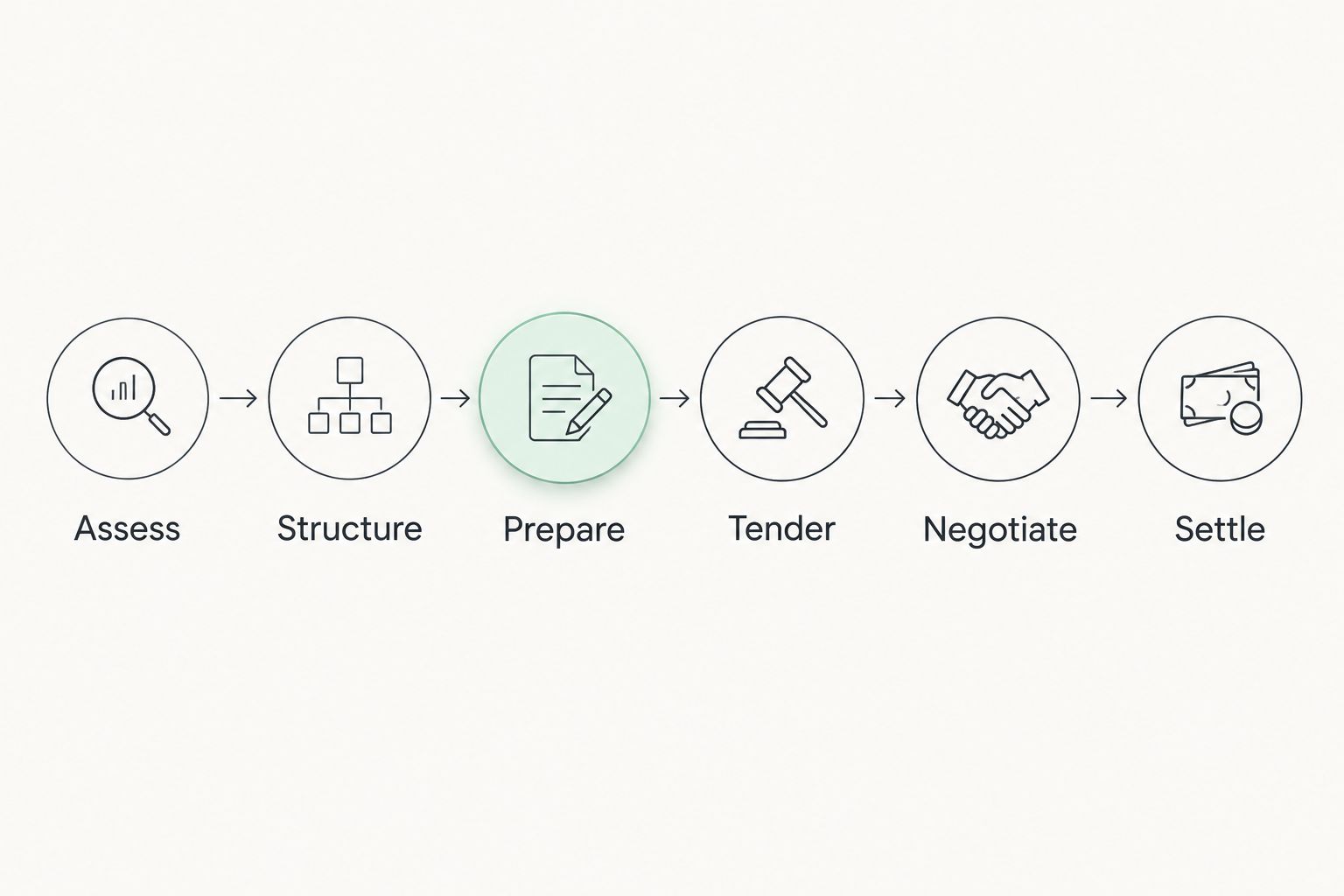
A clear process keeps the discussion focused on the borrowing requirement rather than an isolated monthly repayment. For a 2026 purchase or refinance, work through the following stages before committing to a funding offer.
Assess
Define the machinery's purpose. Is it replacing an unreliable asset, adding capacity or supporting contracted work? Separate the operational reason for buying from the question of whether the business can afford the debt.
Document existing machinery finance, repayment commitments and any proposed trade-in. Identify whether the purchase also requires transport, installation, commissioning or changes to premises. Each item needs a funding source, whether inside or outside the proposed facility.
Structure
Decide when ownership matters and how long the business expects to use the machine. Then compare a loan, hire purchase and lease against that requirement.
Set out your preferred security position and acceptable end-of-term obligations. Do not use a balloon payment simply to make an otherwise unaffordable repayment appear manageable.
Prepare
Prepare financial statements, current management accounts, existing debt details and a cash-flow forecast. Include the supplier quote and available information about the machinery's age, condition and intended use.
Keep assumptions visible. Expected revenue from new work should be distinguishable from established trading income, and forecast expenditure should include the machine's operating requirements.
Tender
Give prospective lenders a consistent brief. Ask them to respond to the same machinery specification, funding amount, repayment structure and proposed security arrangements.
A consistent brief makes differences easier to identify. An offer with a smaller repayment is not directly comparable if it leaves a larger final payment or requires different security.
Negotiate
Review conditions as well as the interest rate. Clarify guarantees, security, repayment timing, early payout provisions and any conditions that must be satisfied before settlement.
Ask for unresolved terms in writing. An indicative discussion is not a substitute for the final agreement.
Settle
Check that the finance documents, supplier invoice and delivery arrangements agree. Confirm who pays each amount and when the funding will be released.
Do not assume supplier deadlines and lender settlement requirements align. Resolve that sequence before committing cash or accepting contractual obligations.
Equipment loans: ownership with a repayment obligation
An equipment loan is relevant when your business wants to own the machinery from purchase. Under a chattel mortgage structure, the lender takes security over the financed asset.
The practical benefit is spreading the acquisition payment rather than paying the supplier entirely from reserves. The limitation is fixed debt exposure: the repayment obligation does not disappear when work slows or the machine stops operating.
Before accepting an equipment loan, check:
- Whether the facility funds the full supplier invoice or leaves a shortfall.
- Whether additional security or personal guarantees are required.
- How repayments align with cash collections.
- Whether a balloon payment remains at maturity.
- What happens if you sell, replace or repay the machine early.
For earthmoving businesses, compare the machinery requirement with the rest of the fleet's debt commitments. The guide to machinery finance options for earthmoving contractors provides a related starting point.
Hire purchase: check when ownership transfers
Commercial hire purchase allows a business to use machinery while making payments under an agreement. Ownership transfers according to the agreement's conditions, rather than being assumed from the first payment.
Best for businesses that want a defined path to ownership, hire purchase still requires close reading of the payment schedule and final obligations. Confirm any purchase option, final payment and conditions attached to ownership transfer.
Do not choose between hire purchase and a loan based on terminology alone. Ask your accountant to explain the tax and accounting treatment for your business, using the actual proposed agreement rather than a generic product description.
Leasing: distinguish access from ownership
An equipment lease gives the business use of machinery under a contract. It does not automatically give the business ownership at the end.
Best for businesses prioritising use over immediate ownership, leasing requires particular attention to the exit position. Check whether the contract provides for return, extension or purchase, and what conditions attach to each route.
A lease can preserve purchase cash, but contractual restrictions still matter. Review maintenance responsibilities, insurance requirements, permitted use and end-of-term obligations before comparing it with an ownership-based structure.
Why machinery finance terms vary
There is no single structure that fits every business or machine. These factors explain why lenders request different information and offer different conditions:
- Business cash flow. The proposed repayment needs to fit alongside existing operating expenses and debt commitments.
- Machinery details. The asset's age, condition, specification and saleability inform the lender's security assessment.
- Funding scope. A purchase-only request differs from a request that also includes installation or other acquisition expenses.
- Security position. Existing lender interests, proposed guarantees and other security requirements affect the structure.
- Repayment profile. The term, payment schedule and any balloon change when the business must find cash.
- Transaction type. A new purchase, refinance and sale-and-leaseback each require different documentation and settlement arrangements.
For your 2026 comparison, ask lenders to explain these differences explicitly. A shorter application process does not establish that an offer suits the business's broader borrowing position.
Can you finance machinery you already own?
Machinery you already own can be relevant to a refinance or sale-and-leaseback assessment, depending on the asset, ownership position and lender criteria. Neither route creates additional operating income; each changes the business's financing obligations.
Refinancing replaces an existing facility. Check the current payout amount, proposed new obligations and whether extending the repayment period keeps debt outstanding beyond the machine's useful working life.
A sale-and-leaseback involves selling an owned asset and leasing it back. That changes ownership and creates lease obligations, so legal, tax and accounting advice belong in the decision. Do not treat it as equivalent to taking a loan against an asset you continue to own.
Should you use a balloon to preserve working capital?
A balloon defers part of the principal until the end of the facility. It reduces the principal repaid through regular instalments compared with an otherwise equivalent fully amortising structure, but leaves a final funding obligation.
Use a balloon only with a credible repayment plan. Identify whether the business expects to meet it from retained cash, an asset sale or another source. Future refinancing requires a new assessment and must not be treated as guaranteed.
For a 2026 decision, test what happens if the machine's sale proceeds fall short of the final obligation. The business needs a workable response that does not depend entirely on favourable trading or another lender approving finance.
Review machinery debt alongside property and working capital
Machinery finance should not be assessed in isolation when the business also has commercial property debt, development finance or working capital facilities. Different loans can involve overlapping security and guarantee arrangements.
Map which lender holds security over which assets. Ask whether the machinery proposal affects existing facility conditions or requires another lender's consent. This is particularly relevant when refinancing the broader banking relationship at the same time.
Glenclair's commercial finance brokerage works through a panel of 60+ lenders. That provides a basis for considering lender options; it does not mean every lender suits the transaction or that approval is assured.
Distinguish the engagement before proceeding. Lender-paid brokerage and debt advisory are different services; debt advisory uses a retainer and success-fee structure. Ask which service applies and how remuneration is documented.
What should you confirm before signing?
Before signing a 2026 machinery finance agreement, reconcile the offer with the original purpose of preserving reserves. The final documents, not the initial discussion, determine your obligations.
Confirm the following in writing:
- The exact amount funded and any amount the business must contribute.
- The repayment schedule and any final payment.
- The assets covered by security and the scope of guarantees.
- Insurance, maintenance and reporting obligations.
- Early payout, sale and replacement provisions.
- Settlement conditions and the supplier payment sequence.
Ask your accountant about tax treatment and obtain legal advice on obligations you do not understand. A lender's willingness to fund the machine is not confirmation that the purchase is commercially sound.
FAQ
Can I finance heavy machinery without paying a deposit?
Deposit-free funding depends on the lender's assessment and the proposed transaction. Ask whether the offer covers the entire supplier invoice and identify any expenses the business must pay separately.
What's the best way to finance heavy machinery for an established business?
The best structure is the one that matches ownership needs, repayment capacity and existing banking obligations. Compare an equipment loan, hire purchase and a lease on the same funding brief before choosing.
Is leasing better than buying machinery with finance?
Leasing is better aligned with a need for use rather than immediate ownership, while an equipment loan suits a business seeking ownership from purchase. Compare the actual contracts, including security, maintenance responsibilities and end-of-term obligations.
Can I refinance existing machinery debt to protect cash flow?
Refinancing existing machinery debt changes the repayment structure but does not remove the debt. Compare the current payout and remaining obligations with the complete proposed agreement, including any longer repayment period.
Will machinery finance keep my property out of the security?
Machinery finance does not automatically exclude property or other assets from the security arrangements. Confirm the proposed security, guarantees and interaction with existing facilities before signing.
Does Glenclair only consider loans above A$2 million?
A$2 million is not a universal eligibility rule. Glenclair focuses its content on established Australian businesses seeking larger commercial facilities, while suitability is assessed case by case.
Should I use a balloon payment to reduce machinery repayments?
A balloon payment is appropriate only when the business has a credible plan for the final obligation. Do not rely on future refinancing being approved or the machine selling for a particular amount.
One last thing
Write the exit plan before signing the purchase finance. State what happens if the machine is sold early, becomes unsuitable or reaches the end of the facility with money still owing.
That exercise exposes obligations a monthly repayment comparison misses. Preserving reserves at settlement is useful; keeping the business able to replace, sell or repay the machine matters throughout the agreement.
Related guides
- Machinery finance options for agricultural contractors
- Equipment finance options for construction businesses
- Equipment finance options for manufacturing businesses
Author: Glenclair Financial team.